
*This post may contain affiliate links for which I earn commissions.*
The Complete Insider’s Guide to Madrid
Madrid is a capital city that takes a few days to understand and then becomes difficult to leave. It runs roughly two hours behind the rest of Europe: lunch at two, dinner at ten, the best of the nightlife starting well after midnight. The museums are among the finest in the world and they open at ten in the morning to mostly empty rooms. The food is serious and considerably cheaper than in any comparable European capital. The light in summer is harsh and extraordinary, and the temperature at six in the evening, when the worst of the heat breaks, is one of the best things about being in the city.
Madrid sits at 650 metres on the Castilian plateau, which makes it hotter than you expect in summer and colder in winter than any Mediterranean capital. It is the highest capital city in the European Union. The altitude gives the air a quality that is different from the coast: cleaner, drier, sharper. It also means the sunsets last longer and the stars, if you drive an hour outside the city, are better than anything on the coast.
What the city rewards above everything else is time. A weekend is enough to see the Prado and eat well. A week begins to feel like the right amount.
What to See
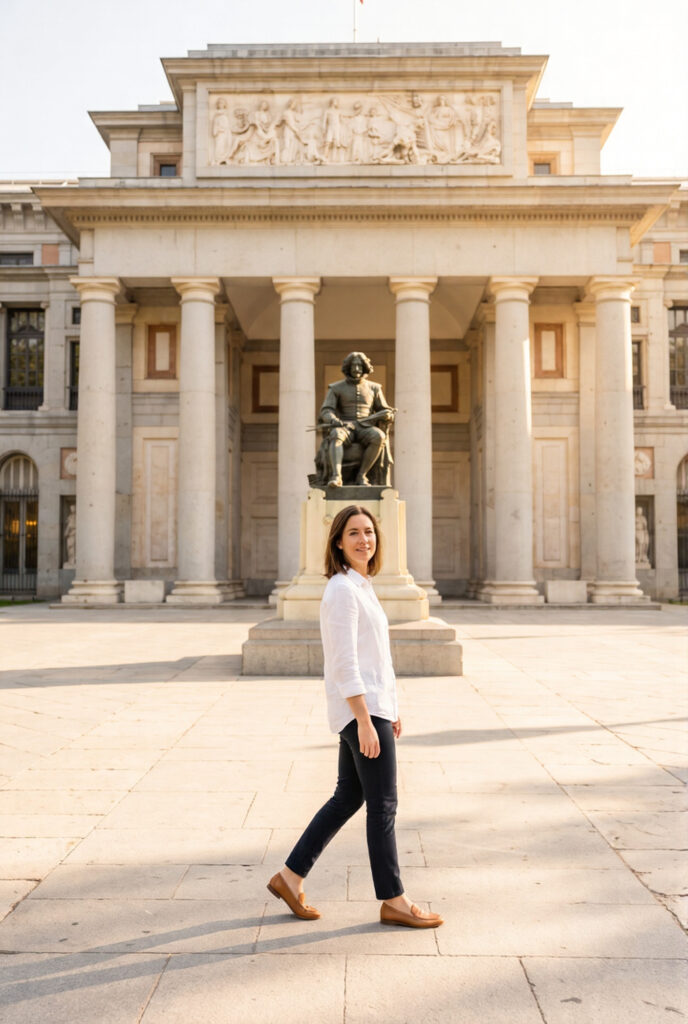
The Prado
The Prado is one of the three or four greatest art museums in the world and most people do not give it enough time. The collection runs from the 12th to the early 19th century and covers Spanish, Flemish, and Italian painting with a depth that no other museum matches for this period. Velázquez, Goya, El Greco, Rubens, Titian: all represented not with one or two significant works but with rooms full of them.
The rooms to spend the most time in: the Velázquez galleries on the first floor, particularly Las Meninas, which is larger than most reproductions suggest and which is worth standing in front of for a long time. The Goya rooms, particularly the Black Paintings on the ground floor, which were painted directly onto the walls of his house and which are unlike anything else in the museum or anywhere else. The Flemish collection on the ground floor, where Bosch’s Garden of Earthly Delights hangs.
Book online to skip the entry queue. The museum opens at ten. Arrive at opening and the Velázquez rooms are almost empty for the first hour. By eleven the tour groups arrive. Allow three hours minimum and do not try to see everything.
The Reina Sofía
The national museum of 20th-century Spanish art sits a ten-minute walk south of the Prado and contains Picasso’s Guernica, which is reason enough to go. The painting is in Room 206 on the second floor and is larger than most people expect: 3.5 metres tall and nearly eight metres wide. It was painted in response to the Nazi bombing of the Basque town of Guernica in 1937 and the scale is part of the work. Stand back. Look at it whole before looking at the details.
The rest of the permanent collection covers Dalí, Miró, Juan Gris, and the broader Spanish modernist and surrealist movements. The building itself is a converted 18th-century hospital with a modern extension by Jean Nouvel added in 2005. The rooftop terrace of the Nouvel wing is free to access and gives a good view over the Atocha train station and the southern end of the Prado hill.
Retiro Park
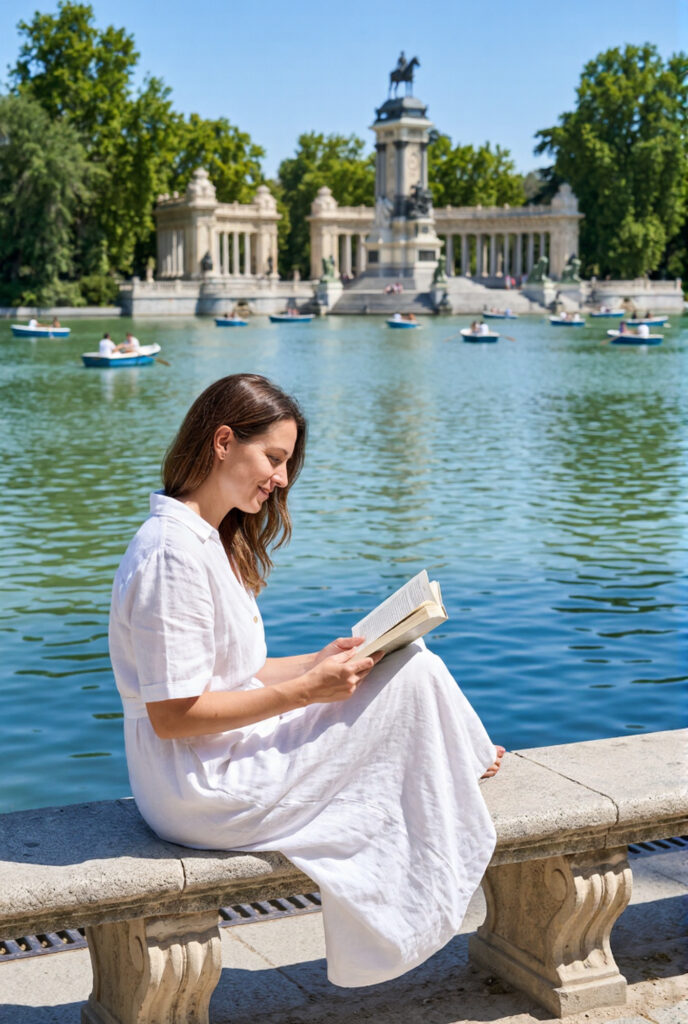
The Retiro is the city’s central park, 350 acres of formal gardens, wooded paths, and lake in the middle of the city. On Sunday mornings it fills up with madrileños doing what madrileños do on Sunday mornings: walking slowly, pushing prams, drinking coffee on benches, reading newspapers. It is one of the best places in Madrid to understand how the city actually lives.
The boating lake at the centre has a rowing boat rental that costs almost nothing and is more enjoyable than it sounds. The Crystal Palace, the Palacio de Cristal, at the southern end of the park is a 19th-century iron and glass exhibition hall that now hosts contemporary art installations and is free to enter. The rose garden, the Rosaleda, peaks in May and is worth the walk to the southern section of the park.
The Royal Palace and the Almudena Cathedral
The Palacio Real is the official residence of the Spanish royal family, though they have not lived in it since the 19th century. It is the largest royal palace by floor area in Western Europe: 3,418 rooms, of which about fifty are open to visitors. The state rooms are excessive in the specific way that 18th-century royal interiors are supposed to be excessive. The Royal Armoury on the ground floor is the most interesting room in the building: the collection of royal armour, including pieces made for Charles V and Philip II, is the finest in the world.
The Almudena Cathedral opposite the palace was consecrated in 1993 after over a century of construction. The exterior is neo-Gothic, the interior is modern, and the crypt beneath is 19th-century neo-Romanesque. The roof terrace requires a separate ticket and gives the best elevated view over the Casa de Campo and the mountains to the west.
The Plaza Mayor and the historic centre
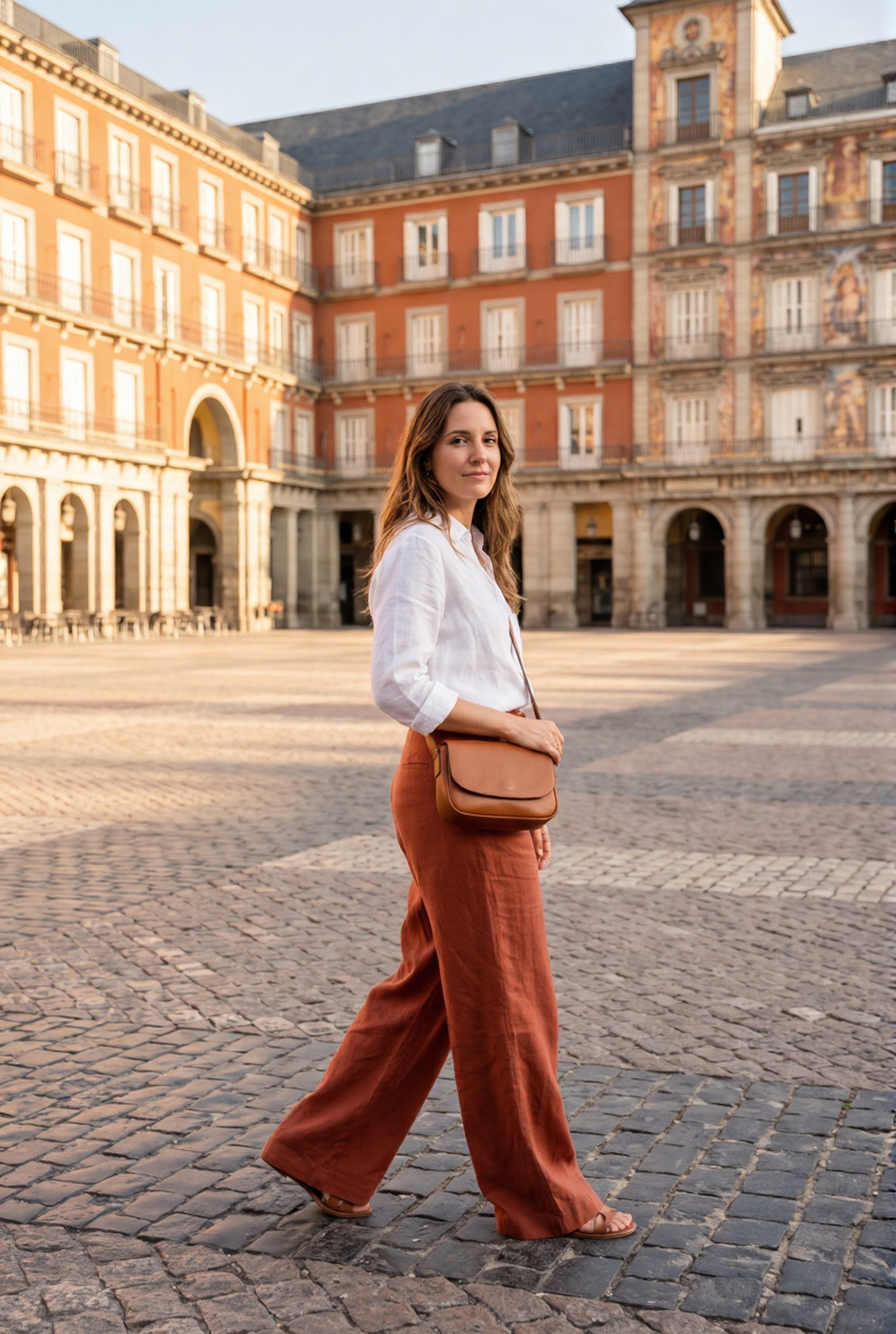
The Plaza Mayor is the ceremonial heart of the old city: a large enclosed square surrounded by uniform 17th-century arcaded buildings with painted facades, built on the orders of Philip III. It is reliably crowded from mid-morning and the restaurants under the arcades are reliably tourist-oriented and overpriced. None of this should stop you from spending time here, because the square itself is genuinely impressive and the early morning, before nine, is one of the better hours in Madrid.
Walk south from the Plaza Mayor to La Latina for the street market on Sunday morning, west toward the Rastro for the city’s most famous flea market, and north through the Sol neighbourhood toward the Gran Vía, the city’s main commercial boulevard. The area between the Plaza Mayor and the Prado, roughly a fifteen-minute walk, contains most of what a first visit to Madrid covers.
The Rastro flea market
The Rastro runs every Sunday morning and on public holidays in the La Latina neighbourhood south of the Plaza Mayor. The market fills the Calle de la Ribera de Curtidores and the surrounding streets with stalls selling vintage clothing, old books, tools, ceramics, and things that defy easy categorisation. It opens at nine and winds down by two.
The stalls are densest and the finds most interesting in the side streets off the main drag. The main Ribera de Curtidores is the tourist version; the streets to the east and west of it are where the actual market is. Keep your bag in front of you and close. Pickpocketing at the Rastro is frequent and well-organised. After the market, the bars and restaurants in La Latina fill up for the long Sunday lunch that is one of the best things about being in Madrid on a weekend.
What to Do
Walk the neighbourhoods: Malasaña, Chueca, and Lavapiés
Madrid’s most interesting neighbourhoods are north and east of the historic centre and are best explored on foot over a morning or a full day.
Malasaña is the neighbourhood that grew out of the countercultural Movida madrileña of the late 1970s and still carries that energy in its independent shops, record stores, and bars. The Plaza del Dos de Mayo at its centre is a good place to start and the streets around it, particularly the Calle de Fuencarral and the Calle del Espíritu Santo, have the best independent shopping in the city.
Chueca, immediately east of Malasaña, is Madrid’s LGBTQ+ neighbourhood and one of the most lively and welcoming parts of the city. The Plaza de Chueca is its centre and the restaurants and bars around it are among the best in the city for modern Spanish cooking at reasonable prices.
Lavapiés, south of the Sol neighbourhood, is the most multicultural neighbourhood in Madrid: Moroccan grocery shops next to Spanish tabernas next to Indian restaurants next to independent theatres. The Mercado de San Fernando is the neighbourhood’s covered market and one of the best places in the city to eat cheaply and well.
Go to the Thyssen-Bornemisza
The third museum in the Golden Triangle of Art, alongside the Prado and the Reina Sofía, the Thyssen-Bornemisza covers European painting from the 13th century to the late 20th in a collection that began as a private collection and was acquired by the Spanish state in 1993. Where the Prado goes deep into Spanish painting and the Reina Sofía into 20th-century modernism, the Thyssen goes wide: Italian Renaissance, Dutch Golden Age, Impressionism, Expressionism, American realism all in one building.
It is the most manageable of the three museums in terms of time: the permanent collection covers three floors and can be seen properly in two hours. The temporary exhibition programme is consistently good. Book online.
Eat at the Mercado de San Miguel
The Mercado de San Miguel, just off the Plaza Mayor, is Madrid’s most famous covered market and one of the best places in the city to eat standing up in the late morning or early evening. The market is a 1916 iron and glass structure that was restored in 2009 and now contains around thirty stalls selling everything from oysters to croquetas to jamón to natural wine.
It is busy and slightly expensive by Spanish market standards and worth it for the quality of what is being sold and the building itself. Go between noon and two, before the lunch crowd, or around seven in the evening when it opens after the afternoon break and the after-work crowd arrives.
Spend an evening on a rooftop
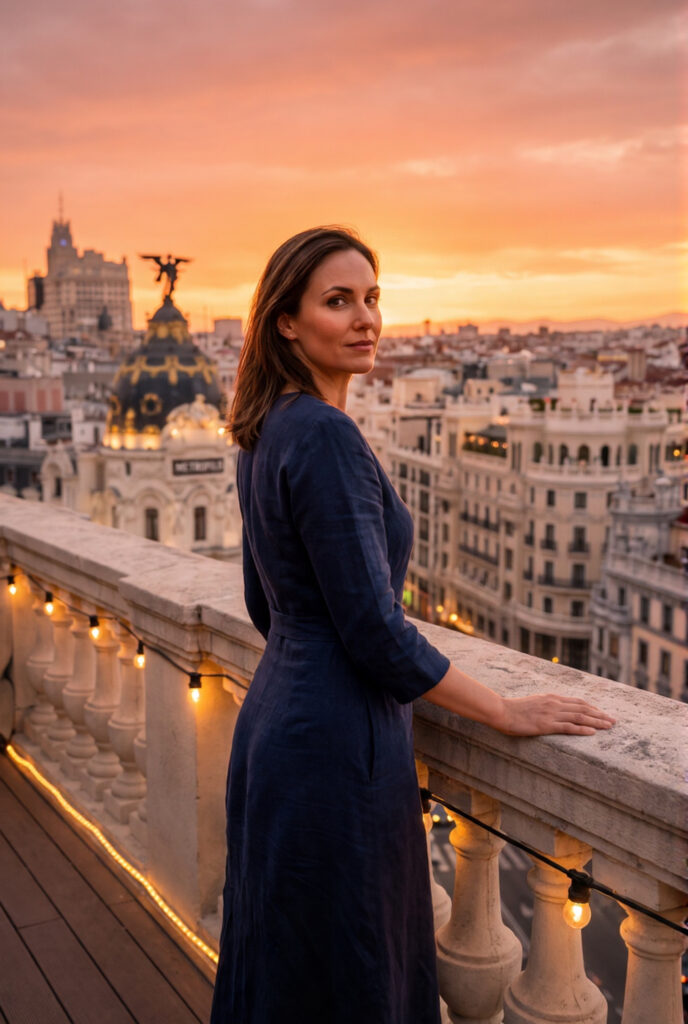
Madrid has more rooftop bars than any other city in Spain and several of them are worth the queue. The best known is the Círculo de Bellas Artes on the Calle de Alcalá: a cultural centre with a rooftop terrace that costs a small entry fee and gives a 360-degree view over the city. The Terraza del Casino on the Gran Vía is more expensive and more formal. The rooftop of the Hotel Riu Plaza España on the Plaza de España is newer and very good for sunset views over the western skyline.
The rooftops are at their best in the hour before and after sunset, from about eight until ten in summer. Arrive early for a good position.
Day trips: Toledo and Segovia
Toledo is one of the finest historic cities in Europe and is forty minutes from Madrid by high-speed train. The old city sits on a granite hill encircled by the Tagus river and contains a Gothic cathedral, a Moorish fortress, El Greco’s house and museum, synagogues, and mosques in a compact area that takes a full day to explore properly. The city was the capital of the Spanish empire before Madrid and the density of monuments reflects that history. Take the first train, spend the full day, come back in the evening.
Segovia is an hour from Madrid by bus or train and is most famous for its Roman aqueduct, which runs through the centre of the town on two tiers of granite arches and has been standing without mortar for two thousand years. The Alcázar castle at the western end of the old city is the building that Walt Disney used as the model for Sleeping Beauty’s castle. The cochinillo, the roast suckling pig, is the local dish and the reason to eat lunch here rather than back in Madrid.
Where to Stay
Madrid’s neighbourhoods each give a different version of the city and choosing between them shapes the trip considerably.
The historic centre: Sol, Las Letras, and La Latina
The area around the Puerta del Sol, the Plaza Mayor, and La Latina puts you within walking distance of the Prado, the Reina Sofía, the Rastro, and the main historic sights. It is the noisiest and most tourist-dense part of the city. Good for a first visit when being central matters more than having a neighbourhood to live in. The Hotel Urban in Las Letras is well designed and well located. The Hospes Madrid on the Plaza de la Independencia is quieter and close to the Retiro.
Malasaña and Chueca
The right base if you want to be in a neighbourhood rather than a tourist zone. Restaurants, bars, and independent shops within a short walk in every direction. A twenty-minute walk or a quick metro ride from the main museums. The Petit Palace Posada del Peine near the Plaza Mayor sits between the historic centre and these two neighbourhoods without being fully in either.
Salamanca
The Salamanca neighbourhood north-east of Retiro is Madrid’s wealthiest residential district and its high-end shopping area. The Calle de Serrano and the Calle de Ortega y Gasset have the Spanish designer boutiques and the international luxury labels. The area is quieter than Malasaña, the restaurants are more expensive, and it is close to the Retiro for morning walks. The right base if budget is less of a concern.
Where to Eat
Casa Lucio, La Latina
One of Madrid’s most venerable restaurants and the place most often cited by madrileños as the essential Madrid dining experience. The huevos rotos, fried eggs broken over chips, is the dish that made the restaurant famous and it is as good as the reputation suggests. The room has been serving the same food since 1974 and the clientele runs from politicians to football players to tourists who knew to book ahead. Reserve a table. This is not a walk-in restaurant.
Sobrino de Botín, Historic Centre
The Guinness World Records lists Botín as the world’s oldest restaurant, operating continuously since 1725. This could easily be a tourist trap. It is not. The cochinillo, the roast suckling pig cooked in the original wood-burning ovens in the basement, is the reason to come and it justifies the booking. Sit on the ground floor or in the basement, not upstairs. Book at least two weeks ahead for weekends.
Mercado de San Antón, Chueca
The Chueca neighbourhood’s covered market has a ground floor of fresh produce stalls and a first floor of cooked food counters serving everything from sushi to ceviche to jamón to natural wine. The rooftop terrace on the second floor is one of the better casual eating spots in the city. Good for lunch, good for an early evening drink before dinner at ten.
Estado Puro, near the Prado
A modern tapas bar from the Paco Roncero group, a few minutes’ walk from the Prado. The tortilla de patatas is cooked soft and runny in the centre, the croquetas de jamón are among the best in the city. Good for lunch after a long morning in the museum when you do not want to go far or wait. No reservation needed for lunch.
La Mallorquina, Puerta del Sol
The most famous pastry shop in Madrid, operating since 1894 on the corner of the Puerta del Sol. The napolitanas, the palmeras, and the ensaimadas are all good. Go in the morning and take something to eat on the walk to the Prado. The upstairs café has a view over the Puerta del Sol and is a better place to sit than the room downstairs.
Good to Know
Getting around
The metro is fast, clean, cheap, and covers every part of the city. A ten-trip card is the most economical way to use it. The central area between the Prado, the Puerta del Sol, and the Malasaña neighbourhood is walkable: most distances are twenty to thirty minutes on foot and the city is largely flat within the centre. Taxis are metered and honest. Ride-hailing apps work well.
The heat
Madrid in July and August is genuinely hot. The temperature regularly exceeds 38 degrees and can reach 42. Save the museums and indoor visits for the middle of the day and explore outdoors in the morning before noon and from six in the evening onwards. The city does not slow down in summer; it shifts its schedule later. Dinner at ten is when the restaurants are full, not because Spaniards are indifferent to the heat but because by ten it is bearable outside.
Museum tickets
The Prado, the Reina Sofía, and the Thyssen all offer combined tickets that work out cheaper than buying individually if you plan to visit all three over two or three days. The Prado and the Reina Sofía are both free in the last two hours before closing: the Prado from six to eight Monday to Saturday and from five to seven on Sundays, the Reina Sofía from seven to nine Monday and Wednesday to Saturday and from one thirty to seven on Sundays. The free hours are busy. Book a paid morning slot if the museums are a priority.
The Sunday schedule
Sunday in Madrid is a different city. The Rastro runs from nine until two. The museums are open. The restaurants in La Latina fill for the long Sunday lunch that starts at two and ends when it ends. The parks are full. Most shops outside the tourist centre are closed. The pace is slower and the city is more itself than on any other day of the week. If you are in Madrid on a Sunday, plan around it.
Language
Spanish, Castilian Spanish specifically. Madrid does not have a second official language the way Barcelona has Catalan or Bilbao has Basque. English is spoken in hotels, many restaurants, and most tourist-facing businesses. A few words of Spanish go a long way in the smaller tabernas and neighbourhood bars that are the best places to eat and drink in the city.
Tipping
Not obligatory but appreciated. Rounding up to the nearest euro or leaving small change at a café. Five to ten percent at a sit-down restaurant where the service was good. More than that is unusual and unnecessary. The tourist-area restaurants occasionally add a service charge; check the bill.
For destination planning and current event information, the Official Madrid Tourism website covers museums, transport, and seasonal events across the city.
Best Time to Go
May and October are the strongest months. May is warm, the parks are in full flower, and the city has not yet hit the summer heat. October is golden: the temperature drops to a very comfortable range, the summer crowds are gone, and the light over the city in the afternoon has a quality that summer does not.
September is good and often overlooked. The heat of August breaks by mid-September and the city returns to its full rhythm after the summer exodus. The restaurants are fully open, the locals are back, and the pace of the city feels right again.
June is excellent before the heat builds in the second half of the month. The Feast of San Isidro in mid-May is Madrid’s patron saint festival: a week of free concerts, the start of the bullfighting season at Las Ventas, and the city at its most celebratory.
July and August are hot and crowded in the tourist centre but much of the city actually empties as madrileños leave for the coast. The museums are less crowded than in June, the restaurants in the tourist centre are open, and the hotels are cheaper. The heat is the cost. If you go in summer, plan your days around it.
Winter, December through February, is cold and dry. The Christmas lights on the Gran Vía are among the best in Europe. The city is less crowded than at any other time of year. The museums are at their quietest. A coat and good boots are the only wardrobe requirement.
Read Next
Madrid dresses more formally than the Spanish coast, and the summer heat calls for specific fabric choices. The Madrid Capsule Wardrobe Guide covers the twelve pieces built for the Prado morning, the Retiro afternoon, and the ten o’clock dinner.
Planning more than one Spanish city? The Barcelona Travel Guide covers the coast, and the Complete Guide to Spain breaks down every region and how the dress code shifts between them. Heading south afterward, the Seville and Granada capsule guides cover the Andalusian heat and cobbles, and the Costa Brava guide covers the cliff paths and pebble beaches further up the coast.
Packing for the whole country in one bag? Spain in One Bag builds the neutral base that works from Madrid to the coast.
If Toledo or Segovia are on the itinerary, check current schedules on Renfe, Spain’s national rail operator, before booking a hotel night that a day trip might not need.