
*This post may contain affiliate links for which I earn commissions.*
Quick Summary
Pack a 12-piece Madrid capsule built around a terracotta linen midi skirt, a fitted black blazer, and a low block-heel leather sandal for the plateau heat and the city’s formal evening paseo. A silk or modal camisole and a structured tan leather tote cover the eight-kilometre museum days between the Prado and Chueca. Skip the spaghetti-strap maxi dress. Madrid’s evening register wants more structure than that.
The Regional Portrait
Madrid does not ease you in. The city presents itself at full volume from the moment you step off the metro at Sol: the roar of conversation spilling out of every bar, the blinding white light bouncing off pale stone, the smell of espresso and diesel and something faintly floral from the flower stalls near the Retiro. The capital sits on a high central plateau at 650 metres elevation. This elevation is the defining fact of Madrid’s climate. It produces heat that arrives with unusual intensity in summer and cold that surprises every visitor who assumes the Mediterranean warmth they’ve seen in holiday brochures.
Madrid is a working city that also happens to be ravishingly beautiful. The Prado anchors the eastern end of the Paseo del Arte. The Reina Sofía counterbalances it from the south. Between them, the Paseo del Prado is one of the great urban promenades of Europe: wide, tree-lined, punctuated by fountains and neoclassical palaces. To the north of Sol, the Malasaña neighbourhood presses up against Chueca, Madrid’s most design-conscious district. Lavapiés sprawls south and east, tiled and lived-in, smelling of cumin from the competing restaurants that fill the pavements.
The dress code of the city matches its energy. Madrileños take dressing seriously. The evening paseo is a performed act. People emerge from their apartments at nine looking completely composed. This culture reaches across all age groups. A grandmother in a pristine silk blouse and leather-soled shoes stands five metres from a twenty-year-old in a perfectly structured blazer over a slogan tee. Both look intentional. Madrid rewards effort and punishes visible carelessness.
The Regional Colour Departure
The capital’s palette comes from its architecture, its light, and the dust of the Castilian plain that surrounds it.
Retiro Terracotta
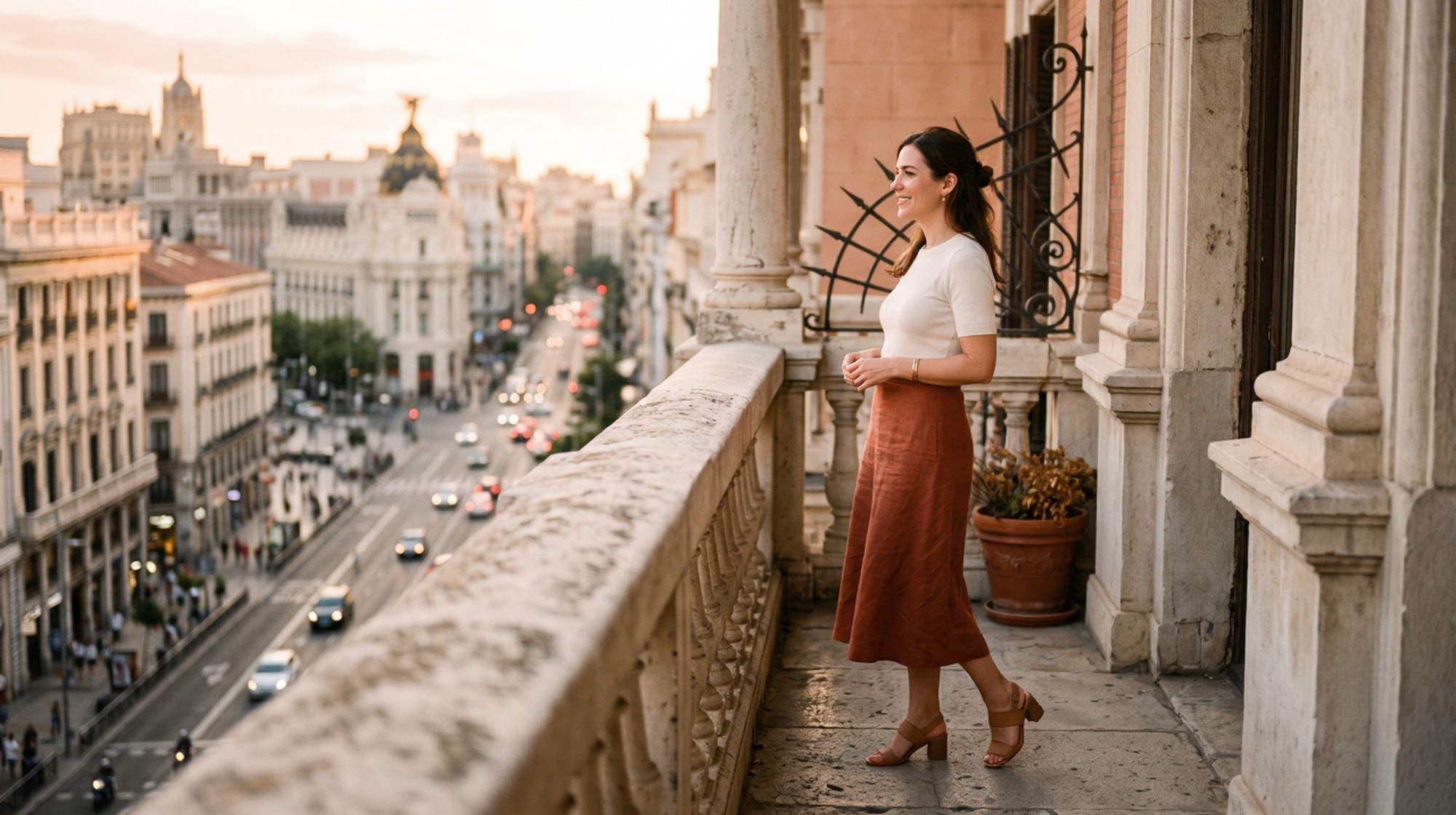
The earth beneath the city’s parks and the baked clay tiles on countless rooftops produce this warm, deep orange-red. It is the colour of Madrid at two in the afternoon when the sun turns everything to fire. Wearing terracotta here looks instinctive rather than deliberate.
Gran Vía Ivory
The pale stone facades of the grand boulevard bleach to a warm ivory in the sunlight. Far more interesting than flat white. Ivory sits beautifully against terracotta and reads as effortlessly polished on the streets around the Paseo del Arte.
Retiro Forest Green
The Parque del Retiro provides this deep, shadowed green — cool, slightly desaturated, the exact colour of the holm oak canopy in late summer. It functions as a serious evening neutral and grounds the warmer tones in the palette.
Ochre Castilla
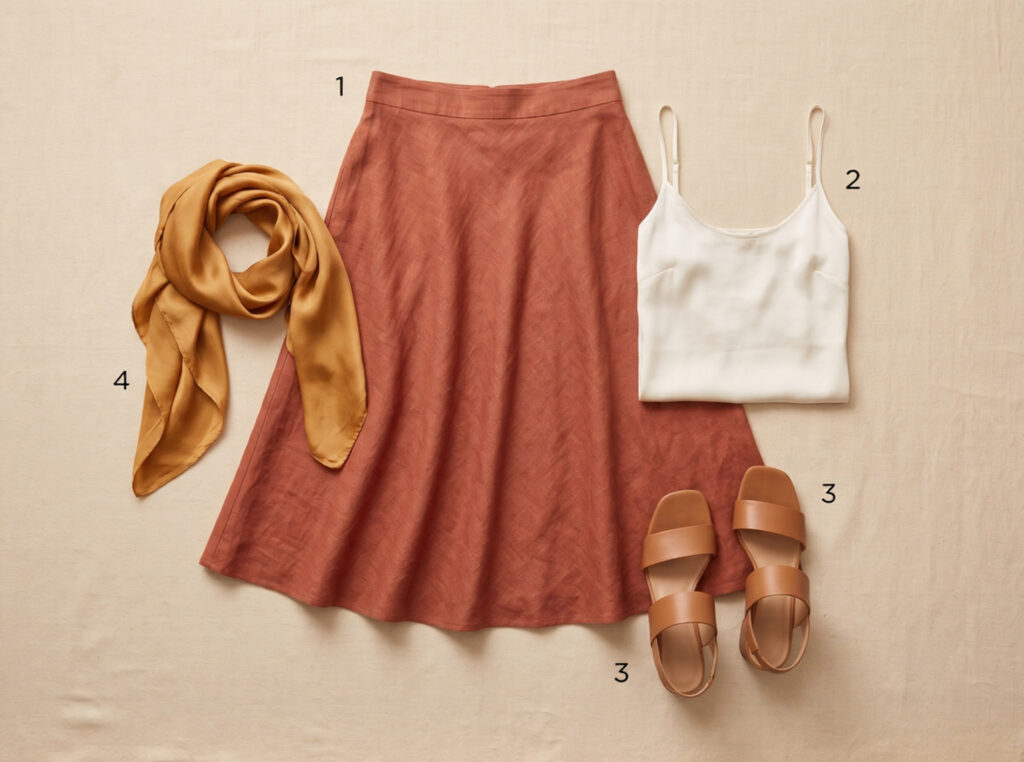
The colour of the Castilian plateau stretching north and west of the city. A warm, slightly orange-tinged yellow. Used as an accent in a scarf or a leather belt, it lifts an otherwise muted travel outfit and references the specific landscape that surrounds Madrid.
Museo Negro
Madrid wears black with complete authority. The art museum crowd, the evening restaurant crowd, the late-night crowd heading into Malasaña: all of them in black. It is not a safe choice here. It is the standard.
The Terrain Reality Check
Madrid is a walking city. The distances between landmarks are deceptive. Visitors routinely underestimate how far it is from the Reina Sofía to the Royal Palace on foot, or from Sol through Malasaña to the Prado. You will cover between eight and twelve kilometres per day if you are following a standard itinerary. The pavements are predominantly wide and flat but switch without warning to ornate hexagonal stone tiles in older neighbourhoods, which are slick when wet and uncomfortable under thin soles.
The summer heat is a genuine physical challenge. Temperatures regularly reach thirty-eight to forty-two degrees Celsius in July and August. The plateau has no coastal breeze to moderate the temperature. You need clothing that breathes aggressively and fabrics that do not trap heat against the skin. At the same time, every museum, bar, restaurant, and metro carriage is air-conditioned to near-Arctic levels. You will move constantly between furnace and freezer. A lightweight layer you can fold into your bag is as essential as sunscreen.
In spring and autumn, the elevation produces evening temperatures that drop sharply after sunset. A warm afternoon of twenty degrees becomes a cool evening of twelve without much warning. Winter in Madrid is cold by any southern European standard: frost is common and the wind off the Sierra makes the cold feel sharper than the numbers suggest.
The Region-Specific Pieces
1. The Linen Midi Skirt in Terracotta
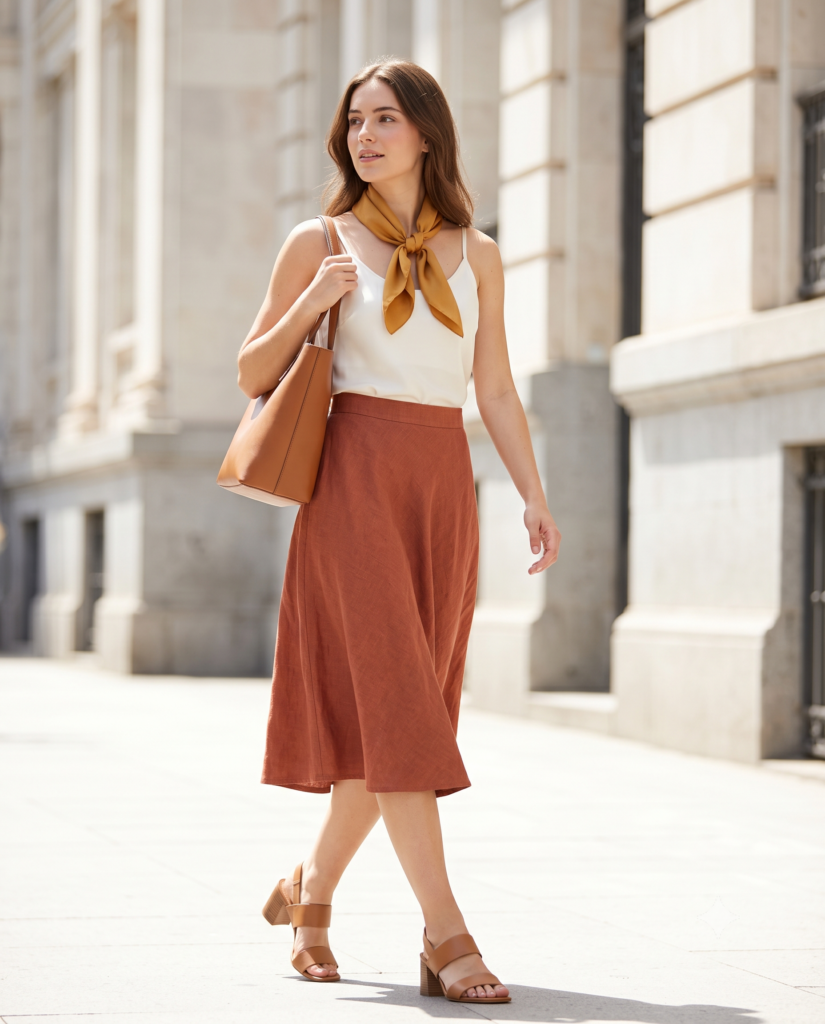
This is Madrid’s signature daytime piece. A mid-length linen skirt in the Retiro terracotta shade covers all the demands the city makes: it breathes in the heat, provides the ankle coverage appropriate in churches and museums, and looks genuinely polished on the Paseo del Arte. Choose a mid-weight linen with some body to it. The terracotta colour photographs beautifully against the pale stone of the city.
2. The Fitted Black Blazer
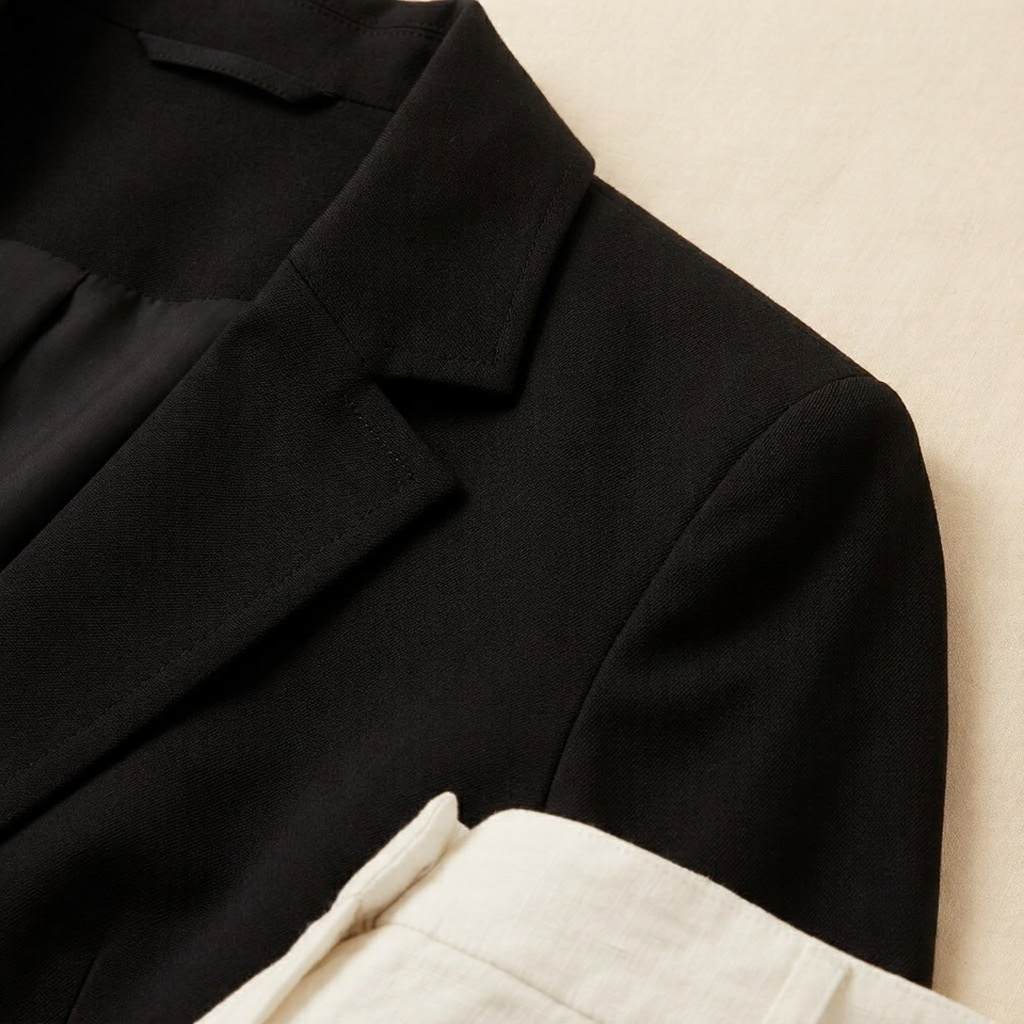
Madrid’s evening dress code is best cracked with a structured blazer. A fitted, slightly cropped blazer in a medium-weight fabric sits correctly over everything from a silk top to a simple linen dress. It converts a casual daytime outfit into something that meets the expectations of Madrid’s better restaurants and handles the cool evenings between March and May. Black is the only right choice here.
3. The Low Block-Heel Leather Sandal
This city walks eight kilometres a day on it. The sandal must have a block heel or a thick flat sole no thinner than two centimetres. Tan or cognac leather reads as the local choice. Wide straps across the ball of the foot distribute weight correctly and hold up over a long day without blistering on the hexagonal stone of the older streets.
4. The Silk or Modal Camisole
A sleeveless top in silk or modal is the workhorse of a Madrid summer wardrobe. It layers under the blazer for evenings, works alone during the brutal midday hours, and tucks into the linen skirt or a pair of tailored trousers with equal ease. Modal holds up better in the heat and washes more easily than silk. The fit should be close but not tight.
5. The Structured Tote in Tan Leather
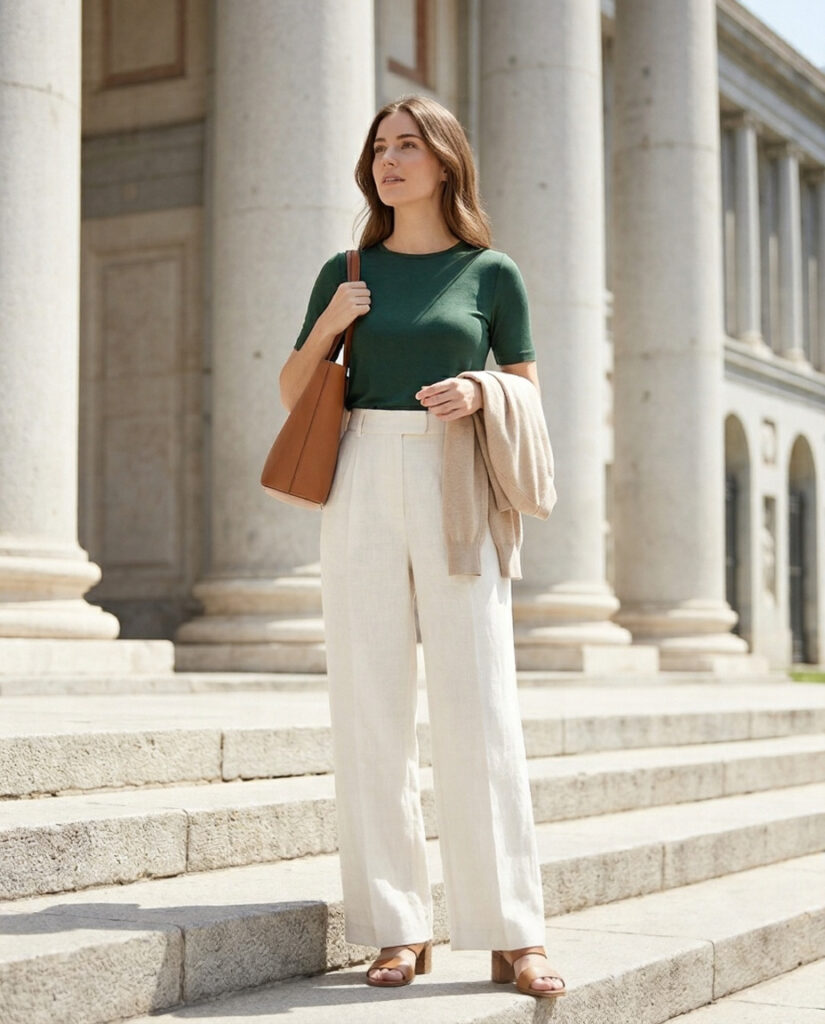
Madrid’s museum circuit requires a bag large enough to carry a water bottle, sunscreen, a folded city map, and a compact cardigan simultaneously. A structured leather tote in tan sits at the intersection of practicality and the city’s dress standards. Avoid canvas and nylon: both read as tourist gear here.
6. The Tailored Wide-Leg Trouser in Ivory or Ochre
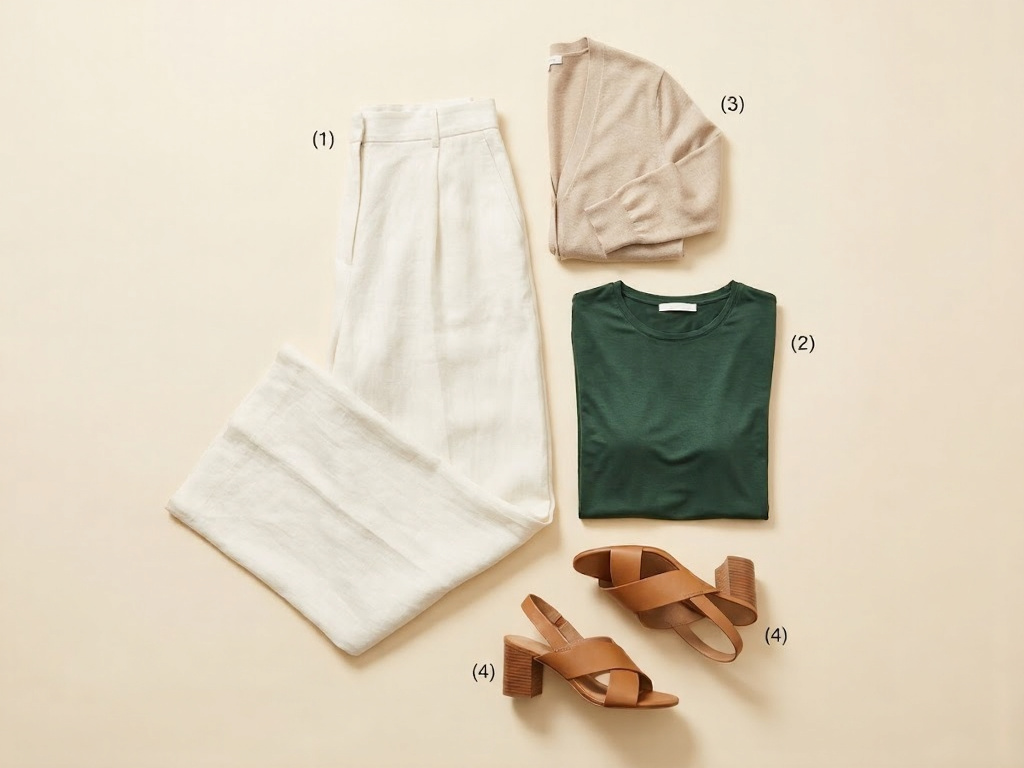
For cooler months, or for any evening in summer when the terracotta skirt has done its daytime work, a wide-leg trouser in ivory or ochre completes the wardrobe. Madrid’s creative districts in Chueca and Malasaña respond well to a strong silhouette. The wide leg reads as current and deliberate.
The Cultural Register
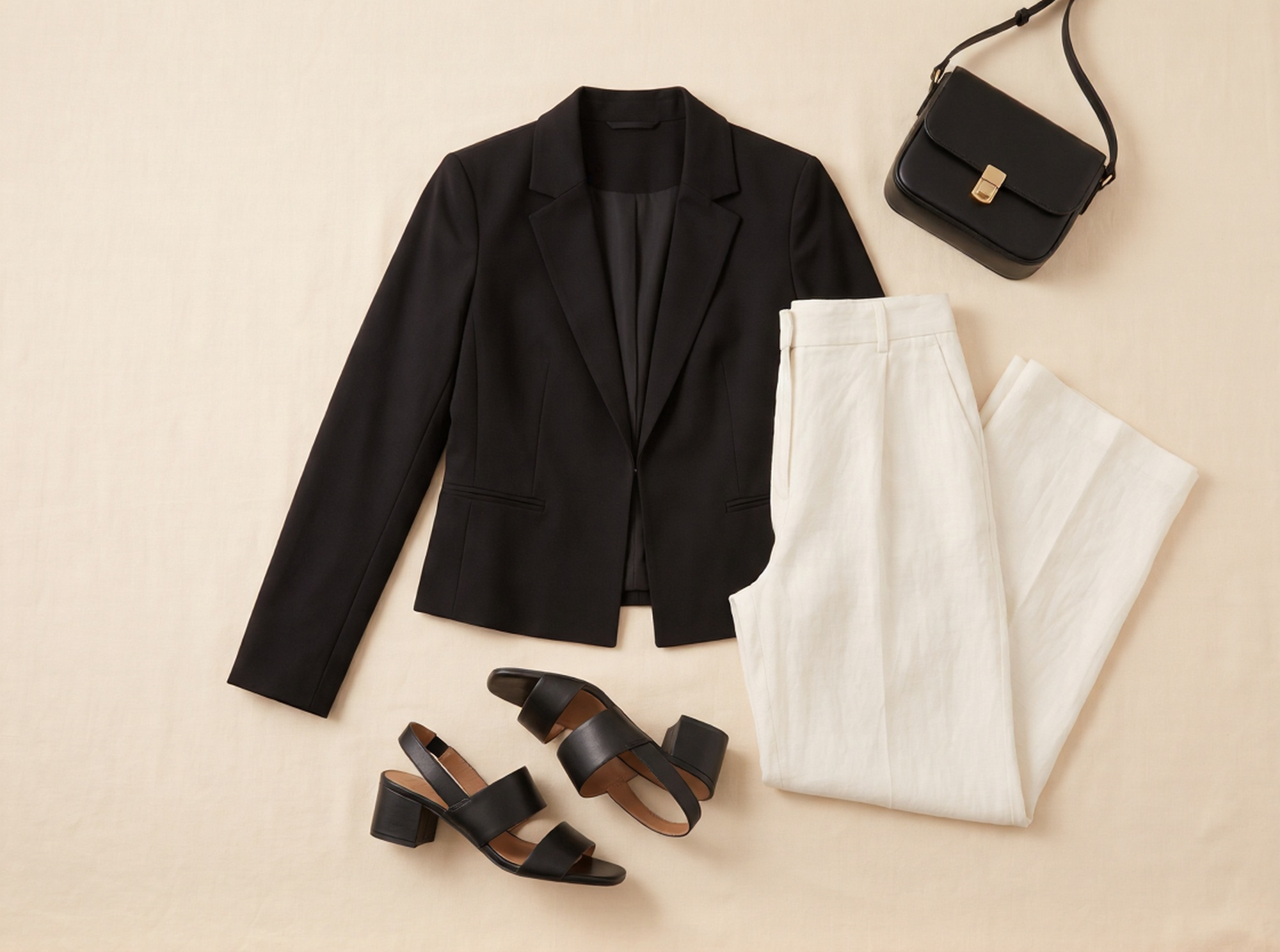
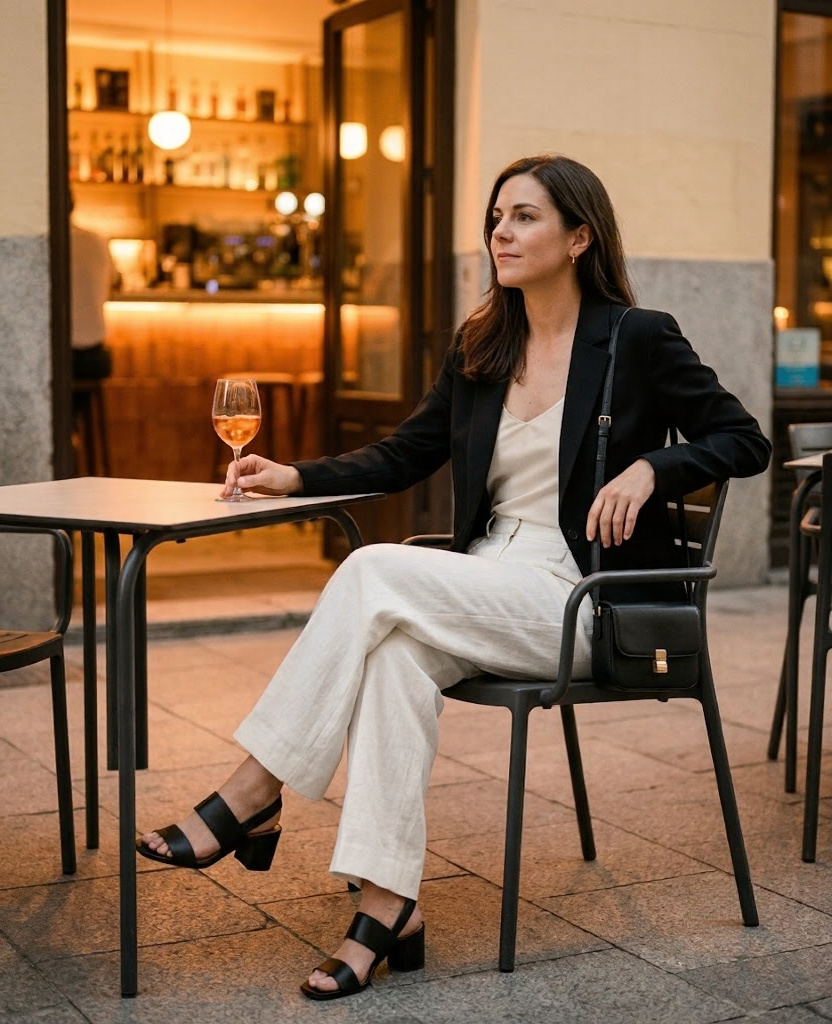
Madrid dresses for itself, not for tourists. The city has a strong, internally consistent style culture that prioritises polish and intentionality. Casual is not the same as careless. A pair of white linen trousers and a silk camisole is a casual Madrid outfit. A pair of athletic shorts and a branded sports hoodie is a tourist outfit. The distinction matters on the better terraces and in the more serious restaurants.
The city’s dress rhythms follow the Spanish day. Lunch runs from two to four and is the main meal: restaurants fill and the dress standard rises accordingly. Dinner begins at nine and often runs past midnight. The later it gets, the more dressed the crowd becomes. Match this energy.
Museums and cultural sites require covered shoulders. The Prado and the Reina Sofía do not enforce strict dress codes, but arriving in a crop top draws uncomfortable attention. Keep a lightweight scarf or a compact cardigan in your bag at all times. Religious sites, including the Catedral de la Almudena, require covered shoulders and knees.
The Fabrics for This Microclimate
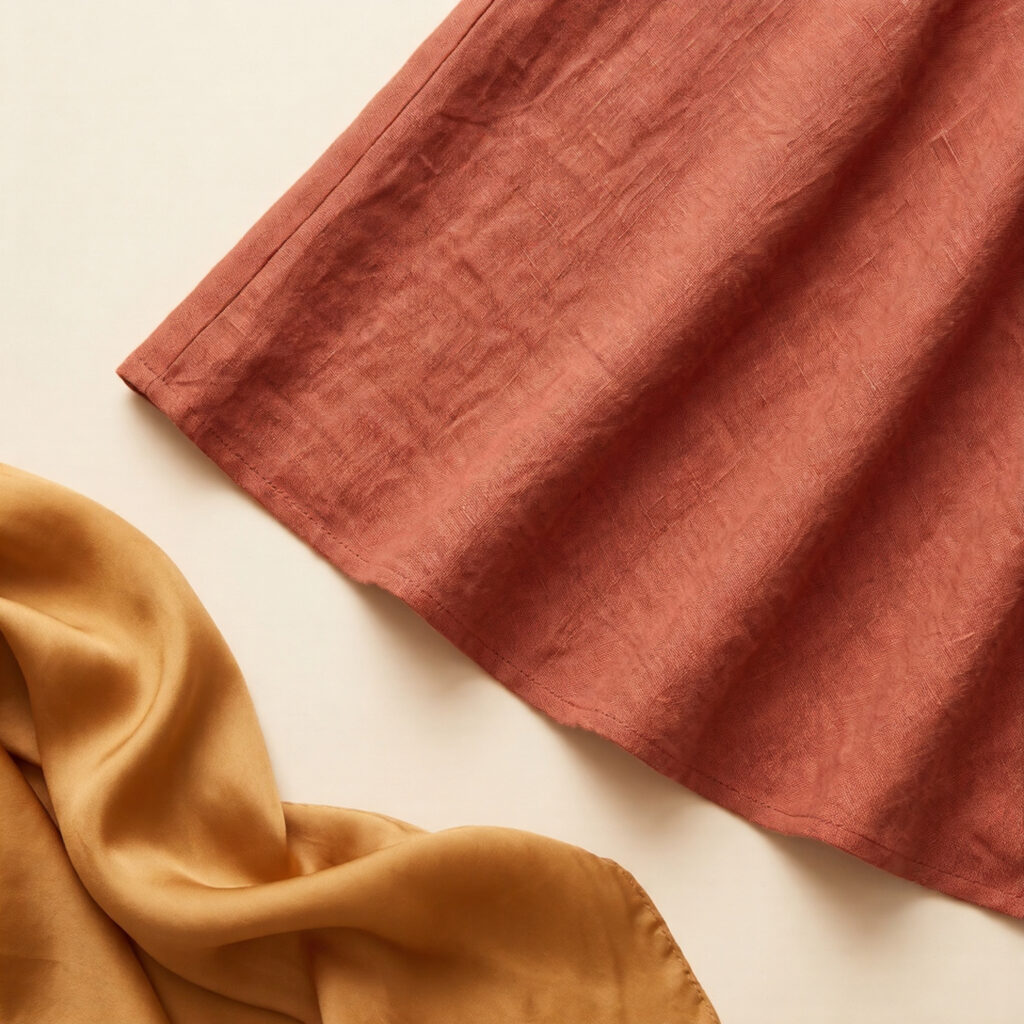
Linen is the primary summer fabric. Not a thin, flimsy linen but a mid-weight garment-grade linen that holds its shape after the first wash. Linen breathes in a way cotton cannot match at Madrid temperatures. It wicks moisture and dries rapidly in the dry plateau air. It creases, but Madrid’s linen-wearing culture accepts this as part of the fabric’s character.
Modal and Tencel are the intelligent alternatives for pieces that need to move from day to evening without a complete change. They drape smoothly, resist odour better than cotton, and look more refined than linen in a candlelit restaurant.
Avoid synthetics and polyester entirely in summer. Synthetic fabrics trap heat against the body and produce a visible sheen in the sun that reads as cheap on Madrid’s streets. In winter, a merino wool base layer under the blazer handles the cold efficiently without bulk.
A compact cotton or merino cardigan earns its space in your bag every day in spring and autumn: stuffed into the tote in the morning and pulled out the moment the Prado’s air conditioning reaches you.
The One Piece You’ll Wish You’d Brought
A lightweight linen blazer in ivory or cream. Most visitors pack a heavy cotton or structured blazer that works beautifully for an evening but becomes impossible during Madrid’s afternoon heat. A linen blazer provides the cover and the polish the city demands in the evening while remaining wearable in thirty-five degree heat. It folds to almost nothing in a structured tote. In summer, it solves the museum air-conditioning problem, the restaurant dress code problem, and the cool late-evening problem simultaneously.
The One Piece You Won’t Need
A maxi dress with thin spaghetti straps. Madrid’s heat makes this feel like the obvious choice and the dress code makes it feel like the bold one. In practice it fails on both counts. The cultural register of the city’s evening culture requires something more structured. Thin straps without additional coverage will leave you shivering in every air-conditioned space. The linen midi skirt and a camisole combination provides the same visual lightness with far more versatility. Leave the spaghetti-strap maxi for the beach.
Planning Your Full Spain Trip?
This guide covers what Madrid specifically demands: the intensity of the plateau heat, the formal evening culture of Chueca and Salamanca, and the serious museum and gallery circuit of the Paseo del Arte. For a complete view of dressing across Spain, the Complete Guide to Spain covers the cross-regional strategy. If your itinerary moves from Madrid to the coast, the Barcelona capsule wardrobe guide covers the Catalan capital’s very different register. For a wardrobe built around both cities together, the Spanish Summer Capsule is the foundational resource.
Your Madrid Capsule: The 12 Pieces
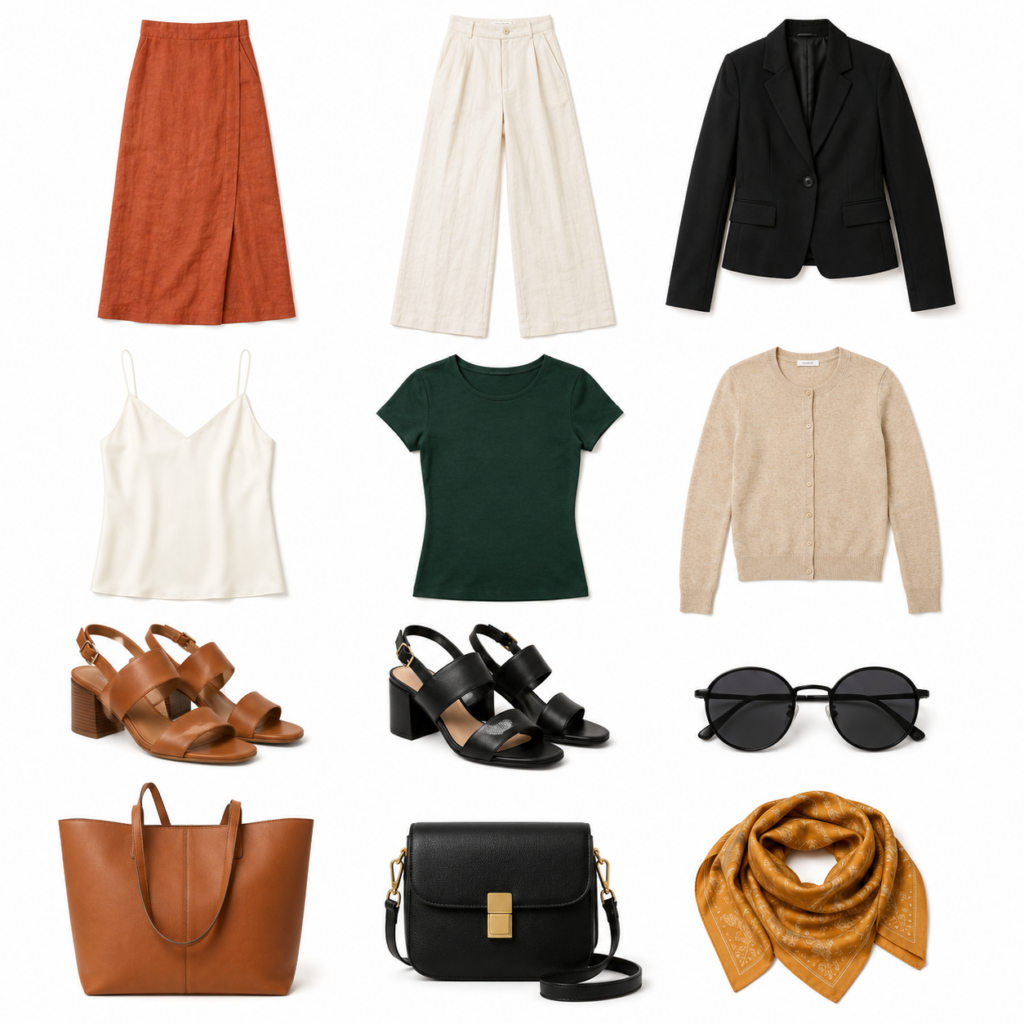
Shop here:
- Terracotta linen midi skirt > GRACE KARIN Pleated Midi Skirt for Women
- Ivory wide-leg linen trousers Sampeel Wide Leg Pants for Women
- Fitted black blazer (medium weight) LookbookStore Womens Blazer
- Ivory silk or modal camisole LilySilk Womens Silk Camisole
- Fitted forest green modal short-sleeve top Zeagoo Womens Tops Short Sleeve Tops
- Compact beige knit cardigan (cotton or merino) Urban CoCo Women’s Knit Cardigan
- Tan block-heel leather sandals Amazon Essentials Women’s Two Strap Heeled Sandals
- Black block-heel leather sandals Amazon Essentials Women’s Two Strap Block Heel Sandal
- Round black sunglasses (UV400) Vintage Round Polarized Sunglasses for Women
- Structured tan leather tote Hobo Bags for Women / Leather Shoulder Handbag
- Small black leather crossbody bag BOSTANTEN Vegan Leather Crossbody Bags for Women
- Ochre silk square scarf 100% Mulberry Silk Scarf
Madrid is the densest and most demanding chapter of a Spain itinerary. Get it right here and the rest of the country becomes easier. The Barcelona capsule wardrobe guide covers the shift from plateau formality to coastal ease. For the south, the Seville capsule wardrobe guide addresses Andalucía’s specific heat and culture. The Granada capsule wardrobe guide adds the Alhambra and the mountain context. For a complete cross-Spain wardrobe strategy, the Spanish Summer Capsule and the Complete Guide to Spain tie everything together.
Frequently Asked Questions
Pack lightweight linen and cotton in breathable cuts. Madrid regularly hits 35-38°C from June through August, with dry heat that intensifies by midafternoon. Bring a wide-brim hat, sunglasses, and a refillable water bottle; the city’s dry climate makes hydration matter more than you’d expect.
Yes, more than most visitors expect. Madrid sits at high elevation and winter nights regularly drop near freezing from December through February. Pack a real coat, not just a light jacket, along with a scarf and closed shoes for cold mornings and evenings.
Madrid’s dinner culture runs smart-casual to elevated, especially since locals eat late and dress with intention. A well-fitted dress or tailored separates work better than casual wear for most restaurants. Save your most casual pieces for daytime sightseeing instead.
Six to seven outfit combinations from a 10-12 piece capsule cover a week comfortably. Build around neutral bottoms that pair with several tops, and plan one elevated option for a late dinner or a night out, since Madrid’s evening culture runs later than most cities.
No strict dress code applies, but comfortable smart-casual works best for a full museum day. Prioritize walking shoes since both museums involve significant time on your feet, and bring a light layer; the galleries run cooler than the streets outside.