
*This post may contain affiliate links for which I earn commissions.*
Quick Summary
Pack a 12-piece Seville capsule anchored by an ivory cotton voile wrap dress, a saffron linen midi skirt, and a flat rubber-soled leather sandal built for forty-five-degree heat and slick marble floors. A wide-brim straw hat and an oversized linen shirt cover the Real Alcazar’s sun and shoulder rules. Skip the denim jacket. A silk scarf handles the warm evenings better.
The Regional Portrait
Seville is the hottest city in continental Europe. This is the foundational fact and the one around which every other decision in this guide is made. In July, the temperature regularly exceeds forty-five degrees Celsius. The Guadalquivir river sits at the western edge of the city in a broad, slow curve, and the air above it is still and thick. The streets of the Santa Cruz neighbourhood narrow to channels of shade between white-washed walls so close together that neighbours on opposite sides could lean out and touch hands across the lane.
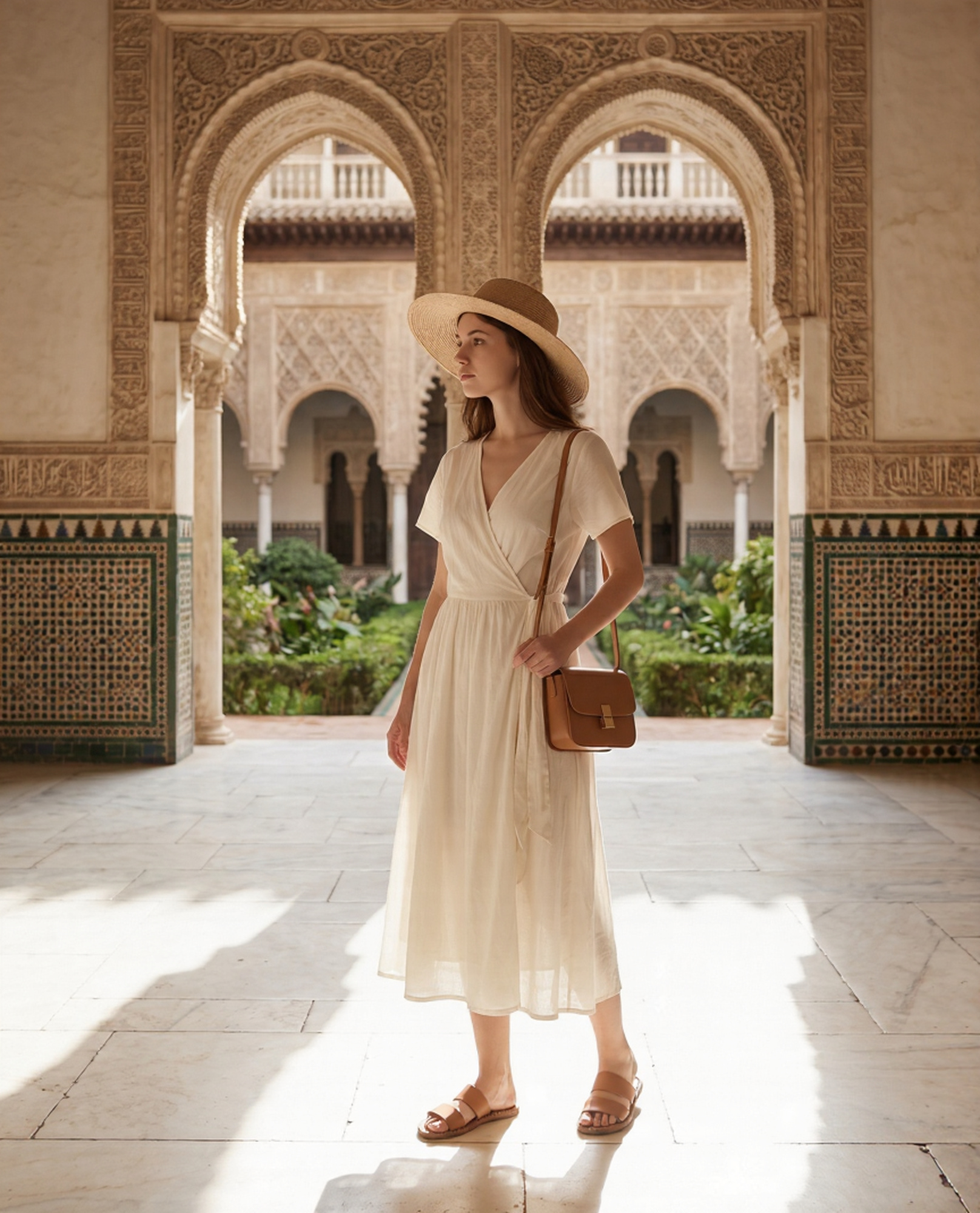
The city is relentlessly beautiful in a way that demands your full attention despite the heat. The Real Alcazar is a layered confection of Moorish tilework and Mudejar plasterwork that takes three hours to move through properly. The Cathedral of Seville is the largest Gothic cathedral in the world, and its interior, even in summer, holds a stone coolness that makes the transition back out into the sun feel like stepping into a furnace. The Triana neighbourhood across the river is ceramic-tiled and colour-saturated, its market stalls and tapas bars running at full volume from mid-morning until well past midnight.
The culture of the city organises itself entirely around the heat. Shops close between two and five in the afternoon. Lunch happens at three. Dinner does not start until ten at the earliest. The streets that were empty at noon fill again at nine in the evening when the temperature drops to a manageable thirty degrees and the city comes back to life. If you are fighting the heat by trying to compress a full day’s activity into the morning hours, you will exhaust yourself before the city even starts. Seville requires you to adopt its pace. Your wardrobe must support that: clothes light enough to wear for eighteen hours straight, through the heat and through the evening, without a change.
The Regional Colour Departure
Seville’s palette is more saturated than any other city in Spain. The Andalucian light is intense and the city has leaned into that intensity across centuries of decorative tradition.
Alcazar Saffron
The golden yellow of the Alcazar’s tile work and the orange blossom that covers the city in spring bleaches to a deep, warm saffron in the summer sun. This is Seville’s most distinctive colour. A saffron or deep yellow linen piece looks as though it was made for these streets and this light. It is not a subtle choice. Seville does not do subtle.
Triana Terracotta
The ceramic tradition of the Triana neighbourhood produces a specific, slightly orange-tinged terracotta that appears on every tiled surface, doorstep, and market stall in the district. This is a deeper, warmer terracotta than the Madrid or Barcelona versions. It is the colour of handmade Spanish ceramic at its most saturated.
Santa Cruz White
The white-washed walls of the Santa Cruz neighbourhood reflect the sun with such intensity that the white itself appears to generate light. Ivory or cream does not capture this. The colour is a full, clean white with a very slight warm undertone from the stone beneath the plaster. A white linen or cotton voile piece worn against these walls disappears into the architecture in the most pleasing possible way.
Guadalquivir Ochre
The slow river at the western edge of the city carries the colour of the Andalucian soil: a deep, warm ochre with a slightly greenish undertone from the olive groves upstream. This colour in a lightweight scarf or a linen trouser serves as the anchor neutral for the wardrobe, grounding the saffron and terracotta without dulling either.
Flamenco Black
Seville is the home of flamenco and the culture of the art form permeates the city’s approach to colour. Black is worn here with the same authority as in Madrid but with more drama. A black linen piece in Seville is never understated: it is worn in the knowledge that the heat and the golden light will make it look more deliberate, not less.
The Terrain Reality Check
The terrain of Seville is the simplest of any Spanish city: it is almost entirely flat. The Guadalquivir plain on which the city sits extends to the horizon in every direction without a hill or gradient to trouble you. This flatness is a significant physical advantage when you are walking in forty-degree heat: there is no elevation to climb, no incline to defeat you. The distances between major sites are manageable on foot and the shade routes through the narrow Santa Cruz lanes make the journey more bearable than the direct sun routes along the main avenues.
The surface underfoot is predominantly smooth marble, polished stone, and ceramic tile. All three become extremely slick in any moisture, including the condensation that forms on shadowed stone in the humid river air. A flat sandal with a rubber or textured sole is essential. The ornamental ceramic tiles outside the Plaza de Espana and on the doorsteps throughout Triana are beautiful and slippery. Avoid any leather sole on these surfaces.
The Real Alcazar and the Cathedral both involve extensive interior walking on stone floors that are hard on the feet after two hours. The Alcazar’s gardens add gravel paths and root-cracked stone surfaces. A sandal with some sole thickness and a secure strap across the foot handles all of these surfaces correctly. The Plaza de Espana is exposed and vast, with no shade at midday: any visit before ten in the morning or after seven in the evening is a fundamentally different experience from the same visit at noon.
The Region-Specific Pieces
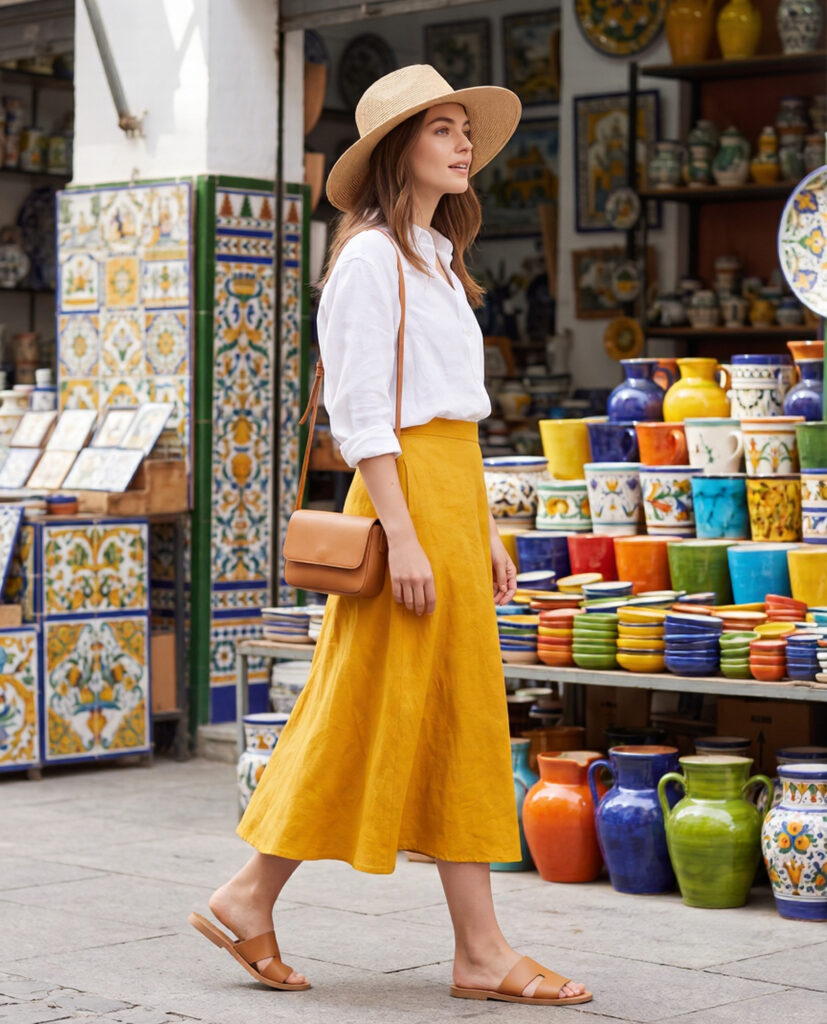
1. The Cotton Voile Midi Dress in Ivory or White
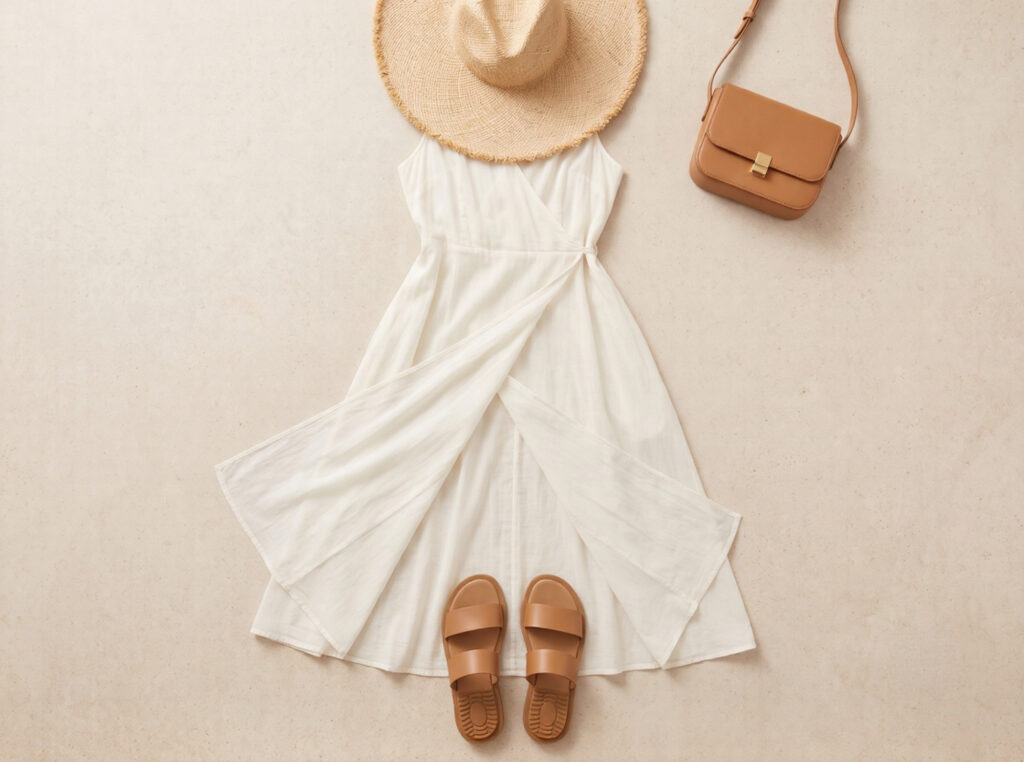
This is the single most important piece in a Seville wardrobe. Cotton voile is the only fabric that is simultaneously light enough to wear in forty-five degree heat, opaque enough to be appropriate in the Cathedral and the Alcazar, and refined enough to transition to dinner at ten in the evening. A mid-length cut covers the knees for heritage sites. The ivory version photographs against the white-washed Santa Cruz walls with extraordinary clarity. The relaxed wrap silhouette allows air to move around the body rather than trapping it against the skin.
2. The Saffron or Deep Yellow Linen Midi Skirt
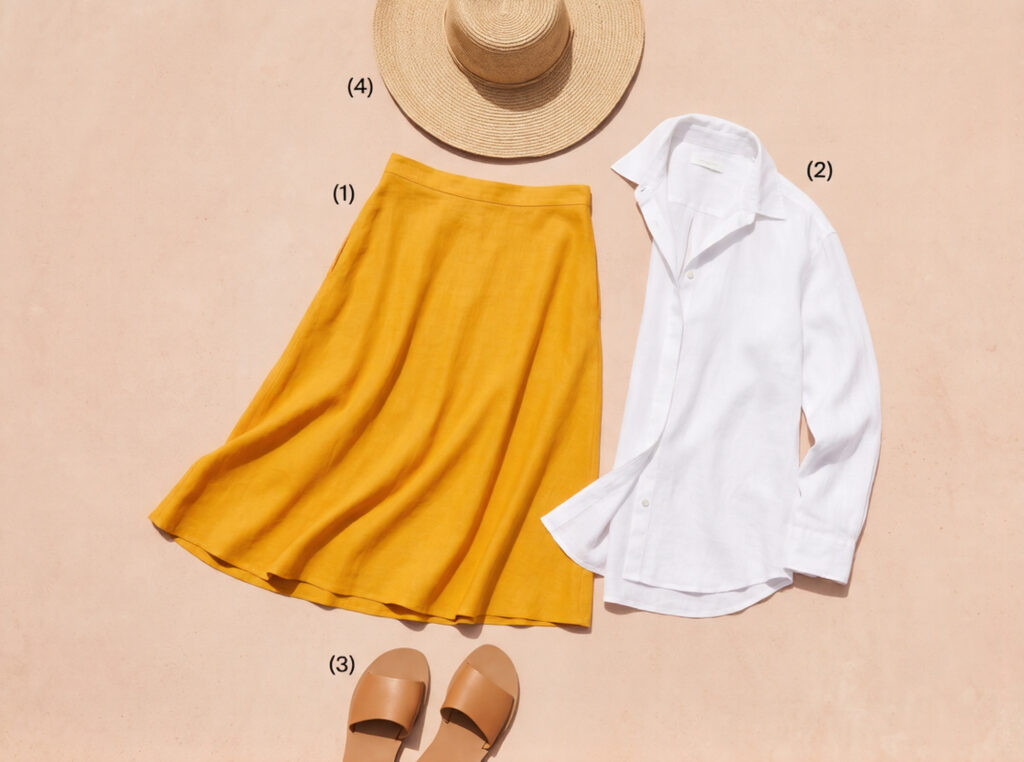
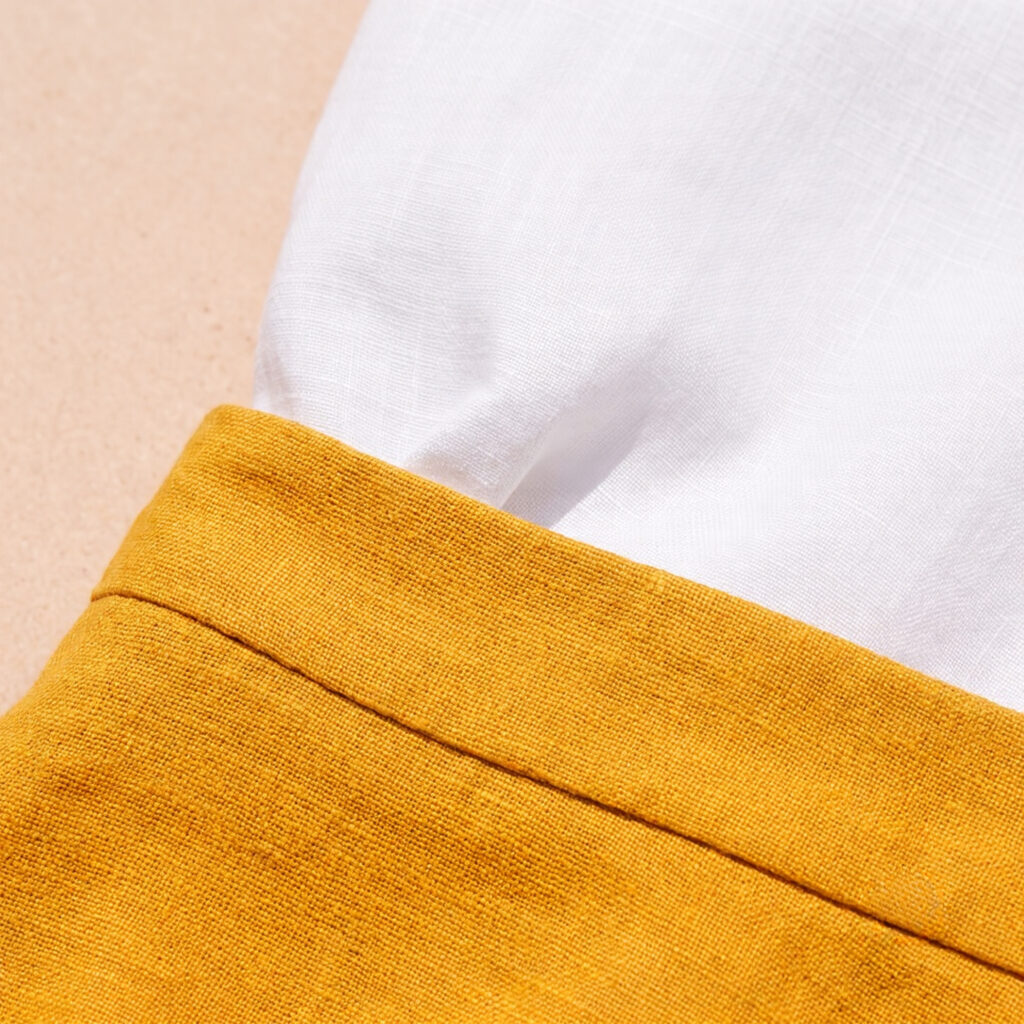
Seville earns a saturated colour piece in a way that more restrained cities do not. A saffron or deep yellow linen midi skirt in the Alcazar palette is the piece that announces you have understood the city’s chromatic register. It pairs with white or ivory above. In the morning light of the Santa Cruz lanes, it catches the golden reflections off the white walls and amplifies them. Do not pack this piece and leave it in the hotel room out of caution: Seville is the one city in Spain that demands you wear it.
3. The Flat Rubber-Soled Leather Sandal
The ceramic tiles and polished marble of Seville’s historic sites are slippery. A flat leather sandal with a rubber or textured sole is the only correct footwear for this city. The rubber sole grips the ornamental Triana tiles and the wet condensation-covered marble of the Cathedral floor. The leather upper keeps the foot cool in the dry heat. A wide strap across the ball of the foot prevents the sandal from shifting on smooth surfaces. Avoid minimalist thin-soled sandals: the marble floors of the Alcazar are hard and two hours on them without adequate sole thickness produces a specific kind of fatigue that shortens the afternoon.
4. The Oversized Linen Shirt in White or Ochre
An oversized linen shirt serves three purposes in Seville. Worn open over a voile dress or a swimsuit, it provides UV protection and a covered-shoulder solution for cathedral visits without requiring a full change of clothing. Tucked into the saffron skirt, it becomes a composed evening look. Worn belted with linen trousers, it functions as a complete daytime outfit for the cooler months of April and October when Seville’s weather is at its most perfect. In white, it is a universal piece. In Guadalquivir ochre, it references the river landscape directly.
5. The Wide-Brim Natural Straw Hat
A wide brim is not optional in Seville between May and September. The UV index in the city in summer regularly reaches eleven and above. A brim of at least ten centimetres provides meaningful facial shade. Natural straw is the correct material: it breathes, it is light, and it compresses down into a large bag without structural damage if the weave is open enough. A hat with a chin cord holds in the Triana market when the light river wind comes off the Guadalquivir.
6. The Black Linen Wide-Leg Trouser
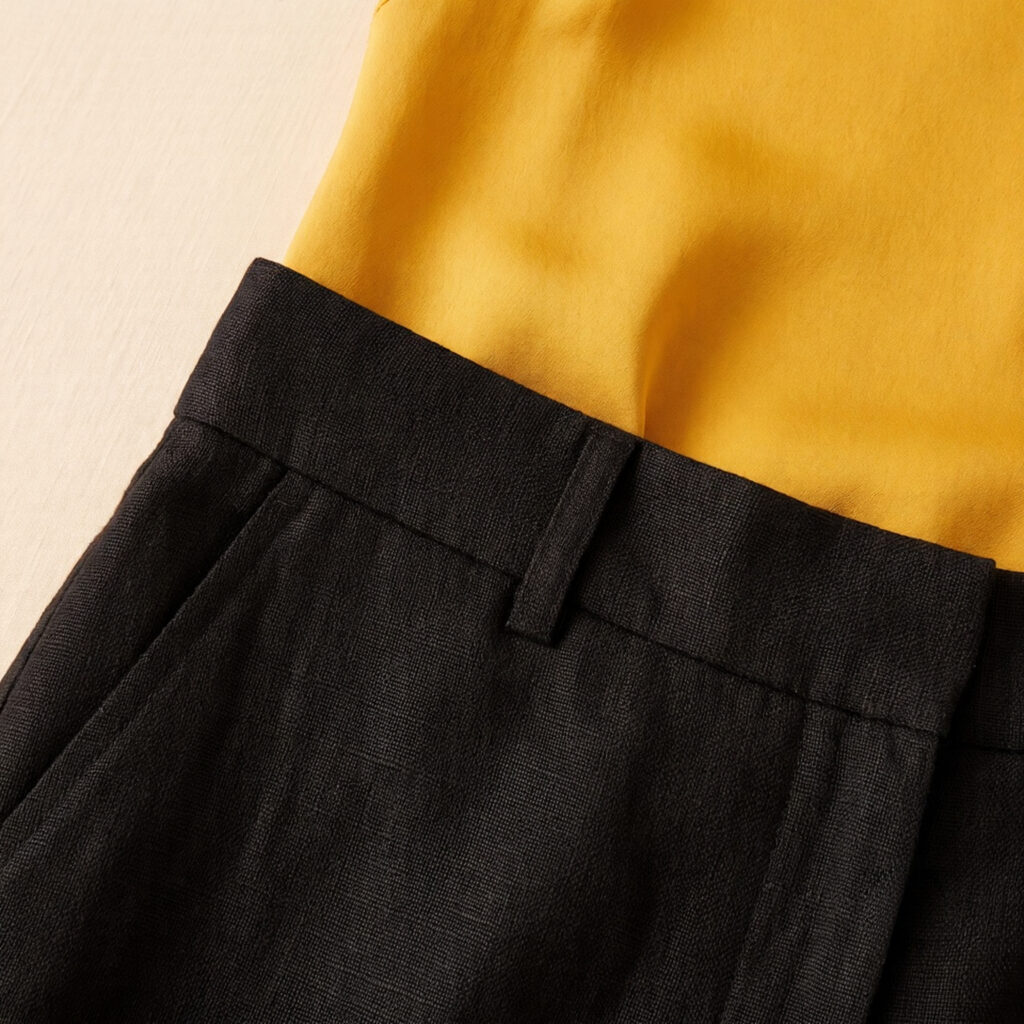
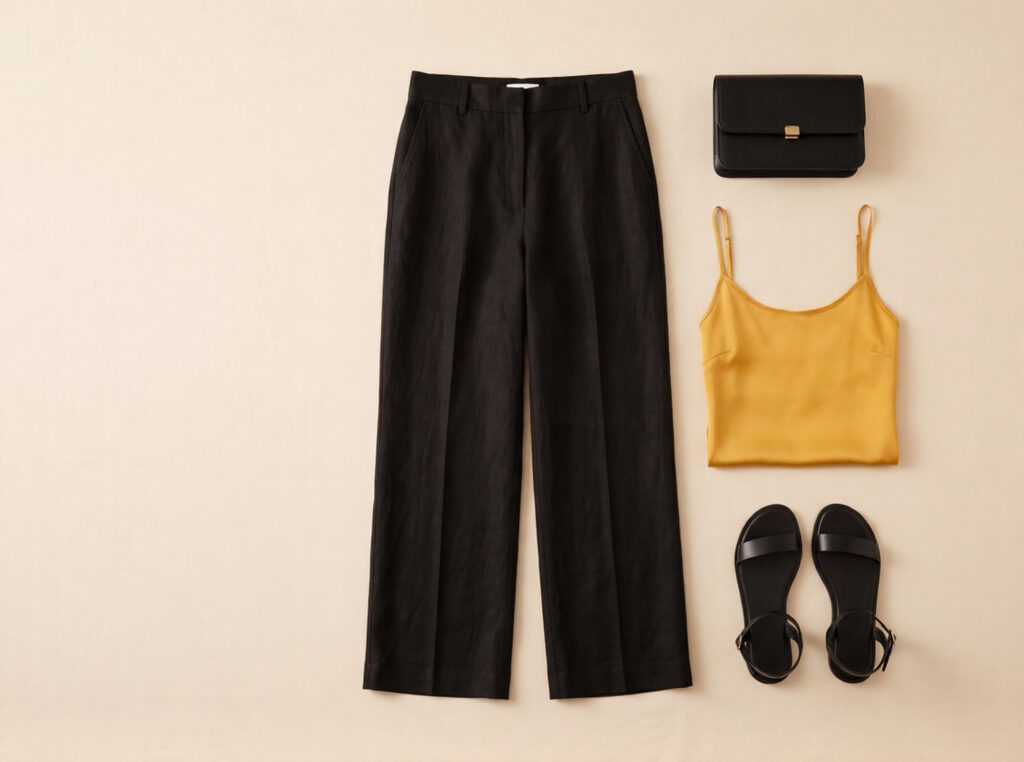
For the evening hours between nine and midnight, when Seville’s streets come back to life and the temperature drops to a point where something more structured than a voile dress feels appropriate, a black linen wide-leg trouser is the right choice. Black in the Seville flamenco tradition is never funereal: it is worn with colour above and with confidence. A wide-leg cut in a mid-weight linen drapes correctly in the warm evening air. Paired with a white linen shirt or a saffron camisole, it covers every evening situation the city presents.
The Cultural Register
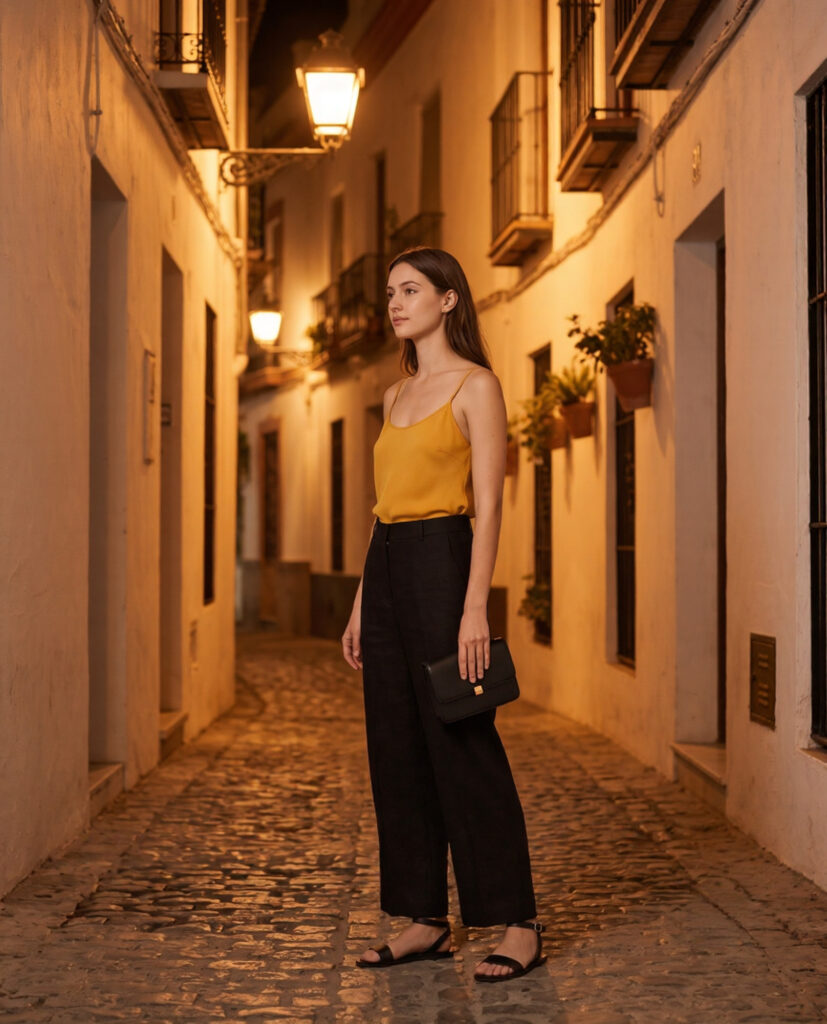
Seville’s dress culture is the most distinctive in Spain. The city has a tradition of formal occasion dressing, particularly around Semana Santa and the Feria de Abril, that produces a year-round expectation of polish and colour awareness. Sevillanas dress with intention in a way that is different from the composed precision of Madrid or the creative individuality of Barcelona. The intention here is chromatic and celebratory. Black and saffron together. White and terracotta. The combinations are bold and they are worn without hesitation.
The Catholic heritage of the city is visible in the dress standards at religious sites. The Cathedral requires covered shoulders and knees at all times and the requirement is enforced. The Real Alcazar is more relaxed but a covered-shoulder layer in your bag is advisable. The numerous small neighbourhood churches throughout Santa Cruz have no formal enforcement but entering in a crop top or sleeveless dress draws visible disapproval.
The tapas bar culture of the city is democratic in terms of dress: the same bar that hosts a family celebration at one table accepts a tourist in linen trousers at the next. But the evening paseo through the Santa Cruz lanes and along the Guadalquivir riverbank has a dress standard that rises with the temperature drop. At ten at night, the streets are full of people who have dressed deliberately for the evening air. A voile dress or a saffron skirt with a linen shirt worn open meets this standard without effort.
Triana has its own ceramic and craft market culture that operates at a lower register than the historic centre. More casual, more colour-positive, more accepting of tourist informality. But even here, the local women running the ceramic stalls and the tapas bars are dressed with a colour precision that the visitor who has thought about their wardrobe will notice and appreciate.
The Fabrics for This Microclimate
Seville requires the lightest fabrics you can find. Cotton voile is the primary choice: a plain-weave cotton so finely constructed that it is nearly transparent in a single layer. It weighs almost nothing against the skin, allows air to circulate freely, and dries within minutes when sweat-dampened. A voile dress in Seville is not a luxury choice. It is the practical one.
Linen in a mid-weight garment grade is the second tier. For trousers, skirts, and shirts that need to hold their shape over a full day, linen is more appropriate than voile. The open weave breathes, the fabric dries quickly in the dry Andalucian heat, and the natural stiffness of linen keeps it off the body rather than clinging to it when damp.
Avoid everything that is not natural fibre. Polyester, nylon, viscose, modal and Tencel all fail in the specific conditions of the Seville summer. Polyester and nylon trap heat. Viscose and modal, despite being marketed as breathable, become clammy in the combination of forty-degree heat and even moderate humidity. The only exception is a silk camisole or silk blouse for evening, where the specific drape and sheen of silk is worth the additional care required.
Dark colours in summer deserve a specific note. Black linen absorbs heat from the sun and becomes uncomfortable if you wear it in direct midday sun for extended periods. In Seville, black is an evening fabric. Reserve the black linen trousers for the hours after eight. During the day, the palette should stay in the whites, ivories, saffrons, and ochres that reflect rather than absorb the Andalucian light.
The One Piece You’ll Wish You’d Brought
A compact folding hand fan. This is not a wardrobe piece in the traditional sense but it functions as one in Seville. Every local woman over the age of twelve carries one. The hand fan is the cooling technology of the city: used on the shaded terrace while waiting for a table, inside the Cathedral where the stone coolness is not enough when the building is crowded, in the queue for the Alcazar at eleven in the morning. The craft fan shops of the Triana neighbourhood produce beautiful examples in painted wood and silk that cost very little and last indefinitely. It is the single item that signals, more than any clothing choice, that you have understood how this city manages its heat.
The One Piece You Won’t Need
A denim jacket. Every summer visitor who has looked at the forecast and noticed that Seville’s evenings occasionally drop to twenty-five degrees considers packing a denim jacket as a light layer. In practice, twenty-five degrees with warm Andalucian air and the residual heat radiating off the white-washed stone walls of Santa Cruz at midnight feels nothing like twenty-five degrees elsewhere. A silk scarf or a lightweight cotton overshirt takes up a fraction of the space, provides the same cover if you need it, and does not trap body heat the way denim does in a city that never truly cools down between June and September.
Planning Your Full Spain Trip?
This guide covers what Seville specifically demands: the most extreme summer heat in continental Europe, the flamenco-inflected colour culture of Andalucia, and the terrain of polished tiles and ceramic surfaces that require a rubber-soled flat. If your itinerary begins in Madrid, the Madrid capsule wardrobe guide covers the plateau heat and the formal evening culture of the capital. For the coastal register of Catalonia, the Barcelona capsule wardrobe guide addresses the humidity and the creative Catalan dress culture. For the full cross-Spain wardrobe strategy, the Complete Guide to Spain ties every destination together.
Your Seville Capsule: The 12 Pieces
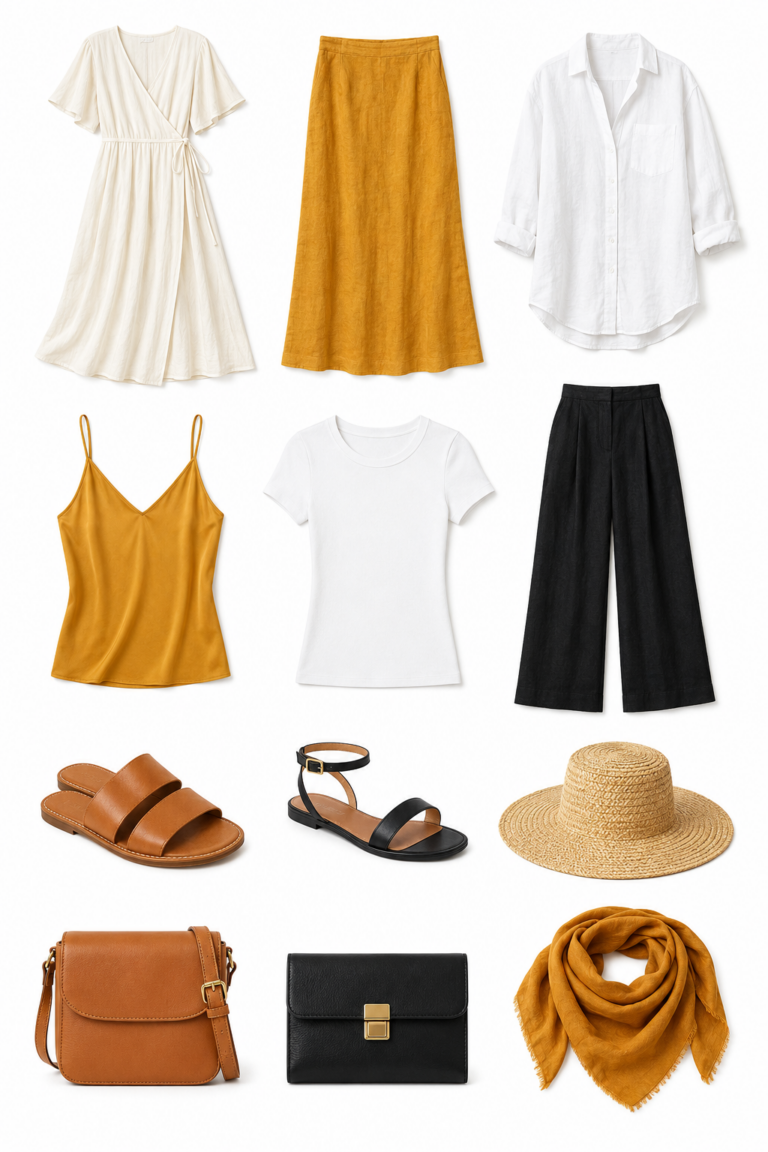
Shop here:
- Ivory cotton voile midi dress (relaxed wrap silhouette) > HOTOUCH Women’s Summer A-Line Midi Dresses
- Deep saffron yellow mid-weight linen midi skirt Kancy Kole Casual Cotton Linen Skirts
- Oversized white linen shirt > ZAAYO Women’s Cotton Linen V Neck Button Down Shirt
- Fitted saffron yellow silk or modal camisole > Zeagoo Women’s Silk Satin Camisole Tank Tops
- Fitted white cotton short-sleeve top > ANRABESS Women Short Sleeve Tops
- Black mid-weight linen wide-leg trousers > Sampeel Wide Leg Pants for Women
- Flat tan leather sandals with rubber sole > Herstyle Flat Sandals for Women
- Flat black leather sandals with ankle strap > Flat Sandals for Women Dressy
- Wide-brim natural woven straw hat > FURTALK Womens Sun Straw Hat UV Protection Travel Packable Foldable Brim
- Small structured tan leather crossbody bag > SG SUGU Small Quilted Crossbody Bag
- Small structured black leather clutch > KKXIU Women Elegant Faux Leather Envelope Clutch
- Deep ochre cotton or linen square scarf > 100% Mulberry Silk Scarfs for Women
Seville is the most colour-committed and heat-demanding destination in Spain. Get the fabric weight right and the palette right and the city gives you everything. Get either wrong and it is a long, uncomfortable week. From Seville, the Andalucian itinerary moves east to Granada. The Granada capsule wardrobe guide covers the Alhambra, the Albaicin’s steep lanes, and the sharp temperature drop that comes with the Sierra Nevada altitude. For the complete picture of Spain by region, the Complete Guide to Spain and the Spanish Summer Capsule provide the cross-destination strategy. The Madrid capsule wardrobe guide and the Barcelona capsule wardrobe guide complete the northern half of the itinerary.
Frequently Asked Questions
Five days in Seville needs six to seven outfit combinations built from a 10-12 piece capsule. Seville’s heat means lightweight, breathable pieces you can remix rather than distinct daily looks. Plan two evening options for flamenco shows or late dinners, and one modest layer for cathedral visits.
Pack linen and cotton in light colors. Seville regularly hits 40°C in July and August, so breathable natural fibers matter more than style. Bring a wide-brim hat, sunglasses, and a light scarf for sun coverage. Skip anything synthetic; it won’t breathe in that heat.
Yes, for cathedral and church visits. Seville Cathedral and smaller religious sites expect shoulders and knees covered. Pack one lightweight cardigan or scarf you can layer over sundresses. Casual sightseeing and restaurants have no dress code beyond normal city-appropriate clothing.
Smart-casual works well; most tablaos don’t enforce a formal dress code. A simple dress or elevated separates suit the setting without overdressing. Skip flip-flops or activewear, since the venues are small and intimate, but you don’t need anything more formal than everyday elegant.
It’s manageable with the right approach. Plan sightseeing for morning and early evening, rest indoors during the midday peak, and prioritize breathable fabric and sun protection over style. Many visitors find shoulder season (April-May, October) more comfortable if summer heat is a concern.