
*This post may contain affiliate links for which I earn commissions.*
Quick Summary
Pack a 12-piece Granada capsule anchored by a flat tan leather ankle boot, a lightweight merino top, and a rust linen midi skirt built for the Alhambra’s cobbled approach and a 25-degree daily temperature swing. Add a compact cashmere wrap for the Albaicín evening chill and a packable down gilet for spring or autumn trips. Skip hiking boots. A leather ankle boot handles every surface here.
The Regional Portrait
Granada sits at 738 metres above sea level, higher than Madrid, at the foot of the Sierra Nevada. The city’s elevation is the fact that separates it from Seville, Cordoba, and the other Andalucian cities and makes it climatically distinct from everything else in southern Spain. In summer, the days are hot but the nights are cold. A July evening in Granada drops to fifteen degrees after sunset, sometimes lower. The thermal difference between two in the afternoon and ten at night can be twenty-five degrees. No other major city in Spain asks this of your wardrobe in a single day.
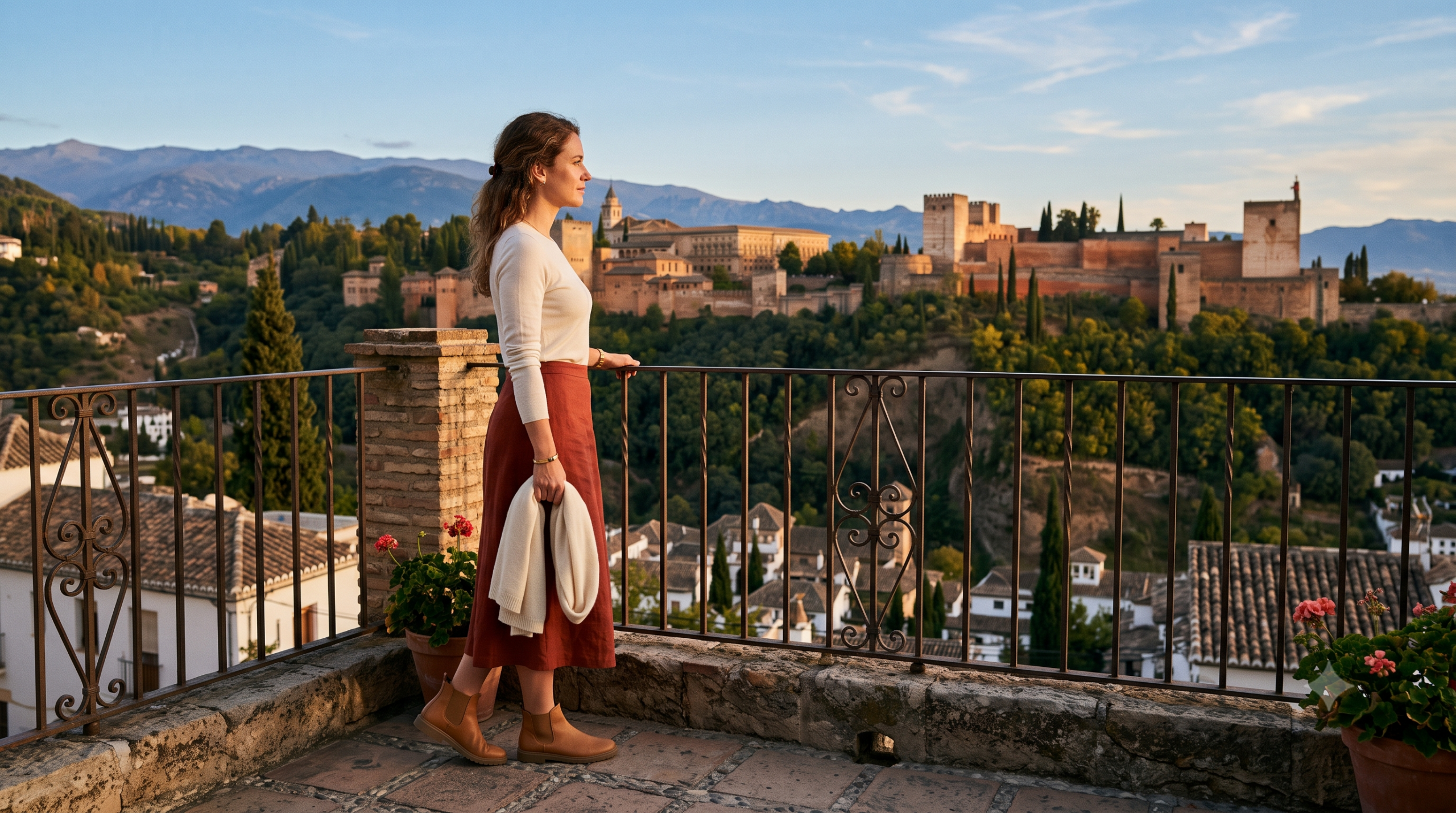
The Alhambra is the reason most people come to Granada and it demands to be understood on its own terms before you arrive. The palace complex sits on a forested hill above the city, the Sabika hill, surrounded by elm and cypress trees planted by the Duke of Wellington in the nineteenth century. The approach on foot from the Plaza Nueva takes thirty minutes up a steep cobbled lane through the trees. The palace itself covers a significant area of the hilltop and a proper visit takes four to five hours. You will cover three to four kilometres inside the complex alone, on uneven stone surfaces and sloped paths, in whatever weather the Sierra Nevada decides to provide.
The Albaicin neighbourhood occupies the hill directly opposite the Alhambra, separated from it by the Darro river gorge. It is the old Moorish quarter of the city: a dense network of steep, narrow, cobbled lanes rising from the river to the Sacromonte caves and the mirador terraces at the top. Walking the Albaicin from bottom to top is an ascent of over 200 metres on irregular stone. The views from the Mirador de San Nicolas at sunset are the best view of the Alhambra in existence. Getting there requires a 30-minute uphill walk on surfaces that eliminate any footwear that is not completely flat and completely secure.
Granada is also the most North African-influenced city in Spain. The Alcaiceria silk market in the old medina and the tea houses of the Calle Calderia Nueva operate at the intersection of Andalucian and Moroccan culture. The city’s craft tradition, its food, its architecture, and its social rhythms carry that dual heritage with a lightness that makes the neighbourhood feel distinct from every other part of the country.
The Regional Colour Departure
Granada’s palette is earthier and more mineral than Seville’s saturated ceramic tradition. The Sierra Nevada provides the underlying colour logic.
Alhambra Rust
The towers and walls of the Alhambra are built from a local red-clay stone that oxidises to a deep, warm rust in the late afternoon sun. This is the colour the palace is named for in Arabic: Al-Hamra, the red one. A rust or burnt sienna linen piece against the pale stone of the Albaicin walls produces the same colour relationship the city has been working with for seven centuries.
Sierra Stone Grey
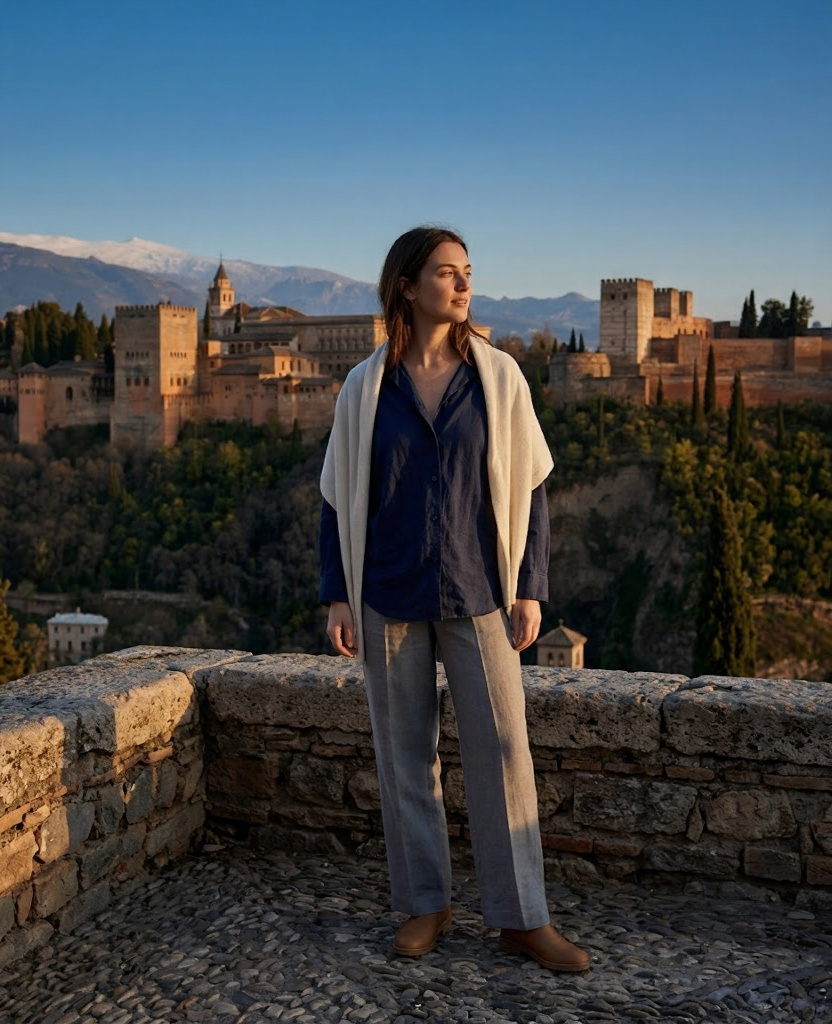
The limestone and schist of the Sierra Nevada produces a cool, slightly blue-tinted grey that appears on the mountain faces above the city when the snow retreats in late spring. This grey serves as the primary neutral for Granada’s wardrobe: a fine merino knit or a lightweight wool blend in this colour sits against the Alhambra rust and the Nasrid ivory with complete authority.
Nasrid Ivory
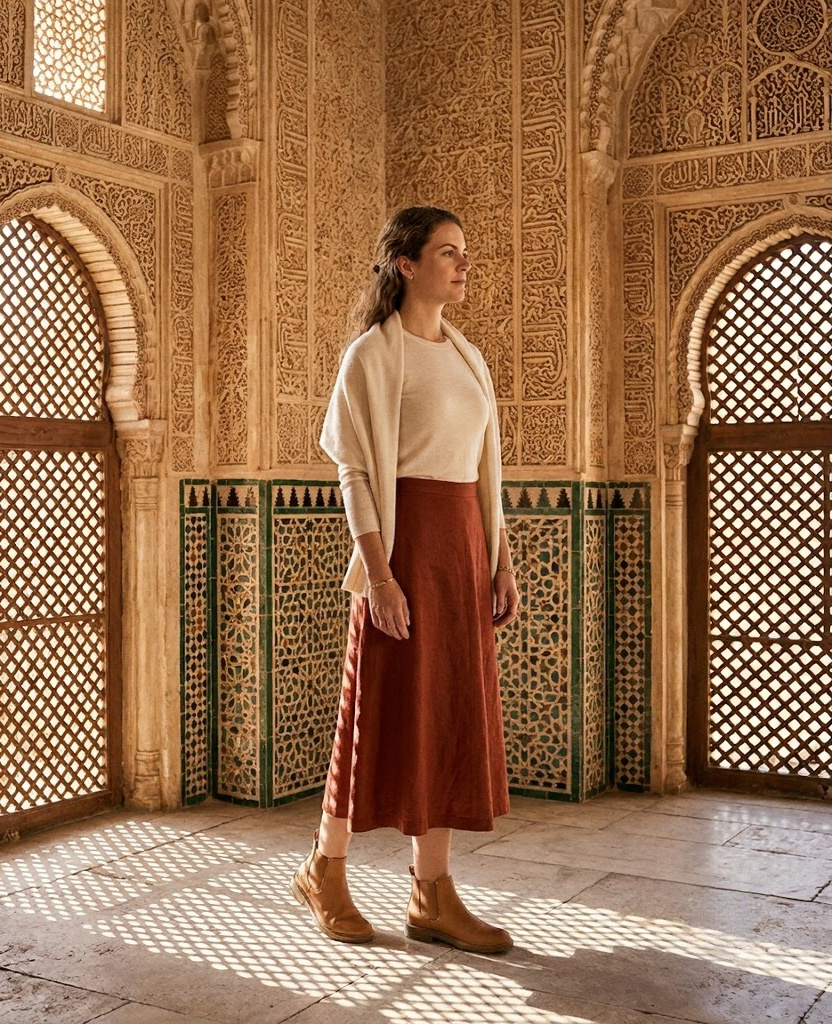
The plasterwork inside the Alhambra’s Nasrid Palaces is an intricate, carved ivory. Not white: a warm, slightly aged ivory with a golden undertone from the honey-coloured stone beneath. This is the ivory that belongs to Granada specifically. A lightweight merino or silk top in this shade photographs against the carved plasterwork of the palace with a quiet resonance that no other neutral achieves.
Darro Terracotta
The Darro river runs through a gorge of terracotta-coloured clay at the base of the Alhambra and Albaicin hills. This specific terracotta is slightly more orange and more saturated than the Seville version: the clay here has a higher iron content and the colour is more vivid as a result. A terracotta linen or cotton piece in this shade sits correctly against the river gorge landscape and the red-clay towers of the palace above.
Sacromonte Indigo
The cave dwellings of the Sacromonte neighbourhood above the Albaicin are decorated with an indigo blue that reflects the North African influence in the city’s history. Indigo appears in the tilework, the painted ceramics, and the woven textiles of the Alcaiceria market. A simple indigo cotton or linen piece is the colour that acknowledges Granada’s Moorish heritage most directly.
The Terrain Reality Check
Granada has the most demanding terrain of any city in this Spain series. The Alhambra approach, the Albaicin ascent, and the Sacromonte climb are all significant physical commitments on surfaces that are irregular, steep, and often damp from the moisture that comes off the Sierra Nevada snowmelt even in summer. The city’s lower centre around the Cathedral and the Alcaiceria market is relatively flat, but you cannot visit Granada properly without committing to significant elevation gain on at least two of your days.
The Alhambra requires specific footwear planning. The approach lane up the Cuesta de Gomerez is steep cobbled stone for thirty minutes. Inside the complex, the paths between palaces are gravel and uneven stone with significant gradients. The Generalife gardens add grass paths and stepped terracing. Four hours in this terrain in the wrong footwear produces a specific and lasting discomfort. A flat shoe or boot with a firm, cushioned sole and a secure fit around the ankle is the minimum requirement.
The temperature swing is the second major terrain challenge. In summer, the morning temperature at the Alhambra at nine when the first entry slot opens is typically eighteen to twenty degrees: cool enough to require a layer. By two in the afternoon, the same location is thirty-four degrees in direct sun. The shade of the Generalife cypress trees cuts this significantly, but the thermal shift across a full Alhambra visit is substantial. Your clothing must handle both ends of this range without requiring you to carry a full second outfit.
In spring and autumn, the Sierra Nevada weather can arrive in the city without much notice. A warm October afternoon can become a cold, windy evening with cloud cover from the mountains. A compact layer that folds small enough to fit in a day bag is not optional in Granada outside of the core summer months.
The Region-Specific Pieces
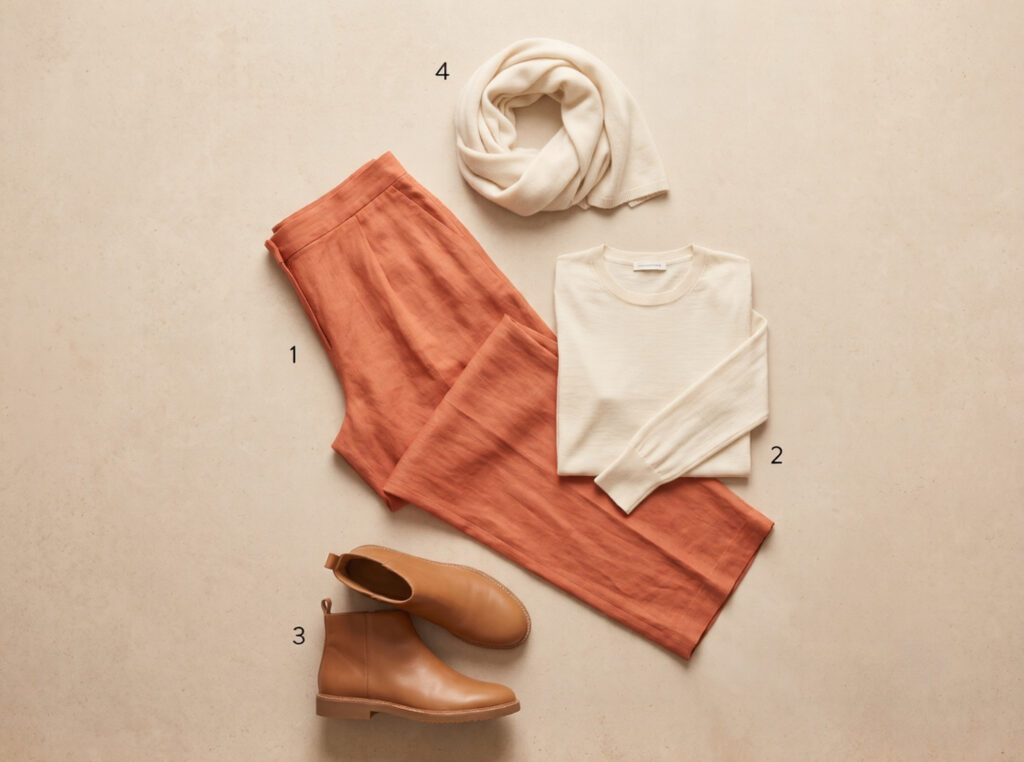
1. The Flat Ankle Boot in Tan Leather
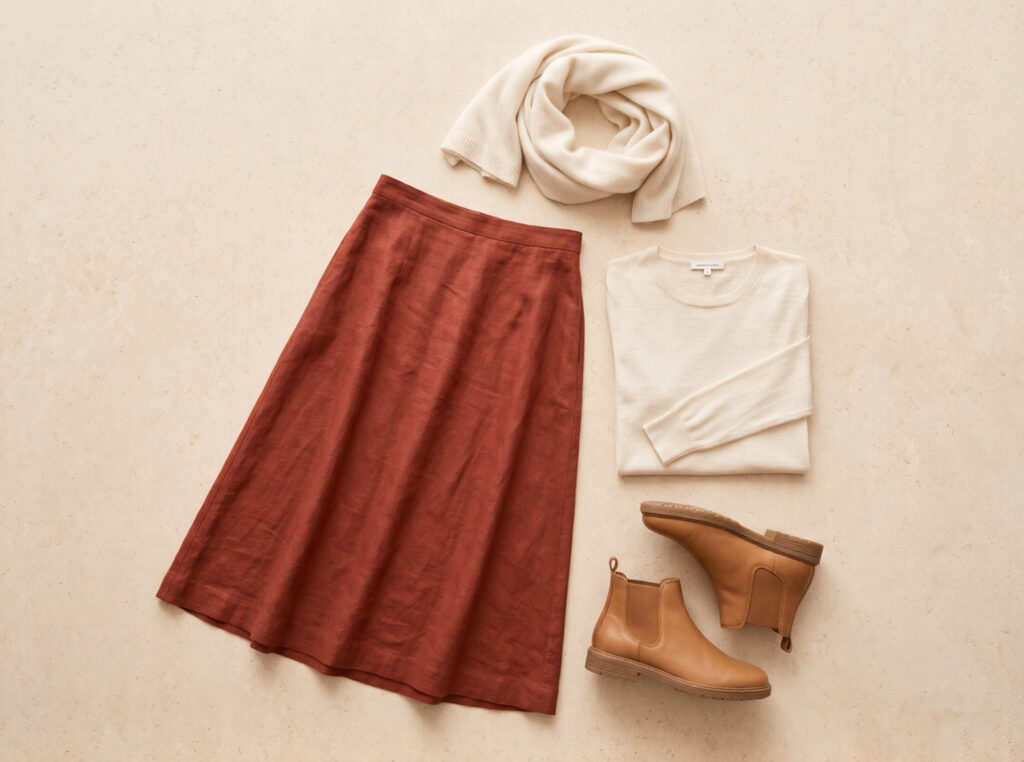
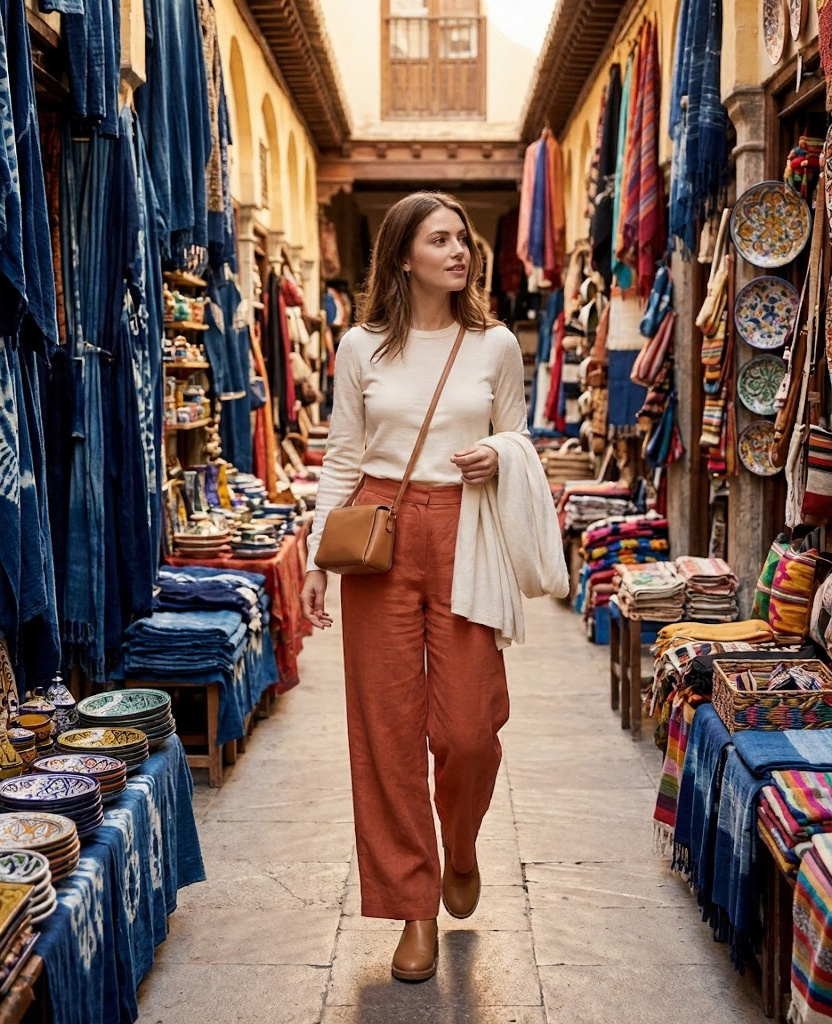
Granada is the one city in this Spain series where a flat ankle boot outperforms a sandal. The Alhambra approach lane, the Albaicin cobbled ascent, and the Sacromonte paths all require ankle support that an open sandal cannot provide. A flat tan leather ankle boot with a rubber sole and a low profile fits a mid-length skirt or wide-leg trousers correctly, provides the ankle stability needed on the Cuesta de Gomerez, and handles the cool mornings and evenings that Granada produces even in July. In spring and autumn it is the only sensible footwear choice for the terrain.
2. The Lightweight Merino Long-Sleeve Top
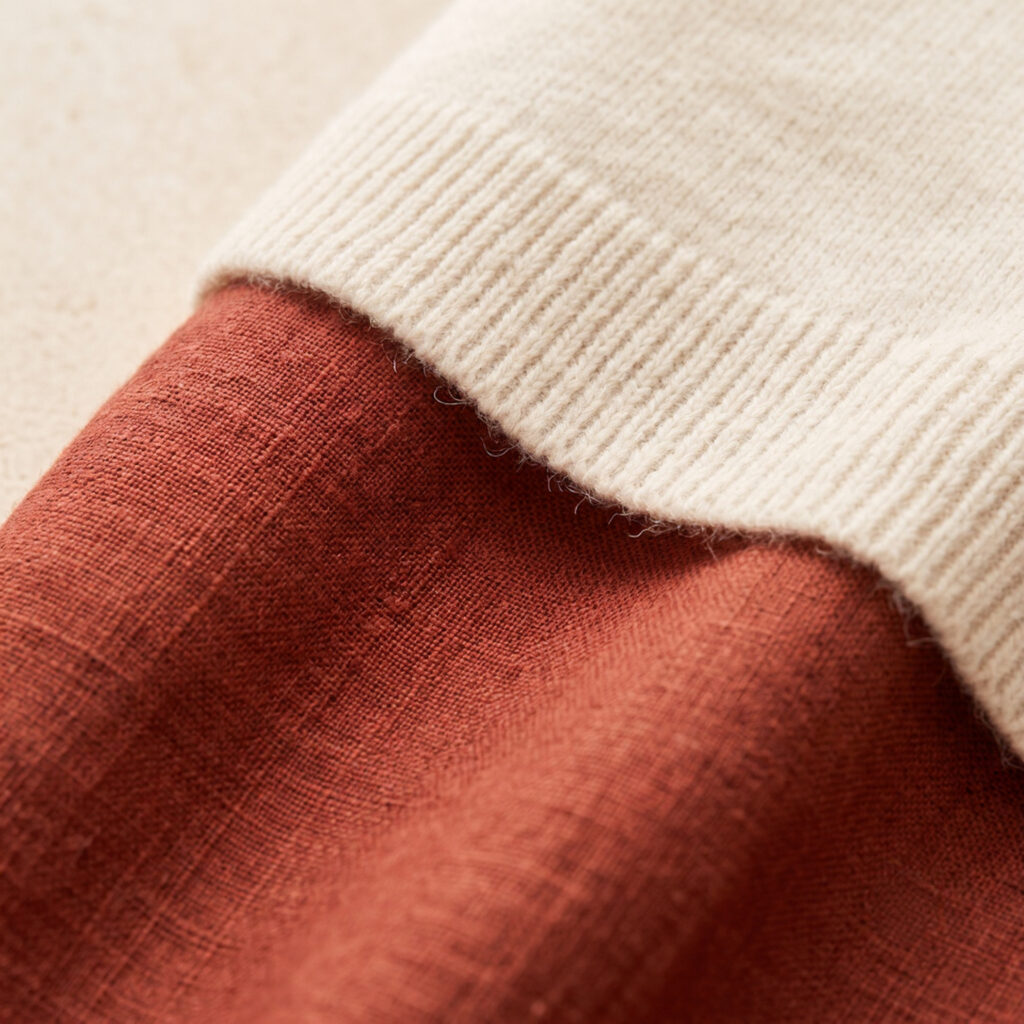
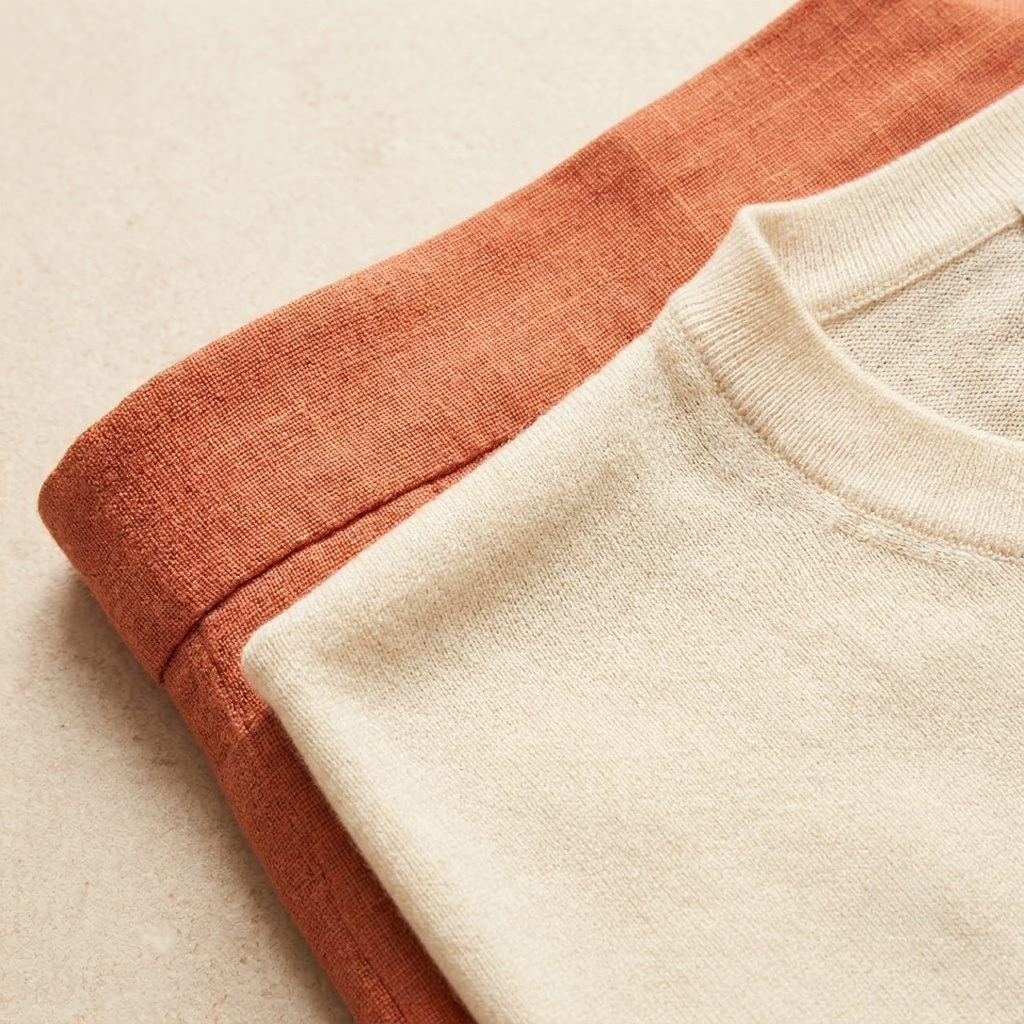
A fitted long-sleeve top in a fine-gauge merino wool is the piece that solves Granada’s temperature swing in the most compact way possible. Merino regulates temperature across a wider range than any other natural fibre: it is cool enough to wear at thirty degrees and warm enough to wear at fifteen. It weighs almost nothing and folds to the size of a rolled sock. It does not hold odour across a long day of walking. In ivory or sierra grey, it works under the rust linen skirt for the Alhambra morning visit and layers under a blazer for the evening in the city centre.
3. The Rust or Burnt Sienna Linen Midi Skirt
The Alhambra colour worn as a skirt. The rust or burnt sienna version of the mid-length linen skirt carries the specific palette of the palace walls in a way that is not a tourist statement but a quiet acknowledgment of the city’s visual logic. Mid-weight linen handles the altitude temperature fluctuation better than lighter voile: it provides more warmth in the cool morning and more structure in the afternoon wind off the Sierra Nevada. The midi length covers the knees for the religious sites and the Alhambra’s cultural expectations.
4. The Compact Wool or Cashmere Wrap
This is Granada’s essential layering piece. The wrap is not a scarf and it is not a jacket: it is a rectangle of fine-knit merino or cashmere large enough to cover the shoulders completely when the evening temperature drops or the mountain wind arrives. It folds into a small square that fits in a day bag alongside your water bottle and your Alhambra ticket printout. In ivory or sierra grey, it pairs with everything in the wardrobe. Cashmere is warmer for its weight than merino. In spring and autumn, cashmere is the correct choice.
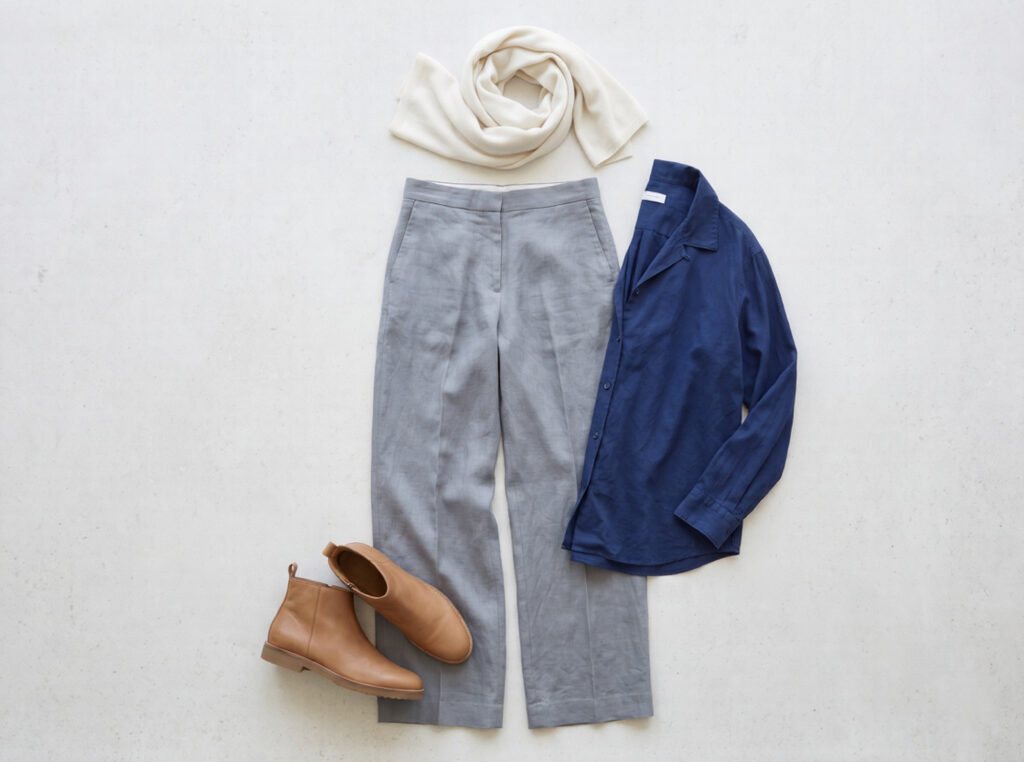
5. The Wide-Leg Linen Trouser in Sierra Grey or Ivory
For the city centre days when the Alhambra and Albaicin are not on the itinerary, a wide-leg linen trouser in sierra grey or ivory handles the more moderate terrain of the Cathedral, the Alcaiceria market, and the tea houses of the Calle Calderia Nueva. Grey linen in Granada photographs against the limestone and schist of the buildings with the same tonal coherence that ivory achieves against the Seville white-wash. A wide leg in a mid-weight linen drapes correctly in the cooler afternoon air that comes off the mountains after five.
6. The Indigo Cotton or Linen Shirt
The Alcaiceria silk market and the Moorish tea houses of the Calle Calderia Nueva have a colour culture that references North African textile traditions: indigo, deep blue, and hand-dyed cotton. An indigo cotton or linen shirt worn loose as a layer sits precisely in this context. It works as a cover layer over a merino top for the cool morning Alhambra visit and as a standalone piece for the afternoon in the medina streets. The colour picks up the Sacromonte indigo in the palette and looks deliberate rather than accidental against the city’s decorative surfaces.
The Cultural Register
Granada’s cultural register is layered in a way that no other city in this series is. The Alhambra visit is a formal heritage experience and the site’s custodians expect covered shoulders and a degree of physical preparedness. Arriving in flip-flops and shorts at the Nasrid Palaces does not prevent entry but it does place you at odds with the gravity of the architecture in a way that is difficult to ignore once you are inside the carved plasterwork of the Comares Hall.
The Albaicin neighbourhood operates on a completely different frequency from the Alhambra. The narrow lanes and the neighbourhood’s mixture of Spanish and North African residents produce a street culture that is relaxed, curious, and entirely uninterested in heritage tourism conventions. The tea houses are the social infrastructure of the upper Albaicin: you sit for an hour with mint tea and pastries and the city rearranges itself around you. The dress standard here is simply that you look as though you intended what you are wearing.
The Sacromonte caves, where Granada’s flamenco tradition lives in its most authentic form, have their own performance culture. The cave venues for flamenco shows are small, warm, and physically close: the dancers are three metres from your chair. Wearing something dark and composed for a cave show is both practical and appropriate. The rust linen skirt with a fitted indigo shirt and flat ankle boots is exactly right for this setting.
The university culture of the city centre around the Gran Via de Colon adds a younger, more casual register to the lower city. The tapas bars in this part of Granada serve free tapas with every drink, a tradition unique to Granada in Andalucia. The dress standard in these bars is completely casual: the university crowd sets the tone and the tone is comfortable and unpretentious.
The Fabrics for This Microclimate
Granada requires a layering strategy rather than a single-fabric approach. The morning cool, the afternoon heat, and the evening cold in summer alone span a range that no single fabric handles optimally across all three. The approach is to dress in a light mid-layer in the morning, carry a compact wrap in the bag for the early Alhambra visit, and have access to a second layer for the evening that packs down to nothing during the day.
Fine-gauge merino wool is the primary layering fabric. A fitted merino long-sleeve top in a fine gauge weighs under 200 grams, regulates across a twenty-degree temperature range, and does not hold sweat odour across a full day of significant walking. It is the single most versatile piece of fabric you can bring to Granada and it is irreplaceable for the morning Alhambra visit in any season.
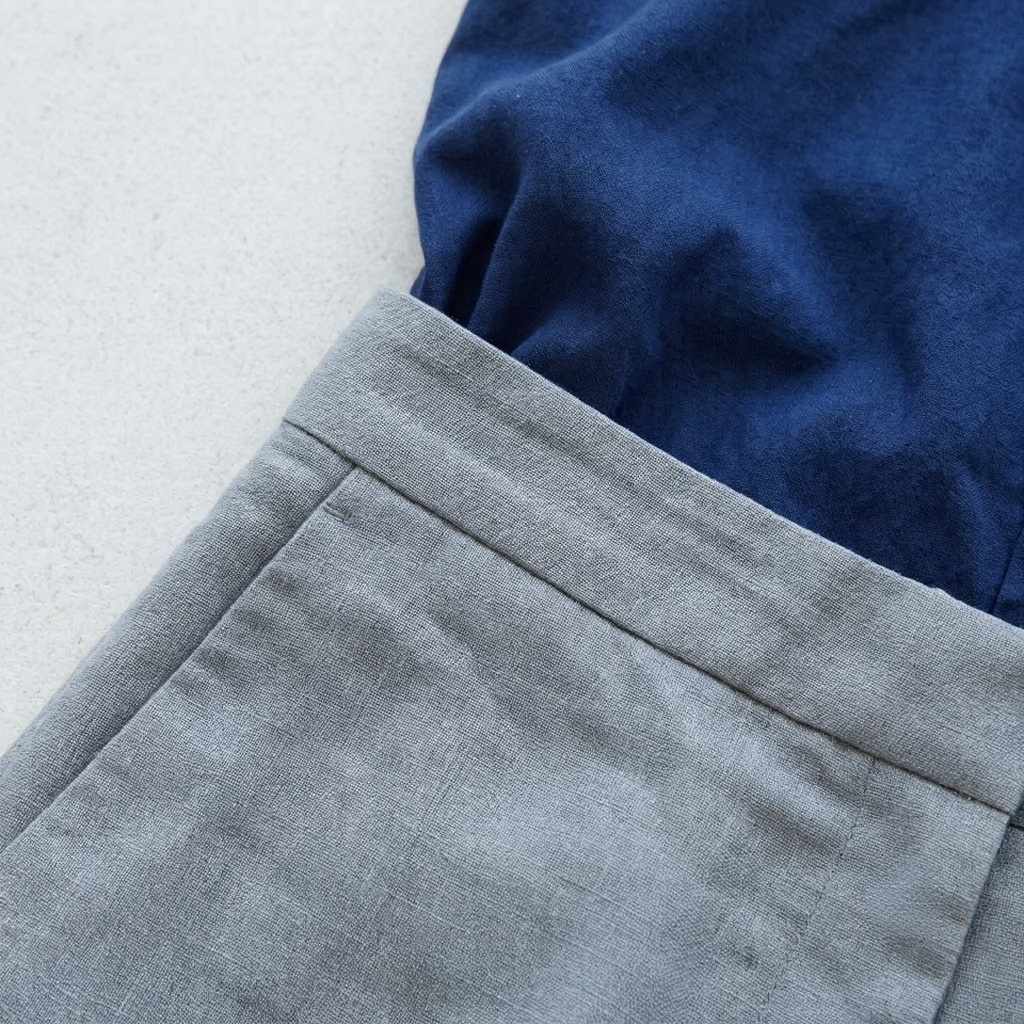
Mid-weight linen is the correct outer fabric for skirts and trousers. In Granada’s slightly drier, cooler microclimate compared to Seville, mid-weight linen is more appropriate than the lighter voile that Seville demands. The structure of mid-weight linen holds up in the afternoon mountain breeze and provides more warmth in the cool mornings than voile can manage.
Cotton and linen blend fabrics work well for the indigo shirt and other shirt-weight pieces. The slight structure of a cotton-linen blend holds the indigo dye more vividly than pure linen and drapes more fluidly than pure cotton in the warm afternoons. A cotton-linen blend in indigo is a specific pleasure in the Albaicin light.
For spring and autumn visits, add a lightweight down gilet or a merino cardigan as a third layer. October in Granada can produce days that start at twelve degrees and reach twenty-four by early afternoon. The gilet packs to nothing and covers the temperature gap between the merino base layer and the full jacket that the Sierra Nevada wind occasionally demands after dark.
The One Piece You’ll Wish You’d Brought
A lightweight packable down gilet in black or ivory. Every visitor who comes to Granada in spring, autumn, or even early summer and packs only for Andalucian heat arrives at the Mirador de San Nicolas at sunset and finds themselves cold. The Sierra Nevada wind that arrives in the city after the sun drops behind the mountains is not a gentle cooling breeze: it is a proper cold wind off snow-capped peaks. A packable down gilet weighs under 200 grams, compresses to the size of a grapefruit in its own stuff sack, and provides an intermediate warmth layer between a merino top and a full coat that no other garment type achieves at that weight. In Granada specifically, it is the piece that separates a comfortable evening on the Albaicin terraces from a cold and truncated one.
The One Piece You Won’t Need
High-top trainers or hiking boots. Every visitor who has read about the Alhambra approach lane and the Albaicin cobbles considers packing a pair of serious walking shoes with significant ankle support and a heavy sole. In practice, a flat leather ankle boot with a rubber sole handles every surface in Granada without the weight, the bulk, and the visual disconnect of a proper hiking boot. High-top trainers are worse than both options: the rubber sole without ankle rigidity provides less stability on the Albaicin cobbles than a leather boot, and they look incorrect against the carved plasterwork of the Nasrid Palaces and the lantern-lit lanes of the old quarter. A leather ankle boot is the correct technical and aesthetic solution simultaneously. Leave the hiking boots for the Sierra Nevada itself if you are planning a mountain day, and pack the flat ankle boot for the city.
Planning Your Full Spain Trip?
This guide covers what Granada specifically demands: the altitude temperature swing, the cobbled terrain of the Alhambra approach and the Albaicin ascent, and the layering strategy that no other Andalucian city requires. If your itinerary includes Seville before Granada, the Seville capsule wardrobe guide covers the extreme heat and the ceramic-tile terrain of the river city. For the full Andalucian context, the Complete Guide to Spain ties the regional wardrobe strategies together. The Madrid capsule wardrobe guide and the Barcelona capsule wardrobe guide complete the northern half of the itinerary.
Your Granada Capsule: The 12 Pieces
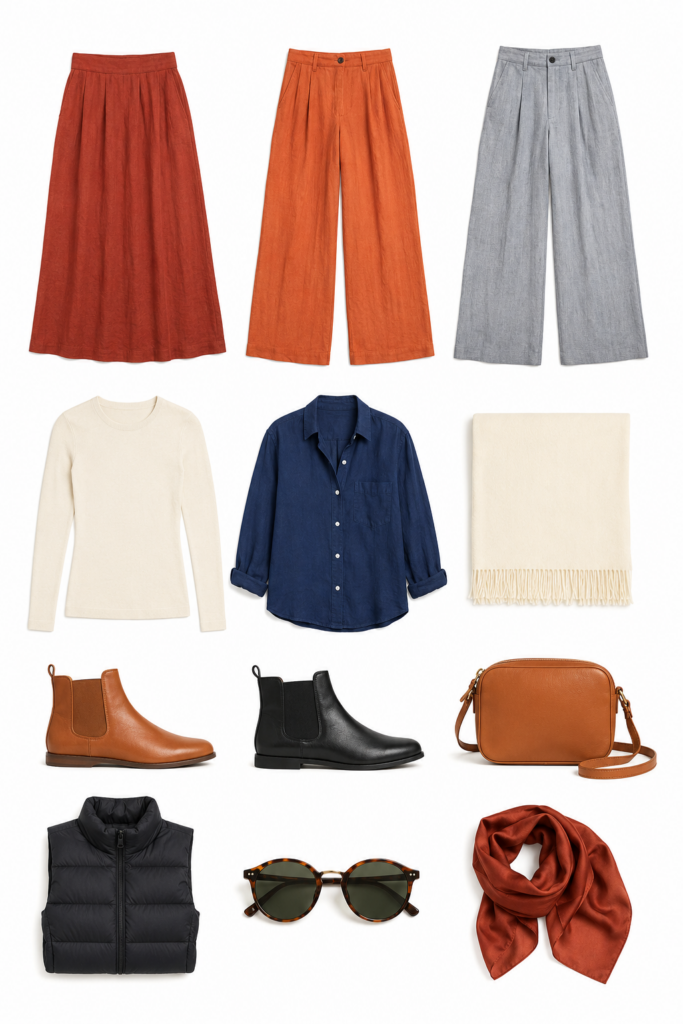
Shop here:
- Rust red mid-weight linen midi skirt > Kancy Kole Casual Cotton Linen Skirts
- Wide-leg linen trousers in Darro terracotta > LOMON Linen Pants Women Wide Leg
- Wide-leg linen trousers in sierra grey > ANRABESS Womens Wide Leg Pants with Pockets
- Fitted ivory lightweight merino long-sleeve top > 100% Merino Wool Base Lightweight Soft Long Sleeve Shirt
- Loose indigo cotton or linen shirt > siliteelon Button Down Cotton Shirts for Women
- Compact ivory fine-knit cashmere or merino wrap > Velanio Cashmere 100% Cashmere Knitted Wrap
- Flat tan leather ankle boots with rubber sole > DREAM PAIRS Women’s Low Heel Chelsea Ankle Boots
- Flat black leather ankle boots with rubber sole > Athlefit Women’s Ankle Boots Low Heel
- Small structured tan leather crossbody bag > befen Genuine Leather Crossbody Bags
- Compact packable down gilet in black > Women’s Quilted Vest with 4 Pockets, Lightweight
- Round tortoiseshell sunglasses (UV400) > WearMe Pro Round Polarized Sunglasses for Women
- Deep rust or terracotta silk square scarf > 100% Silk Square Scarf for Women
Granada sits at the intersection of Andalucian heat, Sierra Nevada altitude, and eight centuries of Moorish architectural heritage. No other city in Spain asks as much of a wardrobe in a single day. The layering strategy here carries forward into the final destination in this Spain series. The Costa Brava capsule wardrobe guide covers the rugged northern coastline with its own specific terrain and coastal register. For the complete Spain wardrobe picture, the Complete Guide to Spain and the Spanish Summer Capsule provide the cross-destination strategy from Madrid to the coast.
Frequently Asked Questions
Pack a layer even in summer. Granada sits at higher elevation than Seville or Málaga, so evenings cool down noticeably once the sun drops behind the Sierra Nevada. Bring breathable daytime pieces plus one light knit or jacket for dinner and evening walks.
Yes, noticeably. Granada’s elevation and proximity to the Sierra Nevada mountains give it cooler nights year-round and genuinely cold winters, unlike Seville’s milder climate. If your trip covers both cities, pack for Granada’s temperature swing rather than Seville’s steadier heat.
Comfortable closed-toe walking shoes work best. The Alhambra involves extensive walking across uneven stone paths, gardens, and stairs, often in direct sun with little shade. Sandals are fine for the city center but not ideal for a full Alhambra visit.
Comfortable, breathable clothing suits the Albaicín’s steep, narrow, cobblestoned streets. There’s no dress code, but the terrain rewards practical shoes over style. Bring a light layer for sunset viewpoints, where temperature drops fast once the sun sets over the Alhambra.
Four to five outfit combinations from a compact 6-8 piece capsule cover three days easily. Prioritize one warm layer over extra tops, since Granada’s evening cool matters more than daytime variety for a short trip.