
*This post may contain affiliate links for which I earn commissions.*
Quick Summary
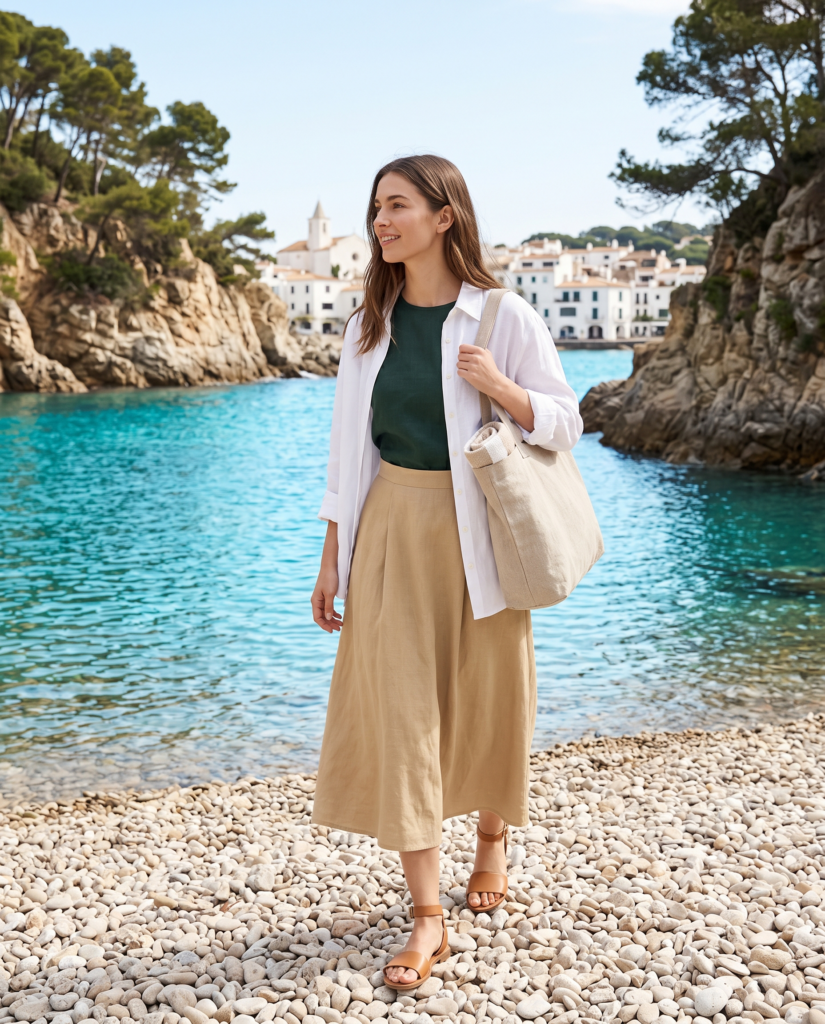
Pack a 12-piece Costa Brava capsule built around a flat ankle-strap sandal with rubber sole, bleached white wide-leg linen trousers, and a pine green linen top for the GR92 cliff path and pebble coves. A compact white linen blazer handles the sea wind, and a Dalí ochre midi skirt covers Cadaqués evenings. Skip the structured handbag. This coast runs on a tote and a crossbody instead.
The Regional Portrait
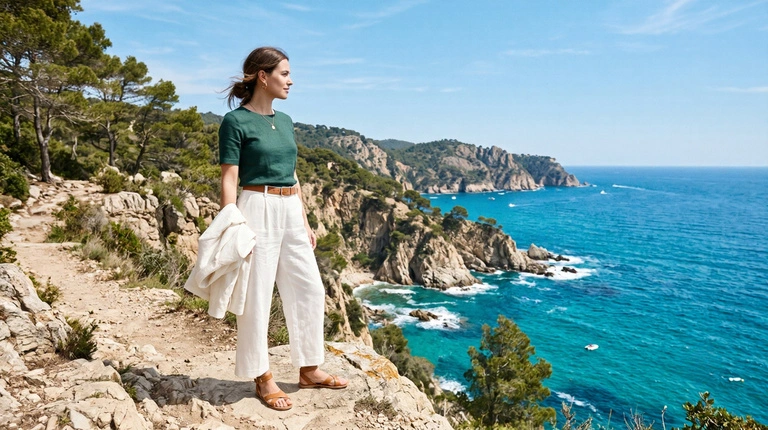
The Costa Brava is a hundred kilometres of Catalan coastline running from Blanes in the south to the French border at Portbou in the north. The name translates directly as the wild coast and it earns the description in a way that the more developed stretches of the Spanish Mediterranean do not. The coastline here is limestone: ancient, white, fractured into coves and headlands and sea stacks by millennia of wave action. The cliffs drop directly into water so clear it reads turquoise over white sand and deep blue over the rocky seabed. There are coves here that you can only reach on foot or by sea.
The GR92 coastal path runs the full length of the Costa Brava, connecting every village and headland from Blanes to Portbou in a continuous walking route. Most visitors walk sections of it rather than the whole: the stretch between Calella de Palafrugell and Llafranc, the headland walk above Cadaques, the path from Begur down to the coves of Aiguafreda and Sa Tuna. These are not strolls along a beach promenade. They are proper coastal path walks on limestone rock and compacted earth, with exposed sections above significant drops, in coastal sun with no shade for stretches of twenty minutes or more.
The villages of the Costa Brava have a specific character that separates them from resort towns. Cadaques, at the far northern end of the coast, was where Salvador Dali lived and worked for most of his life, and the town carries that heritage with a quiet seriousness. The whitewashed houses step up the hillside from the bay in a configuration that has not changed substantially in a century. The restaurant terraces face the water. The evening light on the bay is extraordinary. Begur is a medieval village on a hill above the coast with a castle ruin and five or six beaches reachable on foot. Palafrugell and its satellite villages of Calella, Llafranc, and Tamariu are the most classically beautiful coastal settlements on the southern Costa Brava, their terrace restaurants and fishermen’s houses arranged around small pebble-and-sand coves with the limestone cliffs rising behind.
This is not Ibiza. There is no nightclub culture, no resort strip, no all-inclusive hotel infrastructure of consequence. The Costa Brava draws a crowd that wants the sea, the walking, the local seafood, and the architecture of the old fishing villages. It dresses accordingly: with more outdoor-awareness and less urban formality than Barcelona, but with the Catalan eye for quality and intentionality that means pure tourist casual does not quite fit either.
The Regional Colour Departure
The Costa Brava palette comes from its geology, its water, and the pine forest that covers the cliffs between the coves.
Limestone White
The white limestone cliffs that define the coastline from Begur to Cadaques produce a specific chalk-white tone: not the warm ivory of Seville or the bleached sandy white of Barcelona, but a cooler, slightly blue-tinted white that the coastal light makes almost luminous. A bleached white linen in this tone photographs against the cliff faces and the whitewashed village walls with a clarity that no other neutral achieves on this coast.
Mediterranean Turquoise
The water of the Costa Brava coves is the defining colour of the coast. Over white sand in shallow water it is a pure, vivid turquoise. Over the rocky seabed in deeper water it shifts to a deep cobalt. As an accent colour in a scarf or a swimsuit cover-up, Mediterranean turquoise places you in the specific visual context of this coastline rather than any other stretch of the Spanish coast.
Costa Pine Green
The maritime pines that grow along the cliff edges and cover the headlands between coves are a deep, slightly warm green with a grey-green undertone from the salt spray. This pine green in a linen top or a lightweight shirt is the colour that sits most naturally against the limestone cliffs and the turquoise water simultaneously. It is more complex than a standard forest green: the salt air gives it a slight desaturation that makes it look considered rather than primary.
Cadaques Sand
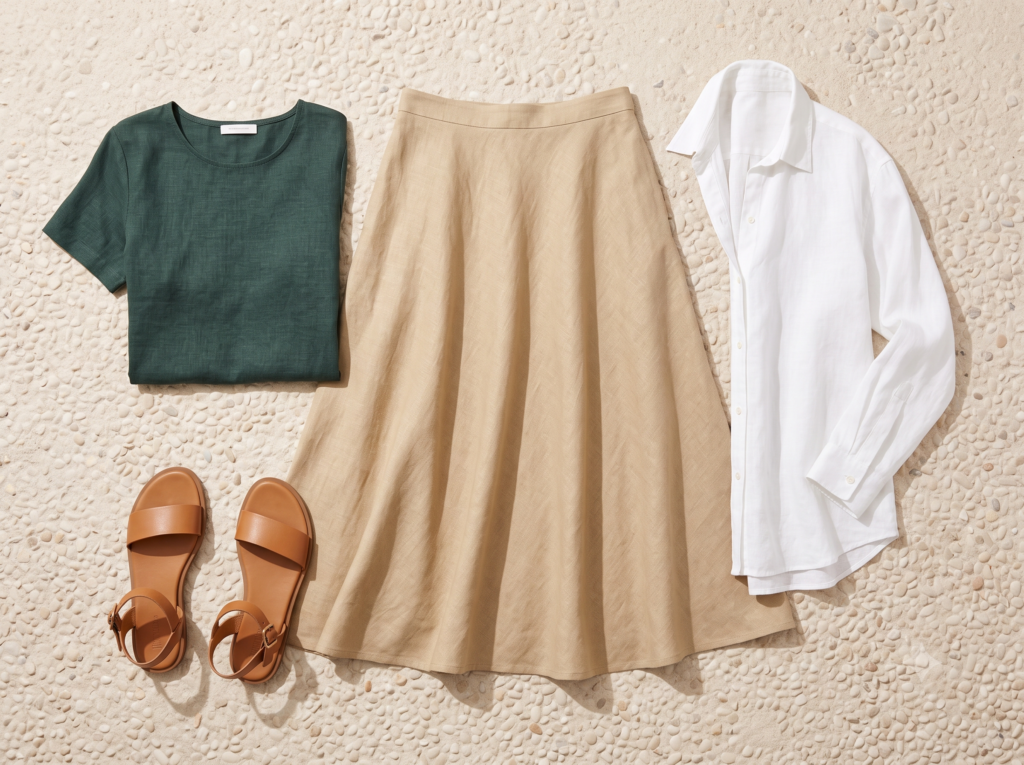
The pebble beaches and sandy coves of the Costa Brava range from pale pearl-grey pebbles to warm sandy ochre. The Cadaques sand tone is a warm, slightly golden neutral that serves as the base for the wardrobe: slightly warmer and more complex than pure white, it sits against the limestone and the water with the same ease as the bleached white but with more warmth.
Dali Ochre
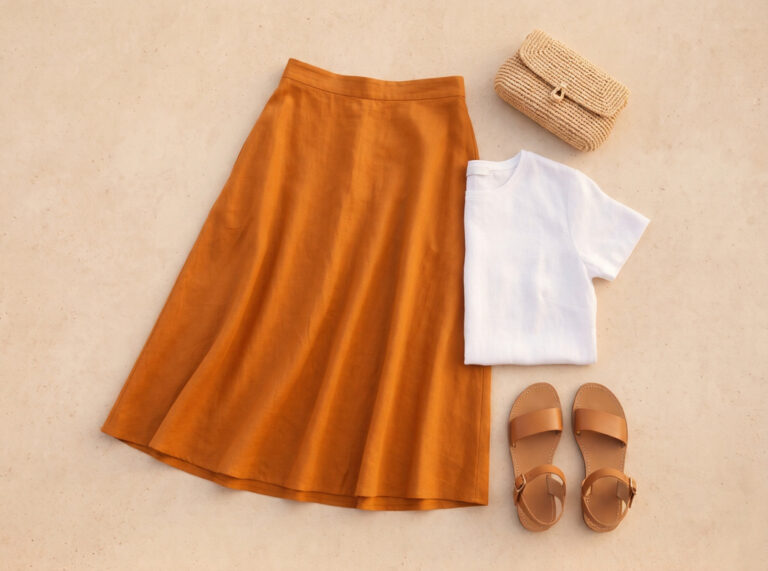
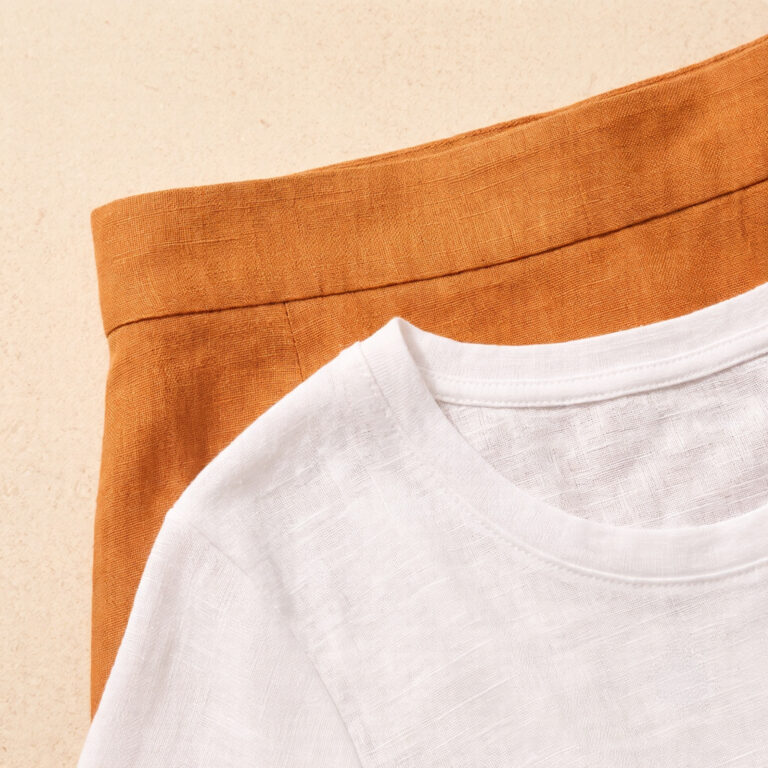
The ochre and sienna tones of the landscape around Cadaques, where Dali found his palette in the iron-rich soil and the rusted fishing boat hulls in the bay, produce this warm, slightly orange-tinted ochre. Used in a linen skirt or a woven accessory, it references the specific artistic and landscape heritage of the northern Costa Brava without needing explanation.
The Terrain Reality Check
The Costa Brava is the most physically active destination in this Spain series. If you are visiting only for the beach, the terrain demands are minimal: the coves are accessible by road or short paths and the village promenades are flat and smooth. But if you are here for the coastal path walking that defines the best of the Costa Brava experience, the terrain is serious.
The GR92 path surface varies significantly by section. The southern sections between Calella and Llafranc are well-maintained compacted earth and limestone rock. The northern sections around Cadaques and Cap de Creus involve loose stone, exposed root systems, and sections of scrambling on limestone where hands are occasionally useful. The path above the water on exposed headlands has no shade, full coastal wind, and a surface that becomes slick when wet from sea spray or morning dew.
The beach terrain adds specific demands. The Costa Brava coves are predominantly pebble rather than sand. Walking on pebble beaches barefoot is uncomfortable across any meaningful distance. A water shoe or a sturdy flat sandal with some sole thickness handles pebble entry and exit from the water without the ankle-rolling risk of bare feet on wet rounded stones. The transition from cliff path to pebble beach to village terrace restaurant is something you make multiple times per day on a Costa Brava itinerary.
Village streets are predominantly flat cobbled stone or smooth tarmac. Cadaques has steeper lanes rising from the waterfront. Begur’s medieval upper village involves significant uphill. In neither case are these the ankle-challenging cobbles of Granada’s Albaicin, but a completely flat sandal with some grip handles both without difficulty.
The Region-Specific Pieces
1. The Flat Ankle-Strap Sandal with Rubber Sole
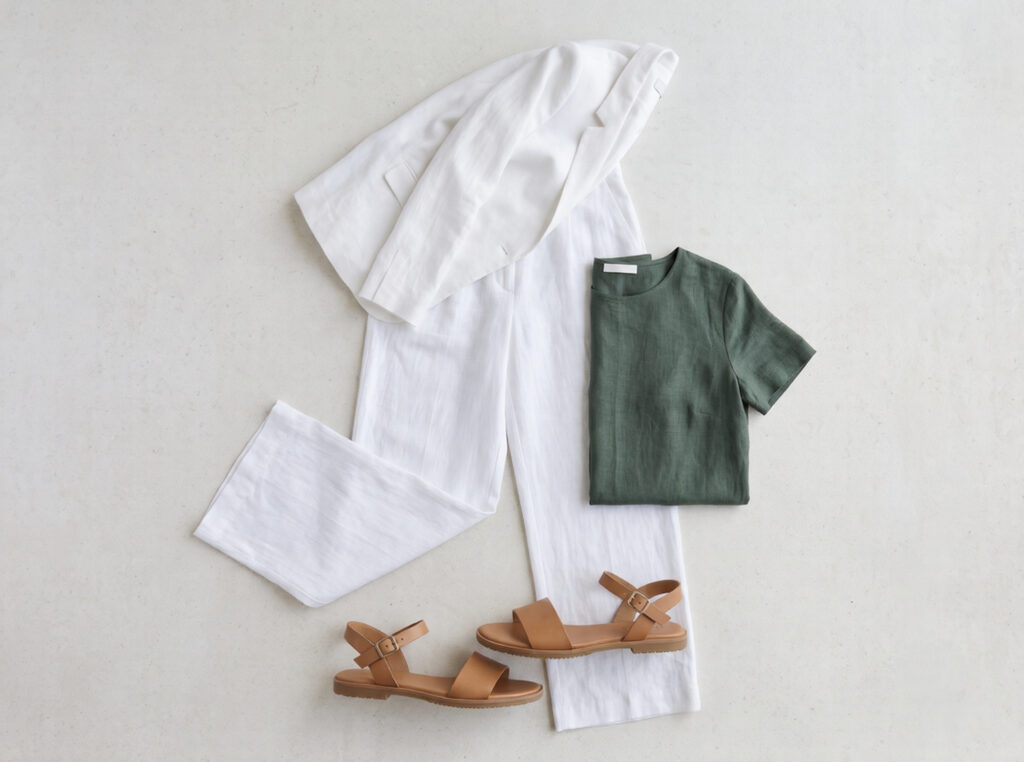
The Costa Brava requires a sandal that holds its position on three very different surfaces within the same afternoon: a limestone cliff path, a pebble beach entry, and a village terrace restaurant. The ankle strap is the critical element: without it, a flat sandal shifts on the uneven limestone of the coastal path and becomes a source of fatigue rather than support. A rubber sole with some texture grips the wet pebble beach entry without the ankle-rolling risk of bare feet. Tan or natural leather is the material that looks correct from path to restaurant without a change. This is the sandal you will wear every single day.
2. The Bleached White Wide-Leg Linen Trouser
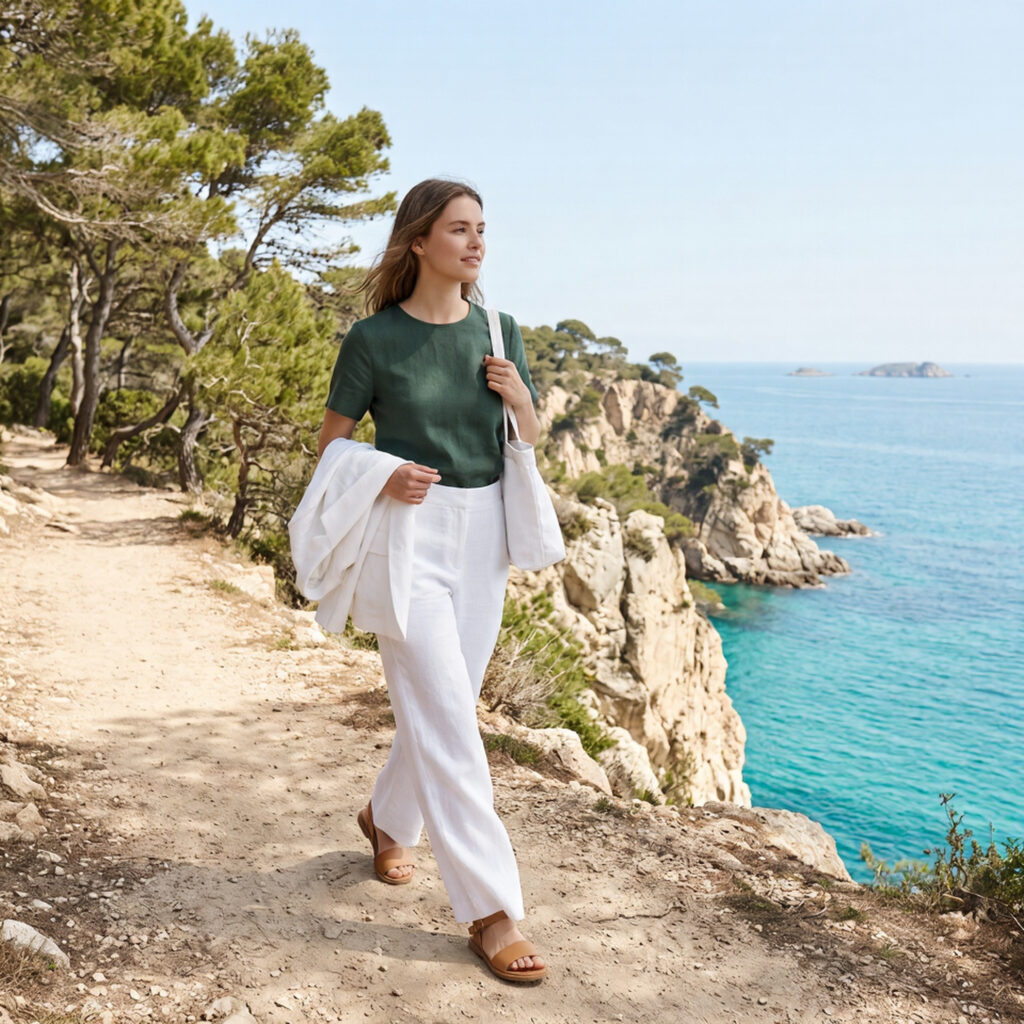
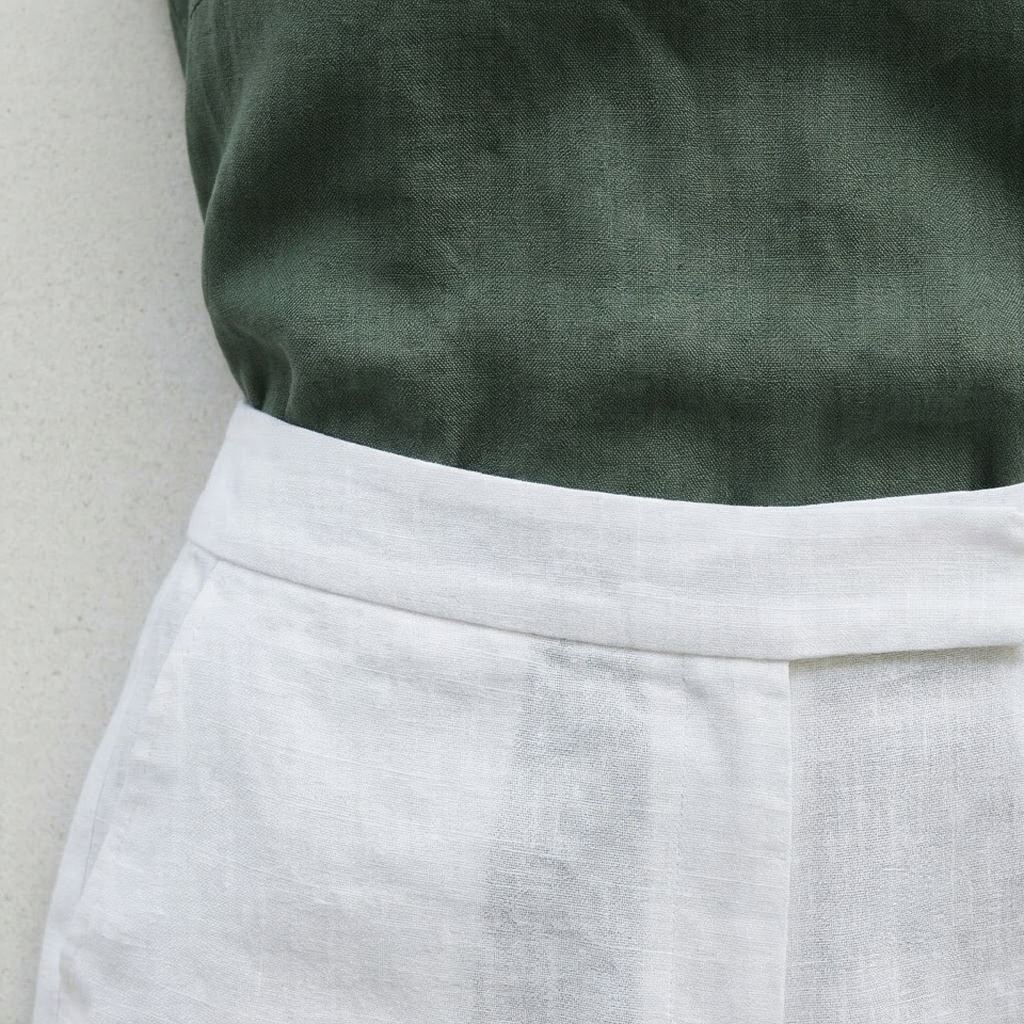
On the Costa Brava, wide-leg linen trousers in bleached white function as the single most versatile piece in the wardrobe. They move from coastal path walking to village lunch to an evening terrace at Cadaques without looking out of place at any stage. The bleached white catches the coastal light against the limestone cliffs in a way that ivory cannot. The wide leg provides enough volume to move freely on the path and enough structure to look deliberate at a restaurant. A mid-weight linen holds its shape across a full day of walking and dries quickly after the inevitable contact with sea spray.
3. The Pine Green Linen Top
The deep pine green with its grey-sea undertone is the colour this coastline provides in its vegetation. A fitted linen top in this shade sits against the limestone, the water, and the village walls with equal authority. It works tucked into the white wide-leg trousers for the coastal path and worn loose over a swimsuit for the pebble cove. The linen fabric breathes in the coastal heat and holds the colour without fading noticeably across repeated days of strong Mediterranean sun. This is the piece that makes the Costa Brava wardrobe look intentional rather than assembled.
4. The Compact Linen Blazer in Bleached White
The sea wind on the Costa Brava headlands is not a gentle summer breeze. It is a proper, directional wind off the Mediterranean that arrives without much warning and drops the felt temperature by eight to ten degrees in a matter of minutes. A lightweight linen blazer with a relaxed shoulder folds to nothing in a linen tote, provides enough cover on the exposed cliff sections to be worth carrying, and converts an afternoon beach outfit into something appropriate for the evening in Cadaques or Llafranc. The bleached white version keeps the palette unified. A linen blazer in this weight is a different garment from the structured black blazer of the Madrid evening: it is coastal outerwear first and a style piece second.
5. The Dali Ochre Linen Midi Skirt
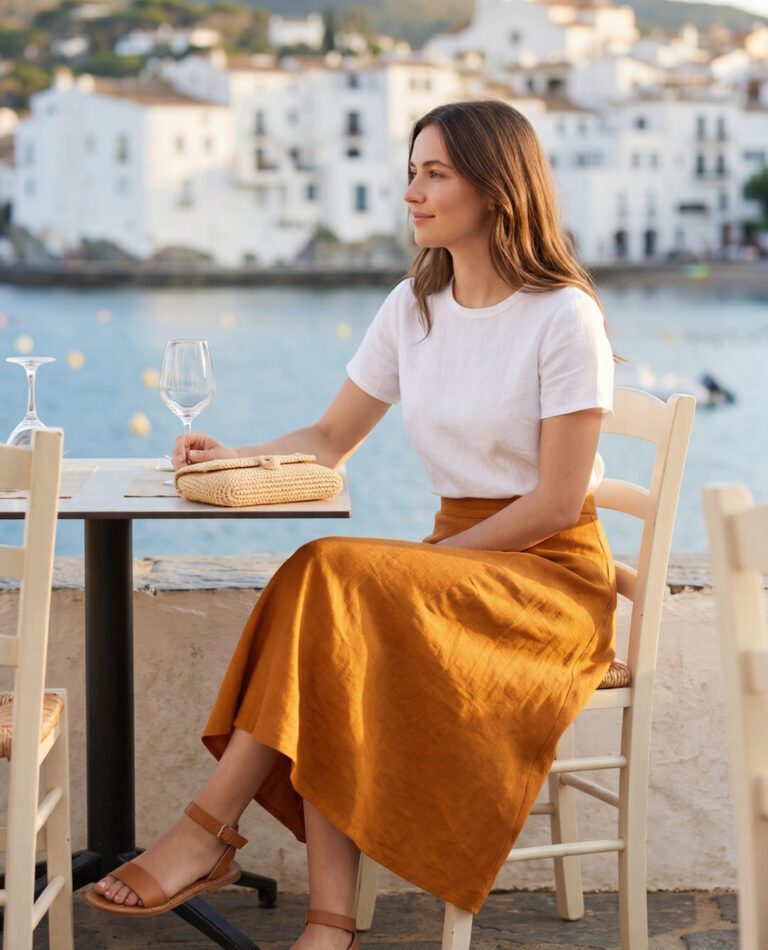
For village days when the coastal path is not on the itinerary, a midi skirt in Dali ochre references the specific landscape and artistic heritage of the northern Costa Brava directly. In Cadaques, the ochre and sienna tones of the surrounding landscape are inescapable: the iron-rich soil, the rusted hulls of the fishing boats in the bay, the warm stone of the village walls. An ochre linen midi skirt in the village streets of Cadaques photographs as if the landscape produced it. It pairs with the bleached white linen shirt and the pine green linen top with equal ease.
6. The Linen Shirt in Bleached White
A slightly oversized linen shirt in bleached white works across every situation the Costa Brava presents. Worn open over a swimsuit it is the beach cover-up that transitions to lunch without removing it. Buttoned and tucked into the ochre skirt it is a composed village outfit. Worn as a layer over the pine green top on an exposed cliff section it provides wind protection. The bleached white keeps it in the limestone palette of the coast and its versatility across multiple uses means it earns disproportionate space in a compact carry-on.
The Cultural Register
The Costa Brava’s cultural register is relaxed in a distinctly Catalan way: not careless, not resort-casual, but outdoor-focused and quality-aware. The visitors who return to Cadaques and Palafrugell year after year tend to dress well in a low-key way: good linen, leather sandals, a straw hat. There is nothing performative about it. The dress code of the fishing village terrace restaurant is that you have thought about what you are wearing, not that you have dressed up.
The Dali connection in the northern Costa Brava brings a certain creative awareness to the area around Cadaques and the Dali Theatre-Museum in Figueres. The visitors at the Theatre-Museum in Figueres tend to be more deliberately dressed than at a standard tourist attraction: there is an art world seriousness to the place and the crowd. A composed linen outfit looks correct here in a way that beach casual does not.
The evening culture on the Costa Brava is village terrace rather than urban restaurant. In Calella de Palafrugell, the terrace restaurants that hang above the cove have offered the same fresh seafood for fifty years: gambas, fresh fish, local wine. The dress standard is that you have changed out of your swimsuit. A linen midi skirt and a fitted top, or the white wide-leg trousers and a pine green top, is exactly right. Nothing more formal than a linen blazer is ever required.
The coastal path walking culture has its own register. On the GR92, you will pass serious hikers in full technical kit and you will pass visitors in linen trousers and ankle-strap sandals. Both are accepted. The path is wide enough and well-maintained enough on the main sections that technical hiking gear is not required for the majority of routes. What is required is a flat, secure sole and clothing that can handle the wind and the sun without requiring a costume change at every transition.
The Fabrics for This Microclimate
The Costa Brava microclimate is defined by three competing forces: the Mediterranean summer heat, the coastal wind off the sea, and the salt-laden air that affects every fabric over multiple days of wear. The approach to fabric selection is different here from any other destination in this series.
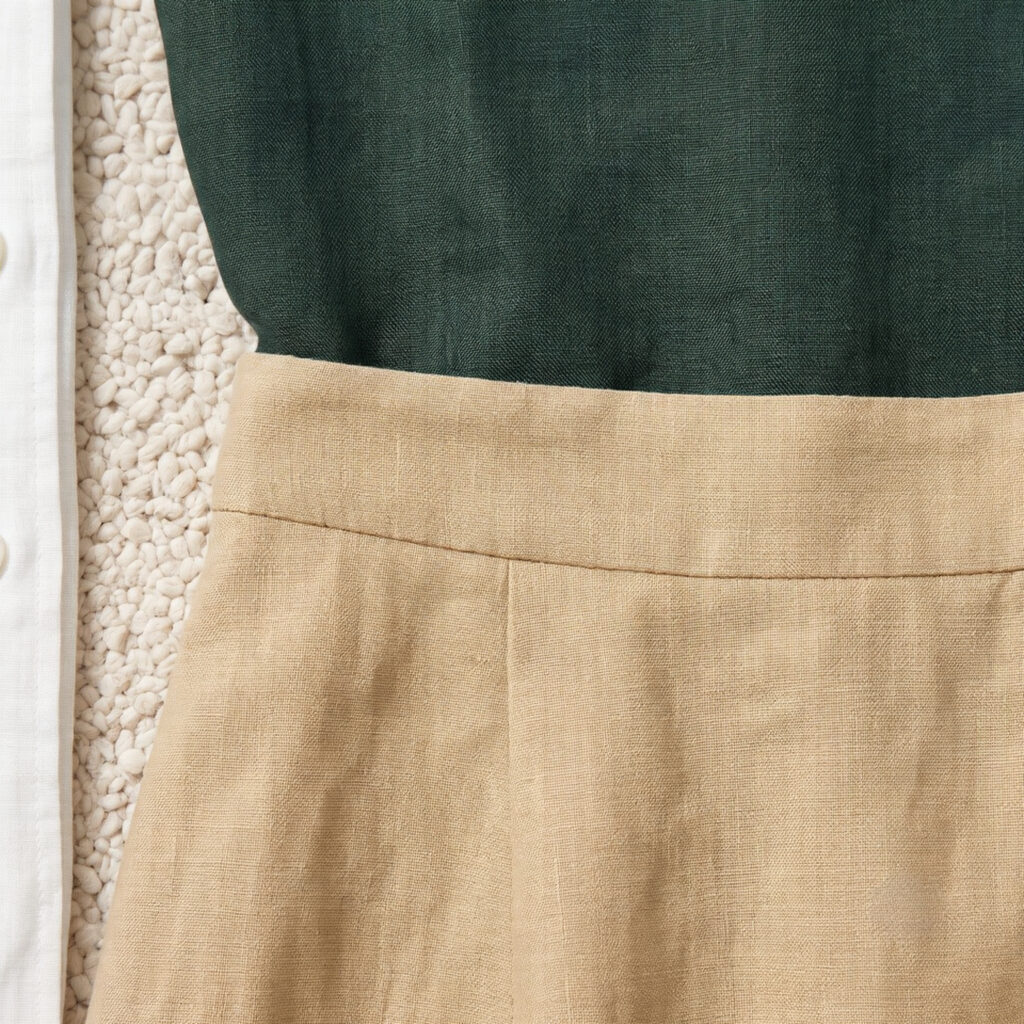
Linen is correct for this coast but the specific weight and weave matters more than elsewhere. The coastal wind means that very lightweight linen or cotton voile becomes impractical on the exposed cliff sections of the GR92: it flaps and wraps and provides no protection from the wind chill. A mid-weight linen with enough structure to hold its shape in a twenty-knot sea breeze is the correct specification. Not a stiff tailored linen: a naturally draping mid-weight linen that moves with the wind rather than fighting it.
Salt air attacks natural fibres at an accelerated rate. Linen and cotton both hold up well, but they need more frequent rinsing than in a dry inland city. Silk is a poor choice for this coast: the salt air dulls the sheen and the spray risk is constant. Merino wool pilling is accelerated by the salt. Stick to linen and cotton for the days on the coast and rinse each piece in fresh water after a day near the sea.
For the pebble beach entry, a quick-dry fabric is essential. The transition from cove swimming to path walking to village lunch requires a fabric that sheds water quickly and does not remain clammy for an hour after the sea. A linen blend with a small percentage of linen-cotton performs better than pure linen here: it releases water more quickly and dries faster in the sea breeze. Technical quick-dry fabric is also acceptable for the swimwear layer worn on the path, though it looks less considered at the village restaurant.
The sun on the Costa Brava is strong from May through September. The limestone cliffs reflect UV back upward from below when you are sitting on a cliff path, effectively doubling your UV exposure. A long-sleeve linen shirt or a linen blazer as a UV layer on exposed cliff sections is a practical decision, not a fashion one.
The One Piece You’ll Wish You’d Brought
A pair of water shoes or amphibious sandals for the pebble cove entries. Every visitor who arrives at the Costa Brava’s pebble coves without them regrets it within the first morning. The rounded wet limestone pebbles at the water’s edge are uncomfortable on bare feet and create a real ankle-rolling risk when you are entering or exiting the sea. A water shoe or an amphibious sandal with drainage holes and a grippy rubber sole transforms the pebble entry from an ordeal into a non-event. It fits inside a beach bag, dries in twenty minutes in the sea breeze, and allows you to walk into the water without the ritual of removing and placing footwear on pebbles. It is the single piece of kit specific to the Costa Brava terrain that nothing else substitutes for.
The One Piece You Won’t Need
A structured handbag. Every beautiful leather structured bag you might pack for a Costa Brava trip will spend the week either locked in the hotel room or sitting uncomfortably on pebble beaches while you swim. The coast here is a bag-in-a-tote environment. A small crossbody for the village evenings and a natural linen or canvas tote for the coastal path and beach days cover every situation this coastline presents. The structured bag accumulates salt air on the leather, sand in the hardware, and sunscreen on every surface it comes into contact with. A tote washes. Bring the structured bag for Barcelona or Madrid. Leave it at home for the Costa Brava.
Planning Your Full Spain Trip?
This guide covers what the Costa Brava specifically demands: the coastal path terrain, the pebble cove transition, the sea wind on the exposed headlands, and the village evening register that is relaxed without being careless. For the Catalan capital two hours south, the Barcelona capsule wardrobe guide covers the Gothic Quarter cobbles, the Barceloneta humidity, and the Eixample evening culture. For the complete Spain wardrobe strategy across all five destinations, the Complete Guide to Spain and the Spanish Summer Capsule provide the cross-destination foundation.
Your Costa Brava Capsule: The 12 Pieces
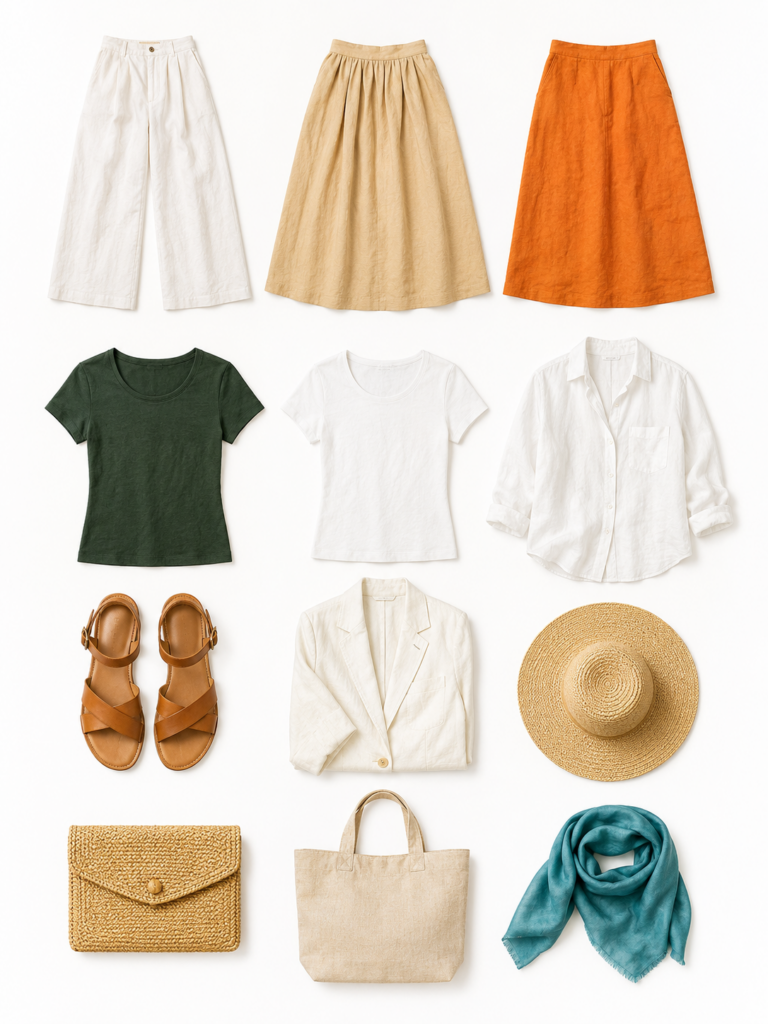
Shop here:
- Bleached white wide-leg mid-weight linen trousers > ANRABESS Womens Wide Leg Palazzo Pants with Pockets
- Cadaques sand mid-weight linen wide midi skirt > SANGTREE Women’s Cotton Linen Midi Skirt with Pockets
- Dali ochre mid-weight linen midi skirt > SANGTREE Women’s Cotton Linen Midi Skirt with Pockets
- Fitted deep pine green linen short-sleeve top > Zeagoo Women Linen Button Down Shirt
- Fitted bleached white linen short-sleeve top > Zeagoo Womens Casual Short Sleeve Tops
- Oversized bleached white linen shirt > siliteelon Womens Button Down Shirt Linen
- Compact relaxed-shoulder bleached white linen blazer Women’s Casual One Button Linen Blazer
- Flat tan leather sandals with ankle strap and rubber sole > Amazon Essentials Women’s Casual Strappy Sandal
- Natural woven straw sun hat (wide brim) > FURTALK Womens Wide Brim Sun Hat with Wind Lanyard UPF
- Small natural woven straw clutch > Larcenciel Clutch Purse for Women
- Natural linen tote bag > KALIDI Women Corduroy Zipper Casual Tote Bag
- Mediterranean turquoise lightweight silk or linen square scarf > PoeticEHome 100% Mulberry Silk Square Scarfs
The Costa Brava completes the Spain series and it is the most physically active and texturally specific destination of the five. The limestone, the pine, the turquoise water, and the pebble coves set a wardrobe logic that no other destination in this series shares. For the urban half of a Spain itinerary, the Madrid capsule wardrobe guide and the Barcelona capsule wardrobe guide cover the capital and the Catalan city. For Andalucia, the Seville capsule wardrobe guide and the Granada capsule wardrobe guide complete the southern half. The Complete Guide to Spain ties all five destinations into a single cross-Spain packing strategy.
Frequently Asked Questions
Build a capsule around swimwear, cover-ups, and breathable linen for coastal towns like Cadaqués and Tossa de Mar. Pack sandals for the beach and one pair of closed shoes with grip for cliffside coastal paths, which run rocky and uneven in several stretches.
A sturdy walking or light trail shoe helps on the longer, rockier stretches of the Camí de Ronda. Sandals work fine for shorter, flatter sections near town. If you’re planning a full multi-town walk, prioritize grip and ankle support over style.
Resort-casual works well: a linen dress or breezy separates suit the relaxed coastal vibe. Towns like Cadaqués and Calella de Palafrugell don’t expect formal wear, even for a nicer dinner. Bring one slightly elevated piece for a special seafood dinner by the harbor.
The tramontana wind can pick up suddenly, especially in fall and winter, sometimes strong enough to affect beach plans. A packable windbreaker earns its space year-round. Summer stays calmer, but a light layer still helps for boat trips or evening walks along the water.
Six to seven outfit combinations from an 8-10 piece capsule cover a week comfortably. Build around beach-to-dinner pieces that transition easily, since most days move between the coast, town exploring, and a relaxed evening meal.