
*This post may contain affiliate links for which I earn commissions.*
The Complete Insider’s Guide to Barcelona
Barcelona faces the sea and takes its architecture seriously, and it manages to do both without one undermining the other. The beach is a fifteen-minute walk from the Gothic Quarter. The Sagrada Família is forty minutes from the Barceloneta on foot. People come for Gaudí and end up spending a morning in the Eixample looking at modernisme buildings they did not know existed. People come for the beach and find themselves in the Picasso Museum by eleven. The city pulls in multiple directions and all of them are worth following.
Barcelona is also a city with its own language, its own political identity, and a strong sense of being something other than Spain. Catalan is the first language of most people who grew up here. The street names are in Catalan. The menus in the neighbourhood restaurants are in Catalan. This is not an obstacle for visitors but it is worth knowing before you arrive, both because it changes what you hear on the street and because a few words of Catalan rather than Spanish go a long way in the places where locals eat and drink.
Give Barcelona more than two days. A week is the right amount. Less than that and you leave feeling you have only started.
What to See
The Sagrada Família
Antoni Gaudí began work on the Sagrada Família in 1883 and died in 1926 with the building less than a quarter complete. Construction has continued from his plans and models ever since, funded entirely by visitor entrance fees, and the target completion date is sometime in the 2030s. The exterior is familiar from photographs and still manages to be surprising in person: the scale, the density of the carved stone, the way the facades change character entirely depending on which side you approach from.
The Nativity facade on the east side is the oldest, completed to Gaudí’s direct supervision, and the most organic: stone that looks grown rather than carved, cascading figures and creatures covering every surface. The Passion facade on the west is the most severe: angular, geometric, deliberately stripped of ornament. The Glory facade, the main entrance on the south, is still under construction.
Book tickets online and choose a time slot that includes the tower lift. The towers on both the Nativity and Passion sides carry you up into the spires, and the views from above, over the Eixample grid to the sea on one side and the mountains on the other, are unlike any other viewpoint in the city. Allow two hours minimum. The interior, with its forest of branching stone columns and the stained glass that shifts from cool green-blue on the east to warm amber on the west as the day moves, takes time to absorb properly.
The Gothic Quarter
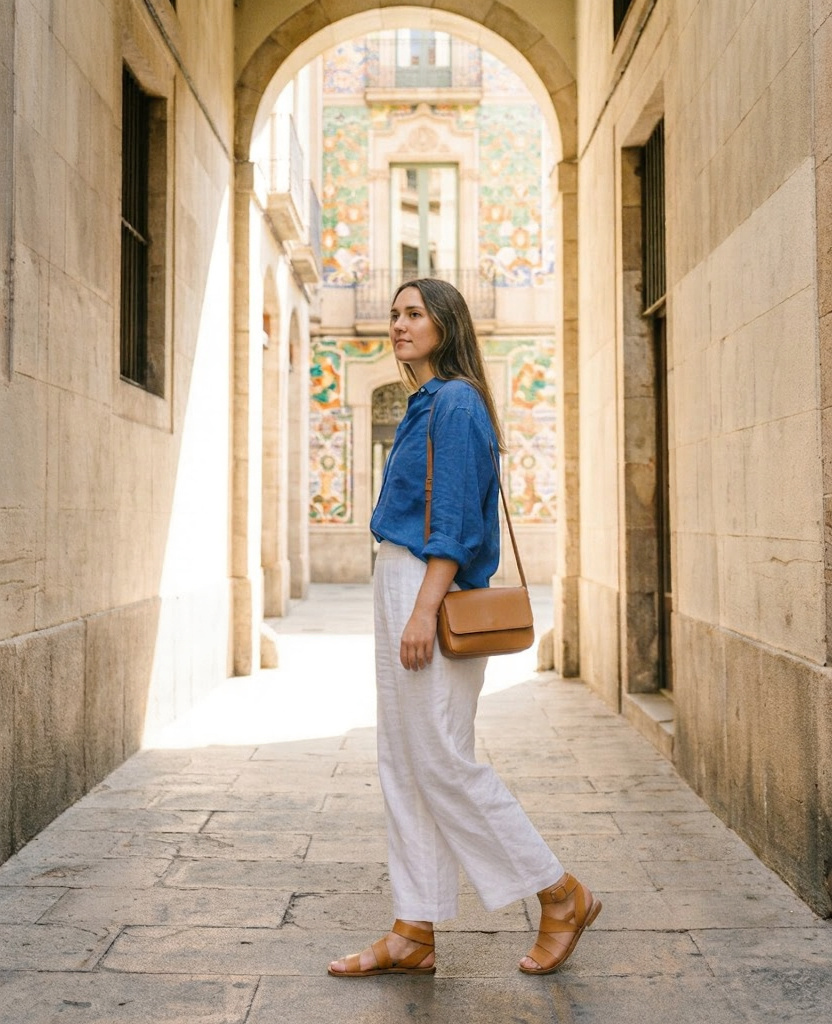
The Gothic Quarter, the Barri Gòtic, sits at the oldest part of Barcelona, built on and around a Roman settlement from the first century BC. The Cathedral of Barcelona at its centre, the remains of Roman walls and columns visible in the basement of the city history museum, the medieval guild streets running between them: this is a neighbourhood that rewards walking without a map and without a particular destination.
The Plaça de Sant Felip Neri is one of the quietest squares in the old city and worth finding: a small stone square with a fountain at the centre, shaded by orange trees, the walls still carrying shrapnel marks from the Civil War. The Carrer del Bisbe bridge connecting the Palau de la Generalitat to the Casa dels Canonges is neo-Gothic rather than medieval but has been photographed so many times it has become genuinely iconic regardless.
Come before nine in the morning. The Gothic Quarter after ten belongs to the guided tour groups. Before nine, the fishmongers are setting up on the Carrer dels Carders, the café on the Plaça de Sant Josep Oriol has its tables out, and the neighbourhood is briefly its own place again.
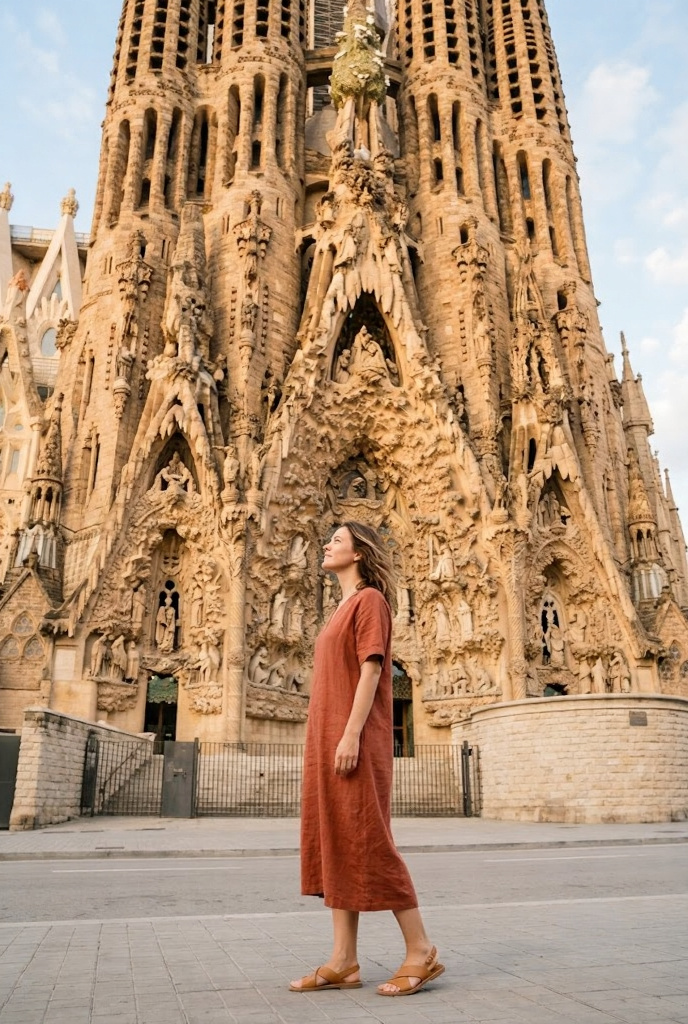
The Sagrada Família. Come for the towers. Stay for the interior, where the light changes all day.
Park Güell
Park Güell is a public park on the hill of El Carmel in the upper part of the city, originally designed by Gaudí as a garden city development that was never completed. The mosaic terraces and the famous multicoloured bench running around the main terrace are in the monumental zone, which requires a timed ticket. The rest of the park is free and considerably less crowded.
The view from the main terrace over the city to the sea is one of the two or three best in Barcelona. Come early. The first ticket slots open at eight in the morning and the terrace in the first hour has a fraction of the midday crowd. The walk up through the free section of the park from the Carrer de Larrard entrance, through the stone viaducts and the pine forest, is pleasant and avoids the long approach road that most people take.
Gaudí lived in the park from 1906 to 1925 in a house that is now the Casa Museu Gaudí, a small museum of his furniture, personal objects, and drawings. Worth thirty minutes if the park is on the itinerary.
The Eixample and the modernisme buildings
The Eixample, the grid of streets built from the mid-19th century outward from the old city, is where Barcelona’s modernisme architecture is concentrated. The grid was designed by Ildefons Cerdà in 1859 with chamfered corners on every block to allow light and ventilation, a design decision that also makes the intersections one of the distinctive visual features of the city.
Beyond the Sagrada Família, the two modernisme buildings most worth visiting are the Casa Batlló and the Casa Milà, both by Gaudí and both on the Passeig de Gràcia within a few hundred metres of each other. The Casa Batlló’s facade, covered in broken ceramic tile in blue and green scales, with balconies shaped like skulls and bones, is one of the most extraordinary building exteriors in Europe. The Casa Milà, known as La Pedrera, is the more restrained of the two from the street but the rooftop, with its warrior chimneys and the curved stone terraces, is the building’s real statement. Book both in advance.
Walk the Passeig de Gràcia between the Carrer d’Aragó and the Diagonal for the highest concentration of modernisme buildings. The block between the Carrer d’Aragó and the Carrer del Consell de Cent is called the Manzana de la Discordia, the Block of Discord, because it contains three competing modernisme masterpieces by three different architects, Gaudí’s Casa Batlló, Puig i Cadafalch’s Casa Amatller, and Domènech i Montaner’s Casa Lleó Morera, side by side.
The Barceloneta and the waterfront
The Barceloneta is the old fishing neighbourhood that sits between the Port Vell and the sea, a grid of narrow streets in a triangular wedge of land that dates from the 18th century. The beach of the same name runs south from the neighbourhood along the coast, backed by the wide Passeig Marítim. It is the most accessible beach from the city centre and in summer it is very busy from mid-morning.
The best time on the Barceloneta beach is early morning, before nine, when the light is low and the sand is still empty. For quieter beaches, the Bogatell and Mar Bella beaches further north along the coast, reachable by bus or on foot along the passeig, are less crowded and more local in character.
The Barceloneta neighbourhood itself is worth a morning separate from the beach: the Mercat de la Barceloneta on the Plaça de la Font, the old fishermen’s bar-restaurants on the Carrer del Baluard, the lighthouse at the end of the jetty with its view back over the city. The neighbourhood has changed considerably since the 1992 Olympics regenerated the waterfront but it still has a different texture from the rest of the city.
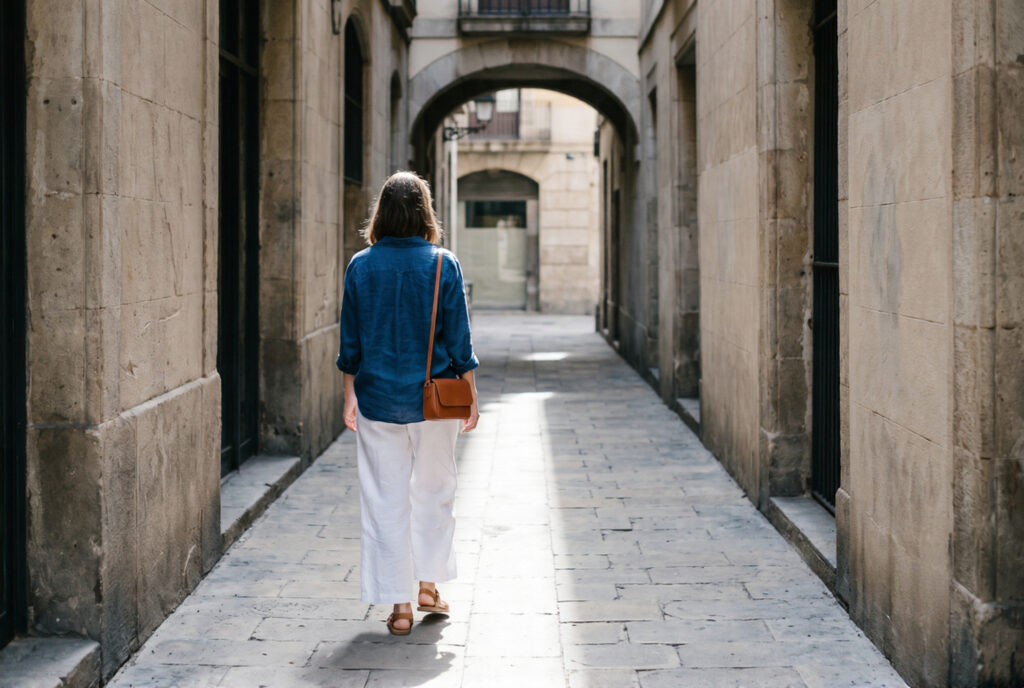
The Gothic Quarter before the day begins. The lanes are narrow enough that the light falls in stripes. Come early and walk without a plan.
The Picasso Museum
The Museu Picasso in the El Born neighbourhood occupies five medieval palaces on the Carrer de Montcada, their interior courtyards connected to form a single museum space. The collection focuses on Picasso’s early years, his time in Barcelona as a young artist in the 1890s and early 1900s, and a significant series of works based on Velázquez’s Las Meninas from 1957. It does not have his most famous works, which are scattered across Paris, New York, and Madrid, but it has depth and context that the famous-works museums rarely achieve.
Book online. The Carrer de Montcada outside the museum is one of the better medieval streets in the old city and worth walking the full length, past the Basílica de Santa Maria del Mar at one end.
What to Do
Spend a morning at the Mercat de la Boqueria
La Boqueria is the most famous market in Spain and the most visited, and the tourist pressure shows in the front section. The stalls visible from the Rambla are largely overpriced and aimed at people passing through. Walk further in to where the actual market traders are: the fish counters, the vegetable stalls, the butchers, the cheese sellers who have been in the same position for thirty years. Back there, it is still one of the finest food markets in Europe.
Bar Pinotxo, just inside the main entrance on the right, is the most talked-about breakfast counter in Barcelona for good reason. The owner, known to everyone as Juanito, has been serving clams, chickpeas, and a very good tortilla from the same spot since the 1950s. Arrive when it opens. The queue forms quickly and the seats at the counter are limited.
Walk the Rambla, but know what it is
La Rambla is Barcelona’s most famous street and its most misunderstood. It is a wide pedestrian boulevard running from the Plaça de Catalunya to the Columbus monument at the waterfront, lined with newspaper kiosks, flower stalls, and café terraces. It is also, particularly from the Liceu theatre southward, the street in Barcelona where pickpocketing is most organised and consistent. Walk it once, understand what it is, and explore the streets on either side of it instead.
The streets east of the Rambla into the Gothic Quarter and west into the Raval neighbourhood are more interesting, less crowded, and considerably safer to walk with a bag. The Raval in particular, which has a reputation that its current state no longer justifies, has some of the best independent restaurants, bookshops, and bars in the city.
Take the cable car to Montjuïc
The Montjuïc hill rises behind the port on the south-west side of the city and is reachable by cable car from the Barceloneta waterfront, by funicular from the Paral·lel metro station, or on foot. At the top: the Castell de Montjuïc, the Fundació Joan Miró, the Pavelló Mies van der Rohe, the Olympic stadium from the 1992 Games, and views over the port and the city to the mountains behind.
The Fundació Miró is the building most worth the trip up. Designed by Josep Lluís Sert and opened in 1975, it is one of the finest museum buildings in Spain: white walls, natural light through carefully placed skylights, a permanent collection of Miró’s paintings, sculptures, and tapestries that covers his full working life. Not crowded. Worth two hours.
The Pavelló Mies van der Rohe, the German Pavilion built for the 1929 International Exhibition and rebuilt on the same site in 1986, is a short walk from the funicular. A single building that changed architecture permanently: travertine marble, green onyx, glass, chrome, and water, with the Barcelona chair in its original setting. Fifteen minutes and worth every one of them.
Eat your way through El Born
El Born is the neighbourhood east of the Gothic Quarter and immediately south of the Picasso Museum, and it has the best concentration of good restaurants and bars in the city for the money. The area around the Passeig del Born and the streets running off it, particularly the Carrer del Parlament and the Carrer del Rec, is where most of the best places are.
The Mercat de Santa Caterina on the Avinguda de Francesc Cambó, designed by Enric Miralles with its extraordinary undulating tiled roof, is the neighbourhood market and considerably less tourist-focused than La Boqueria. Good for breakfast or an early lunch.
Day trips: Montserrat and Sitges
Montserrat is the saw-toothed mountain an hour west of Barcelona by train and rack railway, with a Benedictine monastery at 725 metres that has been a pilgrimage site since the 12th century. The monastery is the reason most people come. The hiking trails on the mountain above it are the reason to stay longer: the Sant Joan trail to the upper peaks takes about two hours and the views over the Catalan interior are exceptional on a clear day. Take the first train from Barcelona Plaça de Catalunya.
Sitges is a small town on the coast forty minutes south of Barcelona by train, with a good beach, a well-preserved old town above the seafront, and a relaxed pace that makes it useful as a half-day or full-day escape from the city. The Museu Cau Ferrat, the house and studio of the artist Santiago Rusiñol, is the most interesting building in town. The beach is best in June and September when the summer crowds have thinned.
Where to Stay
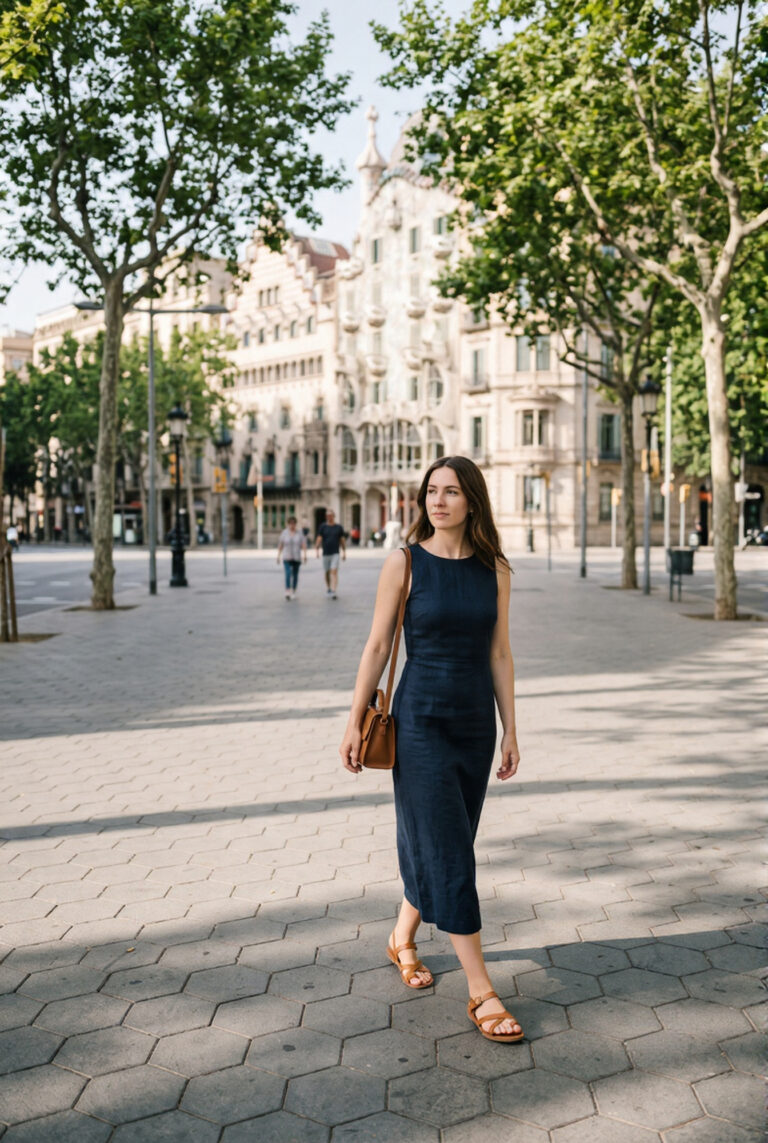
The Passeig de Gràcia. Walk this section between the Carrer d’Aragó and the Diagonal for the highest concentration of modernisme buildings.
Barcelona’s neighbourhoods give very different versions of the city and the choice of where to stay shapes the trip considerably.
El Born and the Gothic Quarter
The best base for first-time visitors who want to be close to the major sights on foot. El Born has the better restaurants and the quieter streets; the Gothic Quarter is older and more atmospheric but noisier at night. The Mercer Hotel Barcelona in the Gothic Quarter occupies a 13th-century palace with Roman walls in the basement. The Boutique Hotel H10 Port Vell on the waterfront side works well for anyone combining the old city with the Barceloneta.
The Eixample
The grid neighbourhood between the old city and the upper city is quieter than El Born at night, better connected by metro to every part of the city, and has the Passeig de Gràcia modernisme buildings and the best independent restaurants of any neighbourhood in Barcelona. The Alma Barcelona hotel on the Carrer de Mallorca is well-placed and well-designed. The Casa Camper on the Carrer d’Elisabets bridges the Eixample and the Raval.
Barceloneta and the waterfront
The right base if the beach is the priority. The waterfront hotels are mostly large and resort-oriented. The W Barcelona at the end of the Barceloneta peninsula is the most architecturally interesting. The Gothic Quarter is about twenty minutes on foot from here, which is fine in the morning and feels longer at the end of a full day.
Where to Eat
Bar Pinotxo, La Boqueria
Inside La Boqueria on the right as you enter from the Rambla. Counter seats only, maybe twelve of them. Juanito has been here since the 1950s. Order the clams with chickpeas, the tortilla, whatever looks right on the day. Arrive when it opens at seven in the morning. This is one of the few places in Barcelona that fully earns its reputation.
El Xampanyet, El Born
A cava bar on the Carrer de Montcada, a few doors from the Picasso Museum, that has been open since 1929 and has changed almost nothing since. House cava poured by the glass, anchovies from tins, the Catalan sausage botifarra cold, a few hot tapas from the kitchen. Stand at the bar or take a table if one is free. The kind of place that makes the neighbourhood what it is.
Bodega Sepúlveda, Eixample
A neighbourhood wine bar on the Carrer de Sepúlveda in the left Eixample. Natural wines, small plates, tables outside on a quiet street. Genuinely local in feel. No reservation, arrive early in the evening or be prepared to wait.
Tickets, Poble Sec
Albert Adrià’s tapas bar in the Poble Sec neighbourhood below Montjuïc, and one of the most difficult reservations in the city. The cooking draws on the El Bulli legacy, the restaurant his brother Ferran closed in 2011, but the format is tapas: small, surprising, and finished in a way that makes you order more. Book two months ahead through the website or try for a walk-in slot at the door from seven in the evening. Not cheap. Worth it for a single special dinner.
La Cova Fumada, Barceloneta
A no-menu, no-reservation bar-restaurant on the Carrer del Baluard in the Barceloneta that is credited with inventing the bomba, the fried potato and meat croquette that is the neighbourhood’s signature dish. Cash only. Opens in the morning and closes when the food runs out, usually by two in the afternoon. The bombes are the reason to go. The rest of the menu, whatever is on the day, is equally good.
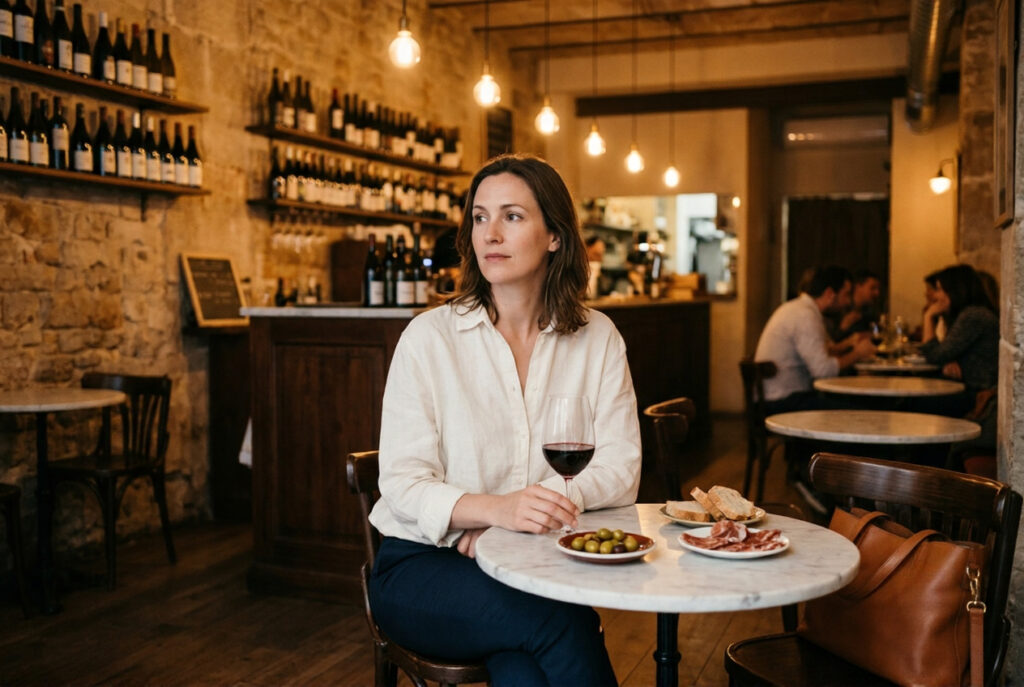
El Born in the evening. The neighbourhood has the best concentration of wine bars and small restaurants in Barcelona. Arrive early or be prepared to wait.
Good to Know
Pickpocketing
Barcelona has some of the most organised pickpocketing in Europe, concentrated on La Rambla, in La Boqueria, at Park Güell, around the Sagrada Família, and on the metro lines serving the tourist areas. A crossbody bag that zips closed, worn in front in crowds, removes most of the risk. Keep phones in a front pocket or a zipped bag rather than a back pocket. It takes thirty seconds to adjust and saves considerable trouble.
Getting around
The metro covers the city efficiently and the T-Casual ten-trip card works across metro, bus, and the Montjuïc funicular. The old city and El Born are best on foot. The Eixample is flat and easy to walk but large: the metro is faster for crossing it. Taxis are metered and reliable. The Aerobus runs from both terminals of El Prat airport to the Plaça de Catalunya in about thirty-five minutes.
Visit The Gothic Quarter in the morning, before nine. The lanes are cool, the light falls between the buildings in narrow strips, and the neighbourhood is briefly itself again.
Language
Catalan is the primary language of Barcelona and of Catalonia. Spanish is widely spoken and understood. Most people working in hotels, restaurants, and tourist-facing businesses speak some English. In the neighbourhood bars and restaurants away from the tourist centre, Catalan or Spanish is more useful. A few words of Catalan, gràcies for thank you, bon dia for good morning, are appreciated in a way that Spanish equivalents are not always.
The beach in summer
The Barceloneta beach in July and August is very crowded by mid-morning. Early morning, before nine, is the best time for the beach closest to the city. The Bogatell and Llevant beaches further north along the coast are less visited and easier to find space on. The sea along this stretch of coast can have jellyfish in late summer, particularly after northerly winds. Check locally before swimming.
Booking ahead
The Sagrada Família, the Casa Batlló, the Casa Milà, and Park Güell all require timed-entry tickets booked online in advance, especially from June through September. Walking up without a booking to any of them in summer is largely a waste of time. The Picasso Museum and the Fundació Miró are easier to get into on the day outside peak periods.
Tipping
Not obligatory. Rounding up at a café or leaving five to ten percent at a sit-down restaurant where the service was attentive is the norm. The tourist restaurants on La Rambla often add a service charge. Check before adding more.
For current information on exhibitions, events, and transport, the Official Barcelona Tourism website is the most reliable source.
Best Time to Go
May and October are the strongest months. May is warm without the summer heat, the city is full but not overwhelmed, and the light is good all day. The Primavera Sound music festival in late May and early June brings a week of concerts that takes over the Parc del Fòrum and draws visitors who may or may not overlap with what you are planning.
June is good before the school holidays begin in the second half of the month. September is excellent: the heat breaks after the first week, the beach is still warm enough to use, the summer crowds have mostly gone, and the restaurants are at their best again after August.
October is the finest month for the city. Warm days, cool evenings, good light, and the Mercat de Santa Caterina and La Boqueria both well-stocked with autumn produce.
July and August are hot, very crowded, and expensive. The beaches are packed by nine in the morning. The Sagrada Família and Park Güell tickets sell out days ahead. Hotel prices are at their highest. If July or August is unavoidable, book everything months in advance and plan outdoor activities for early morning and evening.
Winter, November through March, is mild by northern European standards: rarely below ten degrees, often warmer. The city is at its quietest and most local-feeling. The museums are uncrowded. The Christmas market in front of the Cathedral and the lights along the Passeig de Gràcia are worth seeing in December.
Read Next
Barcelona dresses differently from the rest of Spain: the beach and the city are both part of the same day here, and the wardrobe needs to move between them. The Barcelona capsule wardrobe guide covers exactly what to pack. (Barcelona Capsule Wardrobe — coming soon)
For the full picture of what to pack across every Spanish region in one carry-on, start with Spain in One Bag.
Combining Barcelona with Madrid? The Madrid Travel Guide covers the capital in full.
For the broader regional picture, the Complete Guide to Spain covers every region and how they differ.
Sorting out what to pack for Barcelona? The Barcelona Capsule Wardrobe covers the pieces that handle the Gothic Quarter morning, the Sagrada Família afternoon, and the El Born evening. (Coming soon)