
*This post may contain affiliate links for which I earn commissions.*
The Complete Insider’s Guide to Château Country
The Loire Valley has been recognised as a UNESCO World Heritage Site for its exceptional concentration of Renaissance châteaux and historic towns.
The Loire Valley sits about two hours south of Paris by TGV and feels immediately different from the capital. The pace drops. The light spreads wide across flat river plains. And then the châteaux start appearing through the trees, pale limestone rising from the fields with the unhurried presence of something that has been there for five hundred years and is not particularly interested in impressing you.
This is the region that built the French Renaissance. When the kings moved their court here from Paris in the 15th and 16th centuries, the Loire became the centre of French cultural and political life, and they built accordingly. Chambord, Chenonceau, Amboise, Villandry: each one different from the last, each one worth more time than most visitors give it. The garden at Villandry alone takes three hours. Most people spend forty minutes.
What to See
Château de Chenonceau
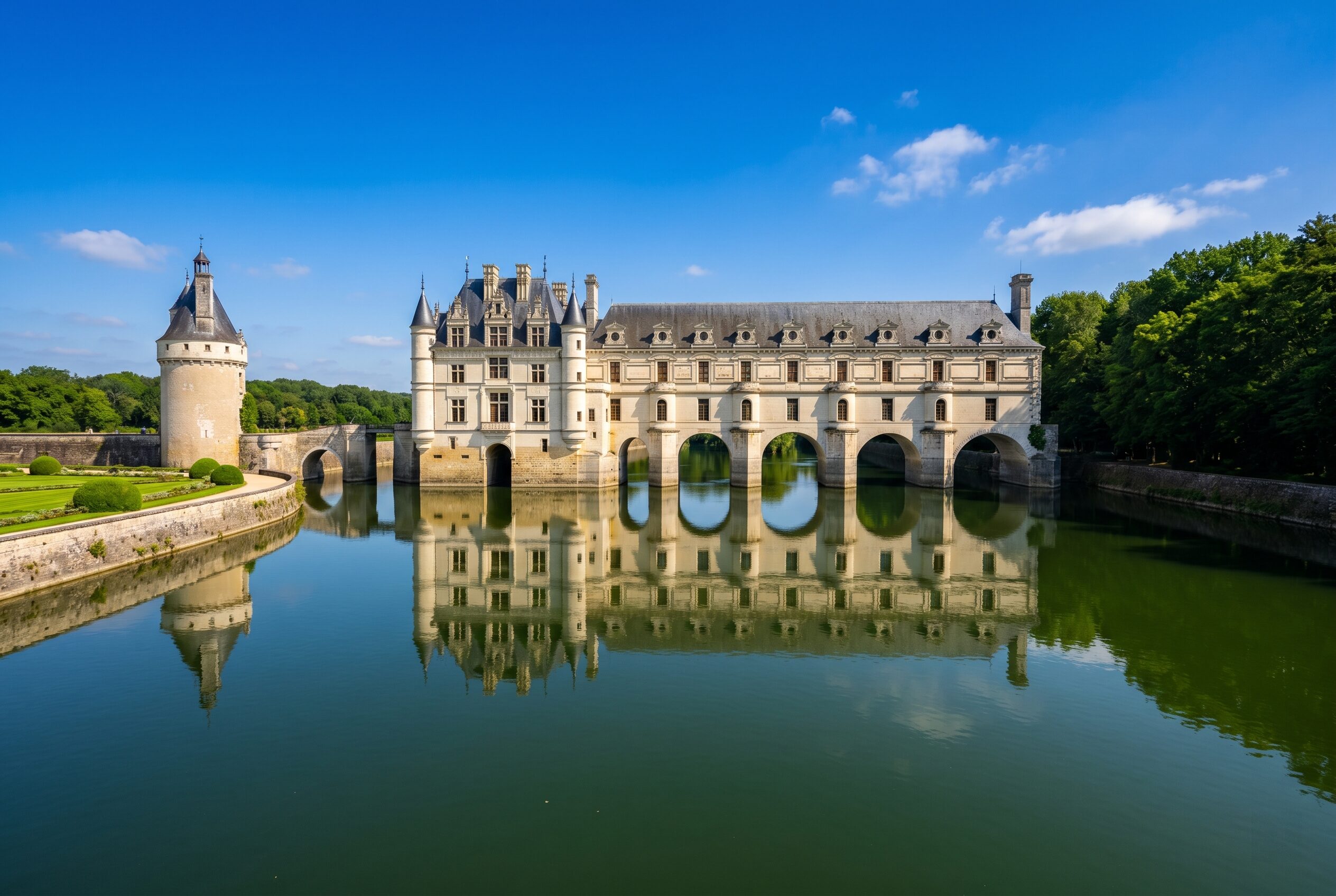
Chenonceau is the one château that surprises even people who have seen photographs. The five-arched bridge spanning the Cher river, the long gallery built across the water by Catherine de Medici, the formal gardens on both banks: none of it quite reads as real until you are standing in front of it. It looks like something someone drew and then, against all reasonable expectation, built.
The history is as interesting as the architecture. The château was given by Henri II to his mistress Diane de Poitiers, who built the bridge across the Cher. When Henri died, his widow Catherine de Medici took it back and added the gallery above the bridge. During the First World War the gallery served as a military hospital. During the Second World War the Cher marked the boundary between occupied and free France: crossing the gallery was, briefly, a way to escape.
Book tickets in advance. The gardens are included in the entry. Go in the morning when the light comes through the gallery windows from the east. Two hours is the minimum.
Château de Chambord
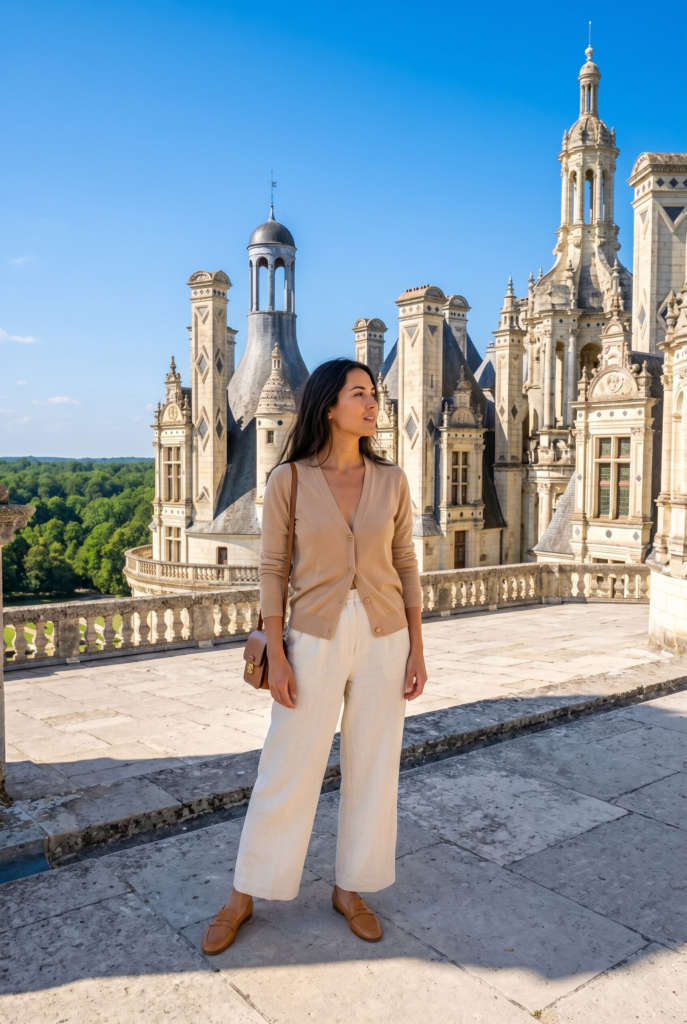
Chambord is the largest château in the Loire Valley. Built by François I as a hunting lodge — a man whose idea of a hunting lodge ran to 440 rooms — it sits in the middle of a 5,440-hectare estate, the largest enclosed park in Europe.
The double-helix staircase at the centre, attributed by some to Leonardo da Vinci who spent his last years near Amboise and was close to François, rises through all four floors without the two helixes ever meeting. The rooftop terrace is a landscape of chimneys, turrets, and lanterns that has been compared to a small town built on a château roof. It is a fair comparison. Go up there.
Walking or cycling the paths through the hunting grounds in the morning, before the coach parties arrive, gives you the building in the landscape the way it was intended to be seen.
Château de Villandry and its gardens
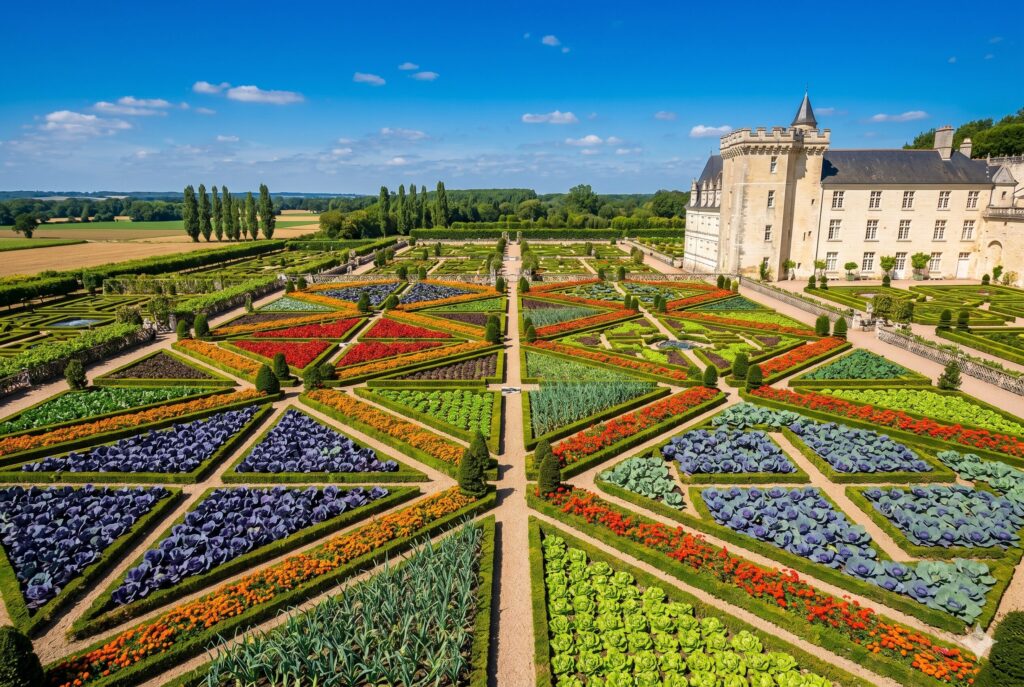
Villandry is the one château where the gardens are the reason to come. Six hectares of Renaissance-style formal gardens across three terraces: ornamental, kitchen, and water. The kitchen garden, laid out in geometric beds of vegetables and flowers derived from Renaissance manuscripts, is the most photographed section. In late summer when the different-coloured vegetables are at their fullest, the effect from the tower above is something you do not forget quickly.
The château itself is smaller than Chenonceau or Chambord but the interior tour is worth it for the Spanish paintings and the view from the tower over the garden layout. Three hours is the right amount of time. Plan accordingly.
The town of Amboise
Amboise is the most underrated town in the Loire Valley. It sits on the south bank of the Loire with a royal château on the cliff above it and, just outside the town, the Château du Clos Lucé where Leonardo da Vinci spent the last three years of his life as a guest of François I. He is buried in the chapel of the royal château above the town.
The Clos Lucé is a good museum: the rooms where Leonardo lived, scale models of his inventions built from his notebooks, and gardens scattered with full-scale reproductions of the machines he designed. It treats the material with seriousness. Book ahead.
The town market on Friday and Sunday mornings on the riverside is the one to go to in this part of the valley: local producers, good charcuterie, mushrooms from the Touraine caves, early vegetables.
What to Do
Cycle the Loire à Vélo
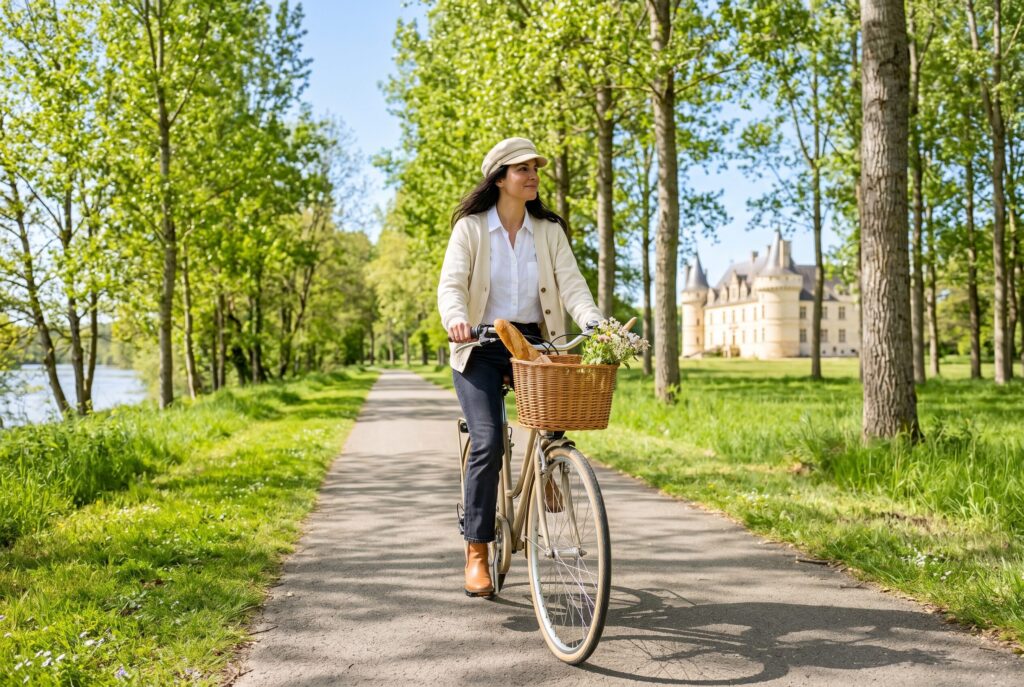
The Loire à Vélo is a 900-kilometre cycling route following the Loire river from its source in the Massif Central to the Atlantic at Saint-Brévin-les-Pins. The section through the château country between Blois and Angers is the most used: flat, well-marked, largely traffic-free on the dedicated path sections, passing châteaux, vineyards, troglodyte cave villages, and riverside towns.
A day cycling from Amboise to Blois, or from Blois to Chambord and back, covers some of the best sections. Bicycle hire from Amboise, Blois, Tours, and Saumur. The official Loire à Vélo website gives day-by-day itinerary suggestions for every level.
Visit the troglodyte caves
The soft tuffeau stone quarried to build the Loire’s châteaux left behind a network of cave dwellings along the cliff faces of the valley. Many were inhabited for centuries. The caves around Amboise, Vouvray, and Saumur have become wine cellars, restaurants, mushroom farms, and in a few cases visitor sites that are genuinely worth the time.
The Maison du Champignon near Saumur is an underground mushroom farm in a former quarry that tours the cave system with real context. The cave dwellings at Troglodytes et Sarcophages in Doué-la-Fontaine go further back: an entire subterranean village inhabited from the 12th century.
Taste the wines
The Loire Valley produces more varieties across more appellations than anywhere else in France. Muscadet from the Nantes end. Sancerre and Pouilly-Fumé from the Sauvignon Blanc vineyards in the east. Vouvray, still and sparkling, from the Chenin Blanc vines above the Loire near Tours. Chinon and Bourgueil for the Cabernet Franc reds. Saumur-Champigny for a lighter red that locals drink slightly cool.
Most estates welcome visitors without booking. Drive the wine roads above Vouvray in the morning and stop at whichever domaine looks open. The Domaine Huet in Vouvray and the Domaine Olga Raffault in Chinon are the two names serious Loire wine people point to.
Take a hot air balloon over the châteaux
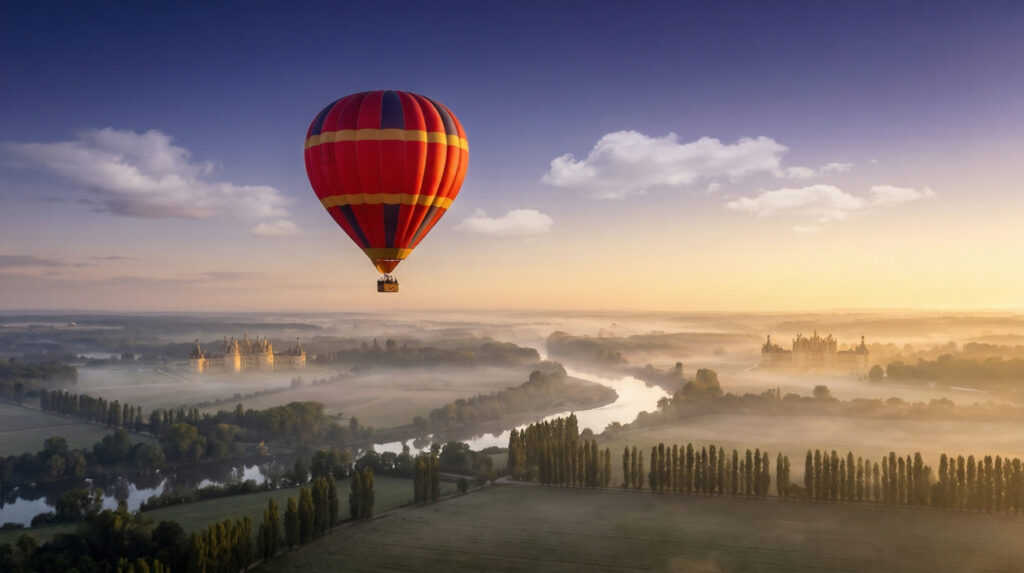
Ballooning over the Loire Valley at dawn shows you what the region actually looks like: the flat river plain, the dark forest, the pale stone buildings rising from both, the scale of it all. Several operators run morning flights from the main château towns. France Montgolfières near Amboise is the most established. Book months ahead in peak season.
Where to Stay
Amboise is the most practical base in the central Loire. Close to Chenonceau, Chambord, and Clos Lucé, good train connections to Paris and Tours, a good market, and well-priced hotels in the old town. The Manoir Les Minimes on the waterfront is the most atmospheric option at the upper end.
Tours is the largest city in the region and the base for anyone who wants a city rather than a town. Good restaurant scene, direct TGV to Paris, well-connected by bus and local train to the main châteaux. More affordable than the château towns.
Saumur at the western end makes sense for anyone whose itinerary runs that way. The mushroom caves, the Saumur-Champigny wine country, and the riding school of the Cadre Noir are all nearby. Smaller and quieter than Amboise, with its own château above the town.
A gîte in the countryside for longer stays. The area around Vouvray, Montlouis, and the wine villages east of Tours has the best concentration of well-maintained rural properties. Staying in a converted farmhouse or tuffeau cave house is a different trip from a town hotel.
Where to Eat
L’Opidom, Amboise
A short walk from the château in the old town. The cooking is rooted in the Touraine: rillettes de Tours to start, freshwater fish from the Loire, mushrooms from the cave farms, goat’s cheese from the local producers. The lunch menu is well priced. Book for dinner.
La Cave des Roches, Bourré
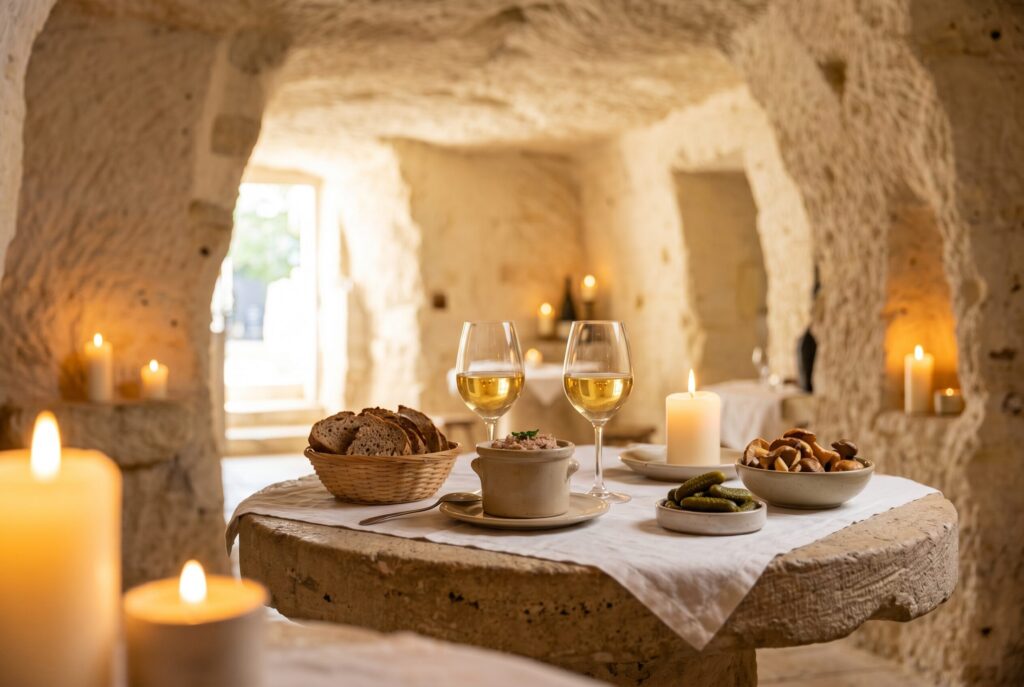
A restaurant built into the tuffeau caves above the Cher river, between Chenonceau and Blois. The cave dining rooms are candlelit, the food is classically Tourangelle: slow-cooked pork, local vegetables, the wines of the valley. It is the kind of meal that takes on the quality of the place it is eaten in. Book in advance.
La Maison de la Reine de Sicile, Fontevraud
The restaurant in the village adjoining the Abbaye de Fontevraud, one of the largest medieval abbeys in Europe and the burial place of the Plantagenet kings including Richard the Lionheart. The cooking is serious and locally sourced. Book ahead. Combine with a visit to the abbey.
The Rillettes
Not a restaurant but a rule: eat the rillettes de Tours at least once, from a market stall or a charcuterie or a restaurant that makes them from scratch. Pork slow-cooked in its own fat until it falls apart, packed cold into a jar or pot, spread on bread with cornichons. Produced here since the Middle Ages. Nothing like the factory version.
Good to Know
A car is useful but not essential. Chenonceau, Chambord, Villandry, and Amboise are accessible by organised tour from Tours, by taxi, or by bicycle from the local towns. The wine villages and cave sites need a car or bicycle. The Loire à Vélo is a good car-free option for covering real distance.
Book the major châteaux in advance. Chenonceau and Chambord sell timed-entry tickets that go quickly in July and August. The Clos Lucé also benefits from booking ahead. The summer weekend queues without a ticket are long.
The Loire floods. The river is managed by a levée system but spring flooding is real. In wet years some of the riverside paths and cycling routes close. Check conditions if you are planning the Loire à Vélo in March or April.
Tuffeau stone. The pale yellow-white stone used to build the châteaux, quarried from the valley’s cliff faces, is the same stone that made the caves. Soft enough to carve by hand, hard enough to last eight hundred years. The afternoon light on it is what gives the valley its colour.
Tipping. Not obligatory. Rounding up or leaving five to ten percent at a sit-down meal is appreciated.
Best Time to Go
April and May are the best months. The Villandry gardens are in their spring planting, the Loire à Vélo paths are clear after winter, the cherry trees along the river roads are flowering, and the tourist volumes have not yet peaked.
June through September is high season. The châteaux are fully open, the cycling is at its best, and the balloon flights run daily. July and August bring the biggest crowds. Manageable with advance booking but plan around it.
October is good and most visitors miss it. The vine leaves turn gold along the Vouvray and Chinon wine roads, the mushroom harvest is running in the cave farms, and the apple orchards of the Touraine are in full fruit. The balloon flights continue into October on clear mornings.
November through March is quiet. Most of the smaller sites and restaurants close or cut hours. The major châteaux stay open year round. The cave restaurants and wine cellars in winter have a particular atmosphere worth seeking out.
Read Next
The Loire Valley capsule wardrobe post is coming soon: the cream linen cardigan, the quality ankle boot, what you actually need for a week moving between châteaux and cave restaurants.
For the full France wardrobe picture across every region, the Complete Guide to Packing for France is where to start.
Already done Paris or the Riviera? The Paris Travel Guide, the French Riviera Travel Guide, the Provence Travel Guide, and the Alsace Travel Guide are all live on The Capsule Trip.
Planning what to pack for the Loire Valley? The Loire Valley Capsule Wardrobe post is coming soon. In the meantime, the Complete Guide to Packing for France covers the core pieces that work across every French region.