*This post may contain affiliate links for which I earn commissions.*
The Complete Insider’s Guide to France’s Most Surprising Region
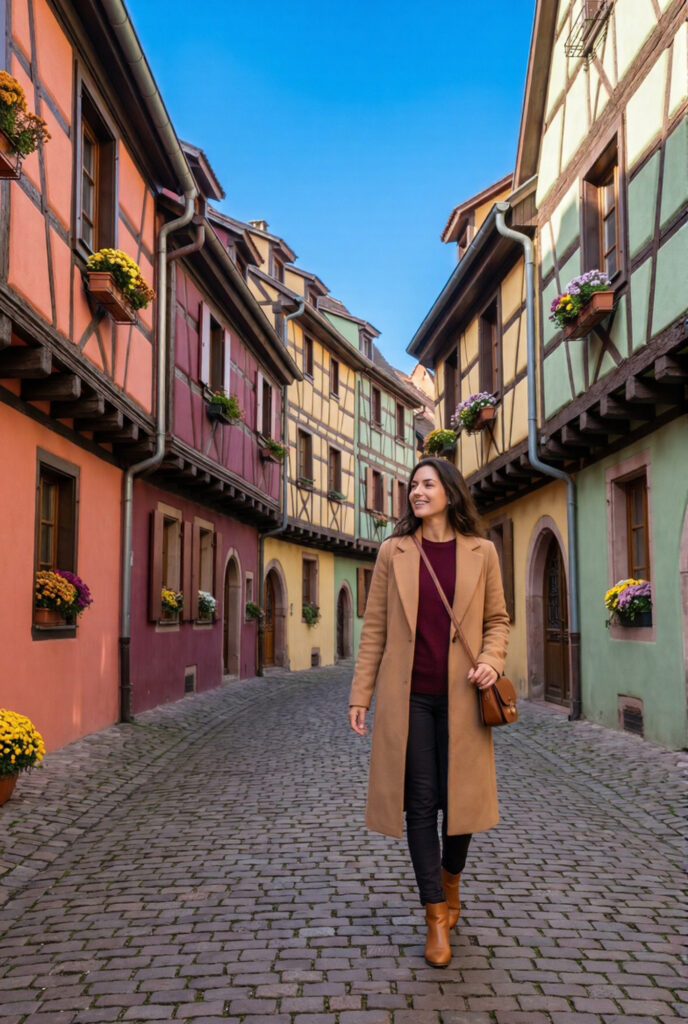
Alsace does not look like France. That is the first thing you notice arriving into Colmar or Strasbourg or any of the small villages along the wine road: the half-timbered facades in deep burgundy and forest green and mustard yellow, the steep pitched rooftops, the road signs in German alongside the French, the stork nests on the chimneys. Nothing about it matches what you were expecting.
The region sits pressed against the German border in the far northeast, the Rhine running along its eastern edge, the Vosges mountains rising to the west. It has changed hands between France and Germany four times since 1870 and the result is a culture that has stopped trying to be either one. The food, the wine, the architecture: all of it is Alsatian, which means it is its own thing, built from two others, and more interesting than either. Come here and give it time. It earns it.
What to See
Colmar’s old town
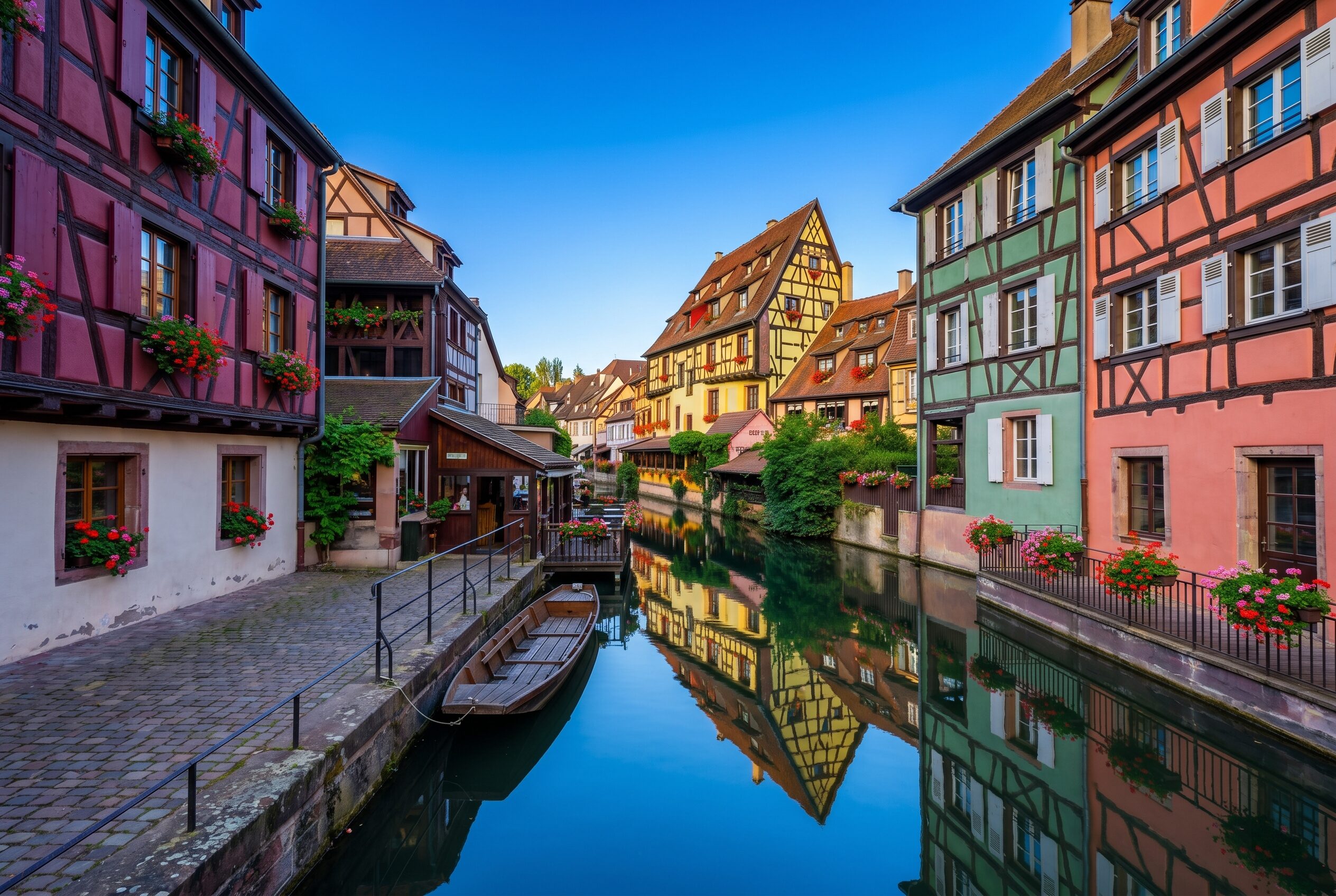
Colmar is the town most people have in mind when they picture Alsace. The Petite Venise quarter, a network of canals lined with medieval half-timbered houses in colours that seem slightly too vivid to be real, is the image that has made the region famous. In person it is extraordinary, particularly in the early morning before the day-trippers arrive by coach, when the reflections in the canal are still and the streets are empty.
The wider old town around the Place de l’Ancienne Douane and the Rue des Marchands takes the rest of the morning. The Unterlinden Museum on the Rue des Unterlinden houses the Isenheim Altarpiece, a 16th-century polyptych by Matthias Grünewald painted for a hospital order that treated patients with skin disease. The suffering in it is physical and immediate. Most visitors to Colmar walk straight past the museum. That is a significant mistake.
Colmar is small enough to explore on foot in a day. Stay overnight if you can: the town after the day-trippers leave is much quieter, and the restaurants in the old town in the evening are worth staying for.
Strasbourg: the Grande Île and the cathedral
Strasbourg is the capital of Alsace and the seat of the European Parliament, a large city with a medieval heart that UNESCO has designated a World Heritage Site. The Grande Île, the island at the centre of the city surrounded by the two arms of the Ill river, contains the old town, the cathedral, the Petite France quarter, and most of the reason to come.
The Cathédrale Notre-Dame de Strasbourg took two centuries to build. The astronomical clock inside, built in 1574, puts on a mechanical display at 12:30pm daily when figures emerge from the clockwork. Arrive ten minutes early. The facade of the cathedral in the morning light is worth standing in front of for longer than most people give it.
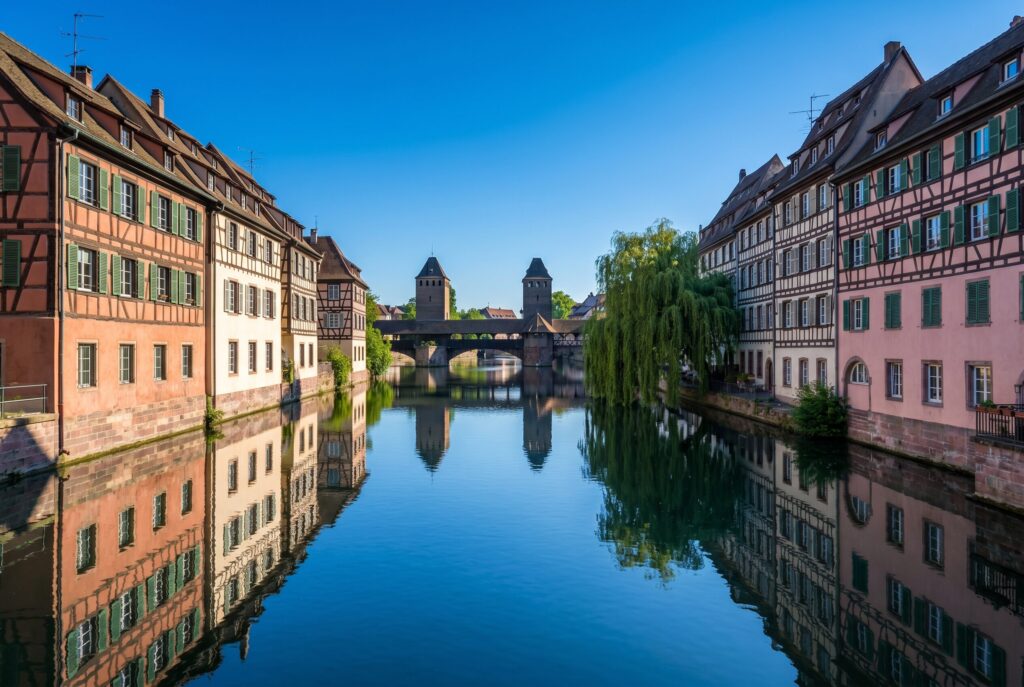
The Petite France quarter southwest of the cathedral has the half-timbered tanners’ houses along the water, the Ponts Couverts, the covered bridges with their defensive towers, and the barrage Vauban with its terrace viewpoint over the whole quarter. Arrive before nine in the morning. By ten the tour groups are there.
The Route des Vins villages
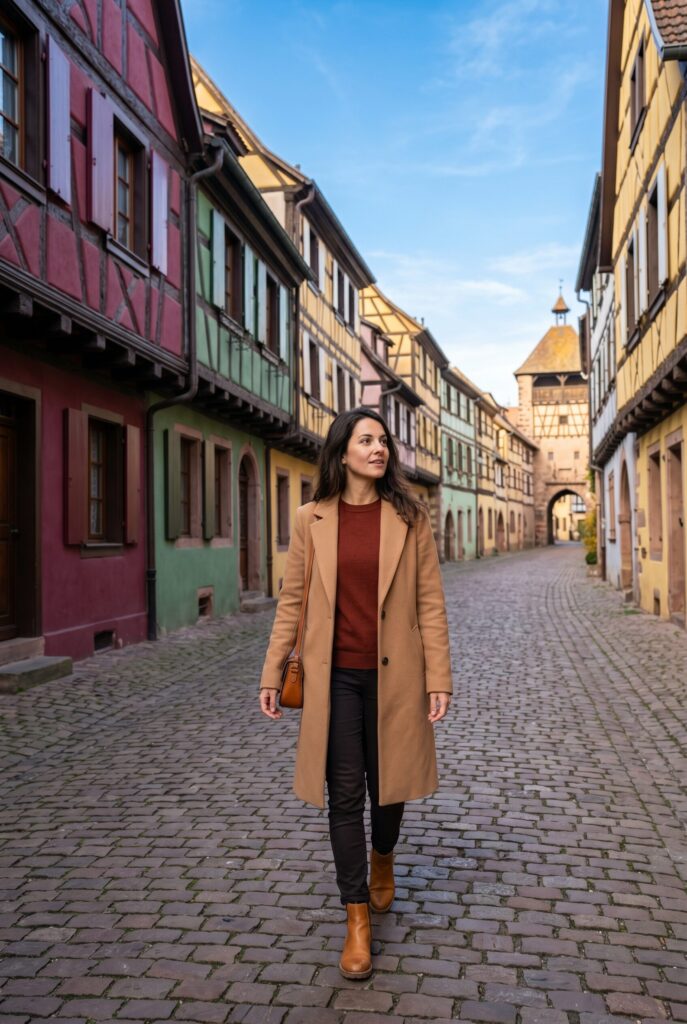
The Alsace Wine Route runs sixty-nine kilometres from Thann in the south to Marlenheim in the north, passing through a succession of wine-producing villages each one different from the last. Eguisheim, Riquewihr, Ribeauvillé, Kaysersberg, Turckheim: all are on the route, all have their own character, and all need walking rather than driving through.
Eguisheim is the one that stops people. A perfectly circular medieval village built around a central château, the streets radiating outward in concentric rings, every house a different colour. Riquewihr is the most visited and most intact: the fortified walls largely standing, the main street an unbroken run of 16th-century facades. Kaysersberg is the least-visited of the major villages and the most worth the detour: Albert Schweitzer was born here, the wine cooperative is one of the best on the route, and the ruined castle above the village has a view down the valley that justifies the climb.
The Haut-Koenigsbourg castle
The Château du Haut-Koenigsbourg sits on a rocky spur above the wine road at 755 metres, rebuilt by Kaiser Wilhelm II between 1900 and 1908 on the ruins of a 15th-century fortification. The reconstruction is more romantic than strictly historical but the scale of the thing is striking: the great hall, the keep, the drawbridge, the views from the ramparts over the Rhine plain and, on a clear day, the Black Forest in Germany and the Alps to the south.
Book tickets in advance, particularly in summer. The queues on weekend mornings can be long. Go on a clear winter day if you can: the crowds are thin, the views are at their longest, and the castle looks exactly like what it is trying to be.
Alsace’s official tourism portal covers the Wine Route villages, Christmas market dates, and regional itineraries.
What to Do
Drive or cycle the Route des Vins
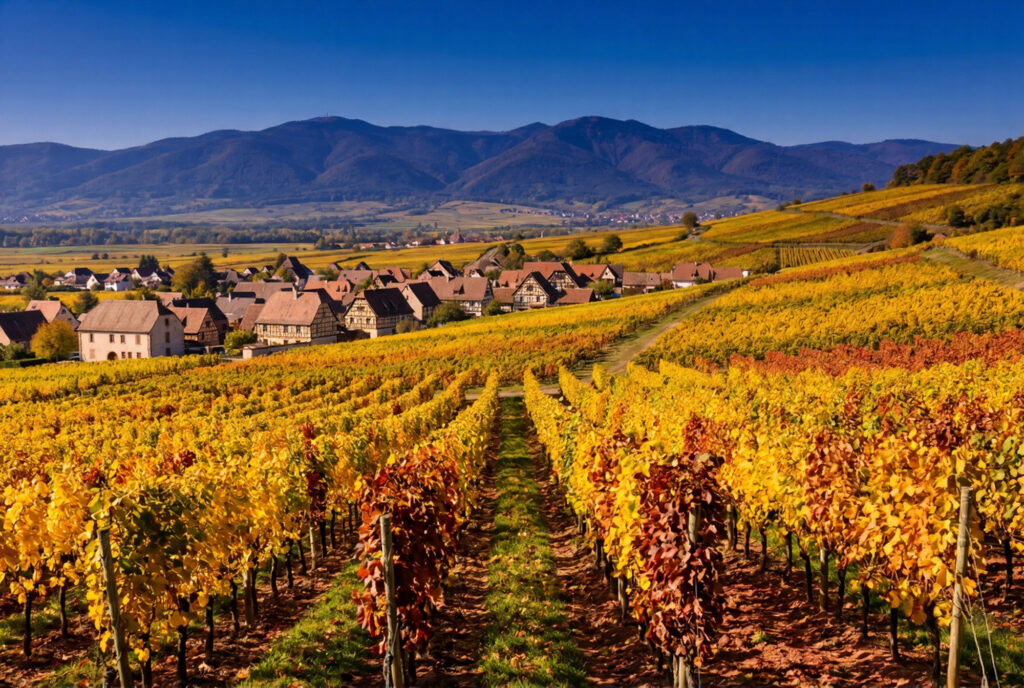
The wine route is best driven or cycled rather than walked: the distances between villages are comfortable by bicycle or car but a long way on foot. The cycling infrastructure along the route is good: a dedicated path runs most of the length, the terrain is flat on the plain section, and cycling through the vineyards in September or October when the leaves are turning and the harvest is running is the finest way to see the route.
Rent a bicycle in Colmar or Ribeauvillé for a day. A circuit from Colmar covering Eguisheim, Husseren-les-Châteaux, and back takes about four hours with stops. Add Kaysersberg for a longer day. Bring a bag for bottles.
Go to a winstub
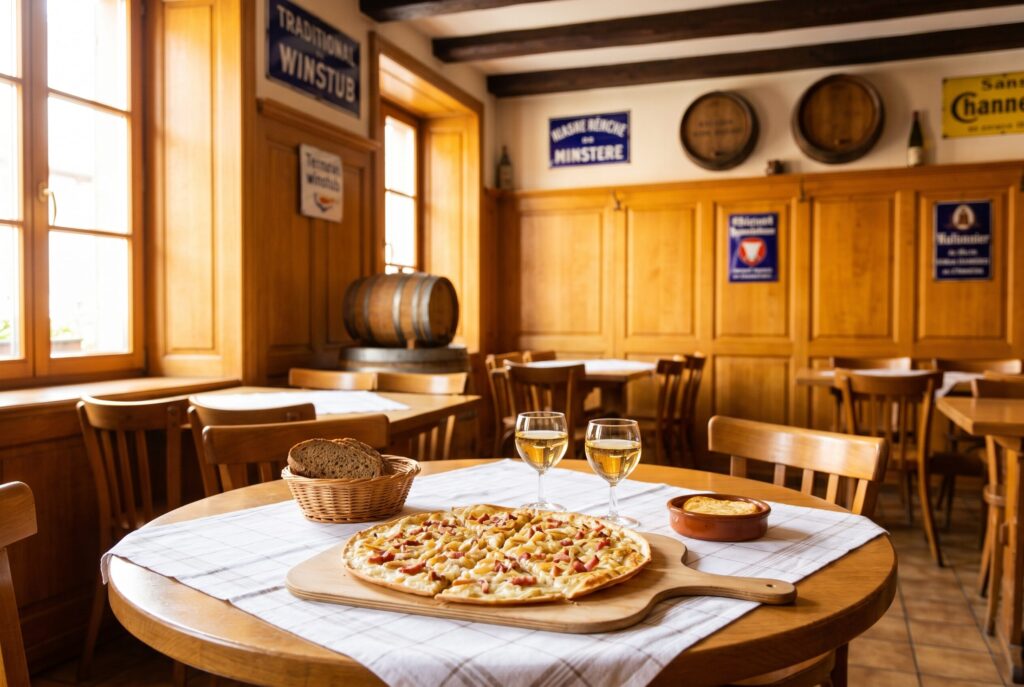
A winstub is a traditional Alsatian wine tavern, warm and wood-panelled and loud, where the wine is local and the food is the hearty cooking of the region: choucroute garnie, baeckeoffe, tarte flambée, munster cheese. A good winstub in the evening is where Alsace feels most like itself: the tables full, the conversation running across them, a carafe of Pinot Gris going between people who are in no hurry to be anywhere else.
The right winstubs are not on the main tourist streets. In Colmar, find the Winstub Brenner on the Grand Rue or the Winstub de la Petite Venise near the canal. In Strasbourg, the Winstub du Pont Saint-Martin in the Petite France quarter and Zum Strissel near the cathedral are the ones locals point to. Do not arrive before 7:30pm and do not rush.
Walk in the Vosges
The Vosges mountains west of the wine road are a different part of Alsace entirely: forested, quiet, small lakes, medieval ruins, the road west from Colmar climbing quickly through pine forest and coming out onto moorland ridges. The Grande Randonnée 5, the GR5, runs the full length of the range from north to south with day sections that give you the full landscape.
The Col de la Schlucht above Munster is the simplest access point: a mountain pass at 1,139 metres with a hotel, a restaurant, and walking trails in every direction. Drive up from Colmar in about forty-five minutes, park at the col, and walk south toward the Hohneck summit for the widest views over both Alsace and Lorraine.
Visit the Christmas markets in December
Strasbourg’s Christkindelsmärik has been running since 1570, the oldest Christmas market in France: twelve locations across the city, the cathedral lit at night, vin chaud and pain d’épice on every street. Colmar runs five separate markets in the old town simultaneously. Kaysersberg, Eguisheim, and Riquewihr each have their own smaller markets that have not yet been turned into events.
Come on a weekday. The weekend crowds in the first two weeks of December are very dense. The markets run from late November through Christmas Eve.
Where to Stay
Colmar is the most practical base for the wine road. Central, walkable, well-connected by train from Strasbourg and Basel. The old town hotels are worth the slight premium: staying inside the medieval quarter means you have the streets to yourself in the early morning and evening when the day-trippers have gone.
Strasbourg is the base for anyone who wants the city alongside the villages. The Grande Île hotels are expensive but the location is hard to argue with. The Petite France quarter has smaller, more characterful options. The tram system covers the city well and the TGV to Paris takes just under two hours.
A wine village gîte for anyone who wants to wake up in the vineyards. Riquewihr, Ribeauvillé, and Kaysersberg all have rental accommodation. Expect limited restaurant options in the evenings outside the village itself and the need for a car to cover the route. Right for people who want the landscape and the quiet.
Where to Eat
Winstub Brenner, Colmar
The winstub most recommended in Colmar, just off the main tourist circuit on the Grand Rue. The choucroute garnie here is the benchmark: sauerkraut slow-cooked with goose fat and Riesling, piled with smoked pork belly, frankfurters, and Montbéliard sausages. The room is exactly what a winstub should be: wood panelling, checked tablecloths, low ceilings, not a quiet corner to be found. Book for dinner.
Zum Strissel, Strasbourg
On the Place de la Grande Boucherie near the cathedral, one of the oldest winstubs in the city. The tarte flambée here, a thin crisp base spread with crème fraîche, onions, and lardons, is the one to order for the table first. The Alsatian Pinot Noir by the carafe is the wine. Come for lunch when it is a little quieter than the dinner service.
La Fourchette des Ducs, Obernai
Two Michelin stars, Chef Nicolas Stamm cooking with the Alsatian territory in a way that is both precise and genuinely rooted in what this region grows and raises. The tasting menu in autumn, when the produce is at its best, is the one to book. Reserve well ahead.
The Kaysersberg wine cooperative
Not a restaurant but worth the stop. The Cave de Kaysersberg on the main street sells the wines of the surrounding estates directly, with tasting at the counter. The Riesling from the Schlossberg Grand Cru above the village and the Gewurztraminer from Turckheim are the ones to find. Buy a bottle, take it to the castle ruins above the town, and drink it looking over the valley.
Good to Know
Alsace has its own language. Alsatian, a Germanic dialect, is still spoken by older residents and used on signs, menus, and in the names of local dishes. German is widely understood and often the preferred language in the smaller villages. French is spoken everywhere but a few words of German go a long way in the winstubs.
The weather. Alsace has one of the driest climates in France east of the Vosges, which act as a rain shadow, but the shoulder seasons and winter bring cold and fog. The misty autumn mornings in the vineyards are as worth seeing as the clear summer days. Pack layers regardless of the month.
Getting around. Trains connect the main cities: Strasbourg, Colmar, and Mulhouse. The wine route villages need a car or a bicycle. Cycling is better in summer when the road through the villages carries tourist traffic. Driving is easier in autumn and winter when the cycling weather is unreliable.
Tipping. Not obligatory. Rounding up or leaving five to ten percent at a sit-down meal is appreciated.
What to buy. Pottery from Soufflenheim north of Strasbourg. Munster cheese from the valley of the same name. Bredele, the small Christmas biscuits, if you are there in December. Kugelhopf, the Alsatian ring cake, from any bakery. And wine: a half-case of Riesling from a good estate on the route is the best thing you can take home.
Best Time to Go
October is the month. The harvest runs through September and into October, the vineyards turn gold and red, the wine road villages are busy but not at their summer peak, the winstubs are full, and the new wine is coming off the presses at the cellar doors. The afternoon light on the half-timbered facades in October is particular to this region and this time of year.
Late November and December are the Christmas market months. They are worth the trip specifically. Weekdays in the first two weeks of December are the right time: the markets are running, the villages are lit, and the weekend crowds have not yet peaked.
Spring and summer are beautiful but the most picturesque villages get crowded by mid-morning. Going early and staying late fixes most of it.
January and February are quiet and cold. The winstubs are open, the castle is accessible without a queue, and the region without its tourist season is stripped back and more itself. The best time to visit the Haut-Koenigsbourg, when the views run all the way to the Alps.
Read Next
Alsace asks for a wardrobe the rest of France does not: boots with real grip, a wool coat, layers that work on the wine road in the morning and in a winstub in the evening. The Alsace Capsule Wardrobe post is coming soon.
For the full France wardrobe picture across every region, the Complete Guide to Packing for France is where to start.
Already done Paris or the Riviera? The Paris Travel Guide, the French Riviera Travel Guide, and the Provence Travel Guide are all live on The Capsule Trip.
Planning what to pack for Alsace? The Alsace Capsule Wardrobe post is coming soon. In the meantime, the Complete Guide to Packing for France covers the core pieces that work across every French region.