
*This post may contain affiliate links for which I earn commissions.*
The Complete Insider’s Guide to the Côte d’Azur
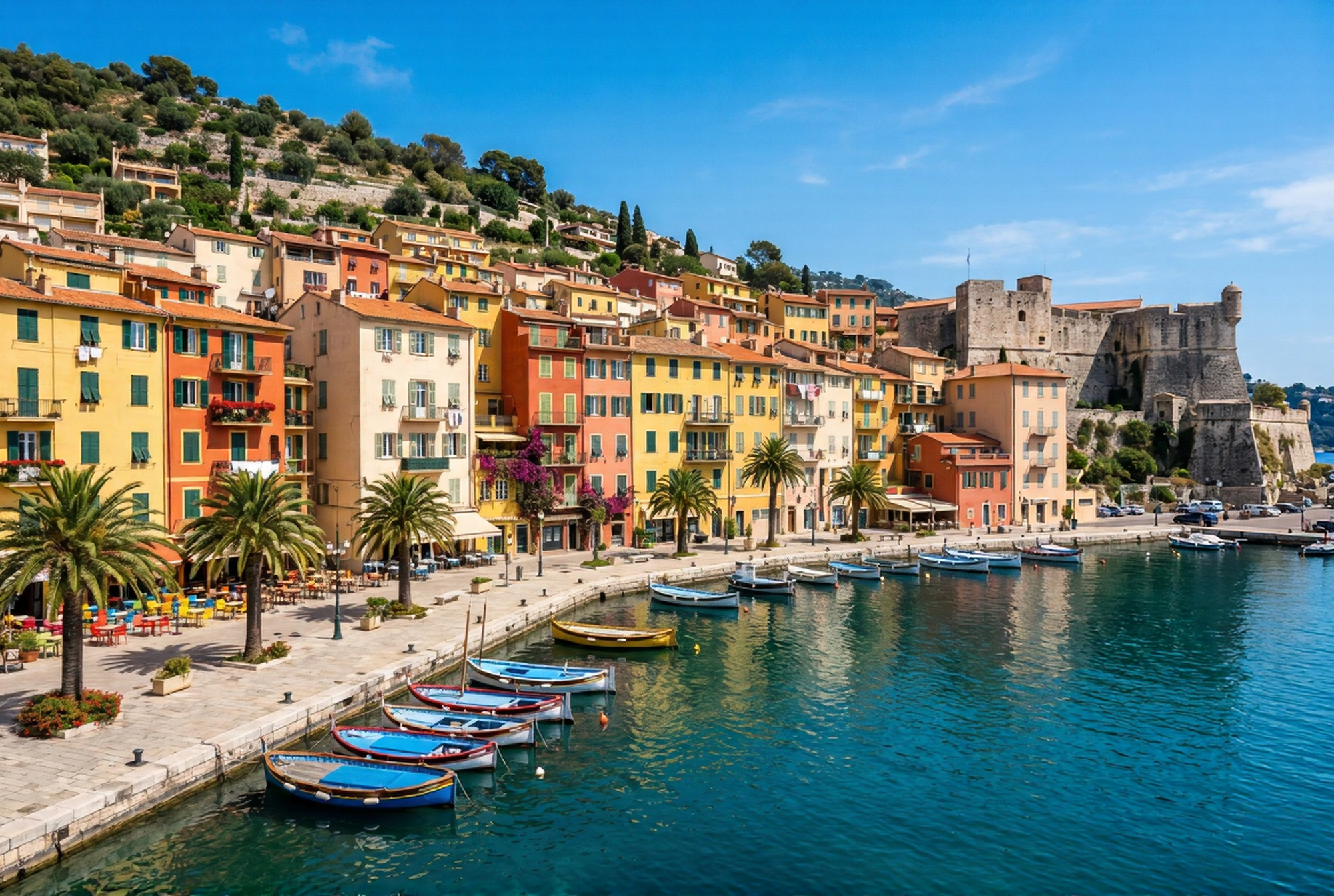
The drive between Nice and Monaco on the Moyenne Corniche takes about forty minutes in light traffic and considerably longer when you stop, which you will. The road cuts into the limestone cliffs a few hundred metres above the sea, and at every bend the Mediterranean appears below in a different shade of blue, deeper offshore, that particular transparent aquamarine near the rocks, the afternoon light turning everything slightly unreal.
The French Riviera has been attracting artists, writers, aristocrats, and people who simply wanted to be warm for nearly two centuries. The light is extraordinary. The food is rooted and serious. The villages above the coast are medieval and almost entirely unbothered. And Monaco is Monaco: preposterous and worth a day of anyone’s time regardless.
What the photographs do not show is how intimate the scale is. The Riviera coast is not long. Nice to the Italian border is about fifty kilometres. Everything is reachable, nothing requires planning two days ahead, and the pace sets itself the moment you arrive.
What to See
Nice: the Vieux-Nice and the Cours Saleya market
Nice is the largest city on the Riviera and the one most visitors underestimate. They come for a day between Monaco and Cannes and leave thinking they have seen it. The old town, the Vieux-Nice, takes longer than an afternoon to understand properly.
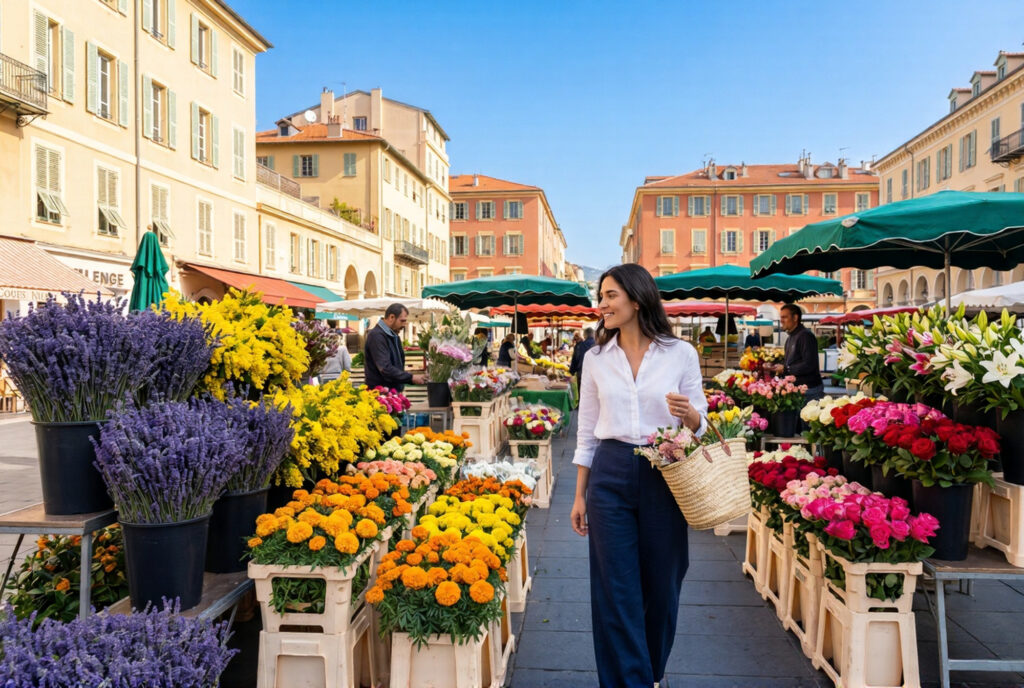
The Cours Saleya market runs Tuesday through Sunday in the long square below the old town, one of the finest flower and produce markets in France. Arrive before ten. The flower stalls are the famous part but the food stalls are the reason to come: socca being made fresh in copper pans, pissaladière on thick trays, olives in every variety grown on the surrounding hills, vegetables that look the way vegetables are supposed to look. Buy something from the stalls and sit on the edge of the square. This is the version of Nice that earns the reputation.
The Cours de la Victoire in the old town itself, the Baroque churches, the Place Rossetti with the best ice cream on the coast at Fenocchio: give the old town a full morning and come back for dinner. The restaurants on the Rue Droite and the surrounding streets are among the most reasonably priced good food on the Riviera.
Èze village
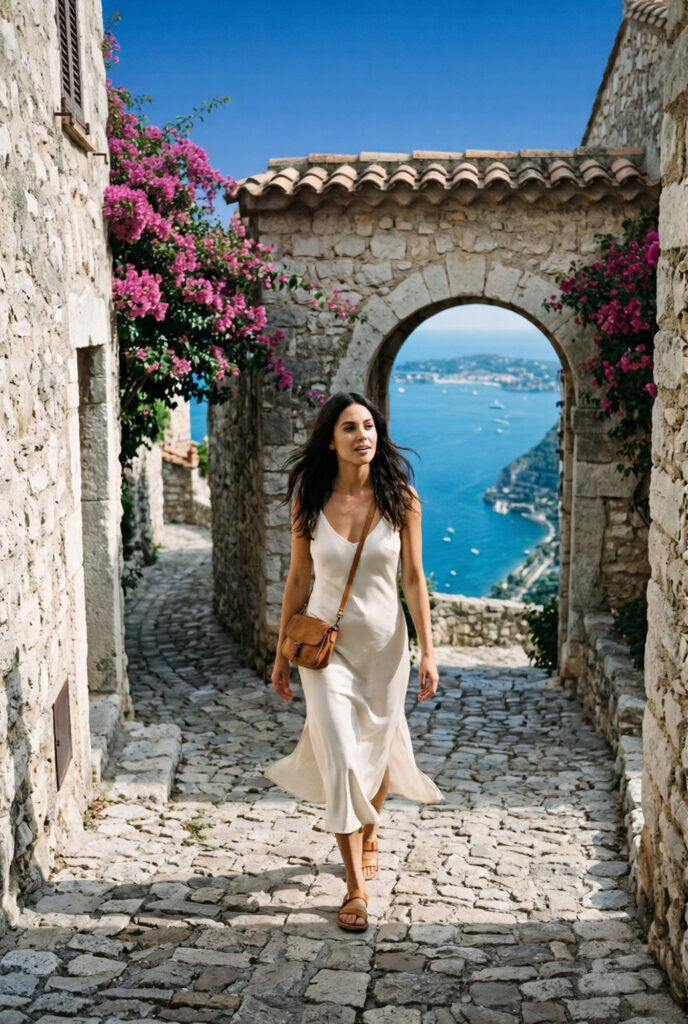
Èze is a medieval village perched at 427 metres on a limestone outcrop above the sea between Nice and Monaco. It has been comprehensively discovered and is crowded in summer between ten in the morning and four in the afternoon. Outside those hours, particularly in the early morning and the early evening, it is something else. The cobbled lanes wind between ancient stone buildings, the cacti garden at the top looks out over the coast from Cap Ferrat to Monaco, and the light on the sea below at that height is different from any other viewpoint on the coast.
Come before nine or after five. Stay for an hour. Drive down toward Beaulieu-sur-Mer on the Basse Corniche rather than back up the way you came. The road through Beaulieu adds twenty minutes and is the more beautiful drive.
The Cap Ferrat peninsula
Cap Ferrat is a small peninsula between Nice and Monaco that has been the preferred address of European aristocracy, writers, and the quietly wealthy for over a century. Somerset Maugham lived here for years. King Leopold II of Belgium built a villa that took up most of the western shore. The gardens they left behind are the reason to come.
The Villa Ephrussi de Rothschild is the standout: a pink Belle Époque palace with nine themed gardens stepping down to the sea on both sides of the peninsula. Open daily, entry required. Walk the full circuit before you stop at the café terrace.
The Sentier Littoral, the coastal path around the peninsula, takes about two hours and gives you the sea and the villas from the waterline. Flat, easy, no crowds.
Monaco old town and the Oceanographic Museum
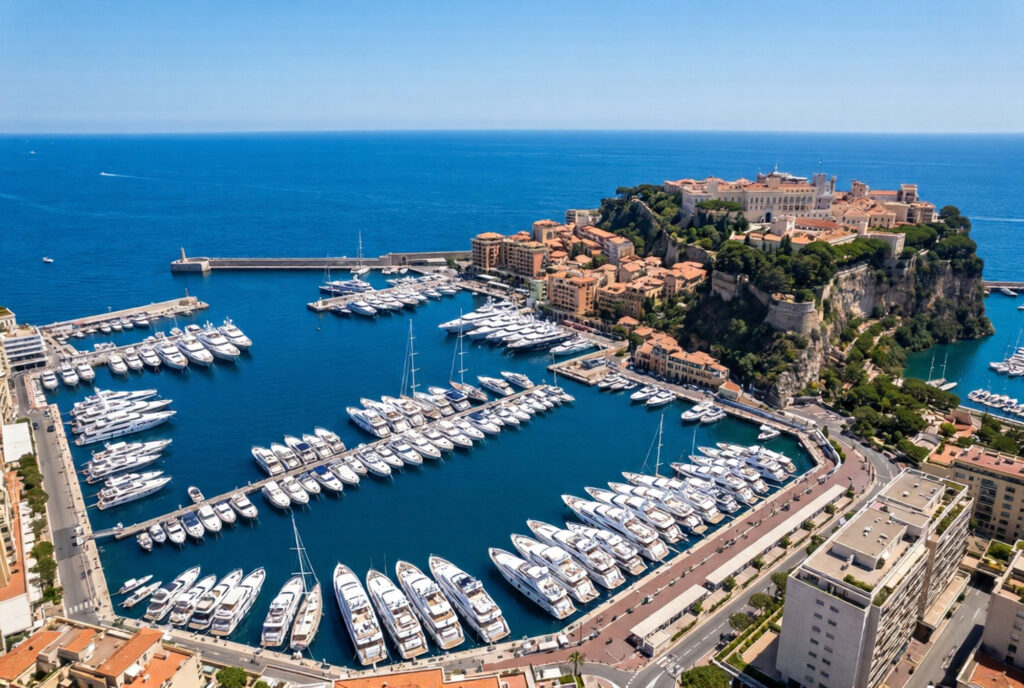
Monaco is easy to dismiss as a tax haven with a grand prix circuit and you would not be entirely wrong. But the old town on the Rocher, the fortified rock above the port, is worth an afternoon. The Palais du Prince, the Cathédrale de Monaco where Grace Kelly is buried, the narrow streets above the harbour: all of it is compact and walkable and free to explore.
The Oceanographic Museum at the edge of the Rocher is the surprise. Prince Albert I founded it in 1910 and the building alone is worth the entry: the grand staircase, the rooftop terrace over the sea, the aquarium in the basement that feels like walking into the deep water. Allow two hours. Book online.
What to Do
Drive the three Corniches
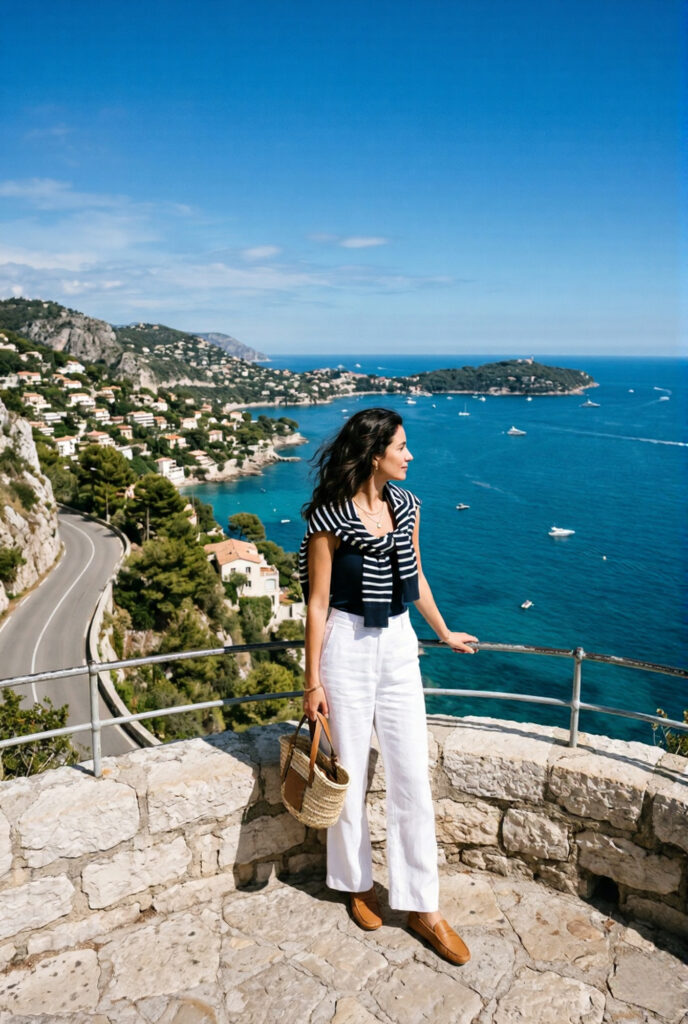
Three roads connect Nice to Monaco at different heights above the sea: the Basse Corniche along the waterline, the Moyenne Corniche halfway up the cliffs, and the Grande Corniche at the top. They are three completely different experiences of the same coastline.
Drive all three if you have a day: the Basse going east through Beaulieu-sur-Mer and Villefranche, the Moyenne for the views from above including the Èze turning, the Grande for the widest panoramas and the least traffic. Stop at the Belvedere d’Eze on the Grande Corniche for the view that Grace Kelly photographed and which appears in every version of the Riviera story.
Take the ferry to the Îles de Lérins
Two small islands sit in the bay off Cannes: Île Saint-Honorat, home to a working monastery, and its neighbour Île Sainte-Marguerite, where the Man in the Iron Mask was imprisoned. Ferries leave from the old port in Cannes and take about fifteen minutes.
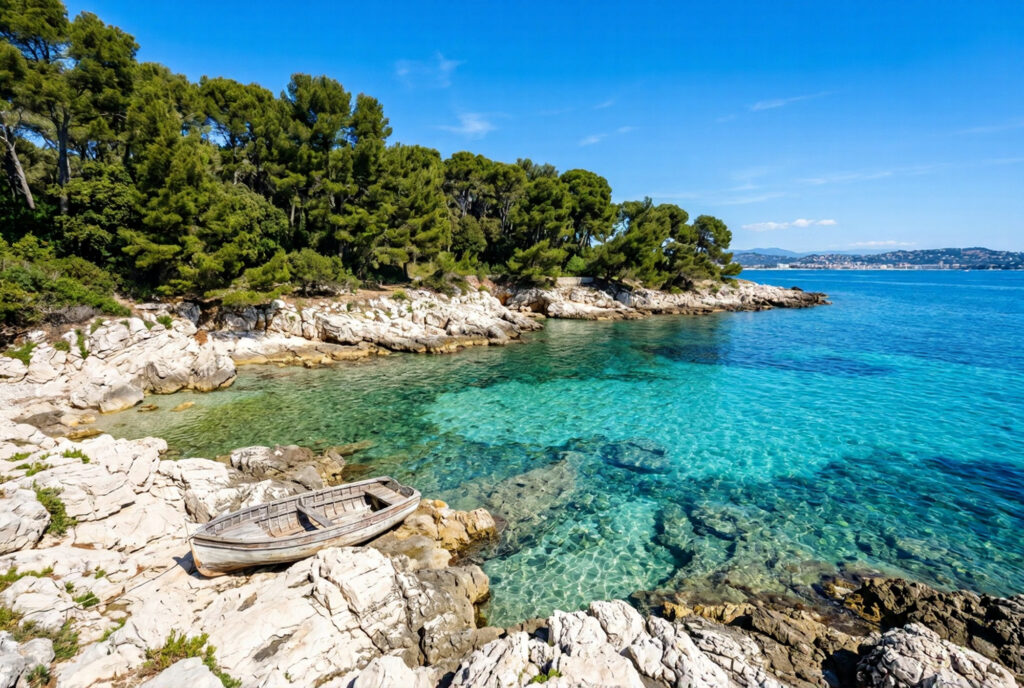
Sainte-Marguerite is the larger island: walking trails through pine forest, the fortress and its museum, clear water for swimming off the rocks on the south side. Bring food or eat at the one restaurant on the island. No cars. Far fewer people than anywhere on the mainland coast.
Spend a morning in Antibes and the old market
Antibes sits between Nice and Cannes and rarely gets the attention it deserves. The old town within the medieval walls, the Cours Masséna market on Tuesday, Thursday, Friday, and Saturday mornings, the Picasso Museum in the Château Grimaldi above the ramparts: all of it in one compact, walkable area.
The Marché Provençal in the Cours Masséna runs every morning except Monday. Arrive before ten. Buy socca or a pan bagnat and eat it on the steps outside the market. The Picasso Museum above is small and good and almost never crowded.
Watch the evening on the Promenade des Anglais
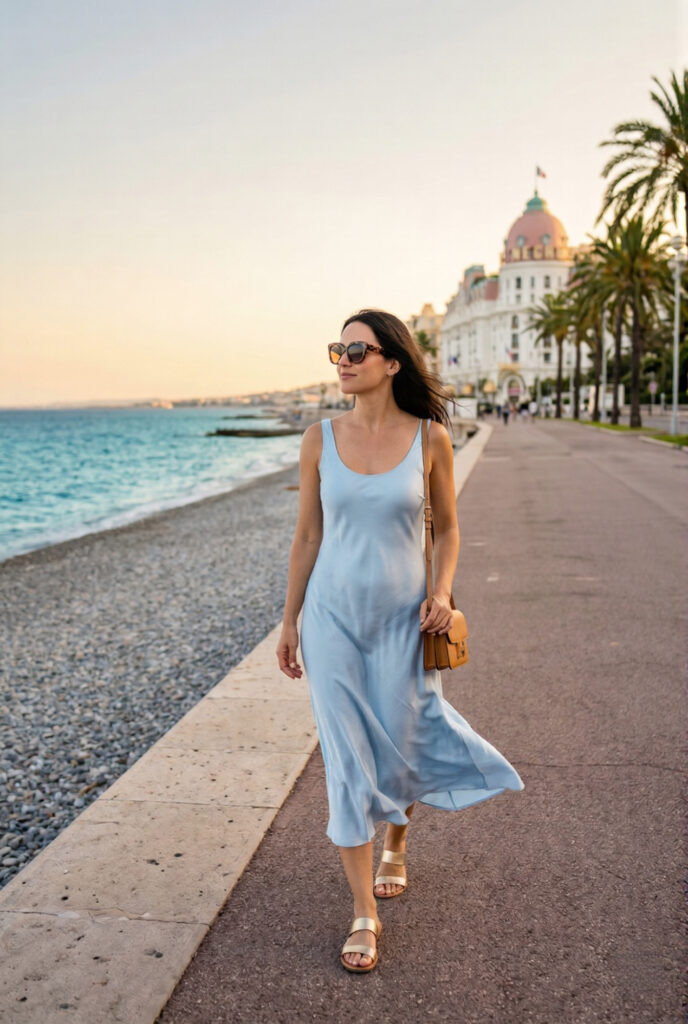
The Promenade des Anglais runs for seven kilometres along the Nice waterfront and is best in the early evening when the light goes golden and the pebble beach fills up. Walk west from the Place Masséna toward the Hotel Negresco and back. Stop for a drink at one of the beach clubs. Watch the city do what it has been doing since the 19th century when the English aristocracy came here for the winter and built the road that bears their name. It costs nothing and the hour passes well.
Where to Stay
Where you base yourself on the Riviera shapes the trip more than the choice of any individual site or restaurant.
Nice is the most practical base. Well connected by train along the coast to Monaco, Antibes, and Cannes, good airport connections, the best food at the most reasonable prices on the Riviera. Stay in the old town or the Carré d’Or neighbourhood for the best access to the market and the restaurants. Nice is a city with its own character and rewards being treated as a destination rather than just a starting point.
Èze and the villages above the coast are for people who want altitude and quiet rather than the beach. The Château Eza and the hotel above the village are expensive and worth it for one or two nights. The drive down to the coast in the morning and back up in the evening becomes part of the pleasure.
Cannes is more resort-focused than Nice, more expensive for equivalent accommodation, and quieter outside the Film Festival season in May. The Croisette boulevard and the old port are pleasant enough. The right base if the beach club experience is the priority or if Antibes and the islands are high on the itinerary.
Monaco is expensive beyond most holiday budgets for accommodation but straightforward as a day trip from Nice. The train from Nice-Ville to Monaco-Monte-Carlo takes twenty-two minutes and costs almost nothing.
Where to Eat
La Merenda, Vieux-Nice
No phone. No reservations. No credit cards. Dominique Le Stanc’s tiny restaurant on the Rue Raoul Bosio serves the most honest Niçoise cooking on the coast: daube, stockfish with tomatoes and olives, pasta with pistou. Fourteen covers. Show up early and wait for a table, or come back the next day. The cooking earns the inconvenience.
Fenocchio, Place Rossetti, Nice
The most talked-about ice cream on the Riviera. Over a hundred flavours including violet, basil, lavender, black olive, and everything you would expect alongside them. Two scoops on a cone, eat it standing in the square. Go twice.
Le Chantecler, Hôtel Negresco, Nice
For a single serious dinner on the Riviera, the restaurant at the Negresco on the Promenade des Anglais is the booking to make. The Belle Époque dining room, the cooking rooted in the region and technically precise, the wine list going deep into Provence and the Rhône. Book well ahead. Dress for it.
Café de Paris, Monte Carlo
The most famous café in Monaco, on the Place du Casino opposite the Opéra. A Campari or a glass of Champagne at a terrace table watching the Ferraris park and the casino crowds move in and out. Everything costs roughly three times what it would in Nice. Order one drink, stay for an hour, consider it the price of the show.
Good to Know
The train is the right way to move along the coast. The Marseille to Ventimiglia line connects Nice, Antibes, Cannes, Monaco, and all the smaller stations between them. Fast, cheap, frequent, and the views from the coastal sections are excellent. For getting between the main towns, the train beats the coast road in summer without any contest.
Driving the Corniches requires patience in summer. The coast road, the D6098 along the waterfront, gridlocks between June and September. The Corniches above are faster but require confidence on narrow mountain roads. If driving is the plan, go early in the morning or late in the afternoon.
Monaco dress code. The casino in Monte Carlo requires smart dress and will turn away anyone in shorts or trainers. The rest of Monaco is casual by day and dressed up in the evening. The Café de Paris terrace does not enforce a dress code but the crowd around you will.
Nice airport. The second busiest in France after Charles de Gaulle. Well connected to central Nice by tram line 2, which takes about twenty minutes and costs under two euros. Much cheaper and nearly as fast as a taxi.
Language and tipping. The Riviera is firmly French despite the proximity to Italy. A few words of French go further here than anywhere else in the country. Tipping is not obligatory: rounding up or leaving five percent at a sit-down restaurant is appreciated. The beach clubs add a service charge automatically.
Beaches. The beaches between Nice and Monaco are almost entirely pebble, not sand. Flat-soled sandals or waterproof shoes make walking on them considerably less painful. The private beach clubs rent sunbeds and provide changing facilities. The public beaches are free and often more pleasant than the clubs outside peak season.
The Côte d’Azur’s official tourism authority covers the full coastal stretch, from Nice to the Italian border.”
Best Time to Go
May and September are the strongest months. The sea is warm enough to swim from late May, the light is extraordinary, the tourist crowds are manageable, and the prices drop from their July and August peaks. In May before the school holidays the coast still belongs to people who live on it.
June is good before the school holidays start in the second half of the month. October is underrated: warm enough for the beaches on most days, the crowds almost entirely gone, the food at its best as the autumn produce arrives.
July and August are peak season. The coast is packed, the Corniches are slow, the beach clubs are fully booked, and the accommodation prices are at their highest. If those months are unavoidable, book everything months ahead, travel by train rather than road, and plan the Corniches drives for early morning before nine.
The Cannes Film Festival in mid-May adds considerable noise and expense to that town specifically. Worth knowing if Cannes is on the itinerary.
Read Next
The Riviera has a specific wardrobe logic that Paris does not: linen over silk, the straw tote over the structured leather bag, the flat driving loafer over the ballet flat. The French Riviera Capsule Wardrobe covers the ten pieces that work from a Cours Saleya morning to a Monte Carlo evening.
For the full France wardrobe picture across every region, the Complete Guide to Packing for France is where to start.
Already been to Paris? The Paris Travel Guide covers the city properly if you are working through France from north to south.
Sorting out what to pack for the Riviera? The French Riviera Capsule Wardrobe has the ten pieces that handle the Promenade, the Corniches, and the Monaco evening.