*This post may contain affiliate links for which I earn commissions.*
The Complete Insider’s Guide to the Alps
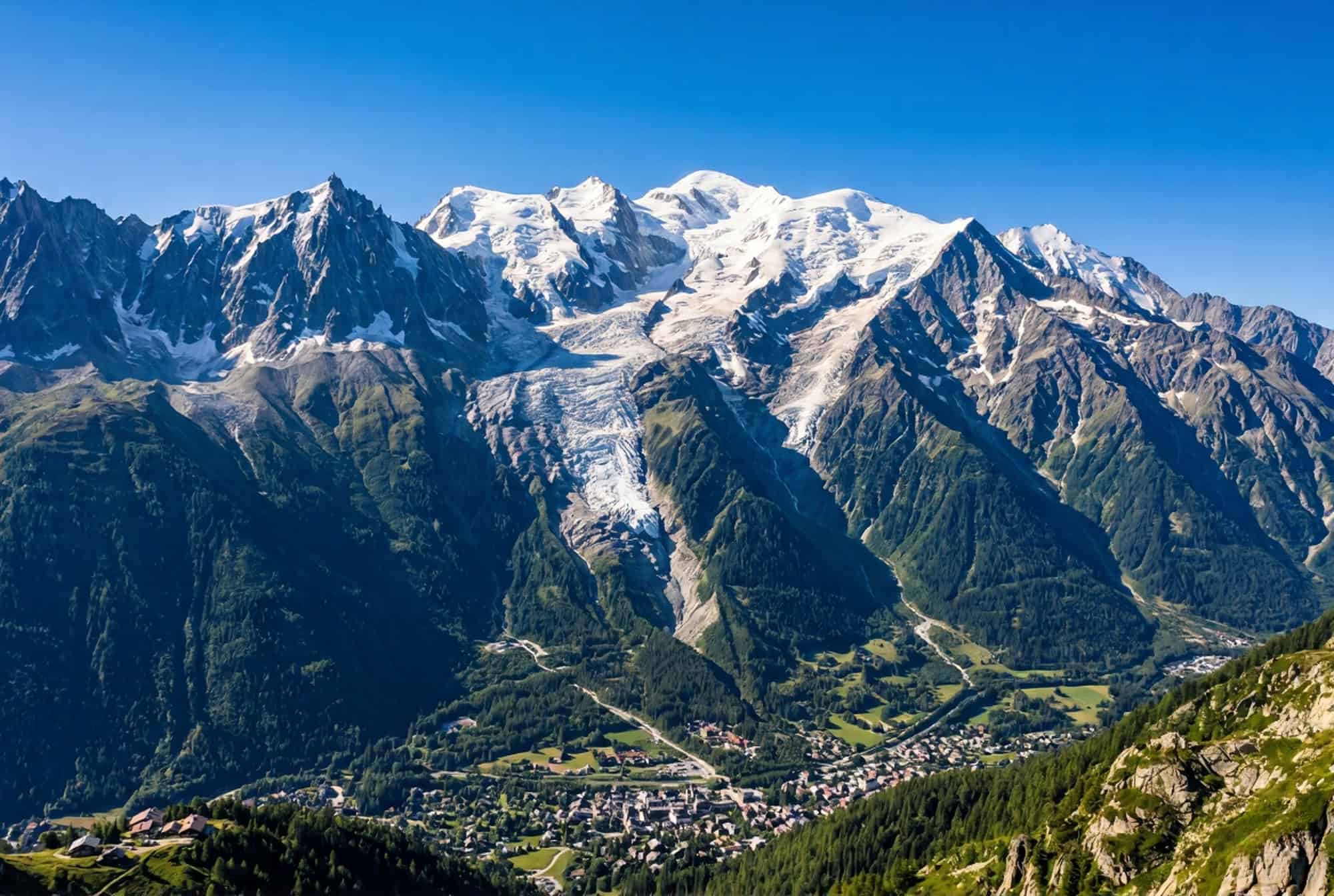
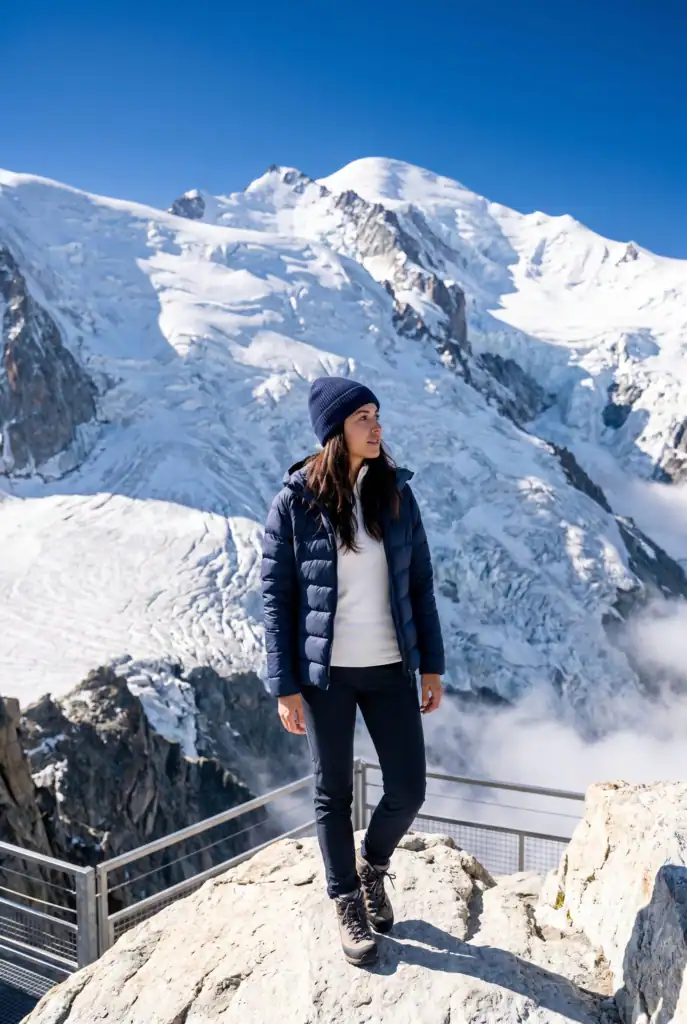
The French Alps begin properly when you come around a bend in the road and Mont Blanc appears. It is larger than you expect. The glacier runs further down the mountain than photographs suggest and the scale of it, 4,808 metres of pale rock and permanent ice above a valley full of pine trees and chalets, takes a moment to absorb. People who have been here before go quiet. People who have not try to say something and find they cannot quite manage it.
Chamonix at the foot of Mont Blanc is the mountaineering capital of the world, serious and technical, the valley walls rising almost vertically from the town streets. Annecy on its lake is something completely different: a medieval town on water that is genuinely, impossibly blue, with the Alps rising from the far shore. Megève and Courchevel are the glamorous ski resorts, expensive by design. The smaller valleys above Grenoble and in the Vercors massif are quieter and largely unknown to non-French visitors. Plan more time than you think you need for all of it.
What to See
Chamonix and the Aiguille du Midi
Chamonix sits at 1,035 metres in the valley below Mont Blanc and has been the centre of Alpine mountaineering since the late 18th century. The town itself is small, the main pedestrian street walkable in fifteen minutes, but the infrastructure for getting into the mountains above it is exceptional.
The Aiguille du Midi cable car rises from the valley floor to 3,842 metres in under twenty minutes. At the top: a viewing platform on a spike of rock above the clouds with Mont Blanc visible directly across the glacier, the Chamonix valley an abstract pattern of green and grey far below. The Mer de Glace, the largest glacier in France, is visible from the train leaving Chamonix-Montenvers station. The glacier has retreated significantly since the mid-20th century and the descent to its surface involves a long ladder system that changes position year by year as the ice drops. Worth seeing for what it shows about the pace of change as much as for the ice itself.
Book the Aiguille du Midi in advance. Tickets sell out in July and August. Dress for minus fifteen regardless of what the valley felt like.
Lake Annecy
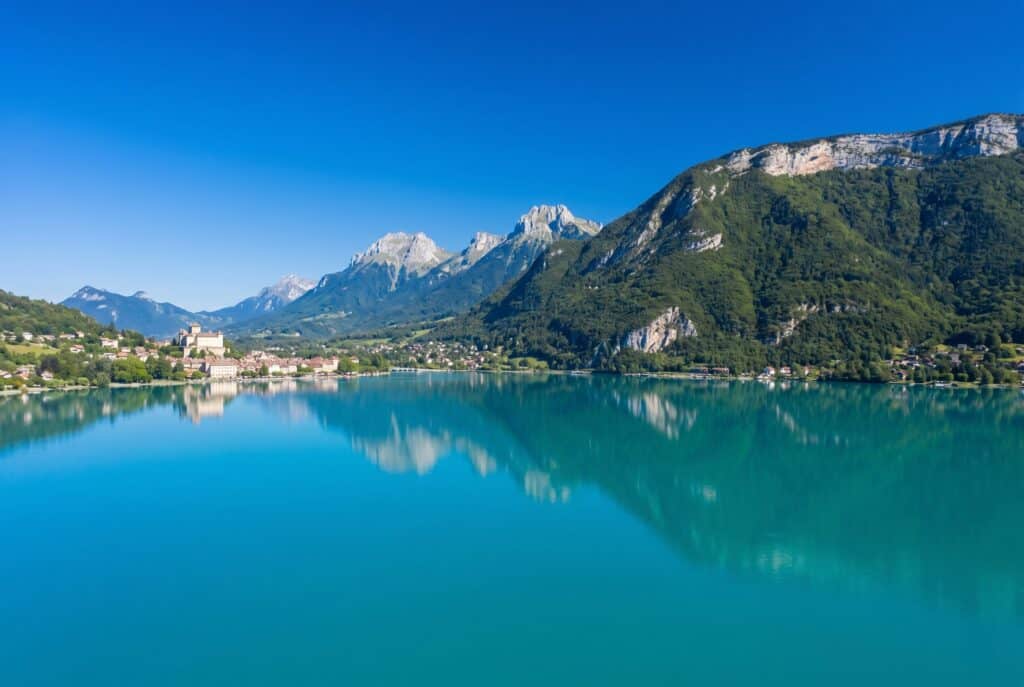
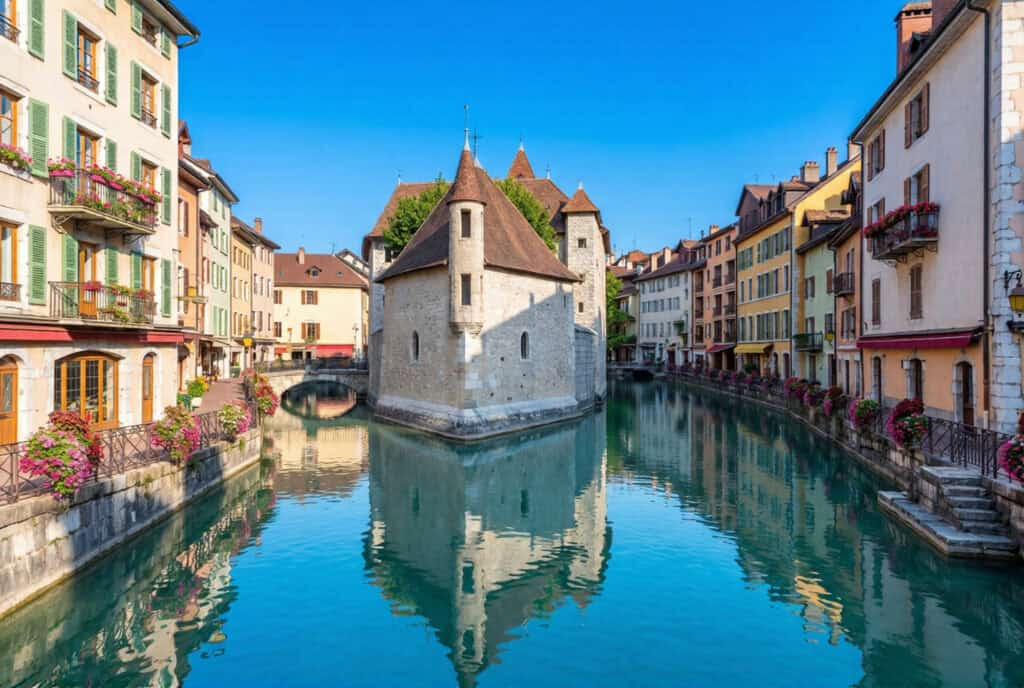
Annecy’s old town clusters around the Thiou river channels and the lakefront, medieval buildings in pale stone with flower-lined balconies, the Aravis and Bauges mountain ranges rising from the far shore. The lake water is a shade of turquoise that photographs suggest is exaggerated and is not. It is one of the cleanest lakes in Europe and the colour is entirely real.
Swimming is good from June through September at the public beaches at Albigny and Impérial. The cycle path running the full circumference, 41 kilometres, is flat, well-signed, and one of the better day rides in France. The old town takes an hour to walk but rewards more time: the Palais de l’Isle in the middle of the canal, the market on Tuesday and Friday mornings, the Château d’Annecy above the town with its views over the lake. Come before the day-trippers from Geneva arrive.
Megève in summer
Megève was built in the 1920s by the Rothschild family as a French alternative to St Moritz. In summer, when the skiers have gone, the prices drop and the village settles into a more relaxed version of itself. The cable car to Mont d’Arbois gives access to walking trails with views over Mont Blanc on one side and the Aravis on the other. The village centre, with its church, covered market arcades, and food shops, is one of the most pleasant alpine villages in France to simply spend an afternoon in.
The Gorges de l’Arly and the Beaufortain
The valley south of Megève toward Albertville runs through the Gorges de l’Arly, a narrow limestone gorge with a fast river at the bottom, before opening into the Beaufortain: a high valley of summer pastures and mountain farms producing some of the best alpine cheese in France. The Beaufort, made from the milk of Tarentaise and Abondance cows grazing the summer pastures, is the reason to drive up here.
The road from Megève through Flumet and into the Beaufortain via the Col des Saisies carries almost no tourist traffic. The fromagerie in Beaufort town sells directly from the cooperative. Buy a piece and eat it the same day. It will not taste like this anywhere else.
What to Do
Hike above the Chamonix valley
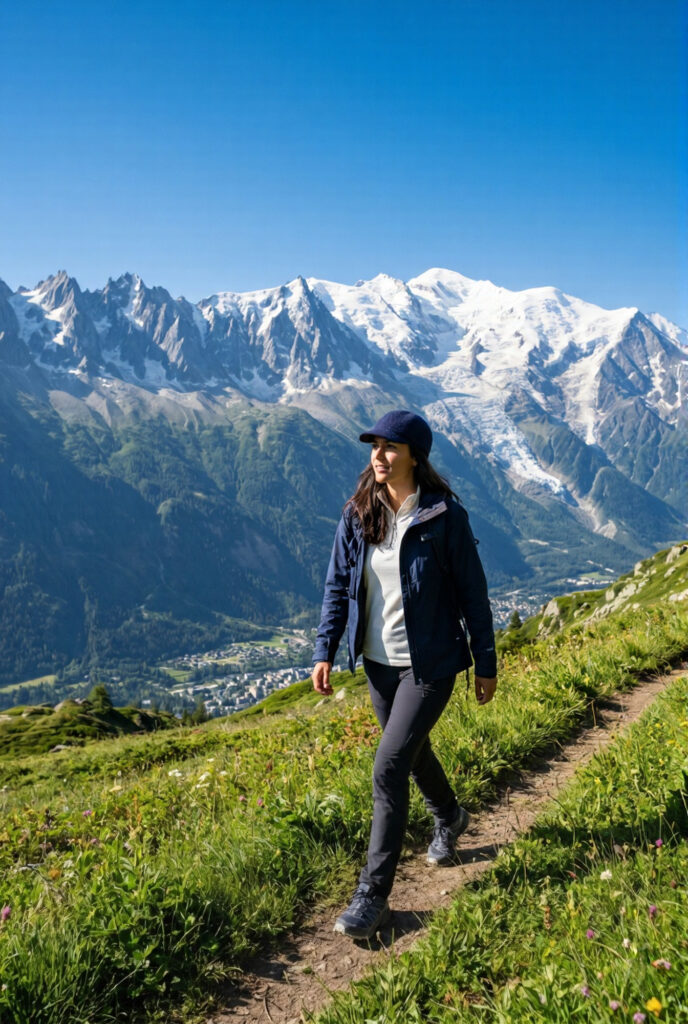
The trails above Chamonix run from easy afternoon walks to multi-day mountain routes. The Grand Balcon Nord, the trail running along the mountainside at around 2,000 metres, is the one most people point to: three to four hours from the Flégère cable car station to the Montenvers train, the Mer de Glace visible below, Mont Blanc and the Aiguilles Rouges across the valley the whole way.
The Tour du Mont Blanc circumnavigates the massif through France, Italy, and Switzerland and takes ten to twelve days. Individual stages work as day hikes using the cable cars to reach the high points and descend back to the valley.
Start early regardless of the weather, carry a waterproof layer, and check trail conditions at the Chamonix tourist office before going above 2,500 metres.
Swim in Lake Annecy
The public beaches at Albigny, Impérial, and Doussard on the southern end are the most accessible. The water reaches a good swimming temperature by late June and stays warm through September. Albigny has a café and easy parking. The mountain view from the water looking south is the best on the lake.
For something quieter, drive the eastern shore road toward Talloires. The small coves below the road between Menthon-Saint-Bernard and Talloires are reachable on foot and largely passed over by day-trippers. The water at the Talloires end is clear enough to see the bottom at depth.
Ski in winter
The Three Valleys linking Courchevel, Méribel, and Val Thorens is the largest linked ski area on earth. Chamonix is for experienced skiers: the terrain is serious, the off-piste is extraordinary, and the Vallée Blanche descent from the Aiguille du Midi requires a guide and is the kind of run people talk about for years afterward.
For mixed-ability groups, Les Gets and Morzine in the Portes du Soleil area are accessible and well-organised. Megève has good variety and the village is the most pleasant in the region to come back to at the end of the day.
Book accommodation and ski passes months ahead for February school holidays and Christmas. Outside those peaks, two to three weeks’ notice is usually enough.
Drive the Route des Grandes Alpes
The Route des Grandes Alpes runs from Lake Geneva to Nice across seventeen mountain passes over 684 kilometres. The full route takes five to seven days. Individual sections work as day drives: the Col de l’Iseran above Val d’Isère at 2,764 metres is the highest paved mountain pass in the Alps. The Col du Galibier above Valloire at 2,642 metres, with views over the Écrins massif to the south, is the most dramatic single pass on the route.
Open generally from mid-June through mid-October depending on snow. Check pass conditions before driving early or late in the season.
Where to Stay
Chamonix is the practical base for Mont Blanc and the Aiguille du Midi. Good range of accommodation from budget to mid-range. The Hameau Albert 1er is the most acclaimed hotel in the valley. Stay in the old town centre rather than along the main road. Train from Paris Saint-Lazare takes about five and a half hours with a change at Saint-Gervais.
Annecy for the lake and the Aravis mountains. The old town has several good mid-range hotels and the lake views from the better upper rooms are worth asking for specifically. Direct trains from Paris Lyon take about three and a half hours.
Megève for a refined alpine village, particularly in summer when prices are lower. Small enough to walk everywhere, good restaurants, cable car access to high terrain right from the village. About an hour from Geneva airport by car.
A mountain refuge for anyone doing the Tour du Mont Blanc or a multi-day hiking route. The TMB refuges book up months ahead for July and August. Book directly through the CAF website.
Where to Eat
La Maison Carrier, Chamonix
In the hamlet of Les Bois below central Chamonix, in a 17th-century Savoyard farmhouse. Raclette, tartiflette, fondue Savoyarde: the classic mountain dishes, done with proper ingredients and care. The room in winter, all dark timber and candlelight, is the right setting for all of it. Book for dinner.
La Ciboulette, Annecy
On the Rue Vaugelas in the old town. Small, worth booking well ahead, a kitchen that takes the Savoyard larder seriously rather than coasting on tourist fondue. Freshwater fish from the lake, local cheeses, a wine list going deep into Savoie and the Rhône.
Le Prieuré, Megève
The restaurant at the Prieuré hotel in the heart of the village. The tartiflette here is the one most people compare everything else against. The summer terrace looks onto the church square and the mountains. Book ahead.
The mountain cheeses
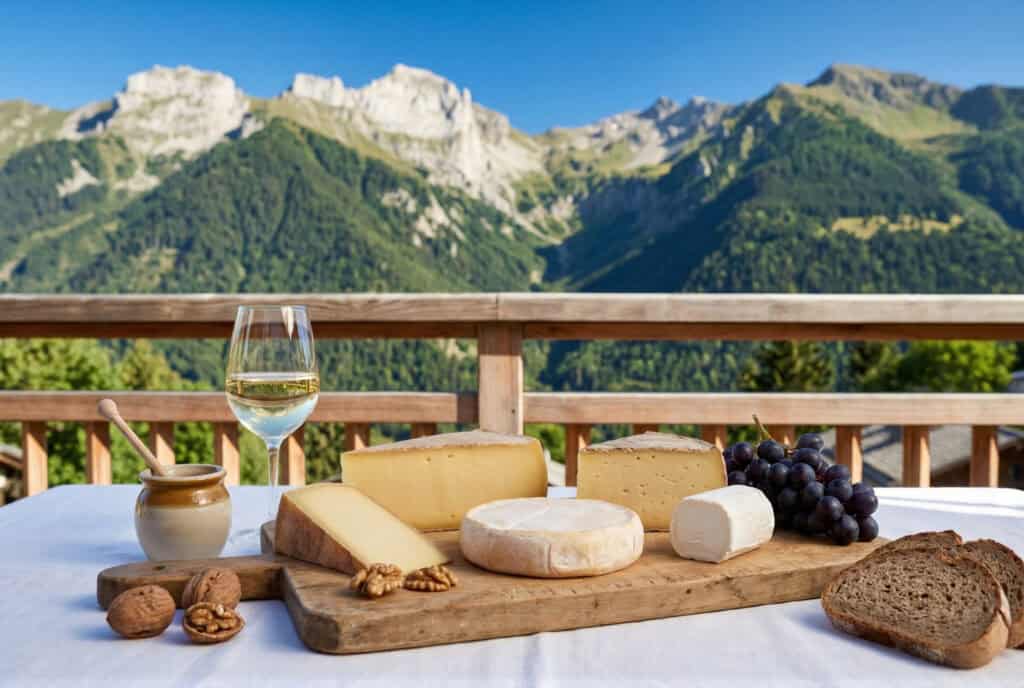
This is more rule than recommendation: eat the mountain cheeses at source. Beaufort from the cooperative in Beaufort town. Reblochon from a farm above Thônes in the Aravis. Abondance from the valley east of Thonon. Tome de Savoie from any market. These cheeses taste completely different within a day of production than they do after a week in a supermarket chiller. Drive to them. Eat them the same day.
Good to Know
Altitude matters. A moderate walk at 2,500 metres is harder than the same distance at sea level, especially in the first day or two after arriving from a low-altitude city. Drink more water than you think you need. Move slowly at first. The altitude headache is unpleasant and easy to avoid.
Weather changes fast above 2,000 metres. A clear valley morning tells you nothing about what the afternoon will look like at 3,000 metres. Always carry a waterproof, a warm mid-layer, and extra water on anything going above that height. The Chamonix tourist office weather forecast is more reliable than general weather apps for the high terrain and is updated daily.
The cable cars fill up. The Aiguille du Midi in July and August needs advance booking. Even with a ticket the queue at the base station can be long. The first cable car of the day has the shortest wait and the best light.
Getting around. The Mont-Blanc Express train connects the Chamonix valley villages and is the right way to move between them. Mountain roads between the major towns are well-maintained but narrow and slow. Double whatever time the map suggests for any drive involving passes.
Tipping. Not obligatory. Rounding up or leaving five to ten percent at a sit-down meal is appreciated.
Best Time to Go
July and August are the peak summer months. Trails clear of snow, cable cars running, lake swimming at its best, mountain light in long Alpine days. The trade-off is crowds, fully booked accommodation, and traffic on the valley roads. Book months ahead.
June and September are better for most people. June brings the wildflower season in the high meadows and far fewer visitors. September is the finest month for most purposes: the summer crowds have gone, the light changes to something lower and clearer, the Savoie wine harvest is running in the valleys below, and the high passes are still open.
December through March is ski season. Christmas and February school holidays are the expensive, crowded peak weeks. January has full snow, everything open, and lower prices than either holiday peak.
April, May, and November are largely closed. Most cable cars and mountain restaurants shut for maintenance. The high passes are snowed in. Avoid unless skiing is the specific plan.
France Montagnes, the country’s official mountain tourism authority, has resort guides and seasonal condition updates.
Read Next
The French Alps need a wardrobe that no other French region requires: technical shell jackets, merino base layers, proper mountain boots. The French Alps Capsule Wardrobe post is coming soon.
For the full France wardrobe picture across every region, the Complete Guide to Packing for France is where to start.
The France Travel Guide cluster is now complete. The Paris Travel Guide, French Riviera Travel Guide, Provence Travel Guide, Alsace Travel Guide, and Loire Valley Travel Guide are all live on The Capsule Trip.
Planning what to pack for the French Alps? The French Alps Capsule Wardrobe post is coming soon. In the meantime, the Complete Guide to Packing for France covers the core pieces that work across every French region.