
*This post may contain affiliate links for which I earn commissions.*
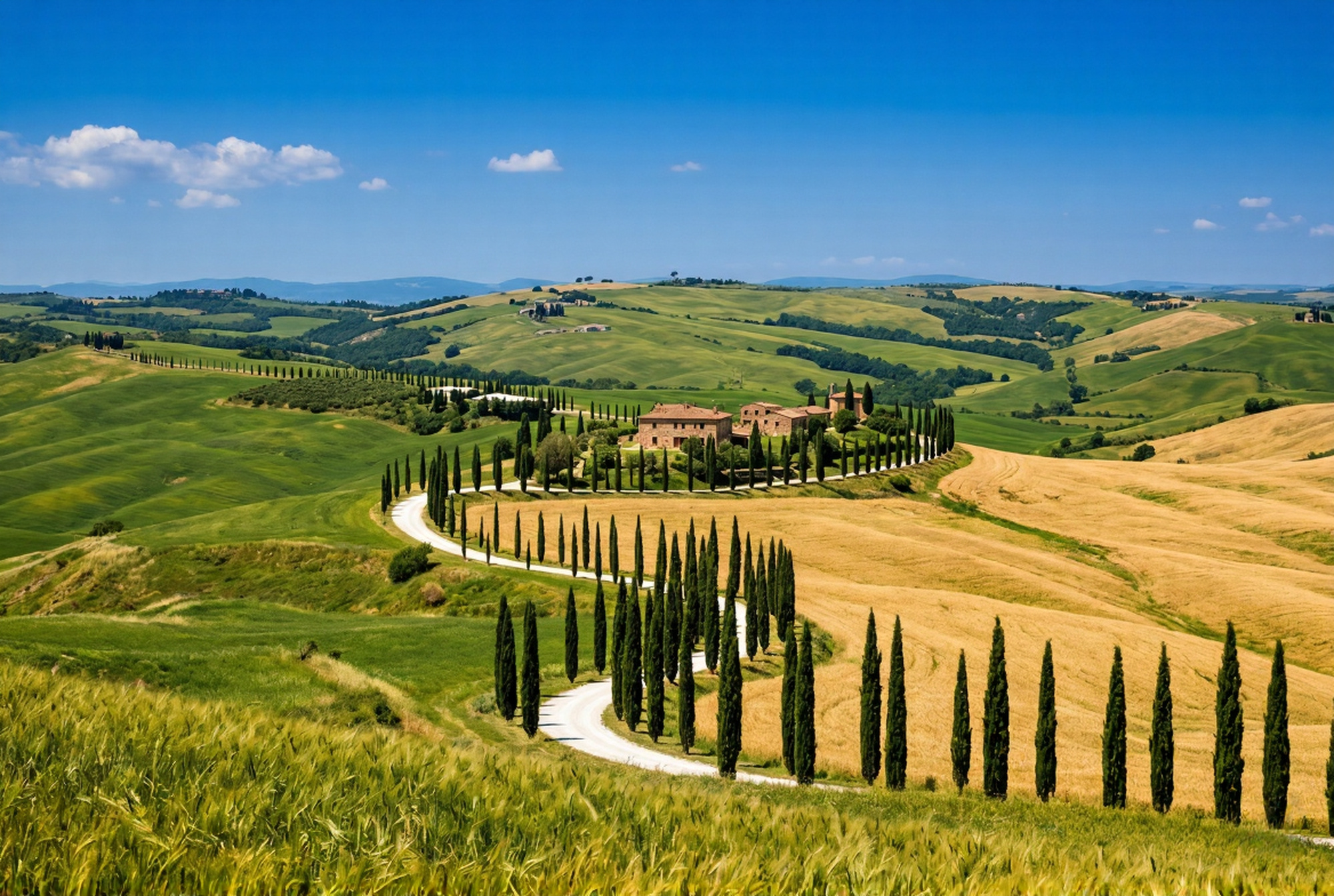
The light in Tuscany in late afternoon does something particular to the stone. It turns the rooftops of Siena a deep burnt orange, thickens the air over the Val d’Orcia into something almost golden, makes the cypress trees along the country roads cast shadows so long they reach the next field. It is the kind of light that stops you mid-sentence. You were saying something and now you are just standing there looking.
Florence alone could fill a week and leave you with a list of things you missed. The countryside could fill another. The trick is getting the balance right: enough of the big sites to feel like you have actually been here, enough of the hills and the wine roads to remember why you came. That is what this guide is built around.
What to See
Florence: the Uffizi without losing your mind
The Uffizi is non-negotiable and, if you are unprepared, completely overwhelming. The collection spans forty-five rooms and contains more significant Renaissance paintings per square metre than anywhere else on earth. Most people try to see everything and remember nothing. A better approach: book a timed entry ticket well in advance through the official Uffizi website, arrive at opening, and spend the first hour in rooms ten through fourteen where the Botticellis live. The Birth of Venus in person is a different experience from any reproduction, larger, stranger, more alive. After that, follow whatever pulls you rather than the floor plan.
Skip the queue entirely by booking ahead. In peak season the walk-up wait runs two to three hours. The ticket price is the same either way.
Siena’s Piazza del Campo
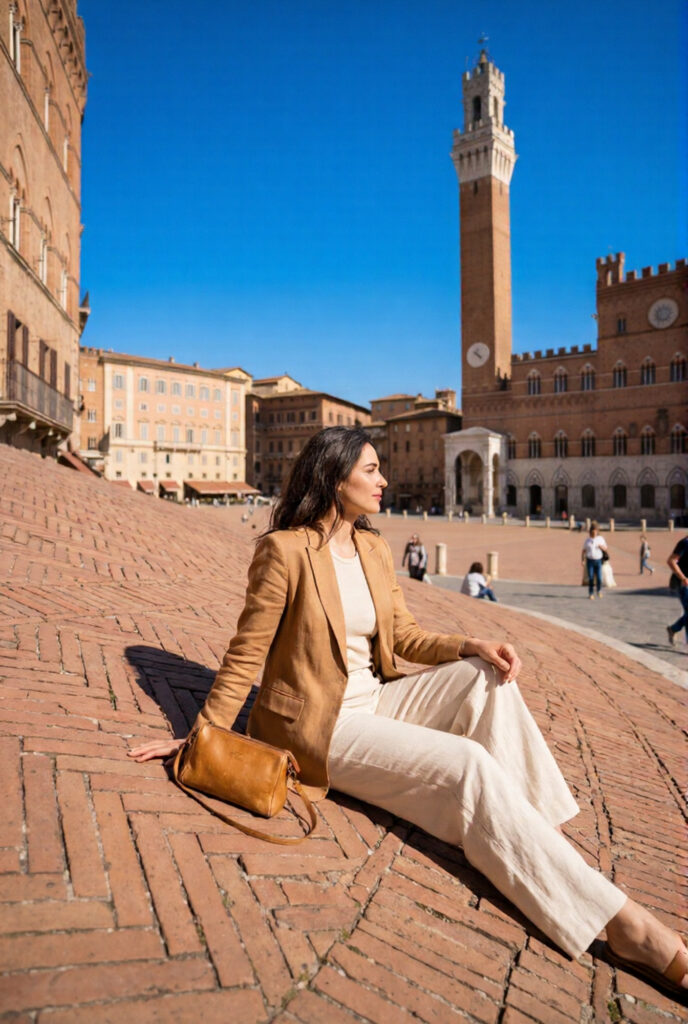
Most people treat Siena as a half-day trip from Florence. This is a mistake. The Piazza del Campo is a shell-shaped central square that slopes gently down to the Palazzo Pubblico and is one of the most purely beautiful public spaces in Italy. The best way to experience it is to arrive in the early morning before the tour groups, find a spot on the brick slope, and sit. No agenda. Just the square, the light coming over the medieval roofline, and a coffee from the café on the edge.
The Torre del Mangia at the corner of the palazzo is worth climbing for the view over the rooftops and the surrounding hills. The stairs are steep and narrow. Go early, before the heat builds in the tower.
Val d’Orcia on a clear morning
The landscape of the Val d’Orcia, the rolling hills south of Siena, the lone farmhouses, the cypress rows, the white roads cutting through wheat fields, is so photographed that it almost feels like a cliché until you are actually standing in it. It is not a cliché. It is exactly as beautiful as it looks, and in the right light, more so.
The best version of it is from a car on the SP146 between San Quirico d’Orcia and Pienza on a clear morning in late April or May, when the wheat is still green and the poppies are out. Stop at the Cappella di Vitaleta, a small chapel on a hill surrounded by cypress trees, for the image everyone has seen and the silence almost nobody writes about.
The Bargello over the Accademia
Florence has two major sculpture museums. The Accademia is famous for Michelangelo’s David. The Bargello contains almost everything else Michelangelo, Donatello and Cellini ever made and sees perhaps a tenth of the foot traffic. The David is worth seeing once. The Bargello is worth seeing properly. Donatello’s bronze David, the first freestanding nude male sculpture of the Renaissance, sits in the first-floor room and stops people cold. No queue. No crowd. A ticket for a few euros.
What to Do
Drive the Chianti wine route
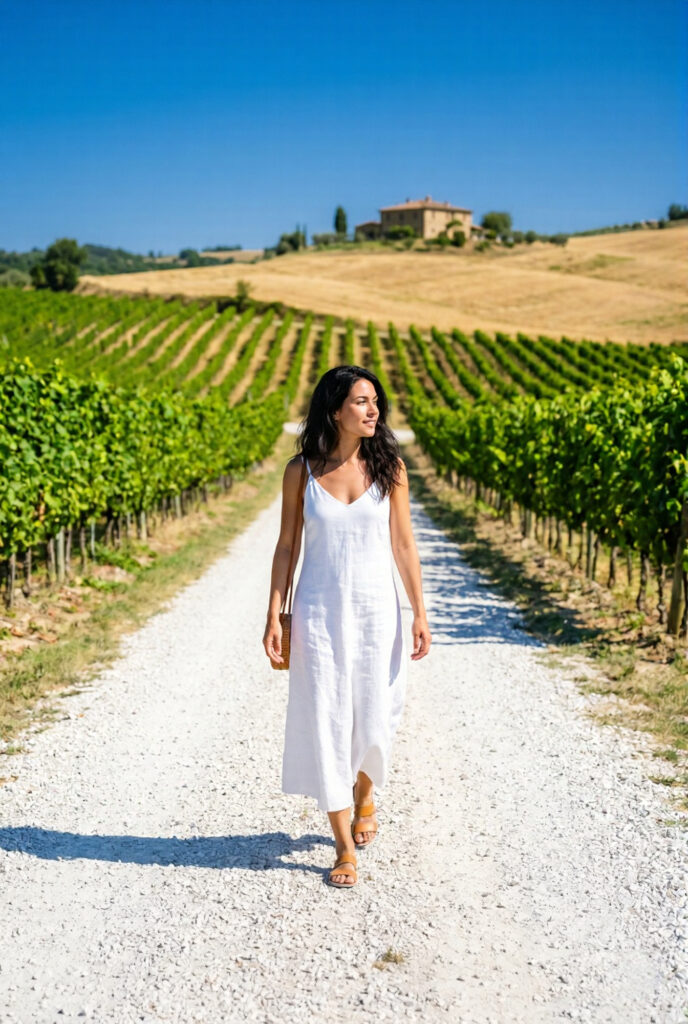
The SS222 between Florence and Siena runs through the heart of the Chianti Classico wine region. Greve in Chianti, Panzano, Radda, Castellina: small towns on steep hillsides surrounded by vineyards and olive groves. You can stop at estates for tastings with no booking required at smaller producers, or arrange visits in advance at the larger names. The drive itself takes about ninety minutes without stops and rewards a full day.
Panzano is worth more than a quick stop. The butcher Dario Cecchini on the main street has become something of a local legend, part butcher, part theatre. His shop is worth visiting even if you are not buying meat.
Visit a working agriturismo
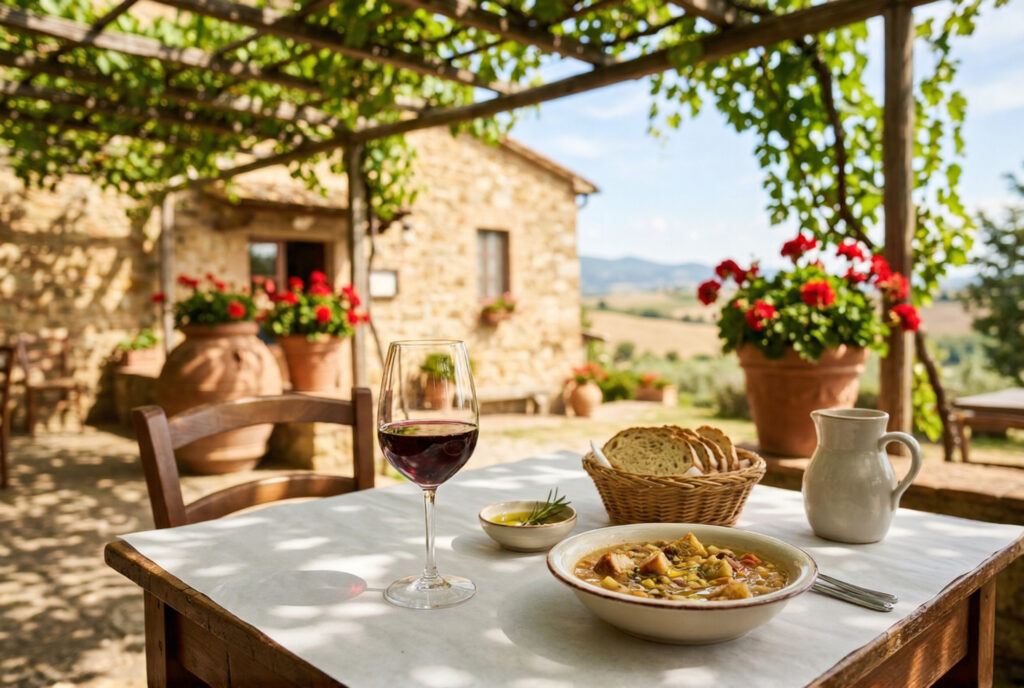
An agriturismo is a working farm that also takes guests or serves meals, sometimes both. The best ones are nothing like a hotel. You eat what was grown or raised that morning, drink the wine made on the property, and sit at long tables with whoever else happens to be there. Many are bookable through their own websites with a simple email. Lunch at a good agriturismo near Montalcino or in the Crete Senesi south of Siena is one of the most purely Tuscan experiences available and costs far less than a restaurant in Florence.
Walk the walls of Lucca
Lucca is an hour west of Florence by train and almost always left off itineraries in favour of Siena or San Gimignano. The 16th-century city walls are so wide at the top they were converted into a tree-lined promenade four kilometres around. You can walk or rent a bike and cycle the full circuit in about thirty minutes. The town inside the walls is remarkably intact: no chain shops on the main piazza, good local restaurants, a market on weekends. Worth a full day rather than a quick pass-through.
Go to San Miniato al Monte at closing time
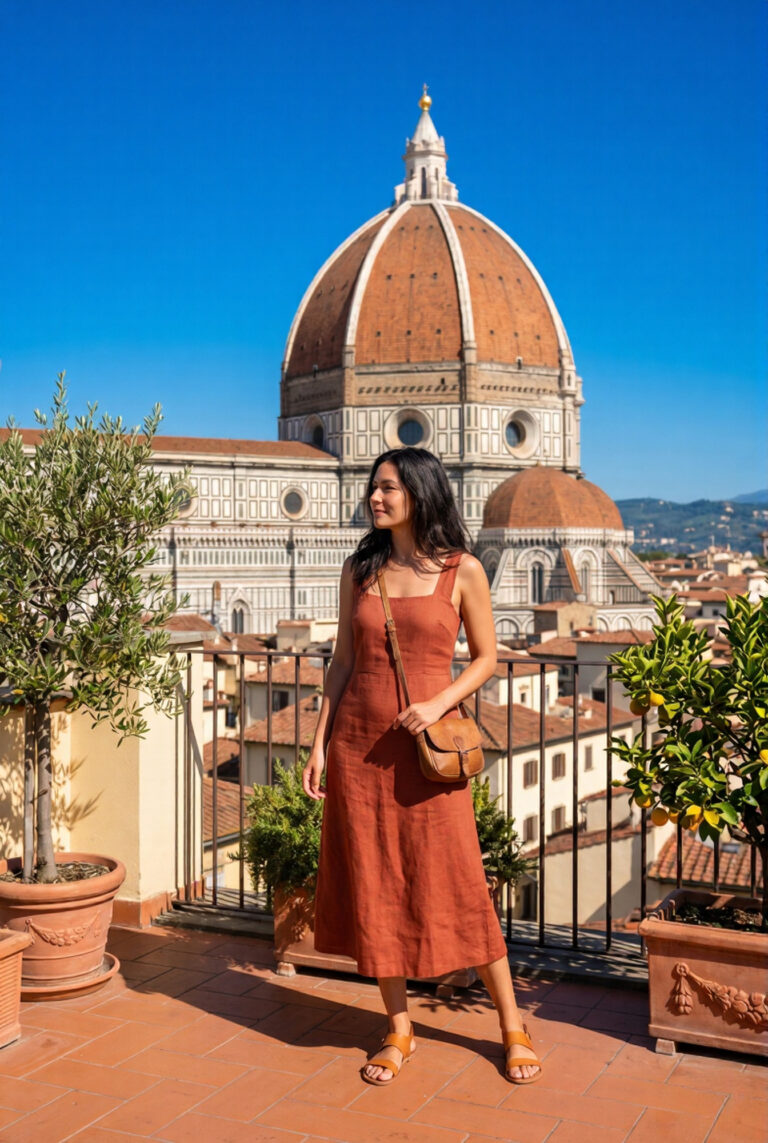
San Miniato al Monte is the Romanesque church on the hill above Florence with the green and white marble façade that looks like a jewel box from the city below. Most people visit it as part of a morning walk to Piazzale Michelangelo for the panoramic view. The better move is to go late afternoon, when the light comes through the windows at low angles and hits the gold ceiling mosaics, and stay until closing. The monks sing vespers at around 5:30pm in the crypt below the church. No ticket, no booking. Just show up and sit quietly at the back.
Where to Stay
Where you base yourself changes the whole character of the trip, and Tuscany gives you genuinely different options depending on what you are here for.
Florence makes sense if the art is the priority. Everything in the city is walkable, the train connections to Siena, Lucca and Pisa are straightforward, and you can be in the countryside in an hour. The Oltrarno neighbourhood on the south side of the Arno is the quieter, more residential choice: good independent restaurants, fewer tourist crowds than the centre north of the river, still within walking distance of everything. The honest caveat is that Florence is a city and feels like one. If you came to Tuscany for the landscape, you will spend a lot of time leaving it.
A small town in the countryside, Pienza, Montalcino, Radda in Chianti, makes sense if the landscape and the food are the point. You will need a car for almost everything. Some people find that a pleasure, others a problem. The reward for the inconvenience is waking up in a hill town with the Val d’Orcia outside your window before anyone else is awake.
Siena is the middle option. A proper city with its own very good restaurant scene, central enough for day trips by car or bus, and beautiful in a way that Florence, overrun for most of the year, sometimes struggles to feel.
Where to Eat
Trattoria Mario, Florence
Mario has been feeding Florentines at communal tables in the same room near the Mercato Centrale since 1953. No reservations, no menu changes worth speaking of, no interest in being discovered by food media. You queue, you sit wherever there is space, you eat ribollita or lampredotto or whatever the pasta is that day. Lunch only, Monday to Saturday, closes when the food runs out. Cash only. One of the most honest meals in the city.
Osteria Le Logge, Siena
A converted 19th-century pharmacy on the Via del Porrione, the wooden shelving still lining the walls where the medicines used to sit. The food is Sienese and done properly: pici al ragù, wild boar, local pecorino with honey. Book ahead for dinner. The room itself is as much of the experience as what is on the plate.
Il Leccio, Sant’Angelo in Colle
A small village near Montalcino with a restaurant that has been quietly excellent for years without trying to be anything other than what it is. Handmade pasta, Brunello from the producers down the road, a terrace with a view over the valley. Book ahead and expect to stay for two hours without anyone suggesting you should hurry up.
Mercato Centrale, Florence
The covered market on Via dell’Ariento does what a market should do. Fresh produce on the ground floor, cooked food upstairs. The upstairs food hall gets busy and is fairly tourist-facing, but the ground floor stalls are the real reason to come. Buy cheese, cured meats, bread, a bottle of something local, and take it to a park. The Giardino di Boboli charges entry but the gardens around the Forte di Belvedere nearby do not.
Good to Know
Churches enforce their dress codes. The Duomo in Florence and the cathedral in Siena will turn you away for bare shoulders or bare knees. A large cotton scarf in your bag solves this instantly. The dress code applies even on the hottest days of July.
Book Florence’s major sites weeks ahead. The Uffizi, Accademia and Palazzo Pitti all sell timed-entry tickets that go quickly in spring and summer. The Accademia, home of the David, has very limited capacity. Walk-up availability exists but is unreliable and not worth the risk of a wasted morning.
A car is essential outside Florence. The hill towns, the Val d’Orcia, the wine estates: none of this is reachable by public transport in any practical way. Bus connections between the major towns exist but are infrequent and slow. Renting a car for two or three days and using Florence or Siena as a base for the city days is the most sensible approach for most itineraries.
Getting around Florence itself. The historic centre is almost entirely pedestrianised and very walkable. City buses cover the wider areas. Taxis are plentiful and metered: find them at official ranks near the main piazzas or use the itTaxi app. For train journeys between Florence, Siena, Lucca and Pisa, Trenitalia tickets are cheap and easy to book online a day or two ahead.
The hill towns close at lunchtime. Between about 1pm and 3:30pm on a weekday, small towns like Pienza, Montepulciano and Montalcino go very quiet. Shops close, restaurants stop seating, the streets empty. Plan sightseeing for the morning, eat early or late, and use the midday hours to drive between places.
On tipping. Not obligatory across Italy, but rounding up or leaving a euro or two is normal for coffee and casual meals. Five to ten percent at a sit-down dinner is generous and appreciated. Check the bill for a service charge before adding more.
Tuscany’s official tourism site covers the full range of provinces and seasonal events.
Best Time to Go
May is the strongest month. The light is good, the countryside is green, the wheat has not yet dried out, and the weather is warm enough for the coast without being punishing in the cities. Late September and October run close behind: the harvest is on, the wine estates are at their most active, and the light turns amber and stays that way all afternoon.
July and August are the hardest months in Florence. The heat is serious and the city gets extremely crowded. The countryside is more bearable since the hills catch a breeze, but it is still hot and busy. If summer is your only option, start early every day and stop by noon.
April is underrated. Still some winter cool in the mornings, occasional rain, but the countryside is extraordinary, everything green and flowering before the summer heat arrives. The Val d’Orcia in April with good light is as good as it gets.
Read Next
Tuscany is one part of a longer Italian trip for most people. For the wardrobe logic that works across the whole country, the universal pieces and the regional rules, the Complete Guide to Italy is the starting point.
For what to actually wear here, how to handle the pietra serena stones of Florence and the vineyard walks of Chianti, the Tuscany Capsule Wardrobe Guide covers the 12 pieces that make it work.
If Rome is next on the itinerary, the Rome Travel Guide covers what to see, eat and know in the Eternal City.
Working out what to pack for Tuscany? The Tuscany Capsule Wardrobe Guide has the full 12-piece edit for the hill towns, the vineyards, and the agriturismo dinners.