
*This post may contain affiliate links for which I earn commissions.*
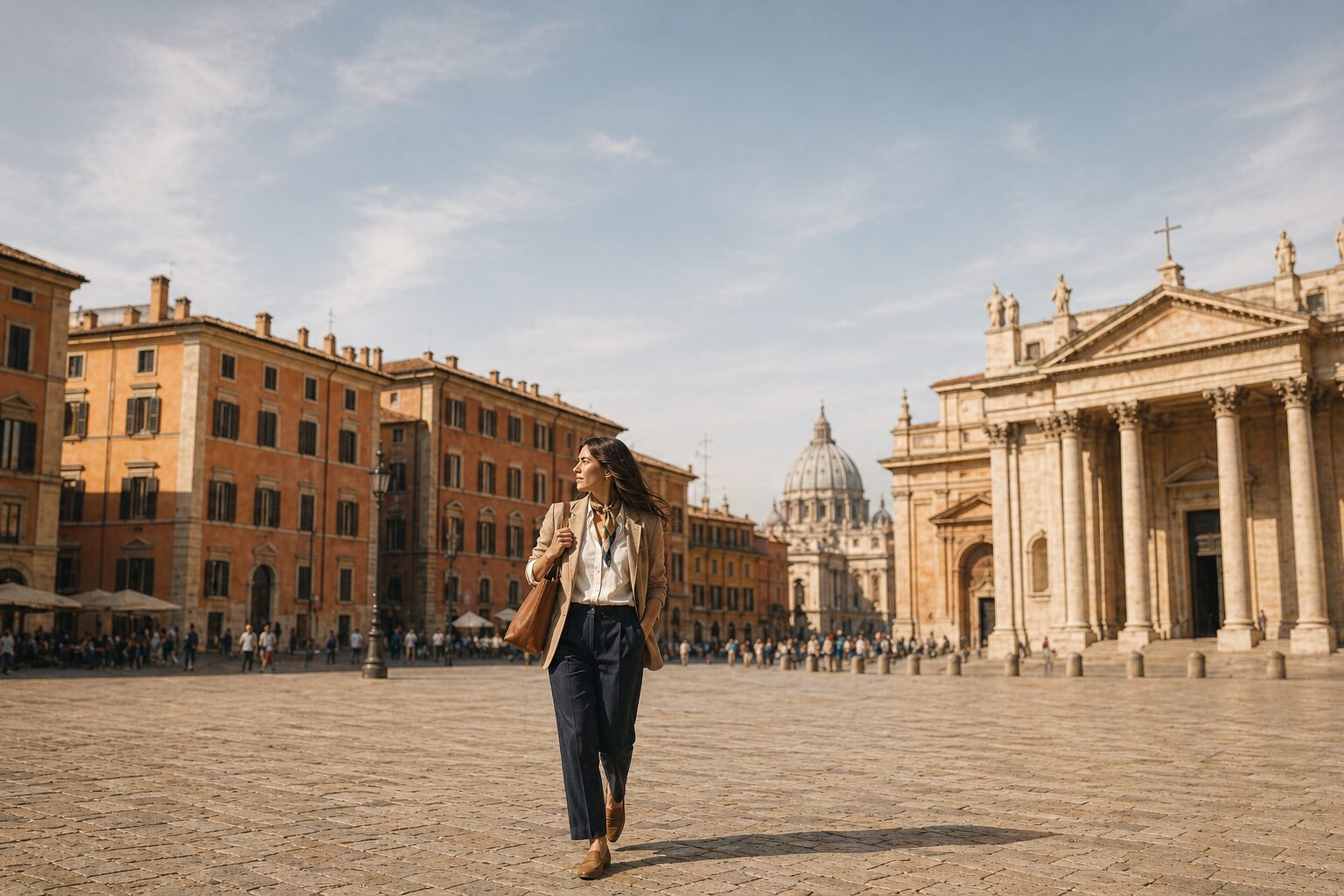
No other country in Europe asks this much of your suitcase. Milan wants sharp tailoring and dark leather. Venice wants grip and warmth. The Amalfi Coast wants linen and sunglasses. The Dolomites want layers. This guide is how you pack for all of it.
Italy dresses differently in every region. This guide covers the universal pieces, the regional rules, and everything in between.
The Italian Aesthetic: An Invitation to La Bella Figura
Italy does not merely ask you to visit; it asks you to participate. To step onto the pavement in Rome, Florence, or Milan is to enter a centuries-old conversation about beauty, dignity, and self-expression. The Italian concept of la bella figura is often mistranslated simply as “making a good impression,” but it is far more profound than that. It is an act of civic respect. In Italy, dressing well is not about vanity; it is about offering a pleasing aesthetic contribution to the public sphere. When you dress with intention, you are telling the shopkeeper, the waiter, and the passerby that you value their company and the shared environment.
The national attitude toward dress is paradoxical to the uninitiated: it is rigorous yet relaxed, formal yet fluid. This is the land of sprezzatura – the art of making the difficult look easy, the studied look natural. You will rarely see activewear outside of a gym. You will rarely see sloppy tailoring. Instead, you will find an adherence to quality fabrics, a reverence for cut, and a distinct lack of fear regarding colour and texture. The Italian wardrobe is architectural but soft, built to withstand the heat of the piazza and the scrutiny of the evening passeggiata. As a traveller, you are not expected to mimic this perfectly, but mirroring the effort is the fastest way to unlock the warmth of the locals. To pack for Italy is to pack with respect for the occasion of simply being there.
The Universal Colour Palette
While the north favours cool sobriety and the south explodes with sun-drenched vibrancy, a specific set of hues acts as a skeleton key, unlocking the aesthetic of the entire peninsula. These colours resonate with the stucco, the stone, and the Mediterranean light.
Travertine Cream
This is not a flat beige, but a warm, living white that mimics the stone of the Roman Forum or a Venetian façade. It reflects the harsh midday sun rather than absorbing it, keeping you cool while looking impeccably fresh against the aging terracotta of the cityscapes.
Faded Indigo
Think of the colour of the Tyrrhenian Sea at dusk, or the perfectly worn knee of a Milanese architect’s denim. It is softer than royal blue but richer than sky blue. It anchors the lighter tones and provides a necessary urban edge for cities like Turin and Bologna.
Burnished Olive
This is the green of the Tuscan landscape – a dry, grey-green rather than a lush emerald. It acts as a neutral in Italy, pairing as easily with navy as it does with cream. It hides the dust of a day’s walking while acknowledging the country’s agricultural heart.
Barolo Red
A deep, blackened burgundy that evokes the country’s most serious wines. Used sparingly in accessories or a single statement knit, it adds the necessary drama that Italian style demands without screaming for attention like a bright fire-engine red might.
Midnight Navy
The non-negotiable anchor. Italians treat navy with the reverence other nations save for black. It is softer under the Mediterranean sun than black, which can look harsh and draining in the high noon light. Navy signals capability and polish in every region.
Warm Espresso
Leather goods in Italy are rarely stark black; they are shades of tobacco, cognac, and deep coffee. This warmth in footwear and bags bridges the gap between the casual linen of the coast and the worsted wool of the business districts.
The Country-Wide Foundation Pieces
Building a wardrobe for Italy requires items that are shapeshifters, capable of moving from a morning museum queue to a late aperitivo without a costume change. The goal is a selection of garments that feel unstructured yet look pulled together, prioritizing natural fibres that breathe in the humidity and drape elegantly in the breeze.
The absolute cornerstone of the Italian suitcase is the unstructured blazer. Unlike its stiff British or American counterparts, the Italian jacket has little to no padding in the shoulders and is often unlined, allowing it to wear like a cardigan while projecting the authority of a suit. You need a garment that you can crumple into an overhead bin and shake out in the taxi, one that looks right over a t-shirt in Naples or a crisp button-down in Milan. Look for high-twist wool (often called “travel wool”) or a linen-silk blend that embraces wrinkles as part of its charm rather than a defect. Boglioli’s K Jacket is the gold standard here, a masterclass in garment-dyed softness that feels like a second skin.
Beneath the jacket, the crisp white linen shirt is non-negotiable. In Italy, linen is not reserved for the beach; it is a city fabric, worn with sleeves rolled up and top buttons undone. The key quality signal is the collar; it must be substantial enough to stand up under a jacket without collapsing. A flimsy collar betrays a cheaper make immediately. You want a shirt that looks better the longer you wear it, softening as the day heats up. Finamore 1925 produces shirts with hand-stitched armholes that allow for greater movement, perfect for navigating crowded markets or gesturing expansively over dinner.
For the lower half, the slim-straight chino or tropical wool trouser replaces the ubiquitous denim of home. Italians generally prefer a break at the shoe that is minimal or non-existent – no puddling fabric at the ankles. The trouser should sit higher on the waist and taper gently. In summer, a drawstring waist hidden by a belt or a tailored waistband offers comfort without sacrificing the silhouette. Avoid cargo pockets at all costs; the silhouette should remain uninterrupted. Incotex makes trousers that are widely considered the best in the world for their durability and precise fit, acting as the perfect foil to the softer upper layers.
Footwear is the primary indicator of status and style in Italy, and the suede loafer is the undisputed king. It is a shoe that straddles the line between formal and casual effortlessly. The suede should be unlined for comfort, moulding to your foot as you traverse cobblestones. While sneakers are acceptable for walking, they mark you instantly as a tourist; a loafer with a rubber sole allows you to walk ten miles and still walk right into a Michelin-starred restaurant. Tod’s Gommino driving shoes are iconic, but for actual walking, look to their city gommino styles or a suede penny loafer from Santoni, which offer better arch support for long days on marble floors.
To bridge the seasons and the regions, a lightweight merino or cashmere crewneck sweater is essential. Even in summer, the air conditioning on trains or the breeze by the lakes can cut through linen. This piece is often draped over the shoulders—a move that seems cliché until you realize its practicality. It frames the face and is ready to be pulled on instantly. The quality signal here is the density of the knit; it should feel substantial, not thin or sheer. Brunello Cucinelli is the aspiration, but Gran Sasso offers exceptional Italian-made knitwear that serves the same function beautifully.
For accessories, the silk-blend scarf is a tool, not just an adornment. It protects the neck from the sun in the south and the draft in the north. It adds a splash of Barolo red or Olive green to a neutral outfit. It implies a certain dash – that sprezzatura again—that suggests you dressed quickly but skillfully. Look for rolled edges, a sign of hand-finishing. A simple pair of acetate sunglasses, preferably in a tortoise shell to match the warm leather tones, rounds out the look. Persol is the heritage choice, specifically the 714 series, which fold up neatly, a marvel of Italian engineering and style.
Finally, the vessel for your day must be a leather tote or a sleek, unstructured leather backpack. Nylon sport backpacks belong on the hiking trails of the Dolomites, not in the Vatican Museums. A leather bag ages with you and elevates even a simple t-shirt outfit. It should be large enough for a water bottle and a guidebook but slim enough not to knock over displays in a boutique. Valextra offers architectural shapes that are devastatingly chic, while a simple leather shopper from a local Florentine artisan often carries just as much character.
The Cultural Dressing Notes
Navigating Italy requires a specific social radar. The country operates on a series of unspoken codes that, once understood, make the traveller feel like an insider. The most famous of these is the dress code for religious sites. The Vatican, St. Mark’s in Venice, and the Duomo in Florence are strict: shoulders and knees must be covered. This is not a suggestion. It applies to men and women equally. The “zip-off” trekking pant is a practical solution that unfortunately screams “tourist.” A better approach is the lightweight cotton trouser and a linen shirt for men, or a midi-skirt and a shawl kept in the bag for women.
Dinner in Italy is theatre. Even in a casual trattoria, showing up in the shorts and t-shirt you wore to the Colosseum is considered a slight lack of manners. You do not need a tuxedo, but you do need to “refresh.” This might simply mean changing into a clean shirt, putting on long trousers, and swapping the walking shoes for loafers. It signals that the day is done and the evening – a time for pleasure and food – has begun.
Grooming is also part of the wardrobe. The “bed-head” look or the gym-hair ponytail is less common here. Italians value a certain sleekness. Ironing your clothes is expected; walking out in a crumpled shirt (unless it is linen, where the wrinkles are patterned and purposeful) is seen as careless. Many hotels will provide irons, but packing a travel steamer is a wise investment for this specific destination.
Climate Overview by Season
Spring (March – May)
The weather is capricious. You might experience a glorious sunny morning and a torrential downpour by lunch. The key here is the trench coat or a sleek technical raincoat (think Herno or Fay) worn over layers. The light is returning, so transition your colours from the dark navies of winter to the creams and stones.
Summer (June – August)
The heat in the cities – especially Rome and Florence – is physical; it radiates from the stones. Synthetic fabrics are your enemy. You need 100% linen, cotton voile, and seersucker. The challenge is looking polished while sweating. The unstructured blazer is carried more than worn, put on only for air-conditioned interiors or the evening.
Autumn (September – November)
Often the most stylish season. The humidity breaks, and the leather jackets come out. This is the time for light cashmere knits, suede boots, and heavier cotton twills. The palette shifts to the burnished olives and browns. It is a season of texture.
Winter (December – February)
Italian winters are damp. The cold gets into your bones, especially in Venice and Milan. A heavy wool coat (a cappotto) is essential – puffer jackets are worn, but usually in sleek, non-athletic cuts. You need scarves, gloves, and proper leather boots with rubber soles to handle the wet pavement.
Choose Your Italy Region
Italy is a collection of former city-states, and their dressing identities remain distinct. What works in the vertical corporate world of Milan will feel stiff in the sun-bleached piazzas of Puglia.
Use the guide below to navigate to the specific region on your itinerary.
LOMBARDY & THE NORTH
Milan, Lake Como, Lake Garda
Dressing Register: Corporate chic, fast-paced, and highly fashion-forward; this is the most formal region in Italy.
Key Destinations: Milan, Bellagio, Bergamo.
Distinct Because: Darker colours, sharper tailoring, and discernible luxury brands are the norm here; “resort wear” is strictly for the boat, not the city street.
→ Read the Lombardy & Milan Wardrobe Guide
VENETO
Venice, Verona, Padua
Dressing Register: Romantic, layered, and practical for a life lived entirely on foot and water.
Key Destinations: Venice, Verona, The Prosecco Hills.
Distinct Because: You need shoes with serious grip for wet marble bridges and layers that handle the damp lagoon mist; the aesthetic is decadent but decayed elegance.
→ Read the Venice & Veneto Wardrobe Guide
TUSCANY
Florence, Siena, Val d’Orcia
Dressing Register: Rustic elegance; a blend of city sophistication and country gentleman heritage.
Key Destinations: Florence, Siena, San Gimignano.
Distinct Because: The tweed, leather, and wool of the countryside blend with the high art of Florence; earthy tones (terracotta, olive) rule here more than anywhere else.
→ Read the Tuscany & Florence Wardrobe Guide
LAZIO
Rome & The Vatican
Dressing Register: The “Great Beauty”—classic, bureaucratic, and steeped in political power dynamics.
Key Destinations: Rome, Tivoli, Ostia Antica.
Distinct Because: It is a working government city that is also a resort; you need “Power Casual” clothes that handle the intense heat but respect the gravity of the institutional surroundings.
→ Read the Rome & Lazio Wardrobe Guide
CAMPANIA & THE SOUTH
Amalfi Coast, Naples, Capri
Dressing Register: Unapologetically glamorous, colourful, and relaxed; this is the home of high-end leisure.
Key Destinations: Positano, Capri, Naples, Sorrento.
Distinct Because: This is the only place where true “resort wear” (linen sets, bold prints, sandals) works in town; Naples requires a slightly grittier, street-smart adaptation of the look.
→ Read the Amalfi Coast & South Wardrobe Guide
TRENTINO-ALTO ADIGE
The Dolomites
Dressing Register: Alpine luxury; Germanic precision meets Italian flair.
Key Destinations: Cortina d’Ampezzo, Bolzano.
Distinct Because: This is the one region where technical gear (Patagonia, North Face) is acceptable, but in the evenings, it is swapped for fur, velvet, and heavy cashmere—never jeans.
→ Read the Dolomites Wardrobe Guide
VISITING MORE THAN ONE REGION?
Many travellers combine the art cities (Rome/Florence/Venice) or mix the city with the coast. You need a strategy that bridges the gap without overpacking.
→ Read the Italy Multi-Region Wardrobe Guide – One Bag for Every City
Regions at a Glance
| Region | Primary Vibe | Key Fabric | Footwear Focus |
| Lombardy | Sharp, Corporate, Dark | Worsted Wool / Silk | Polished Leather Loafer |
| Veneto | Romantic, Misty, Rich | Velvet / Brocade | Rubber-soled Grip |
| Tuscany | Rustic, Earthy, textured | Tweed / Leather | Suede Boot / Loafer |
| Lazio (Rome) | Classic, Imperial, Hot | Crisp Cotton / Poplin | Breathable Walking Shoe |
| Campania | Vibrant, breezy, loud | Pure Linen | Leather Sandal (Capri style) |
| Dolomites | Cozy, Alpine, Sporty | Cashmere / Tech Wool | Hiking Boot / Shearling |
Every region of Italy has its own dressing logic. The north is sharp and fast. The centre is earthy and considered. The south is warm, loud, and unapologetically glamorous. Pack for where you’re going; not for a generic version of Italy that doesn’t exist.
Start with your region above. If you’re covering more than one, Italy in One Bag is where to begin.