
*This post may contain affiliate links for which I earn commissions.*
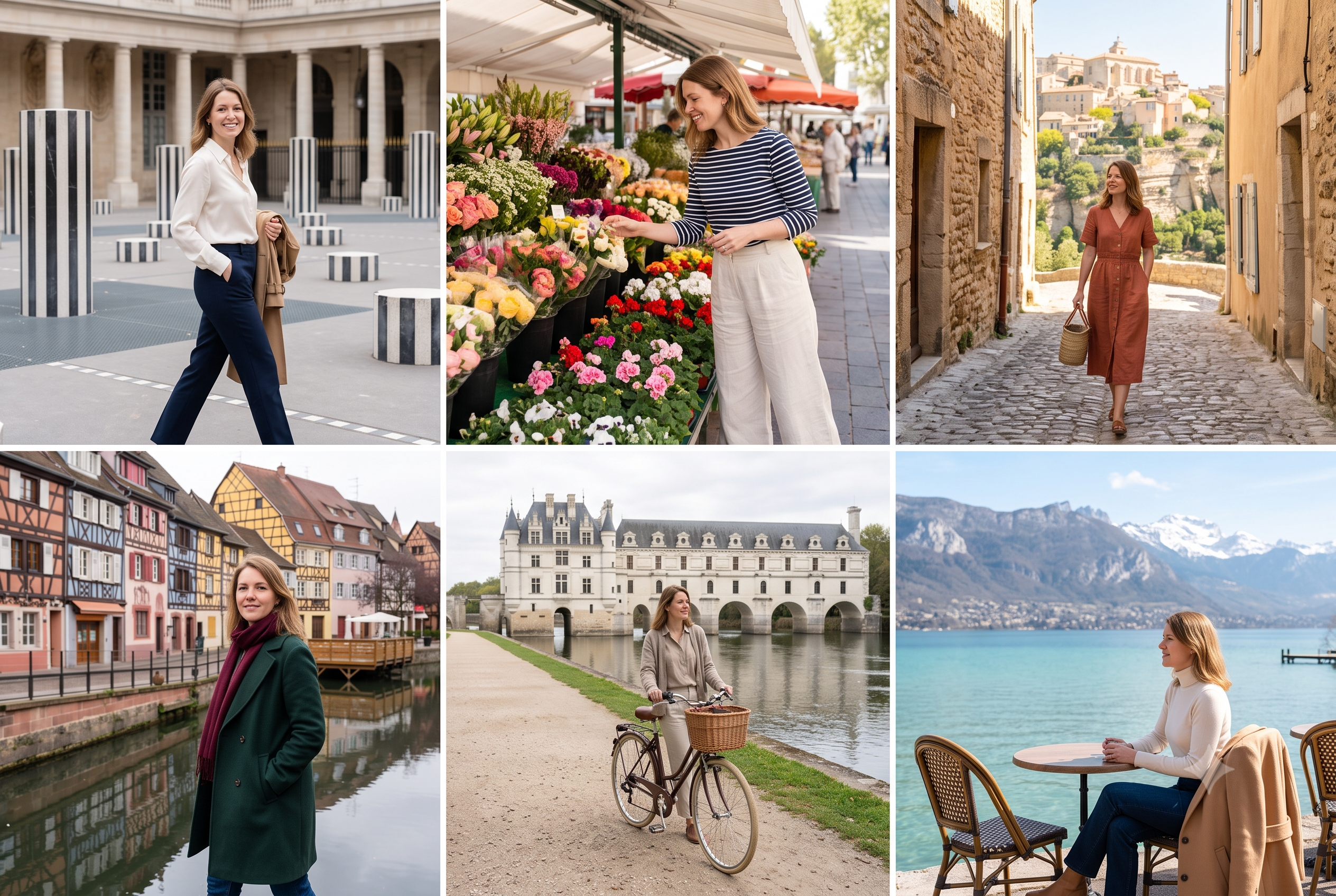
No other country in Europe asks this much of your suitcase. Paris wants precision and a good leather shoe. The French Riviera wants linen and the willingness to eat lunch very slowly. Provence wants you to stop checking the time. Alsace wants layers. The Loire Valley rewards the traveller who shows up with a bicycle and no fixed agenda. The French Alps need a wardrobe that no other French region requires. This guide covers all of it.
France looks different in every region. This guide covers the national aesthetic, the regional distinctions, and everything in between.
The French Aesthetic
The idea most people carry into France about French style is roughly right. Quality over quantity. A narrow colour palette chosen with some care. Nothing purchased specifically for the trip. The appearance of not having tried, achieved through trying more than you would admit.
What makes this useful for packing is that it maps directly onto the capsule wardrobe idea. One good shirt worn three ways beats three forgettable shirts. A leather loafer that handles cobblestones without looking like footwear designed for cobblestones is doing exactly what the French wardrobe does in general: making the practical look like a preference.
The difference between the French version and the Italian version of this idea is that France is quieter about it. Where Italy dresses for the room, France dresses for itself. The result is the same, which is that both are worth paying attention to as a travelling visitor. But the French register is cooler, more private, and slightly harder to read from the outside. Neutral colours. Nothing loud. Nothing that asks for a second look. The second look comes anyway.
You are not expected to match this as a visitor. But arriving with some version of the same instinct, fewer pieces and better ones, makes the whole trip easier.
The Universal Colour Palette
French style runs on a tighter colour range than Italian style, and it commits more firmly to neutral grounding. The palette that works across all six regions moves from warm off-whites through navies and charcoals, with accents borrowed from the landscape.
Écru and ivory
Not stark white but a warm, slightly creamy tone. It reads as clean without being clinical and it works in every season: linen in it for summer on the Riviera, a fine-knit jumper in it for autumn in Alsace. The most French of all the neutrals, partly because it sits between elegant and casual without committing to either.
Navy
The anchor of the French wardrobe. Worn differently by region, slim trousers in Paris, a linen shirt on the Riviera, a heavy cable-knit in the mountains, but present everywhere. French navy is ink-saturated and deep rather than bright primary blue. It works as black does in other countries without the harshness that black can have under direct sun.
Stone and sand
Warm greige tones that echo the limestone of Provençal villages, the sandy beaches of the coast, and the pale stone of the Loire châteaux. The most versatile colours to travel with across all regions, because they sit between the lighter écru and the deeper navy and bridge both.
Terracotta
France’s accent colour. In the roof tiles of Provence, the painted shutters of Alsatian villages, the Campari in a Nice café. A terracotta scarf or faded brick-red knit stops an all-neutral outfit from looking blank. Used sparingly, but useful.
Forest green
Deeper and richer than the Italian olive. The green of the Loire forests, the Vosges above Alsace, the pine slopes above Chamonix. It reads as grounded without being casual, which is why it works as well in a Parisian blazer as it does in an Alpine fleece.
Charcoal
The cold-weather workhorse. Softer than black in Paris’s grey winter light, more sophisticated than mid-grey. It ages well in natural fabrics and crosses from city to mountain without looking wrong in either.
The Country-Wide Foundation Pieces
The French capsule starts from a different place than the Italian one. Italy reaches for the unstructured blazer and the suede loafer as its base. France begins with something more personal: pieces that look worn-in rather than polished, assembled rather than coordinated.
The marinière, the Breton stripe top, is the entry point. It is the single most versatile French garment: casual and smart at the same time, correct on a Paris café terrace and on a Riviera boat and on a market morning in Provence. The key is the quality of the fabric. A dense, tight-knit cotton with clean navy stripes on écru. Saint James makes the original. The difference between a good one and a cheap one is the weight and the precision of the stripe. You can feel it.
Alongside or instead of the marinière, a white or ivory cotton shirt does most of the heavy lifting. Not the crisp Oxford-cloth version but something softer: poplin or chambray, relaxed collar, worn with the sleeves rolled and the bottom half-tucked. The half-tuck that reads as careless is actually the result of choosing a shirt with the right hem length and weight. A.P.C. does this well.
The trousers that run through the French wardrobe are slim and straight, sitting at or just below the natural waist. Not skinny, not wide-leg. Dark navy or charcoal, a cut that works from a museum morning to an evening wine bar without any change. Isabel Marant’s straight-leg trousers are the aspiration. A.P.C. offers the same silhouette at a more accessible price.
Footwear in France divides between two choices: the clean white leather sneaker and the leather ankle boot. The sneaker, unbranded or subtly branded and not a running shoe, is worn in every French city and acceptable almost everywhere. Veja defines this category in France. The ankle boot, flat or very low-heeled, is for cooler months: it covers the ankle, handles cobblestones with authority, and looks right with everything from slim jeans to a midi dress.
The trench coat is the French outerwear anchor. Not the heavy British version but a lighter cotton-nylon blend, unlined, in classic camel or khaki. It goes over everything, handles spring rain and autumn wind equally, and looks correct against every piece of French architecture you will walk past. A.P.C. and Sandro both make versions at the right weight.
The bag runs smaller in France than in Italy. A mid-size leather tote or structured leather bucket bag rather than a large carryall. Enough for a book, water, a scarf, and a phone. Polène and Jacquemus both make bags that are immediately legible as French in their restraint.
The Cultural Dressing Notes
The codes that govern French social settings are not enforced loudly. They are simply noticed. Understanding the register, the appropriate level of dress for a given moment, is what separates someone who feels at ease from someone who feels perpetually slightly wrong.
The most important code on the Riviera and in Provence is the one between beach and town. Swimwear does not leave the beach. A cover-up, a linen shirt, a pareo over the swimsuit, is required the moment you step into a café, a market, or a village street. In Nice, Cannes, and Antibes this applies in midsummer. The visitors who miss it are noticed immediately.
Cathedrals and churches throughout France expect covered shoulders and knees. The great Gothic cathedrals, Chartres, Reims, Strasbourg, are working places of worship. A scarf in the bag resolves this for every region and adds nothing to the weight of the luggage.
Dinner in France is a step up from the day. In Paris, a restaurant that would read as casual in London or New York expects the French version of evening dress: long trousers, a clean shirt or blouse, shoes rather than sneakers. In Provence the bar is lower but the principle holds. A change of shirt and a pair of loafers takes a few minutes and changes how the evening feels.
The morning market, the marché, runs from roughly eight until one in most French towns. The dress code is relaxed but not sloppy. Flat shoes, a cotton or linen top, a basket bag for carrying produce. The basket bag is practical here, not affectation. Buy a light canvas one before you arrive or pick one up at any market in the south.
Climate Overview by Season
Spring (March to May)
Capricious is the honest word. March in Paris can be genuinely cold. May on the Riviera can be warm enough for a swimsuit. The same trip in April can give you both. Layer: a trench coat over a fine knit over a linen shirt covers most of what spring throws at you across all regions. Evening temperatures drop sharply even when the days are warm.
Summer (June to August)
The south of France in summer is seriously hot. Provence and the Riviera reach the high thirties in July and August. The mistral wind in Provence makes some of those temperatures feel colder at the body despite the heat, rather than more comfortable. Linen is the only practical fabric from June onwards. In Paris, summer is warm but manageable. Pack natural fabrics and plan outdoor activities for morning and late afternoon.
Autumn (September to November)
The finest season in France and the most underrated. September on the Riviera is warm, less crowded, and cleaner than August. The Loire Valley in October has harvest markets and low golden light. Alsace turns amber in late October and the wine villages smell of fermenting grapes. The trench coat earns its keep in autumn. Add a cashmere scarf from October onwards for evenings that cool quickly after warm days.
Winter (December to February)
Two distinct experiences. The ski season in the Alps, which requires proper technical and après-ski gear. And everywhere else, which requires a good wool coat and an appreciation for quieter, darker, colder versions of places that are spectacular in summer. Paris in winter is less crowded and beautiful on clear days. Alsace’s Christmas markets run from late November through December and are worth the cold. Pack a heavyweight coat, leather boots with rubber soles, and a genuinely warm scarf.
Choose Your France Region
France’s regions have distinct climates, distinct architecture, distinct daily rhythms, and distinct dressing registers. What works on the Riviera can look out of place in Alsace. What the Alps require is actively wrong in Paris. Use the guide below to navigate to the region on your itinerary.
PARIS
Île-de-France
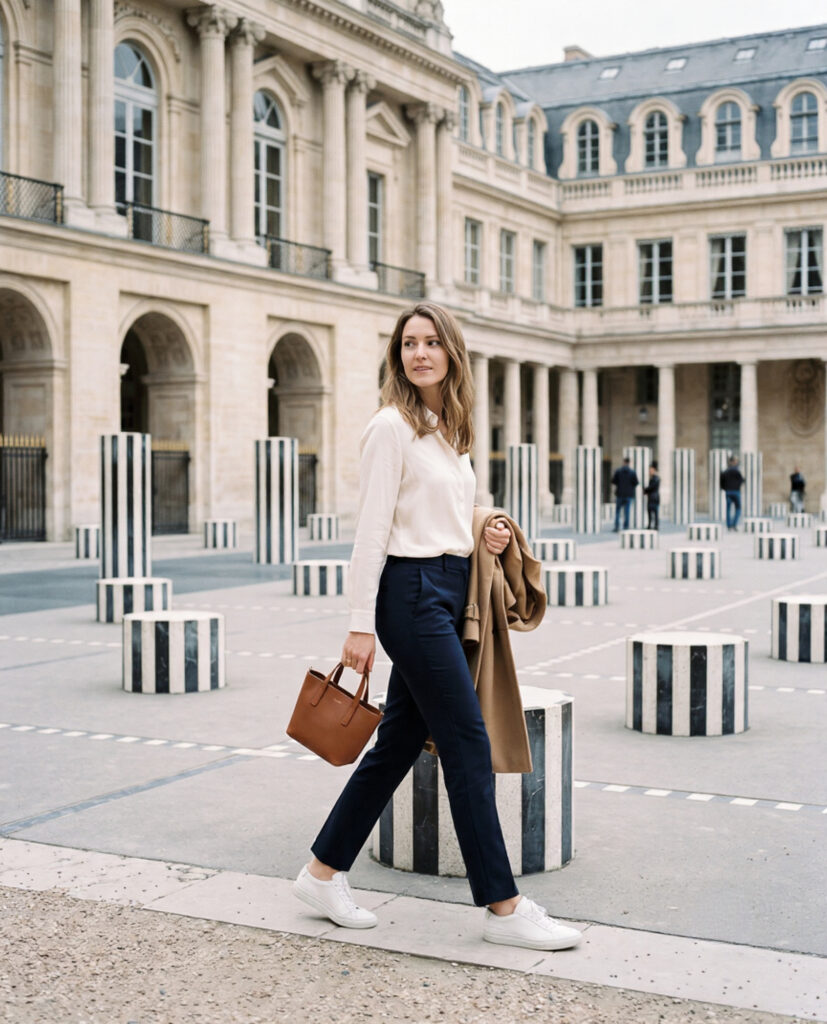
Dressing register: Understated, precise, and carefully calibrated. The most self-aware city in France.
Key destinations: Le Marais, Saint-Germain-des-Prés, Montmartre, Palais Royal, the Musée d’Orsay, the Canal Saint-Martin.
Distinct because: Paris rewards invisible effort. The same outfit, a good white shirt, slim dark trousers, a leather loafer, takes you from a museum morning to a wine bar evening without changing. Overdressing reads here as clearly as underdressing. The ideal is that nobody can quite work out how much thought you put in. The answer is more than it looks.
→ Read the Paris Capsule Wardrobe Guide
FRENCH RIVIERA
Nice, Cannes, Antibes, Èze, Villefranche-sur-Mer
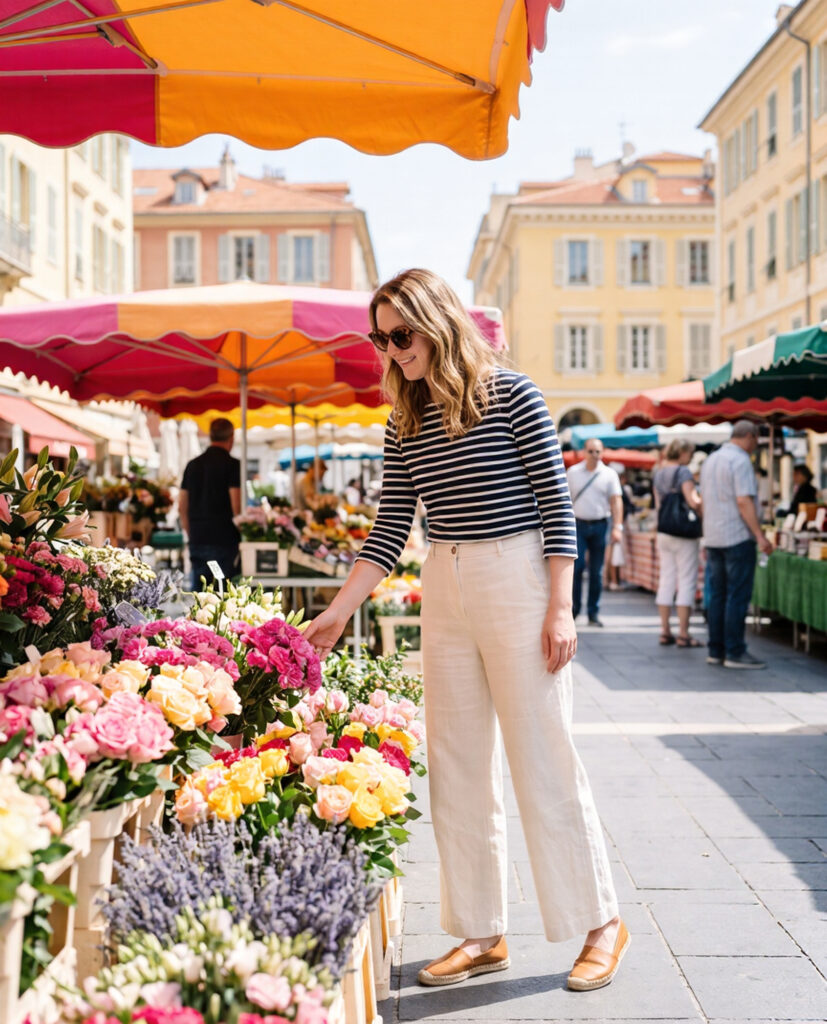
Dressing register: Glamorous, sun-soaked, and deliberately unhurried. High-end leisure dressing, not beach-holiday dressing.
Key destinations: Nice’s Vieux-Port and Cours Saleya market, the Promenade des Anglais, Cannes, Antibes old town, Èze village, the Îles de Lérins, Monaco.
Distinct because: The Riviera is where linen sets and strappy sandals are appropriate in town as well as on the beach. But the word resort here means a 1950s hotel terrace, not a pool party. Swimwear stays on the beach. Cover-ups are expected the moment you step onto a promenade. The glamour is unhurried and well-groomed, and the moment you rush it, it shows.
The French Riviera Travel Guide covers the three Corniches, the Cours Saleya market, Èze village, Cap Ferrat, Monaco, and where to stay and eat across the coast.
→ Read the French Riviera Capsule Wardrobe Guide
PROVENCE
Aix-en-Provence, the Luberon, Gorges du Verdon, the Camargue
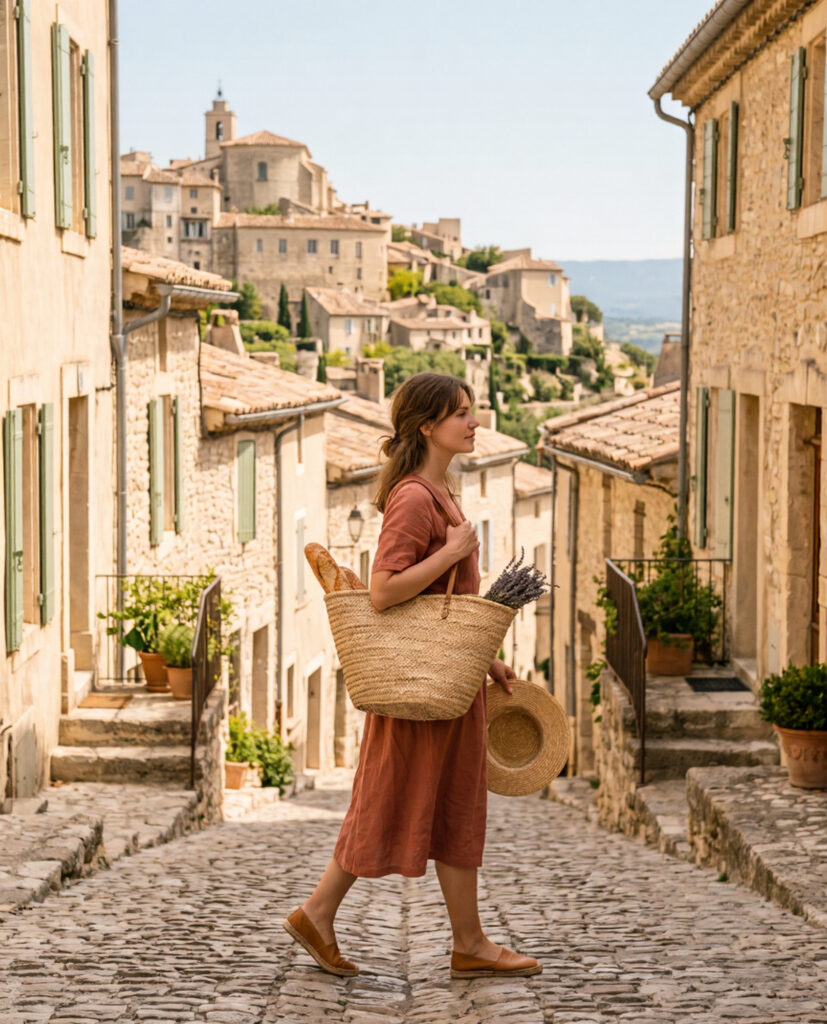
Dressing register: Rustic, sensory, and deliberately slow. Earthy tones, natural fabrics, shoes made for market cobblestones.
Key destinations: Aix-en-Provence, Roussillon, Gordes, Les Baux-de-Provence, the Luberon villages, Arles, the Camargue.
Distinct because: Provence runs on market time and lunch time. The pace demands clothing that fits both. The Provençal aesthetic is relaxed but not careless: washed linens, flat espadrilles, a well-chosen scarf for the mistral wind that makes even a sunny day feel sharp. The landscape, sunbaked stone, lavender fields, terracotta roofs, makes earthy tones feel more natural here than anywhere else in France. A wicker basket bag is practical, not a style choice.
→ Read the Provence Packing List
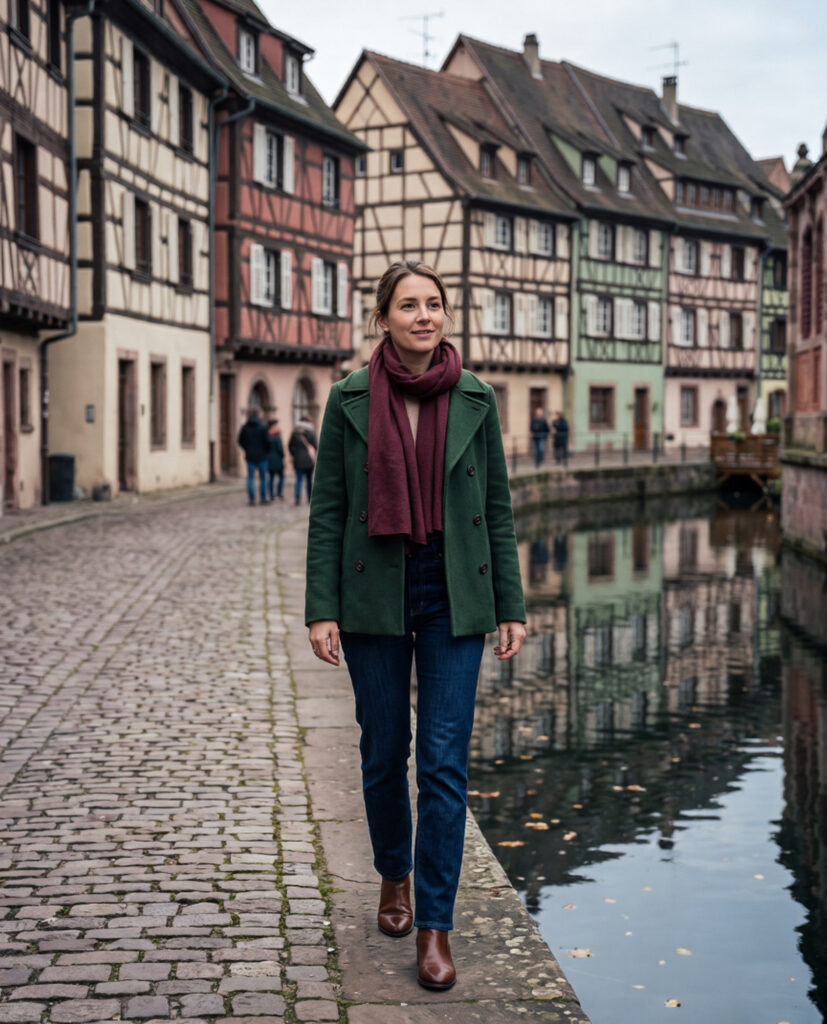
ALSACE
Strasbourg, Colmar, Riquewihr, the Route des Vins
Dressing register: Germanic in structure, French in refinement. Layered, textured, and built for a region with four genuinely distinct seasons.
Key destinations: Strasbourg, Colmar, Riquewihr, Ribeauvillé, the Vosges foothills, the Route des Vins.
Distinct because: Alsace was German for large stretches of its history and the architecture, food, and dressing register reflect it. The colour palette runs darker and richer than the south: forest green, burgundy, slate, deep navy. Layers matter here in a way they do not on the Riviera. The Christmas markets, running from late November through December, are among the most celebrated in Europe and require proper cold-weather dressing. A good wool coat, serious boots, and a warm scarf are not optional from October.
→ Read the Alsace Packing List
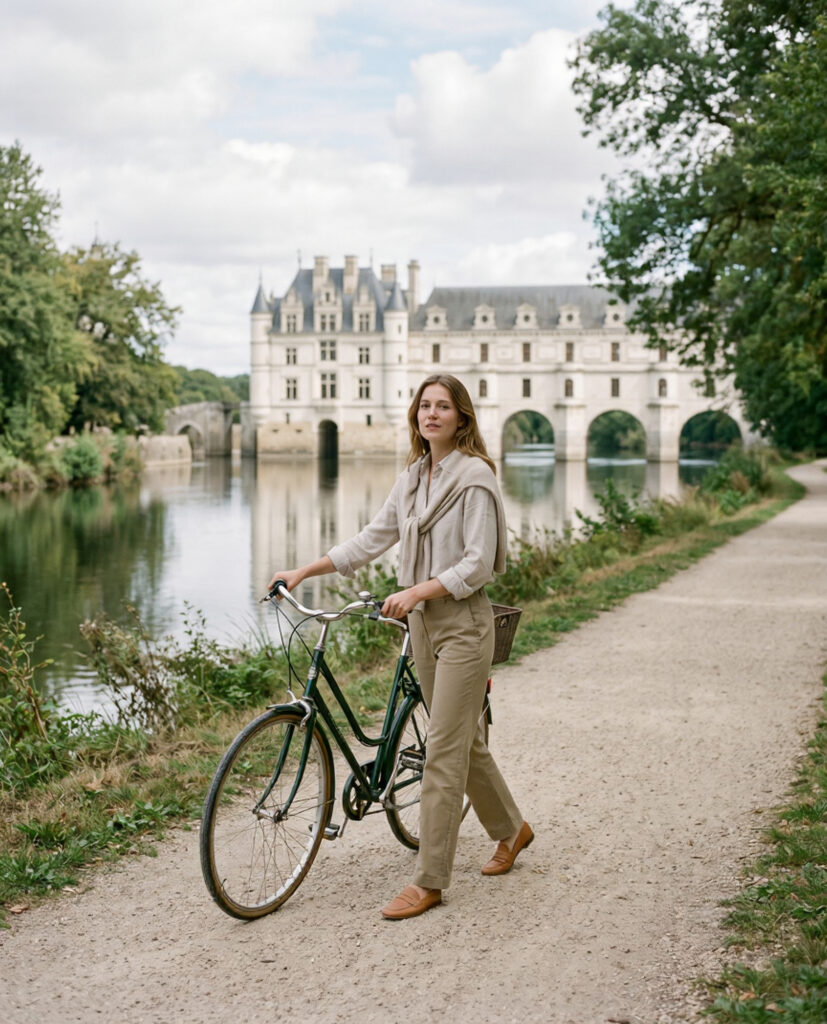
LOIRE VALLEY
Tours, Blois, Amboise, Chinon, Saumur
Dressing register: Quiet and unhurried, with a gentle elegance that suits the pace of château visits and river cycling.
Key destinations: Château de Chambord, Château de Chenonceau, Amboise, Tours, Saumur, the Loire à Vélo cycling route.
Distinct because: The Loire is UNESCO-listed for its landscape, its châteaux, and the quality of its light, a diffused silver brightness that is different from the sharp south. It is also wetter than most of France. Spring and autumn bring real rain. A packable rain layer belongs at the top of the bag for most of the year here. Most visitors do part of the Loire à Vélo cycling route, which shapes the packing list: you need clothes that work on a bike and off it, and shoes that handle both a gravel path and a château interior.
→ Read the Loire Valley Packing List
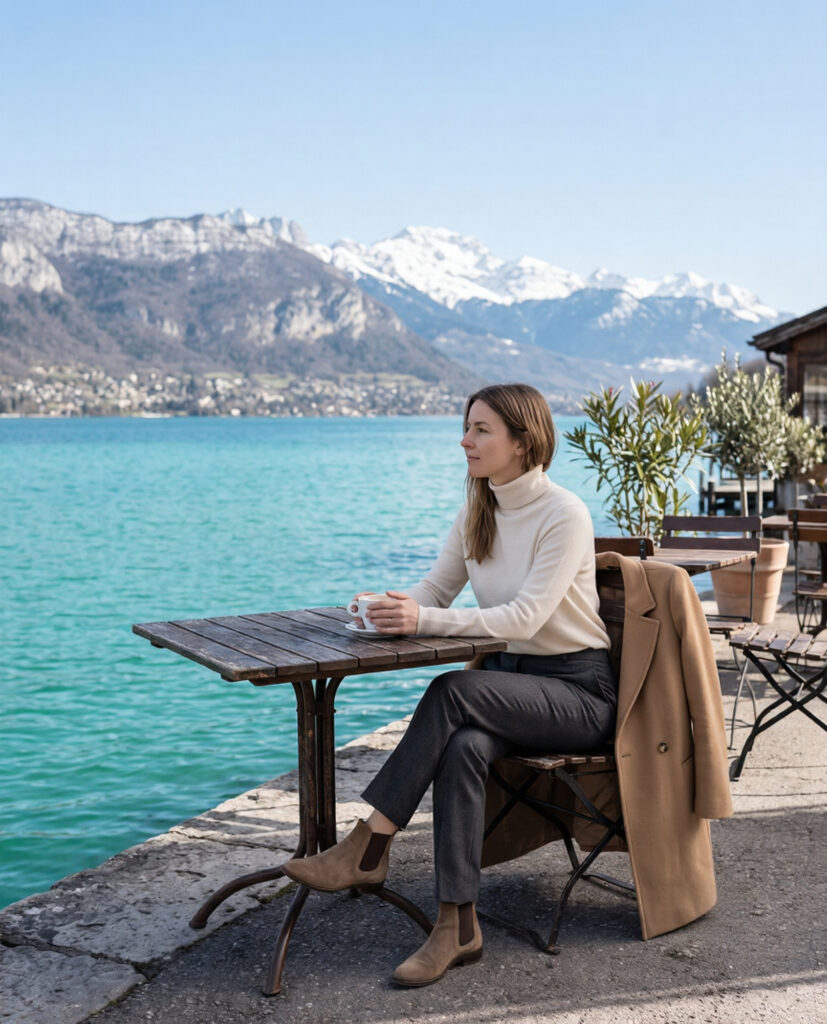
FRENCH ALPS
Chamonix, Annecy, Megève, Courchevel, Les Deux Alpes
Dressing register: Technical performance on the mountain, considered elegance in the resort towns. Two completely distinct modes.
Key destinations: Chamonix and the Aiguille du Midi, Lake Annecy, Megève, the Mer de Glace, the Route des Grandes Alpes.
Distinct because: The Alps are the one region in France where the usual capsule wardrobe logic bends to the terrain. A cable car ride from the Chamonix valley to the Aiguille du Midi covers a 2,800-metre altitude gain and a 15-degree drop in temperature. The layering system, base, insulation, waterproof shell, is the whole framework. In winter, the ski resorts of Chamonix and Megève are style-conscious places: après-ski is a serious aesthetic event and the mountain towns expect more than a fleece and ski trousers for the evening.
The French Alps Travel Guide covers Chamonix, the Aiguille du Midi, Lake Annecy, Megève, where to ski, where to hike, and what to eat in the mountain villages.
→ Read the French Alps Packing List
VISITING MORE THAN ONE REGION?
A lot of France trips combine Paris with a second destination: the Riviera, Provence, Alsace, or the Loire Valley depending on the season. Packing for two or more regions from a single carry-on requires a neutral base that holds its own everywhere and one or two destination-specific additions.
→ Read the France Packing Guide: What to Pack for Every Region
Regions at a Glance
| Region | Primary Vibe | Key Fabric | Footwear Focus |
| Paris | Understated, precise, city-smart | Fine cotton / tailored knit | Leather loafer / ankle boot |
| French Riviera | Glamorous, sun-soaked, effortless | Pure linen / silk | Strappy leather sandal |
| Provence | Rustic, unhurried, sensory | Washed cotton / linen | Flat espadrille / leather mule |
| Alsace | Layered, textured, four-season | Wool / dense cotton | Ankle boot / walking shoe |
| Loire Valley | Verdant, gentle, quietly elegant | Light cotton / merino | Flat loafer / walking shoe |
| French Alps | Alpine luxury, technical, layered | Merino / waterproof shell | Trail boot / après leather |
Every region of France has its own dressing logic. Paris is precise and restrained. The Riviera is glamorous and linen-based. Provence is earthy and unhurried. Alsace layers for real seasons. The Loire Valley is gentle and slightly wet. The Alps have their own rules entirely. Pack for where you are going, not for a generic version of France that does not exist.
Start with your region above. For destination planning beyond what to wear, the French Tourism Authority covers all six regions in depth and is updated regularly with practical travel information.