
*This post may contain affiliate links for which I earn commissions.*
Everything You Need to Know About Eating in Naples
Naples feeds you differently from anywhere else in Italy. Not just the food itself, though the food is extraordinary, but the whole register of eating here: standing at a counter at ten in the morning with a fried something in your hand and espresso that costs a euro and the noise of the street coming through the open door. There is no ceremony. There is also no compromise. The ingredients are what they are, the recipes have not changed in a century, and the Neapolitans have a very clear sense of what good food is and exactly no patience for a lesser version of it.
This is a city where the pizza debate is not abstract. People have strong feelings about specific ovens, specific dough hydrations, specific pizzaiolos. The coffee is a point of civic pride. The pastry situation alone could occupy a long weekend. Come hungry and stay that way for as long as you can.
The Pizza
What makes Neapolitan pizza different
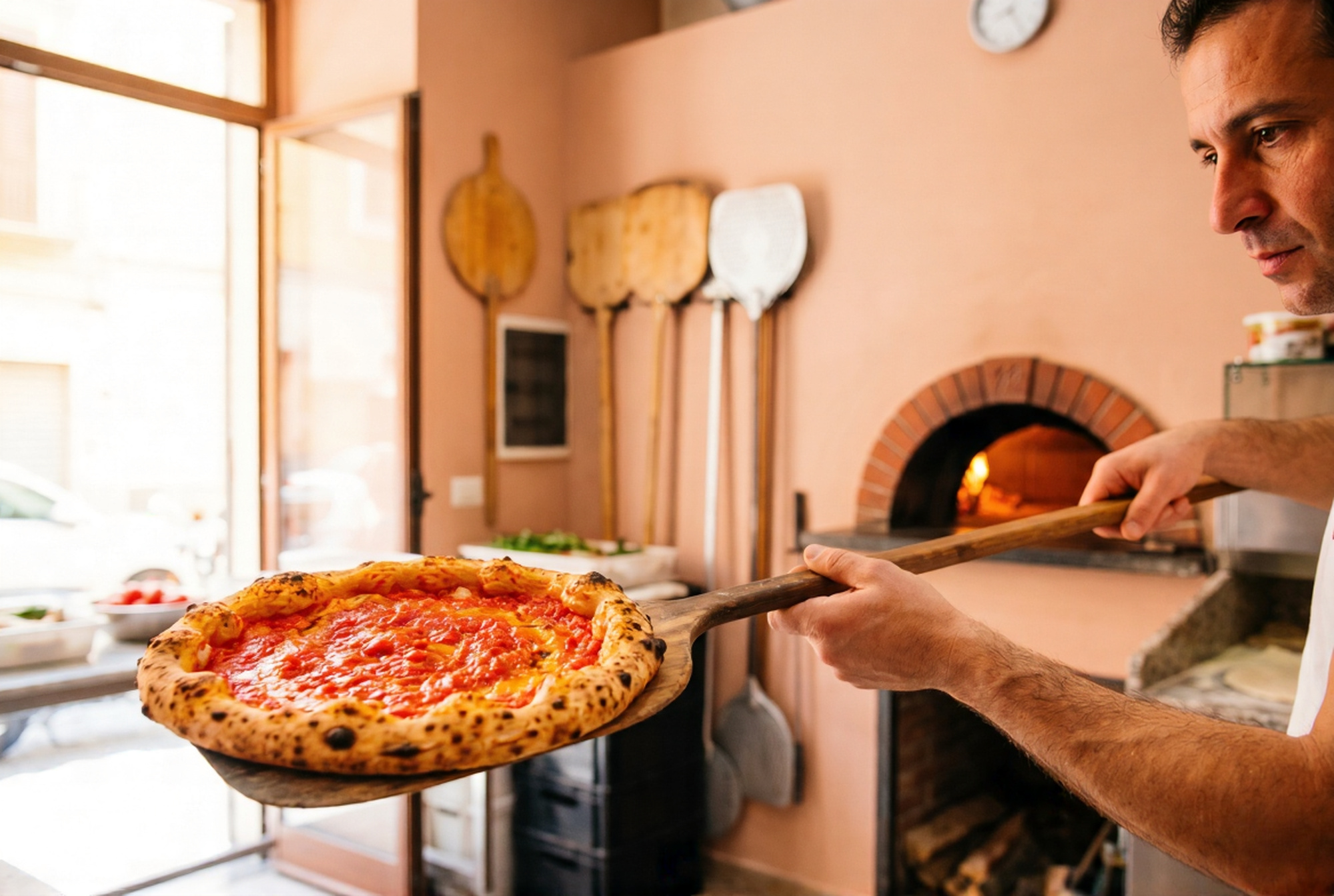
The dough is soft and wet, made with double zero flour, water, salt, and yeast, and left to prove for at least eight hours. The pizza goes into a wood-fired oven at around 450 degrees for sixty to ninety seconds. The result is a crust that is charred in places on the outside, soft and slightly chewy inside, with a thick raised edge, the cornicione, that is airy and blistered and tastes of the fire. The centre stays wet. This is not a flaw. This is the point.
The classic versions are the Marinara, tomato, garlic, oregano, olive oil, no cheese, the oldest pizza in Naples, and the Margherita, tomato, fior di latte mozzarella or buffalo mozzarella, fresh basil, olive oil. Both cost between six and nine euros at a serious pizzeria. Both are better than any pizza you have eaten anywhere else.
Di Matteo, Via dei Tribunali 94
The most recommended pizzeria in Naples by the people who actually live there. The room is narrow and loud and packed at every hour. The pizza arrives fast. Order at the counter, pay in cash, eat standing or at one of the small tables. The Marinara here is the benchmark: the tomato is sweet and slightly sharp, the garlic is present but not aggressive, the olive oil is the kind that makes you understand why olive oil matters.
Di Matteo also does frittura, fried things: calzone fritto, pizza fritta, montanarine. Order one alongside the pizza. This is not a diet destination.
Sorbillo, Via dei Tribunali 32
The most famous name in Neapolitan pizza. Gino Sorbillo’s family has been making pizza on this street since 1935 and the queue outside most evenings reflects that. The pizza is excellent, the room is large, and the booking system exists but does not always hold. Show up, put your name on the list, wait. It is worth it, though Di Matteo is less crowded and equally good.
Pizzeria da Attilio, Via Pignasecca 17
Slightly off the tourist circuit in the Pignasecca market area. Attilio Bachetti makes eight types of pizza including his famous star-shaped Carnevale, and the room fills entirely with locals. Book for dinner. Go hungry. The pizza fritta here, a folded fried pizza filled with ricotta, provola and salami, is one of the best things you will eat in the city.
L’Antica Pizzeria da Michele, Via Cesare Sersale 1
Two pizzas only: Marinara and Margherita. Nothing else on the menu, nothing else ever will be. The queue starts before the door opens and the turnover is fast. This is the purist’s pizzeria, the one that appears in every book written about Neapolitan food, and it earns the reputation. Cash only. No reservations. Get there early.
The Street Food
The fritto misto and the frying shops
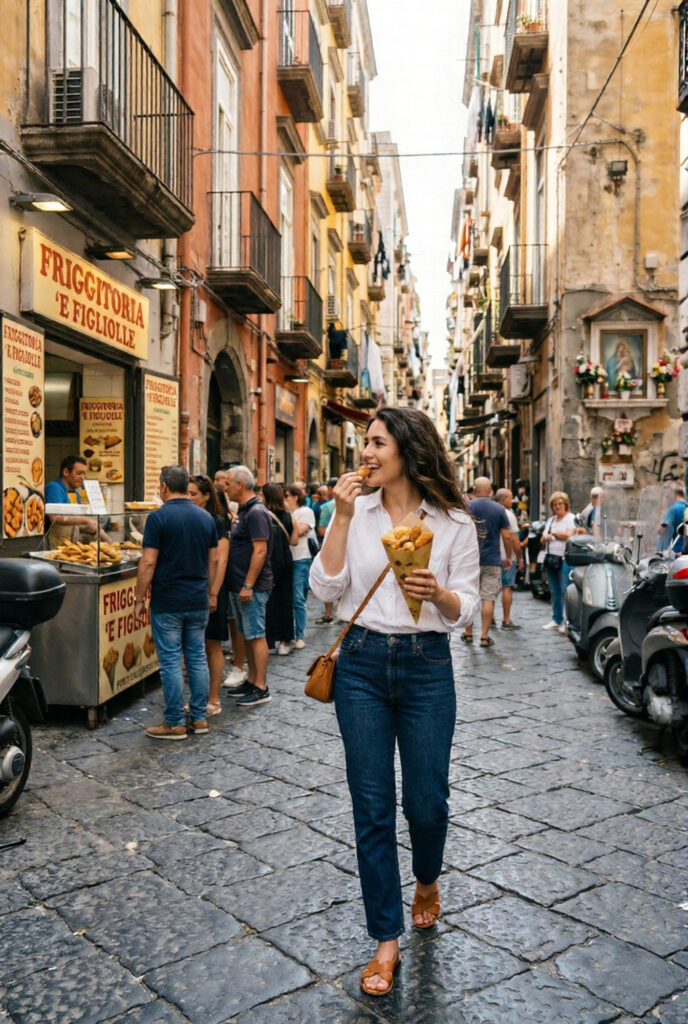
Naples is built around the friggitoria, the frying shop, in a way no other Italian city is. The fritto misto, the mixed fried plate, includes everything from potato croquettes to fried zucchini blossoms to pizza fritta to the cuoppo, a paper cone of fried seafood or vegetables. The food comes out of the oil and into your hand immediately. You eat it standing on the pavement.
Any friggitoria in the Spaccanapoli or the Quartieri Spagnoli will do. The Friggitoria Vomero at Via Cimarosa 44 in the Vomero neighbourhood is the one most locals point to, but the best one is whichever one is frying right now in front of you.
Taralli
A small ring-shaped savoury biscuit made with lard, almonds, and black pepper, baked until golden and hard. Street vendors sell them throughout the historic centre, warm in a paper bag. They are what you eat walking between things. Taralli Napule Mia near the Piazza Dante is the most recommended. A bag costs almost nothing and disappears faster than you expect.
Cuoppo
A paper cone of fried fish and seafood: calamari, shrimp, small anchovies, or the mixed version with vegetables. Bought from street stalls in the port area and the Spaccanapoli, eaten immediately, standing up. The best versions have just come out of the oil and are still crackling. The Friggitoria Masardona on the Via Giulio Cesare Capaccio does the definitive version.
Pizza a portafoglio
Pizza folded into quarters and eaten walking. A street food specific to Naples, available from the small pizza windows throughout the historic centre. The dough is softer than a full pizza, the toppings simple, and the whole thing costs a euro or two. Walk down the Via dei Tribunali and you will find three or four places selling it within a hundred metres.
The Pastry
Sfogliatella
Naples owns this pastry entirely. Two versions: the riccia, the shell-shaped version with dozens of crisp layered pastry leaves, filled with ricotta, semolina, candied citrus peel and cinnamon, and the frolla, made with smooth shortcrust pastry and the same filling. Both are served warm from the oven and should be eaten immediately on the street outside.
Sfogliatella Mary at the Galleria Umberto I has been making both since 1914 and is the definitive address. Pintauro on the Via Toledo, a few minutes’ walk away, is the other name everyone mentions. Go to both. The riccia at Pintauro and the frolla at Mary is the consensus local preference.
Babà
A small rum-soaked sponge cake, light and slightly sticky, the size of a mushroom, sold individually in every pasticceria in the city. It came to Naples from France in the 18th century with the Bourbon court and never left, gradually becoming something the French would no longer recognise as theirs. The best versions are soaked generously in rum syrup and served at room temperature. Order one with your afternoon coffee.
Pastiera Napoletana
The classic Neapolitan Easter cake: a shortcrust pastry shell filled with ricotta, cooked wheat berries, eggs, orange blossom water, and candied citrus. Available year round in the pasticcerie of Naples, best in spring when it is freshest. The Pasticceria Capriccio on the Via dei Tribunali makes one of the best versions in the city.
The Coffee
How to order coffee in Naples
An espresso is simply un caffè. You order it, it arrives, you drink it at the counter in thirty seconds and leave. The ritual is non-negotiable: Neapolitans do not take their coffee to go, do not add syrup, and do not consider a twenty-minute sit-down with a laptop to be a coffee experience.
The caffè sospeso, the suspended coffee, is a Neapolitan tradition: you pay for two coffees, drink one, and the other waits for whoever comes in next and cannot afford one. Some bars still practise it. Ask about it.
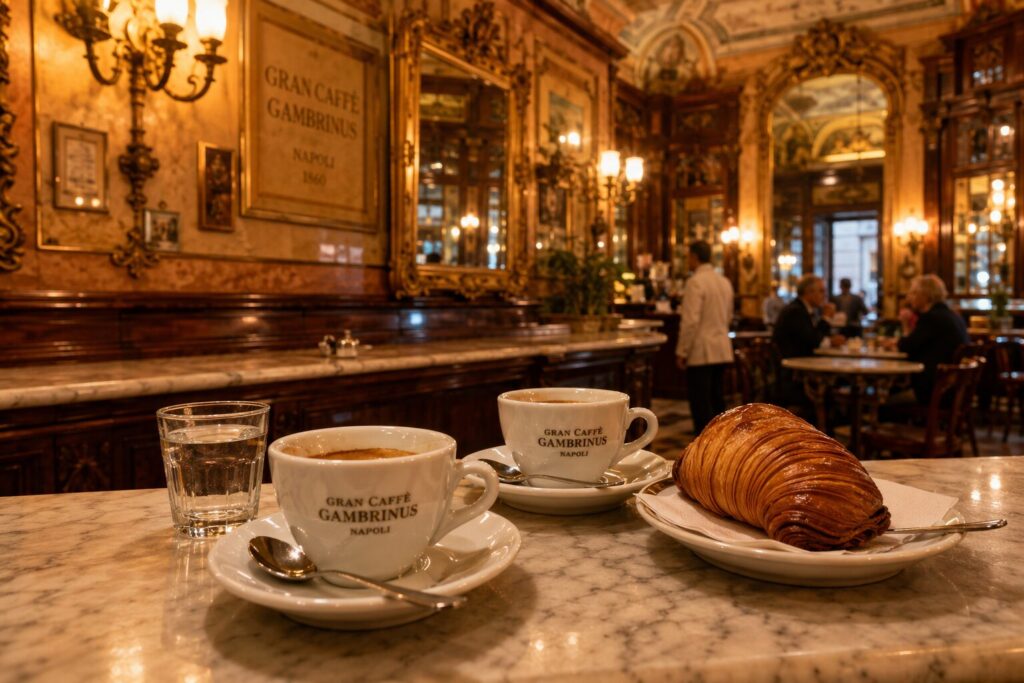
Gran Caffè Gambrinus, Via Chiaia 1
Open since 1860 and the most famous café in the city. The Liberty-style interior is extraordinary: painted ceilings, gilt-framed mirrors floor to ceiling, white marble counters worn smooth by a century of espresso cups. The coffee costs more here than anywhere else in Naples, it is still under two euros, and walking into that room in the morning is one of the more quietly pleasurable things this city offers.
Caffè Mexico, Piazza Dante 86
The local favourite. Dark roast, thick crema, served at a counter with no fuss and no interest in being discovered. The caffè corretto, espresso with a shot of something in it, is what many regulars order in the morning. Extremely affordable, extremely good.
The Neighbourhood Guide to Eating
Via dei Tribunali
The main street of the historic centre and the spine of the pizza culture. Di Matteo, Sorbillo, Michele: all of them are here or within fifty metres. Walk the full length from the Piazza del Gesù Nuovo end and stop when something looks right. The street also has good friggitorie, pastry shops, and produce stalls. Come hungry and eat your way along it.
The Quartieri Spagnoli
The Spanish Quarter runs uphill from the Via Toledo in a grid of narrow lanes. It is rougher than the Tribunali and better for it: the trattorias here are the kind where the menu is handwritten and changes with what came in that morning. The Trattoria da Nennella on the Vico Lungo Teatro Nuovo is the most recommended: chaotic, lively, extremely affordable, with a fixed-price lunch that includes wine.
Pignasecca Market
The daily produce market in the Montesanto area, a short walk from the Spaccanapoli. Open every morning, the stalls selling fish, produce, cheese, and street food. The seafood at the fish stalls is extraordinary and there is no more honest version of Naples food culture than standing in this market at nine in the morning eating something fried while the vendors shout over each other. Arrive before ten.
Chiaia and Mergellina
The more residential, more polished end of the city along the waterfront. Good seafood restaurants, the best gelato in the city at Scimmia on the Piazza della Vittoria, and the Caffè Mexico nearby. Come here for dinner when the historic centre has worn you out.
Practical Notes
Cash is preferred almost everywhere. Many of the best places, Di Matteo, Michele, the friggitorie, the street food stalls, operate cash only or strongly prefer it. Carry enough euros to cover a day of eating and coffee before you head into the historic centre.
Eating hours. Neapolitans eat late by northern Italian standards. Lunch from 1pm to 3pm, dinner rarely before 8:30pm and more commonly 9pm. The pizzerias open earlier, from 7pm, and close when the dough runs out. Queue early for Michele and Sorbillo or expect to wait.
Dress code. Naples is a casual city at the table. The smarter restaurants in Chiaia have no enforced dress code but the room is dressed and you will feel the difference if you are not.
Portions. Large. The Neapolitan sense of hospitality runs directly through the quantities. Order one pizza between two people and a shared antipasto. If you order a pizza each and a starter you will not finish either.
Read Next
Naples is one section of a larger Campania trip. The Amalfi Coast, Naples and Capri Travel Guide covers everything beyond the food: where to stay, what to see at Herculaneum and Ravello, how to get around the coast, and the Capri logistics that most guides get wrong.
For what to actually wear in Naples and on the Amalfi Coast, the Campania Capsule Wardrobe Guide covers the twelve pieces that handle the heat, the steps, and the Capri evening.
The Complete Guide to Italy covers the full wardrobe picture across every Italian region.
Planning a trip to Naples? The Amalfi Coast, Naples and Capri Travel Guide has everything else you need before you go.