
*This post may contain affiliate links for which I earn commissions.*
The Complete Insider’s Guide to the Campania Region
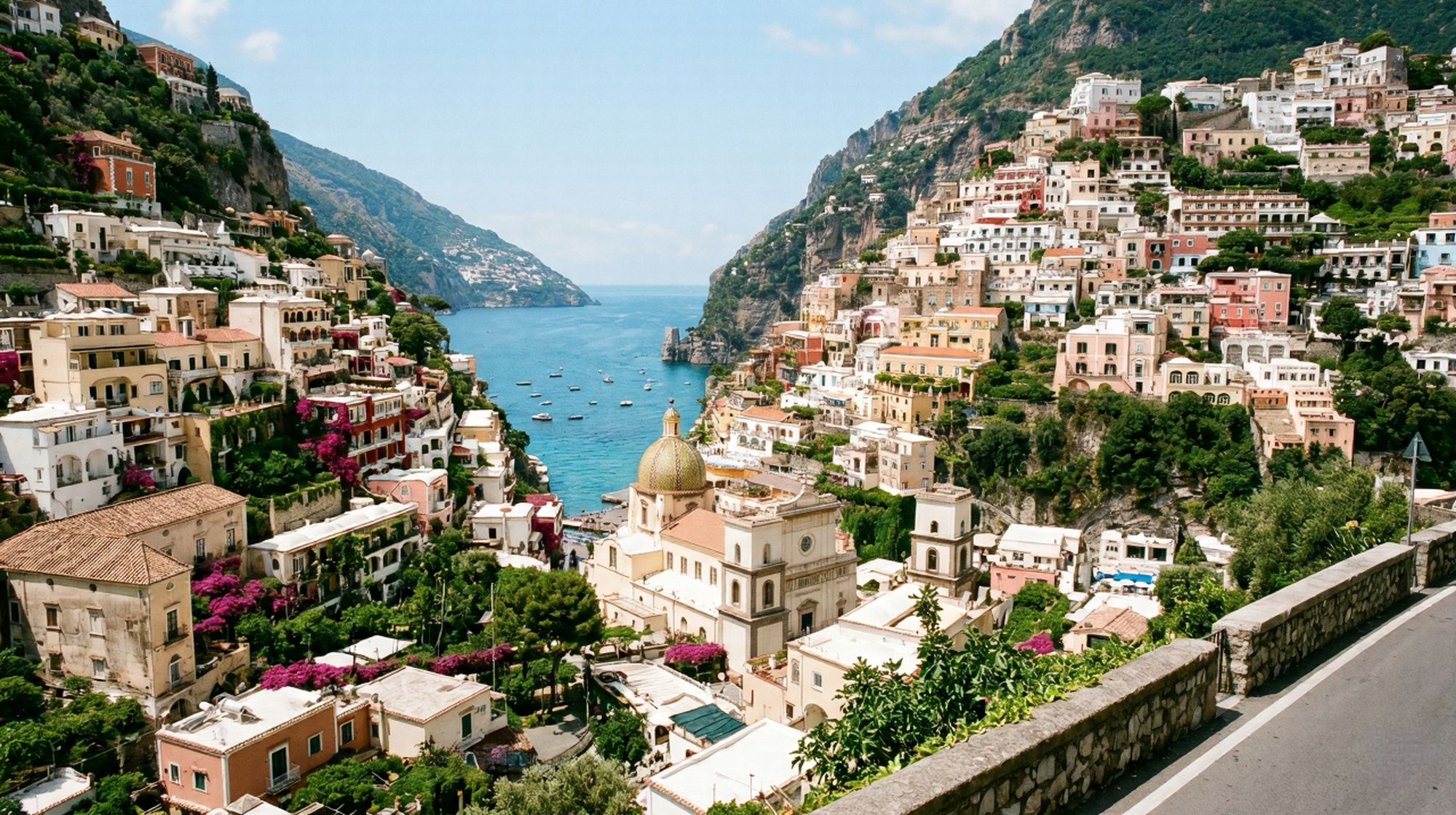
Morning light hitting the Tyrrhenian Sea creates a glare so sharp and white it is almost audible. The air coming off the water carries bruised lemon and espresso and the particular mineral smell of sun-baked limestone. You step out of your hotel in Positano and there are steps going down and steps going up and no other options, and the view from either direction is so extravagant it takes a moment to remember you came here with a plan.
Campania is not one place. It is at least three, each demanding a completely different version of you. The Amalfi Coast is high drama and serious glamour, the kind of place where even a morning espresso feels like a performance. Naples is raw and loud and brilliant, a city that has been doing things its own way for three thousand years and has no interest in adjusting for visitors. Capri is something else entirely, a floating stage set of blue water and white stone where the beautiful and the expensive arrive together every summer and the locals have long since made their peace with both. All three are within an hour of each other. Pack accordingly.
The coastline has held UNESCO World Heritage status since 1997 — a designation that speaks to both its natural and cultural significance.”
What to See
Pompeii, but go to Herculaneum first
Everyone goes to Pompeii. Far fewer go to Herculaneum, the smaller Roman town buried by the same eruption in 79AD, and the ones who do almost always say the same thing: Herculaneum is better. Where Pompeii was buried under volcanic ash and pumice, Herculaneum was sealed under a surge of volcanic mud that hardened and preserved everything it touched. The wooden furniture, the food still in the shops, the painted walls, the carbonised bread in the bakery ovens. Pompeii gives you scale. Herculaneum gives you a life interrupted.
The site is in Ercolano, twenty minutes by Circumvesuviana train from Naples and a short walk down from the station. Book ahead online. Go in the morning before the Pompeii coaches arrive. Plan two to three hours. Then, if you want Pompeii, you will have the context to make it land properly.
Ravello and its gardens
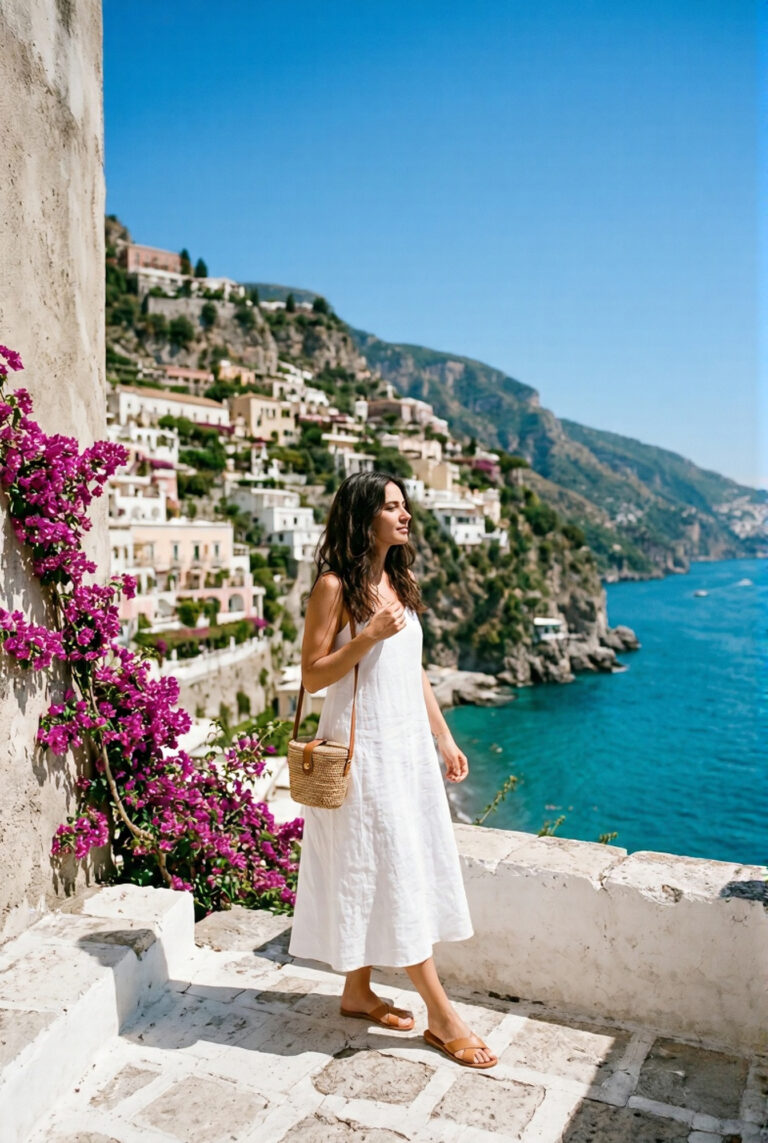
Ravello sits above the Amalfi Coast at four hundred and fifty metres, high enough that the tourist traffic below becomes a distant hum and the air cools to something approaching bearable even in July. The town itself is quiet and slightly austere, its piazza built around a cathedral that has been here since the eleventh century. The two villa gardens, Villa Cimbrone and Villa Rufolo, are the reason most people make the climb.
Villa Cimbrone’s Terrazza dell’Infinito is a balustrade-lined platform at the edge of the cliff with a drop directly to the coast below. On a clear day the view runs to Capri. Nothing on the Amalfi Coast prepares you for it. Come in the morning before the day-trippers arrive, walk through the garden slowly, and buy a pastry from the bar on the piazza on the way back down.
The Spaccanapoli, Naples
Spaccanapoli is the long straight street that cuts ancient Naples in two, following the exact path of the Roman decumanus inferior. It is loud and dense and completely extraordinary. The street-level energy here is different from anything else in Italy: street shrines on every corner, laundry strung between the buildings four floors up, a frittoria on one side frying things you cannot identify, a baroque church on the other with its doors open and the smell of incense coming out.
Walk it slowly, from the Piazza del Gesù Nuovo in the west to the Via Duomo in the east, a walk of about twenty minutes that never stops delivering. Stop at the church of San Lorenzo Maggiore at the Via dei Tribunali intersection: beneath the church is an excavated Greek and Roman marketplace, two thousand years of Naples stacked directly underneath the living city. Entry is a few euros.
Capri by hydrofoil at 8am
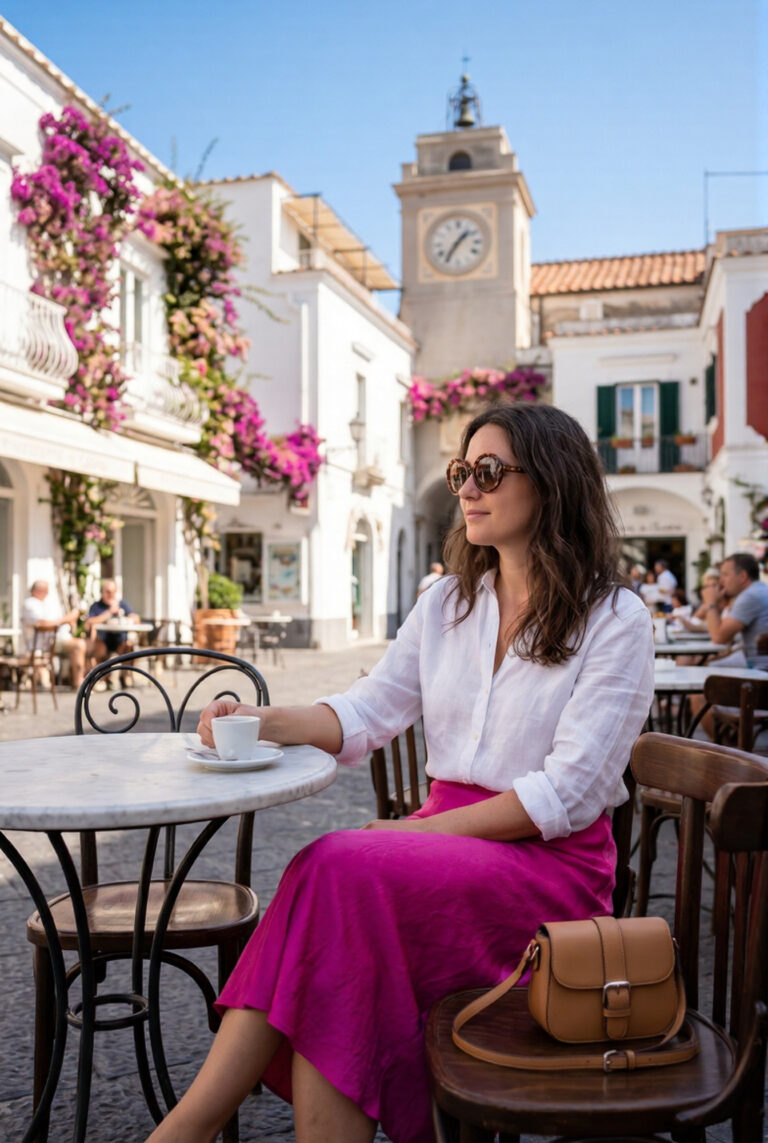
The first hydrofoil from Sorrento or Naples arrives in Capri before the day-tripper boats. For two hours, roughly between eight and ten in the morning, Capri is as quiet as it gets. Walk from the Marina Grande up through Capri town, which is a network of white-walled pedestrian lanes built for people rather than the high season crowds that fill them by eleven. The Piazzetta is the geographical and social centre of the island, four cafés around a tiny square that has been the place to sit and be seen since the 1950s. Sit down. Order something. Watch the morning come in.
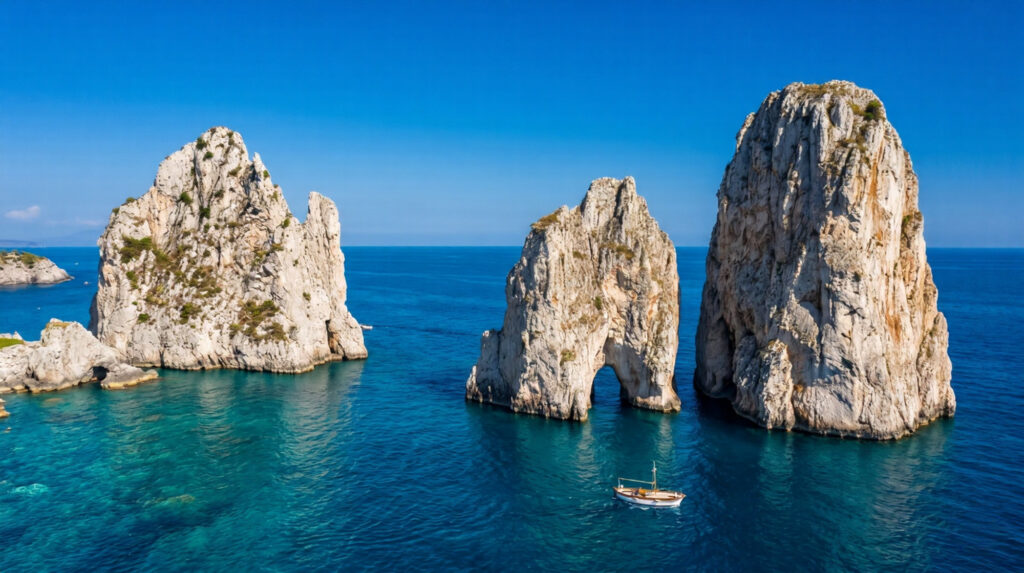
The Blue Grotto is worth doing once, on the understanding that it is brief, expensive, and dependent on sea conditions. The boat ride around the island serves most visitors better: the rock formations, the sea caves, the Faraglioni stacks seen from the water, all of it best seen moving rather than anchored in a queue.
What to Do
Take the Path of the Gods
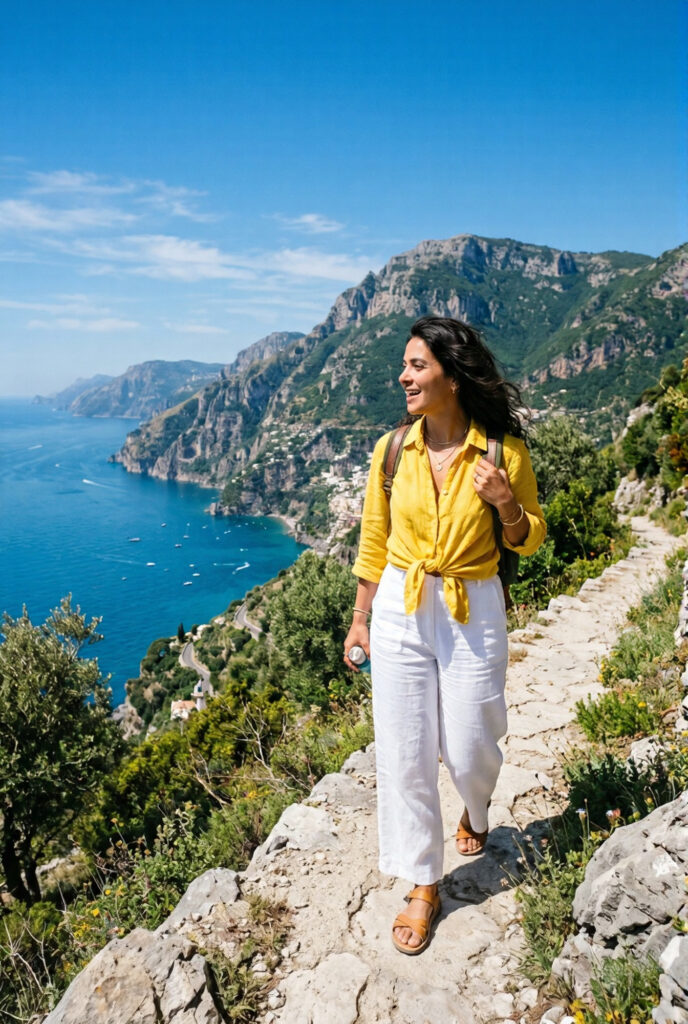
The Sentiero degli Dei runs along the ridge above the Amalfi Coast between Agerola and Nocelle, high above the sea, with the coastal towns visible below and the mountains behind. The walk takes between two and four hours depending on pace and stops. It is not technically difficult but it is steep in places and the terrain is uneven. Wear proper shoes. Carry more water than you think you need. Start early, before the heat builds.
The Nocelle end finishes above Positano with a descent of roughly five hundred steps into the town. Take the bus back to Amalfi or Praiano from Positano rather than reversing the route. The views on the descent into Positano in the late morning light are among the finest on the coast.
Eat pizza in Naples at the source
Naples invented pizza. This is not a debatable point. The Neapolitan pizza has a specific set of rules, a protected designation of origin, and a tradition running back to the eighteenth century. The margherita here is not what you have eaten anywhere else. The dough is softer, the centre wetter, the cornicione more charred and more flavourful. The best versions cost between six and nine euros and are eaten in rooms that have been serving the same thing for decades.
Di Matteo on the Via dei Tribunali is the one most locals point to. Queue outside if needed. Sorbillo around the corner is larger and more famous. The honest answer is that any of the serious Neapolitan pizzerias on the Via dei Tribunali or in the Spanish Quarter will produce a pizza that changes your understanding of what the thing is supposed to be.
Take a boat from Positano to the sea caves
The beach clubs of Positano offer boat trips along the coast to the sea caves and more accessible swimming spots east of the town. The organised trips leave from the main beach in the morning and return by early afternoon. They stop at points along the coast that are unreachable on foot and at coves where the water is the particular transparent green that photographs cannot adequately record.
Book through your hotel or directly at the beach in the morning. The boats are small enough that the experience stays personal. Bring a hat, sunscreen, and waterproof sandals.
Watch the evening passeggiata in Sorrento
Sorrento is often dismissed as a tourist town and it is, during the day, but in the early evening the local population takes back the Piazza Tasso and the Corso Italia in the way Italian towns always have. The passeggiata runs from around seven to nine: families, couples, teenagers, elderly residents moving at the pace of people who have been walking this same stretch every evening for decades. Find a table at one of the bars on the edge of the piazza, order a limoncello or a spritz, and watch the town do what it has always done. It costs almost nothing and tells you more about southern Italian life than a morning in any museum.
Where to Stay
The coastal towns and Naples are entirely different experiences. Most trips work better when you split the time between them rather than commuting daily.
Positano is the most famous and most expensive base on the Amalfi Coast. The views from almost any room are extraordinary. The steps are real and relentless: arriving and leaving with luggage requires either a porter or significant physical effort. Worth it for one or two nights, harder to justify for longer stays at those prices.
Praiano sits between Positano and Amalfi, significantly quieter, more affordable, and with the same basic access to the coast road and ferry connections. Far fewer people, which on the Amalfi Coast is worth a considerable amount.
Sorrento is the practical base for the region: well connected by ferry to Capri, Positano and Amalfi, by Circumvesuviana train to Naples and Pompeii, with a good range of accommodation at prices well below the Amalfi Coast towns. The town itself gets underestimated because it is not as dramatic as Positano. That is precisely what makes it useful.
Naples deserves at least two nights as a base in its own right, not just as a transit point. Stay in the historic centre near the Spaccanapoli or in the Chiaia neighbourhood for the best access to both the old city and the waterfront. The city is safe for visitors who exercise normal urban awareness. The anxiety about Naples is consistently overstated by people who have never been there.
Where to Eat
Di Matteo, Via dei Tribunali, Naples
Already mentioned above and worth mentioning twice. The margherita here is the benchmark. Queue if necessary, order at the counter, eat standing or at a small table. Cash preferred. Do not go looking for an upscale experience. The point is the pizza and the room and the fact that the room has been doing exactly this since 1936.
Lo Scoglio, Marina del Cantone
Marina del Cantone is a small beach at the end of the Sorrento peninsula, reachable by bus from Sorrento or by boat from Positano. Lo Scoglio is a restaurant on the beach that has been run by the same family since 1958. The pasta with zucchini and provola started a conversation about this place that has not stopped. The spaghetti alle vongole is made with clams pulled from the water directly below the terrace. Book ahead, arrive hungry, and plan to stay for two hours.
Ristorante Indaco, Ravello
For a single serious dinner on the Amalfi Coast, Indaco at the Hotel Villa Maria in Ravello is the booking to make. The terrace looks out over the coast in the evening light, the menu is rooted in the local territory, and the wine list draws heavily from Campanian producers including the exceptional reds from the Taurasi appellation. Book well ahead for a terrace table and go at sunset.
Sfogliatella Mary, Naples
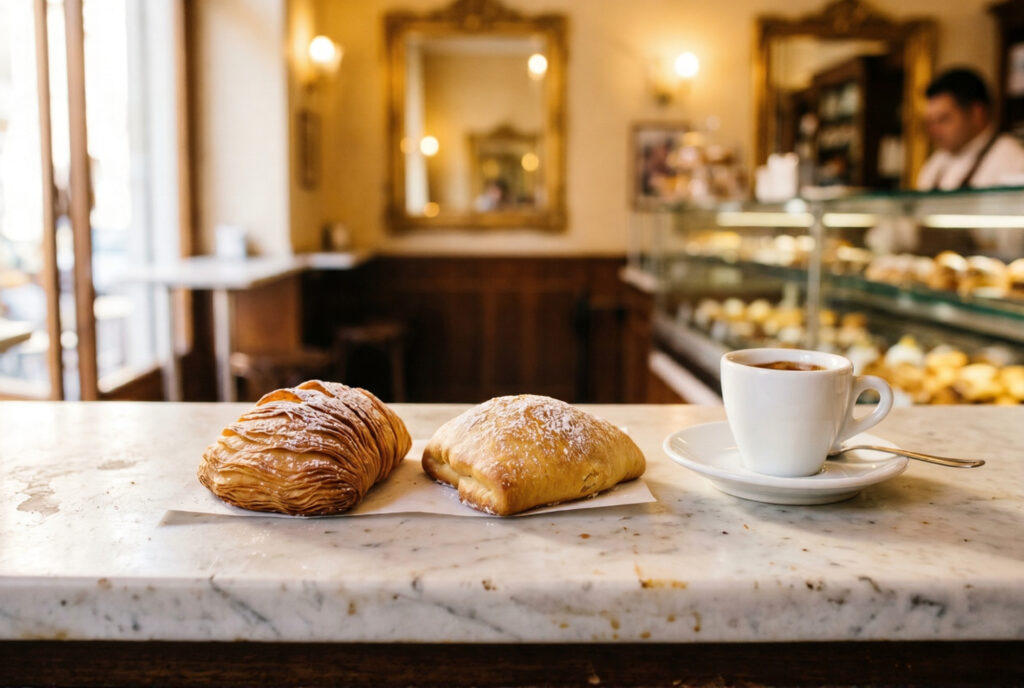
Sfogliatella is the pastry that belongs to Naples the way the croissant belongs to Paris. The shell-shaped, multi-layered pastry filled with ricotta and semolina exists in two forms: riccia, the classic crimped shell version, and frolla, the smoother shortcrust version. Mary at the Galleria Umberto I has been making both since 1914. They are served hot from the oven. Eat them on the street outside immediately. This is not negotiable.
Good to Know
The Amalfi Coast road is genuinely terrifying. The SS163 is a single carriageway road cut into the cliff face, shared by cars, coaches, scooters, and pedestrians, with passing places barely wide enough for two vehicles. Driving it yourself for the first time requires full concentration and steady nerves. The SITA bus service that runs the full length of the coast is how most locals travel between towns and costs almost nothing. The ferry connecting the main coastal towns is faster than the road in high season and considerably more enjoyable.
Positano’s steps are non-negotiable. There are no flat routes in Positano. Everything is either up or down, on stone steps, often uneven, often steep. If mobility is a consideration, Positano is not the right base. Sorrento and Praiano are both significantly more accessible.
Naples is not dangerous in the way many visitors fear. Exercise the same awareness you would in any busy European city: keep bags in front of you, be aware of your surroundings on scooter-heavy streets, avoid displaying expensive equipment. The historic centre around the Spaccanapoli is busy and chaotic but not threatening. The reputation the city carries internationally is built on incidents from thirty years ago and bears little relation to the place as it is now.
The Circumvesuviana train connects Naples to Sorrento via Pompeii and Herculaneum. It is cheap, frequent, and the only sensible way to reach the archaeological sites without a car. It is also crowded and slow by mainline standards. Keep bags close and allow more time than the schedule suggests.
Getting around the coast. The SITA bus covers the full SS163 and costs almost nothing. The ferry between Naples, Sorrento, Positano, Amalfi and Capri is faster, more comfortable, and worth the slightly higher price. Water taxis are available from all the main coastal towns for point-to-point journeys at a premium. In Naples, use official metered taxis or the itTaxi app.
On tipping. Not obligatory in southern Italy. Rounding up after coffee or a casual meal is appreciated. Five to ten percent at a sit-down dinner is generous. The coastal restaurants sometimes add a coperto: check the bill before adding more.
Best Time to Go
May and early June are the finest months. The coastal towns are open, the sea is warm enough to swim from the second half of May, the tourist volumes are significant but not yet at the summer peak, and the light on the coast in late spring is extraordinary. The wildflowers on the Path of the Gods are still out in early May.
September and October run close behind. The summer crowds begin thinning from the first week of September, the water is at its warmest of the year, and the light changes in October to something lower and more golden that suits the coast differently but equally well. Ferries continue running through October.
July and August are the hardest months. The coast is crowded beyond comfort in August: the Amalfi road gridlocks, the beaches are packed, the prices peak, and the heat on the cliff paths becomes dangerous by mid-morning. Naples in August is extremely hot and many local restaurants and shops close as residents leave the city. If July or August is unavoidable, book everything months ahead, start all outdoor activity before nine in the morning, and treat the ferry as your primary transport.
Read Next
The Amalfi Coast has a specific set of physical and aesthetic demands that no other region in Italy shares. The terrain, the glamour register, and the Naples street-smart shift all demand different things from your wardrobe. The Campania Capsule Wardrobe Guide covers all twelve pieces, from the leather wrap sandal for the steps to the silk kaftan for Capri evenings.
For the full wardrobe logic across every Italian region, the Complete Guide to Italy is where to start.
Already done Rome and Tuscany? The Rome Travel Guide and the Tuscany Travel Guide are both live on The Capsule Trip.
Sorting out what to wear on the Amalfi Coast? The Campania Capsule Wardrobe Guide covers the twelve pieces that handle Positano’s steps, Naples’ streets, and the boat deck at Capri.