
*This post may contain affiliate links for which I earn commissions.*
The Insider’s Guide to Italy’s Most Glamorous Island
This Capri travel guide is built around one central idea: the island is best experienced before ten in the morning. By eleven, the hydrofoils from Naples and Sorrento have deposited several thousand day-trippers into the Marina Grande and the narrow lanes of Capri town are running at full capacity. The Piazzetta, the tiny central square that has been the social heart of the island since the 1950s, becomes a slow shuffle of selfie sticks. The beach clubs at La Fontelina fill up. The taxi queue at the funicular grows long.
None of this has to be your experience. The island is small, the distances between everything worth seeing are short, and the people who get there early get a completely different version of it. A Capri travel guide that tells you the sights without telling you the timing is only half useful. This one tells you both.
What to See
The Piazzetta and Capri town
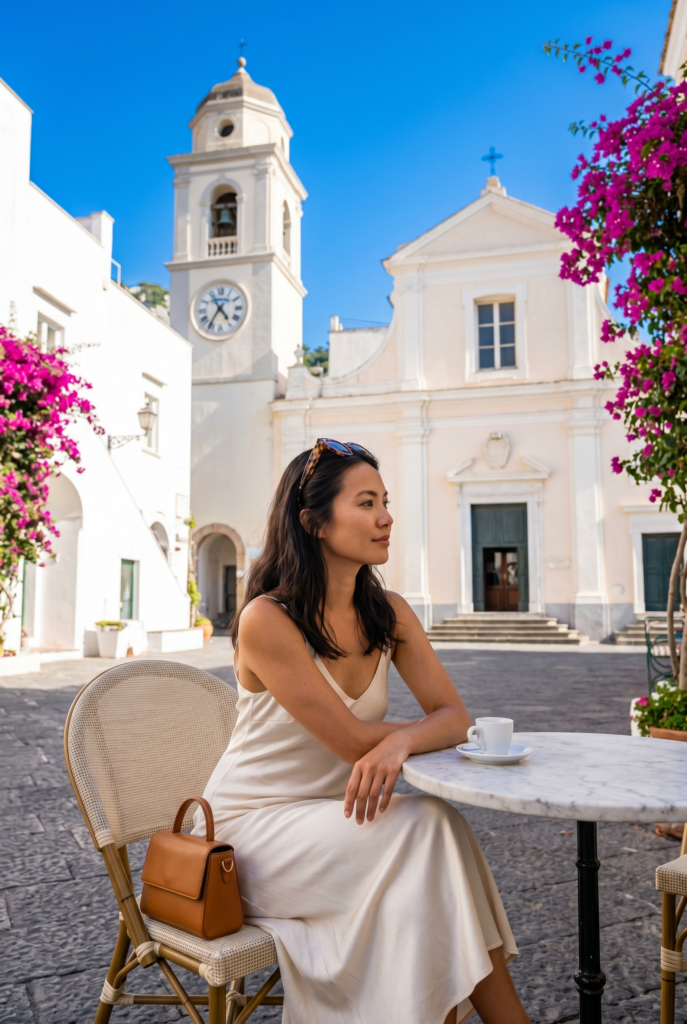
The Piazza Umberto I, universally known as the Piazzetta, is a small square at the heart of Capri town surrounded by four cafés, a clock tower, and the white facade of the church of Santo Stefano. It is about the size of a large sitting room and has been, since the 1950s, the place where the island’s social life happens. Gracie Fields lived here. Graham Greene drank here. Brigitte Bardot, Jackie Onassis, and assorted European royalty passed through with enough regularity that the cafés still carry photographs.
The Piazzetta at 8am, before the first hydrofoil arrives, belongs entirely to the island’s residents: an espresso at the bar of Bar Tiberio, the morning papers, the occasional scooter crossing the square. By 11am it is a different place. Come early, stay for coffee, and then move before the crowds arrive.
The streets radiating from the Piazzetta, the Via Le Botteghe and the Via Camerelle, are worth walking slowly. The ceramics shops and the lemon-scented boutiques sell things that are genuinely local alongside things that are not. The distinction is usually visible.
The Gardens of Augustus and Via Krupp
The Giardini di Augusto sit at the southern edge of Capri town, formal terraced gardens with sweeping views over the Marina Piccola bay and the Faraglioni rock formations below. Entry is a couple of euros and almost never crowded even in peak season. The bougainvillea along the garden walls in June and July is extraordinary.
From the gardens you can look directly down Via Krupp, the famous zigzag path cut into the cliff face by the German industrialist Friedrich Alfred Krupp in 1902. The path descends in hairpin curves from the gardens to the Marina Piccola below and is one of the most photographed views on the island. The path itself is occasionally closed for rockfall maintenance. Check at the gardens whether it is open before descending.
The Faraglioni from Via Tragara
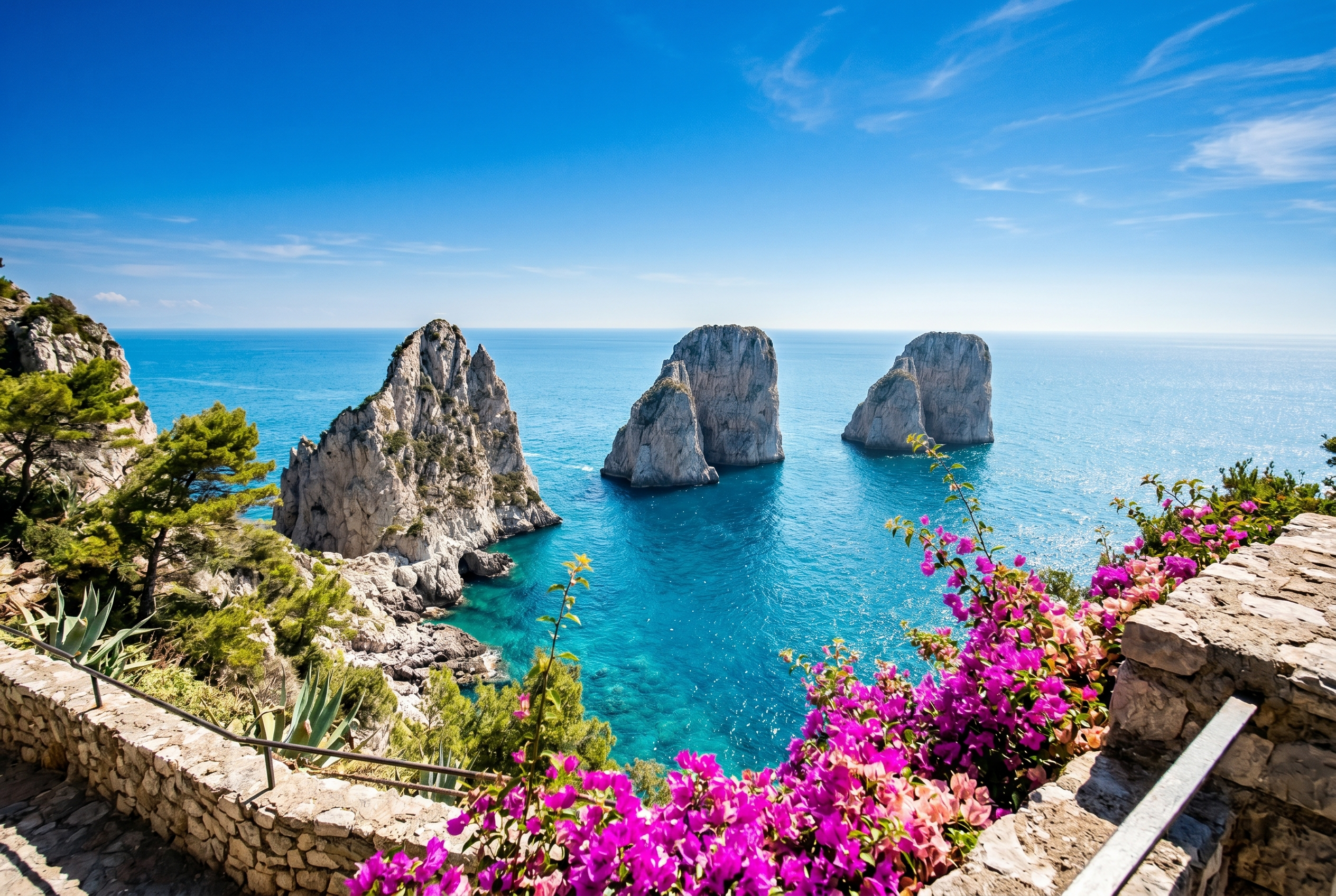
Via Tragara runs east from Capri town through a residential street of grand villas and pine trees, arriving after about fifteen minutes at the Belvedere di Tragara, a clifftop viewpoint overlooking the three Faraglioni limestone stacks rising from the sea below. This is the view most associated with Capri in travel photography and it is not exaggerated. The three pale grey columns rising from the aquamarine water, the arch through the nearest stack where small boats pass, the open sea beyond: it is the image that made the island famous and it holds up in person.
Walk Via Tragara in the early morning when the light comes from the east and the Faraglioni are lit directly. Return in the late afternoon when the light comes from the west and the colour of the sea changes entirely. Both versions are worth the fifteen-minute walk.
Anacapri and Monte Solaro
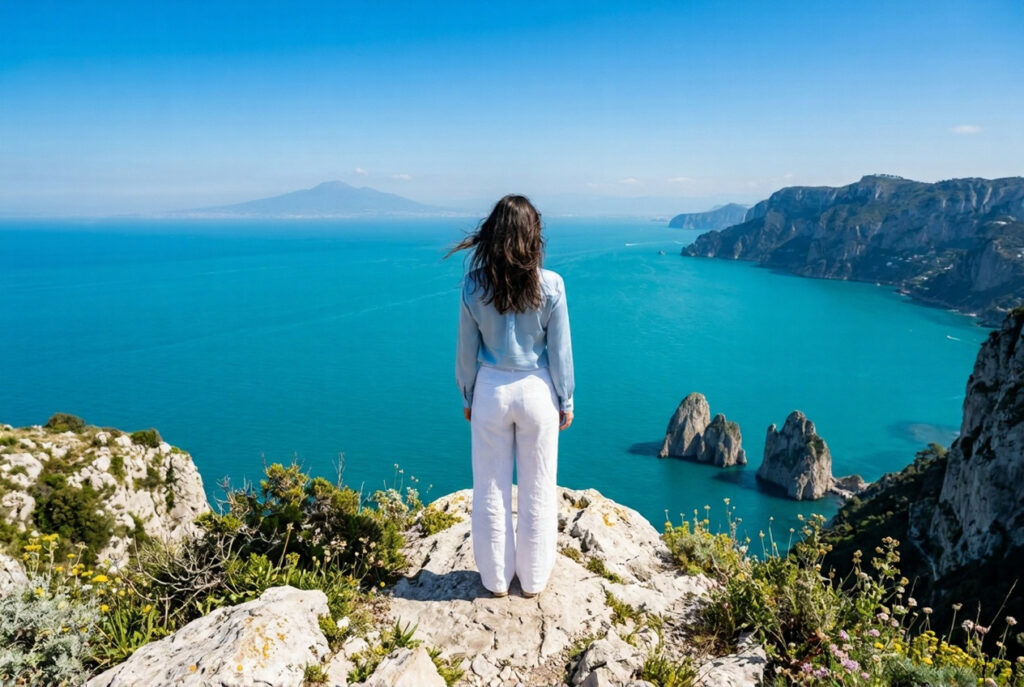
Anacapri is the second town on the island, higher up the western slope and noticeably quieter than Capri town. The chair lift from the Piazza Vittoria in Anacapri rises to the summit of Monte Solaro at 589 metres, the highest point on the island, in about twelve minutes. The view from the top takes in the full sweep of the Bay of Naples, Vesuvius on the mainland, the Amalfi Coast to the south, and on very clear days the outline of the Aeolian Islands to the southeast.
The Villa San Michele, the early 20th-century home of Swedish physician Axel Munthe, sits at the edge of Anacapri above the original Phoenician stairway connecting the two levels of the island. The garden is open daily and has views that make the entry fee straightforward to justify.
What to Do
Arrive by the first hydrofoil
The first hydrofoil from Sorrento leaves at 7:15am. From Naples the first departure is around 6:45am. Both arrive at the Marina Grande before 8am. The island at that hour is not yet the Capri of the high season midday: the roads are walkable, the Piazzetta is quiet, the beach clubs are setting up rather than full.
If you are staying overnight on the island, which is the right approach for anyone wanting the full experience, you already have this. If you are day-tripping, the early hydrofoil is the single most useful piece of information in this guide.
Take a boat around the island
The full island boat trip, available from operators at the Marina Grande, takes about an hour and a half and passes every point of interest from the water: the Blue Grotto, the White Grotto, the Green Grotto, the Faraglioni from the sea, the Arco Naturale, the sea caves along the northern cliff face. It is the best way to understand the geography of the island and to see the Faraglioni from the angle that does them most justice.
The Blue Grotto specifically deserves an honest word: the experience is beautiful but brief, expensive, and entirely dependent on sea conditions. When conditions are right, small rowing boats take you through the low entrance into a cave where the water glows an extraordinary electric blue from the underwater light. When conditions are not right, it does not happen. The island boat trip gives you the outside of the grotto from the water even if the inside is closed, which on many days it is.
Swim at La Fontelina beach club
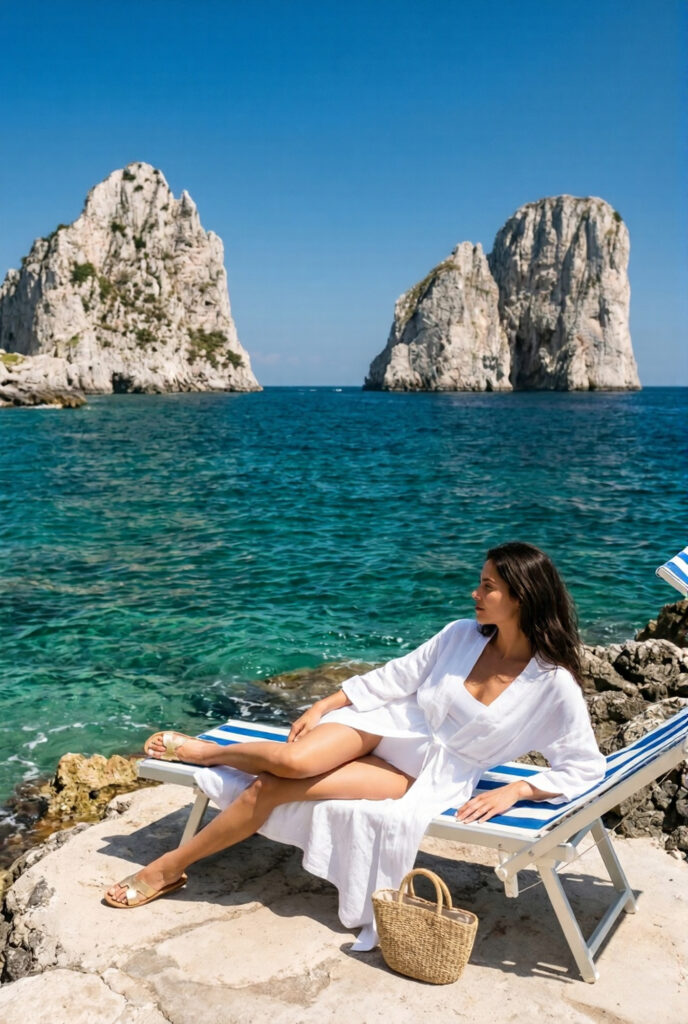
La Fontelina sits at the base of the Faraglioni cliffs on the southern side of the island, accessible by boat from the Marina Piccola or on foot down a long stone staircase from the Via Tragara. It is the most famous beach club on Capri and one of the most famous in Italy: white and blue striped sunbeds, extraordinarily clear water, the Faraglioni rising directly above the swimming area.
Book a sunbed well in advance for July and August. The alternative is arriving early and waiting at the entrance for a walk-in space, which exists but is not guaranteed. Going mid-week is significantly easier than weekends. The food at the restaurant is good and the setting makes it exceptional.
Walk to the Arco Naturale
The Arco Naturale is a large natural limestone arch on the northeastern edge of the island, a thirty-minute walk from Capri town through pine forest and past the ruins of a Roman villa. Almost no one from the day-tripper crowd makes it this far. The arch itself frames a view of the sea and the distant mainland that is among the quietest and most beautiful moments available on the island.
Return via the Grotta di Matermania, a large cave in the cliff face below the arch that the Romans used as a nymphaeum, a shrine to the water nymphs. No entry fee, no queue, an extraordinary space.
Where to Stay
Staying overnight on Capri changes the trip entirely. The island after 6pm, when the last hydrofoils have taken the day-trippers back to the mainland, becomes a different place: quieter, more local, the restaurants filling with people who are actually staying rather than passing through. If the accommodation prices make overnight difficult, Sorrento as a base with an early hydrofoil is the next best option.
Capri town has the most concentrated choice of accommodation and the best access to the Piazzetta, Via Tragara, and the Gardens of Augustus. The Hotel Quisisana is the historic grande dame of the island. The Capri Palace in Anacapri, with its pool and its art collection, is the most celebrated hotel at the luxury end. For mid-range options, the Relais Maresca has a good position near the Piazzetta without the top-tier pricing.
Anacapri is quieter and slightly more affordable than Capri town. The Villa Eva, a family-run property set in gardens above the town, is the most consistently recommended option for anyone who wants peace over proximity to the Piazzetta action.
Where to Eat
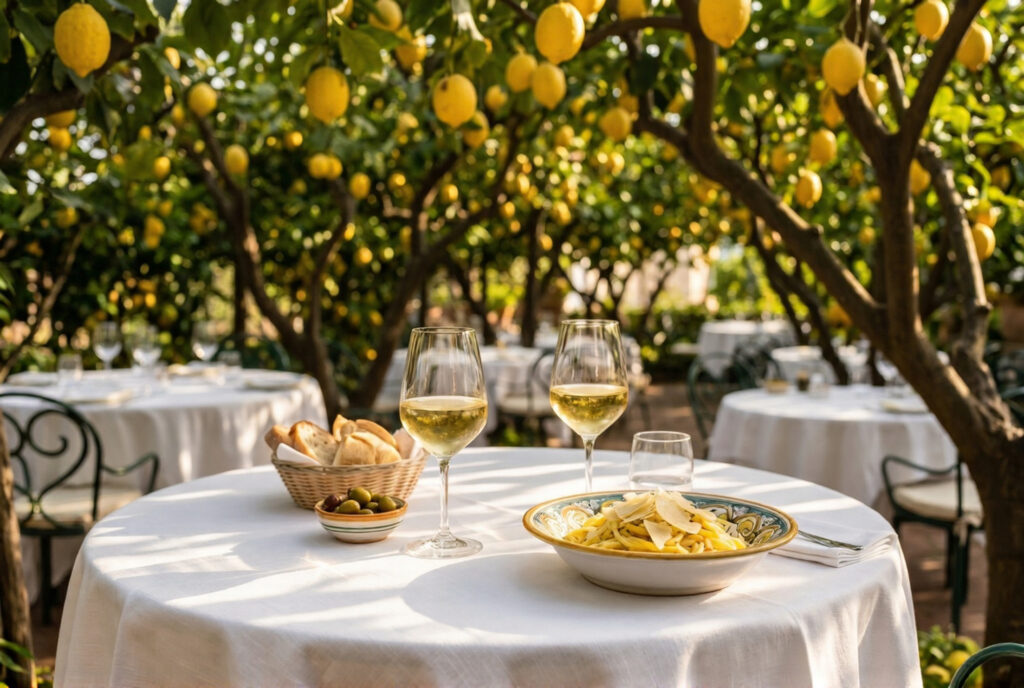
Da Paolino, Capri town
In a lemon grove on the Via Palazzo a Mare below Capri town. White tablecloths under lemon trees that form a canopy above the dining terrace, the lemons hanging at arm’s reach above your head. The food is straightforward Caprese: fish, pasta, the local limoncello. The setting is the reason to go. Book well ahead for dinner.
Lo Smeraldo, Anacapri
On the main street of Anacapri, less famous than the Capri town restaurants and noticeably less expensive. The pasta al limone here is the version that most people point to as the benchmark: linguine with a sauce of local lemon, olive oil, and parmesan that tastes specifically of the island’s lemons rather than any other. Lunch here is a very good use of the midday hours when Capri town is at its most crowded.
Bar Tiberio, the Piazzetta
Not a restaurant but a rule: have at least one espresso at the bar of Bar Tiberio on the Piazzetta before 9am. The coffee is good, the room behind the bar is old and dark and lined with photographs of the island’s decades of famous visitors, and the square outside at that hour is worth the price of a coffee to sit in. Everything here costs more than it does anywhere else on the island. Order one thing and take your time with it.
The lemon granita
Available from most bars and café terraces on the island and not a novelty. The granita di limone made from the island’s lemons, small, intensely fragrant, not yet yellow-green but close, is the correct thing to drink between eleven in the morning and three in the afternoon when the heat is at its highest. Order it wherever you happen to be standing when you need it.
Good to Know
No cars on the island. Private cars are not permitted on Capri. The taxis are shared, open-topped vehicles that carry four to six passengers along the island’s narrow roads. They are expensive and worth it for the upper part of the island or for luggage. Walking between Capri town and Anacapri takes about forty-five minutes on a steep road. The bus service between the two towns is cheap, regular, and perfectly fine.
The funicular. The funicular connects the Marina Grande to Capri town and runs frequently. It is the right way to arrive from the hydrofoil. The walk up is steep and long with luggage. Take the funicular.
Booking in advance for July and August. La Fontelina beach club, the better restaurants in Capri town, and all the overnight accommodation worth staying in book up weeks to months ahead in the high season. If July or August is when you are going, the booking needs to happen before you book the hydrofoil.
The island is small. From the Piazzetta to the Faraglioni viewpoint at Via Tragara is fifteen minutes on foot. From Capri town to Anacapri by bus is ten minutes. Most of what the island offers is reachable on foot in under half an hour. A day is enough to cover the main sights. Two nights is the right amount to feel you have actually been there.
Tipping. Not obligatory in Italy. Rounding up or leaving five to ten percent at a sit-down meal is generous and appreciated. The beach clubs add a service charge automatically.
Best Time to Go
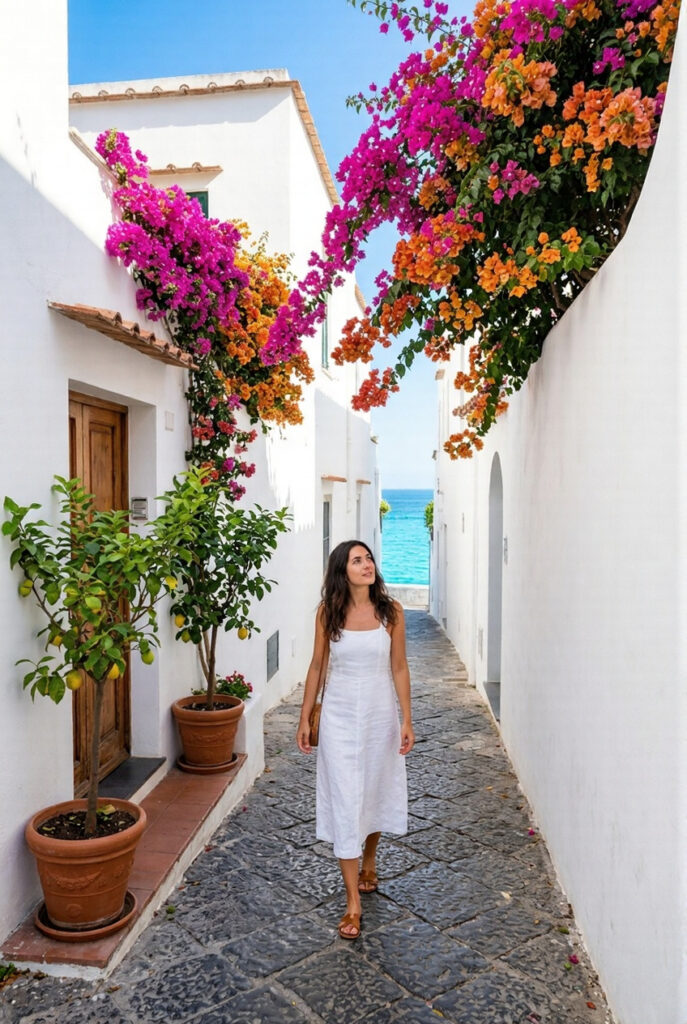
May and September are the best months. The sea is warm enough to swim, the island is busy but not at its July and August peak, and the light in those months is some of the finest in the Mediterranean. The mimosa and bougainvillea are in flower in May. September brings a particular clarity to the air after the summer heat.
June is good in the first half before the school holidays in the second half push volumes up significantly.
July and August are the peak. The island is at full capacity, the hydrofoils run constantly, and the Piazzetta becomes difficult to cross at midday. If those are the months available, the early morning strategy becomes essential rather than merely recommended. Book everything months ahead.
October is underused. The sea is still swimmable on most days, the island returns to something closer to its own pace, and the boat trips run on calmer water than the summer months often allow.
Read Next
Capri is one stop on a larger Campania trip. The Amalfi Coast, Naples and Capri Travel Guide covers the full region: the Path of the Gods hike above Positano, Herculaneum before Pompeii, the ferry logistics, and everything else the coast offers beyond the island.
For what to wear on Capri specifically, the silk kaftan for the Piazzetta evening, the flat leather sandal for the Via Tragara walk, the swimsuit that works for La Fontelina, the Campania Capsule Wardrobe Guide has the full breakdown.
The Complete Guide to Italy covers the wardrobe logic for every Italian region in one place.
Planning a trip to the Amalfi Coast? The Campania Capsule Wardrobe Guide covers what to wear on Capri, on the steps of Positano, and at dinner in Ravello.