*This post may contain affiliate links for which I earn commissions.*
Quick Summary
Pack a 12-piece French Alps capsule built around a waterproof shell jacket, a merino mid-layer, and a slim glacier grey technical trouser that moves from a Chamonix hiking trail to a cable car without changing. A cognac shearling ankle boot and a heavyweight merino knit cover the Megève après-ski evenings. Skip the full down puffer. A merino base layer plus a packable gilet layers smarter for less bulk.
The Regional Portrait
The French Alps require you to pack for two completely different lives in the same bag. By day: a mountain, with everything that implies about weather, altitude, and physical demand. By evening: a resort town where Chamonix and Megève set a standard for après-ski dressing that is taken seriously by the people who live and work there. These two modes exist within the same twenty-four hours and require genuinely different pieces. The skill in packing for the Alps is finding the pieces that work in both.
Chamonix sits at 1,035 metres at the foot of the Mont Blanc massif, the highest peak in the Alps at 4,808 metres. The altitude gain from the Chamonix valley to the Aiguille du Midi cable car station is 2,807 metres. The temperature difference between the valley floor and the summit on the same day can be 20 degrees. The weather can change completely in an hour. These are not hypothetical concerns; they are the daily reality of being in Chamonix and they determine every packing decision.
Megève, thirty kilometres south, is at a similar altitude but has a different character: a medieval village at its core, a high-end resort layered around it, and a dress culture that leans harder toward the elegance of the evening than Chamonix does. Annecy, forty minutes north, is at the lake rather than in the mountains and calls for a different register again. The French Alps capsule needs to cover all three.
The Regional Colour Departure
Glacier White
The sharp, brilliant white of the Mont Blanc glaciers under direct sun. Not the warm ivory of the Loire capsule or the chalk white of the Paris wardrobe, but a colder, cleaner white with no yellow in it. This is the colour of the high mountain in summer and the ski slopes in winter, and wearing it in a merino base layer or a technical top brings you into alignment with the landscape in the specific way that the Alps require of their visitors.
Alpine Navy
The deep blue of the sky at altitude on a clear day, sharper and more saturated than the sky at sea level. Alpine navy is the anchor colour of the French Alps wardrobe for the same reason it is the anchor of the Paris wardrobe: it goes with everything, reads correctly from the mountain trail to the resort restaurant, and holds its depth in cold light. A navy merino mid-layer worn over a white base layer is the foundational alpine outfit.
Glacier Grey
The complex, slightly blue-toned grey of the granite peaks, the rock faces below the snowline, and the moraine left by retreating glaciers. This grey has more blue in it than charcoal and more depth than mid-grey. It works in technical trousers, a fleece mid-layer, or a structured evening trouser that reads between the mountain daytime and the resort evening.
Pine Green
The dark, slightly muted green of the pine forests that cover the lower slopes of the Alps from the valley floor up to the treeline at roughly 2,000 metres. A warmer and less saturated green than the Vosges green of Alsace, it works in a fleece, a mid-layer, or an après-ski knit. The contrast between pine green and glacier grey is one of the strongest visual combinations in the Alps palette.
Cognac and Warm Tan
The warm leather tones that appear in the resort towns of Megève and Courchevel in everything from the hotel lobbies to the ski boot buckles to the après-ski boots worn for the evening walk. Cognac and tan leather in a boot or a bag lift the technical base of the Alps wardrobe into something that works on a terrace at the end of the ski day. This is the colour that bridges the mountain mode and the resort evening mode.
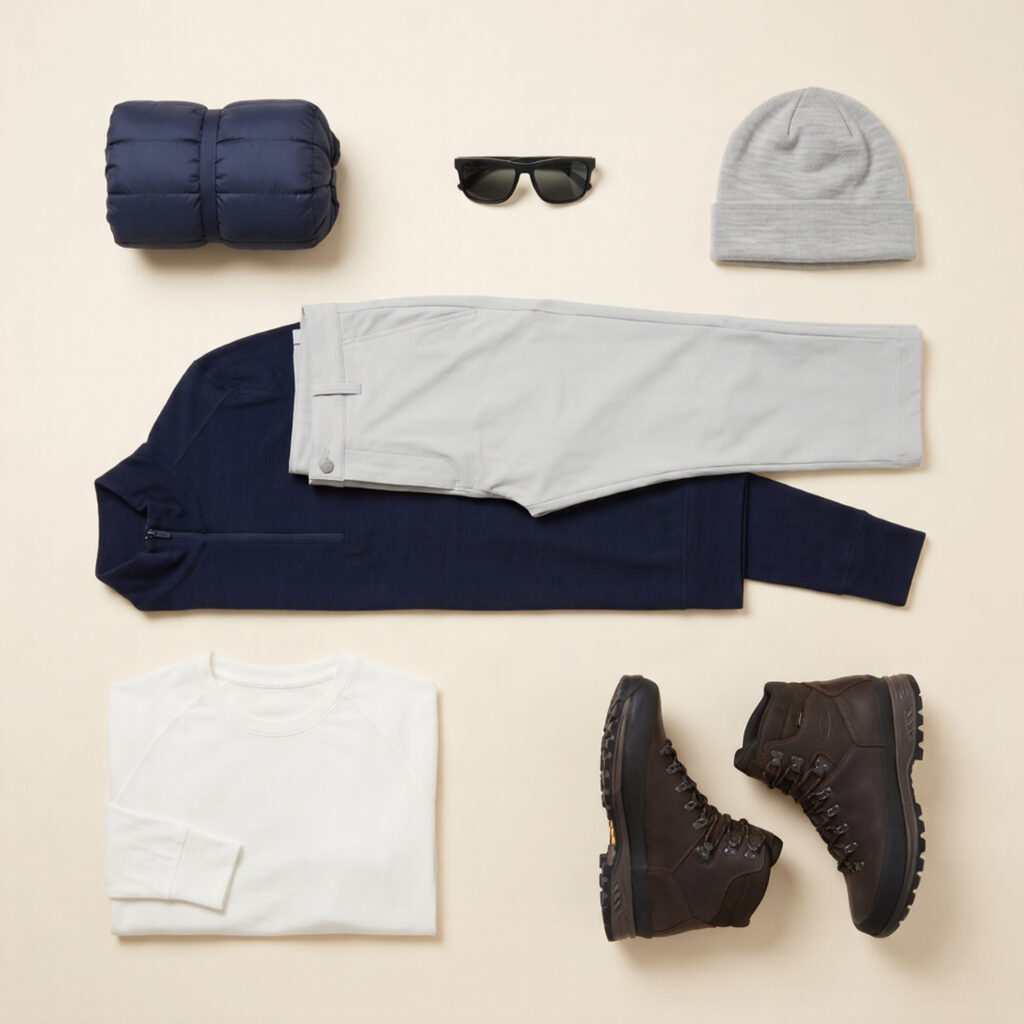
Six pieces, one hiking wardrobe. Everything the Mont Blanc trails ask for. 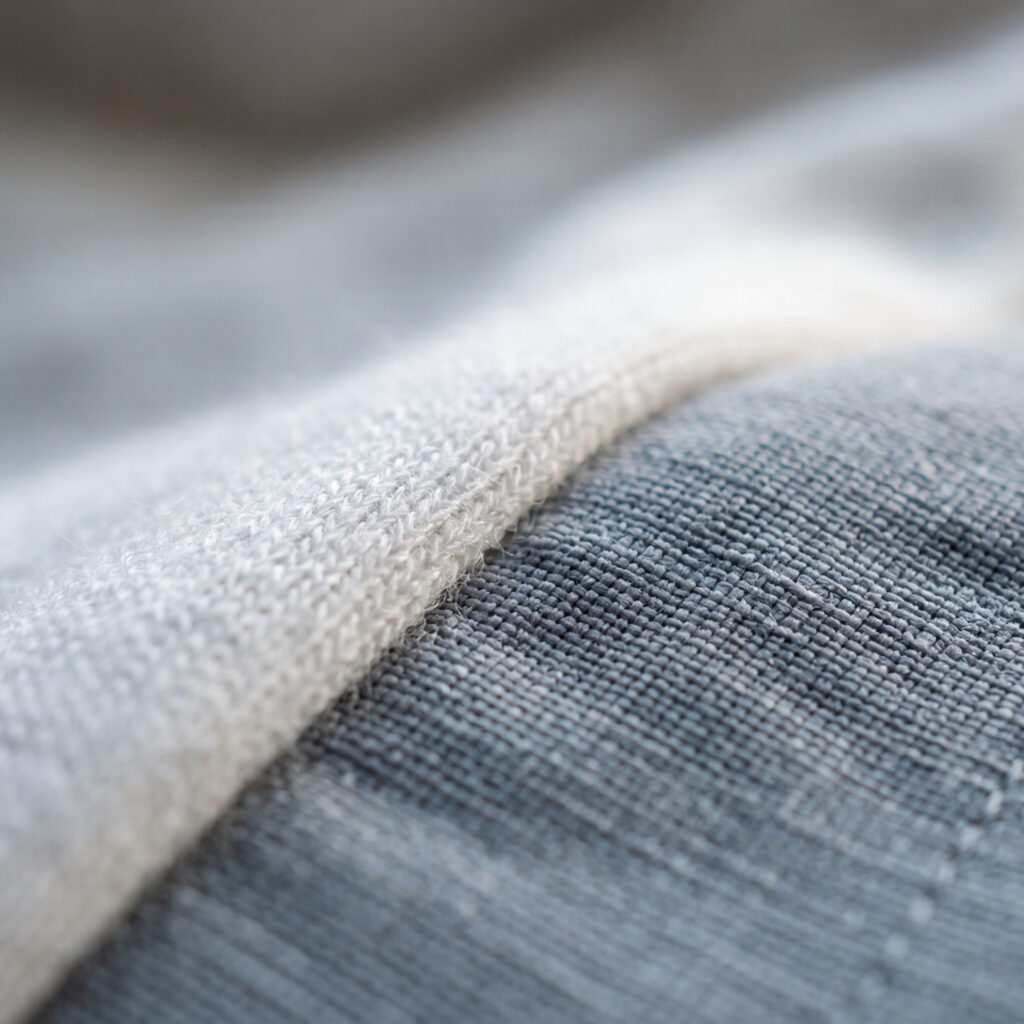
Merino against technical stretch. The pairing that regulates a day on the trail. 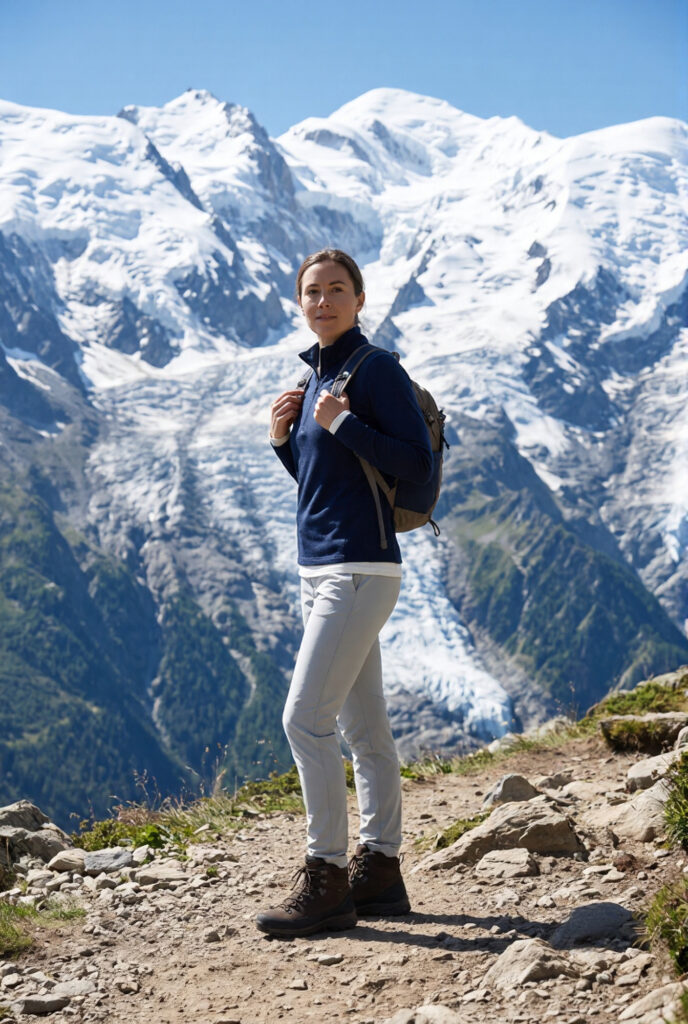
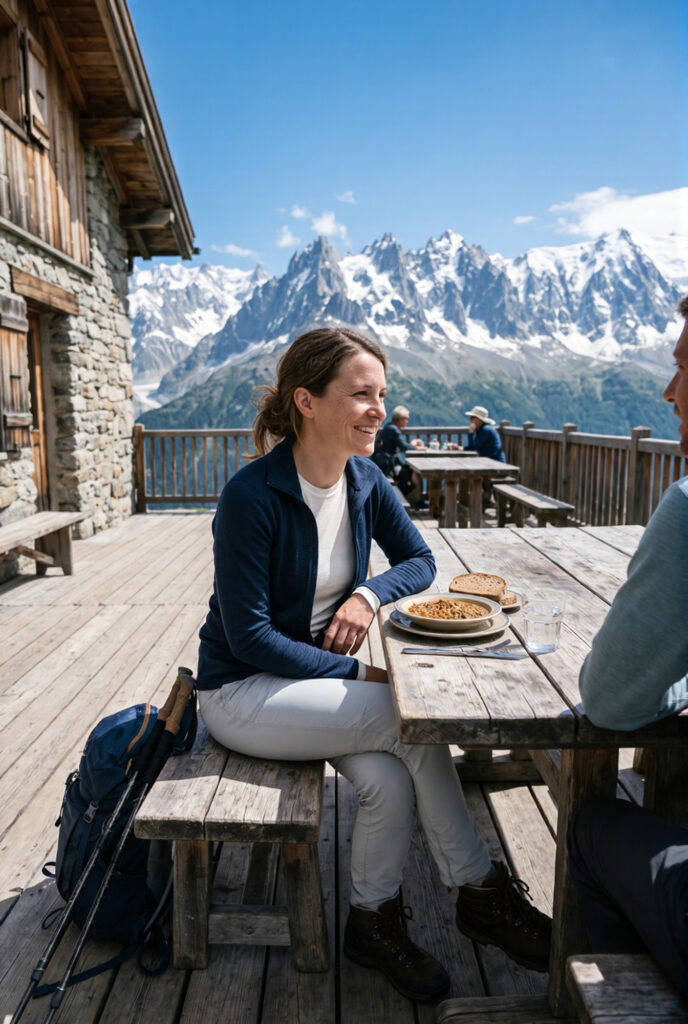
Above Chamonix at midday. The base layer, the mid-layer, the trail boot: the summer half of the capsule at work.
The Terrain Reality Check
The French Alps in summer are a hiking destination. The trails above the Chamonix valley, the Tour du Mont Blanc, the Aiguille Rouges traverse, the Mer de Glace approach: all require proper hiking boots, technical fabrics, and the layering system that the altitude and the weather demand. The high trails above 2,500 metres can have snow on them in July. The temperature at the Aiguille du Midi at 3,842 metres is below zero year-round.
In winter, the Alps are a skiing destination and the wardrobe divides even more sharply between the technical mountain gear worn on the slopes and the resort evening clothes worn everywhere else. Ski gear is not covered in this capsule because it is rented or owned separately and varies too much by individual to include as general guidance. This capsule covers everything worn off the slopes: the base layers that go under the ski suit, the après-ski outfit for the resort town, and the pieces that bridge both.
Annecy is a lakeside town at 447 metres and in summer it requires a different wardrobe from the mountain context: lighter fabrics, the ability to swim in the lake, and the relaxed elegance of a French lake resort rather than the technical seriousness of Chamonix. The capsule covers this too as a secondary mode.
The weight of the bag matters in the Alps in a way it does not in Paris or the Loire Valley. If the trip includes any walking above the valley floor, the bag carried on the trail needs to be light. Technical fabrics that weigh less than natural fibres and pack more compactly earn their place here specifically because of the weight consideration.
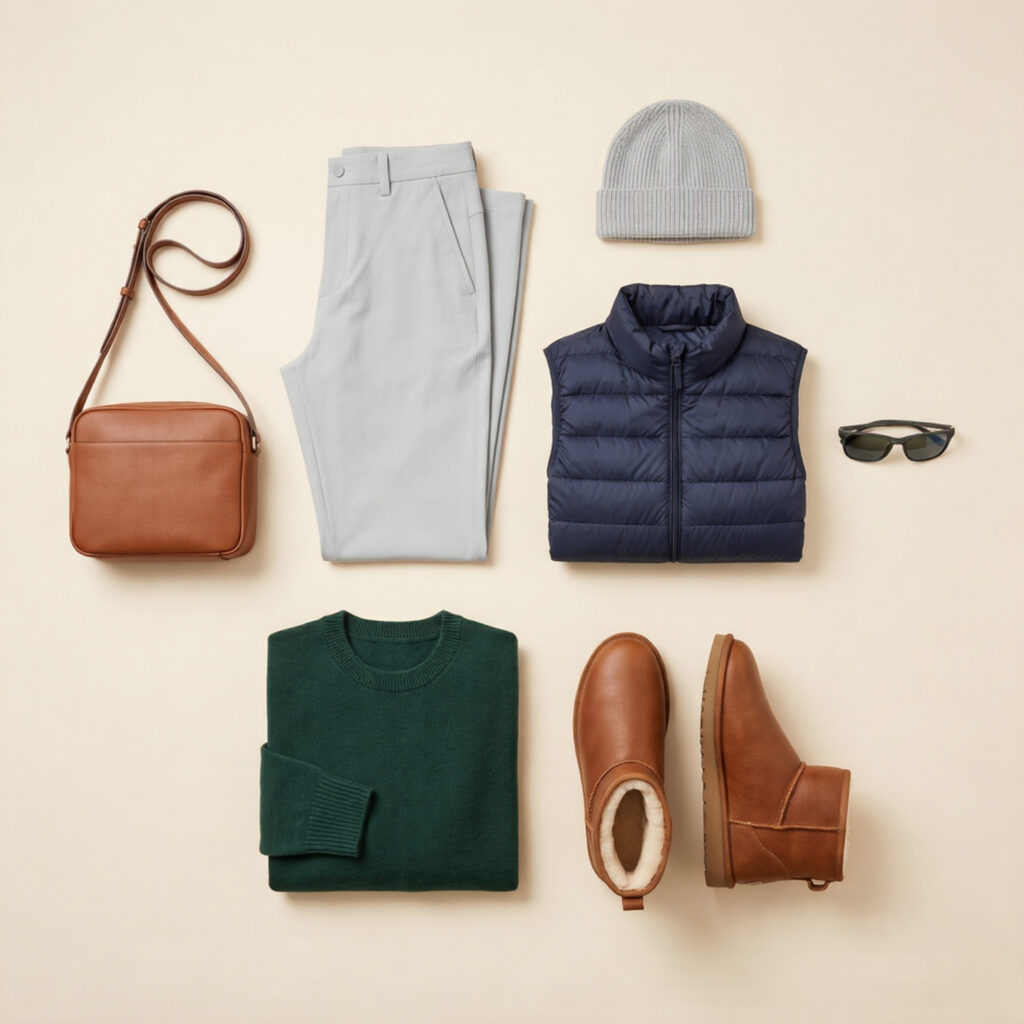
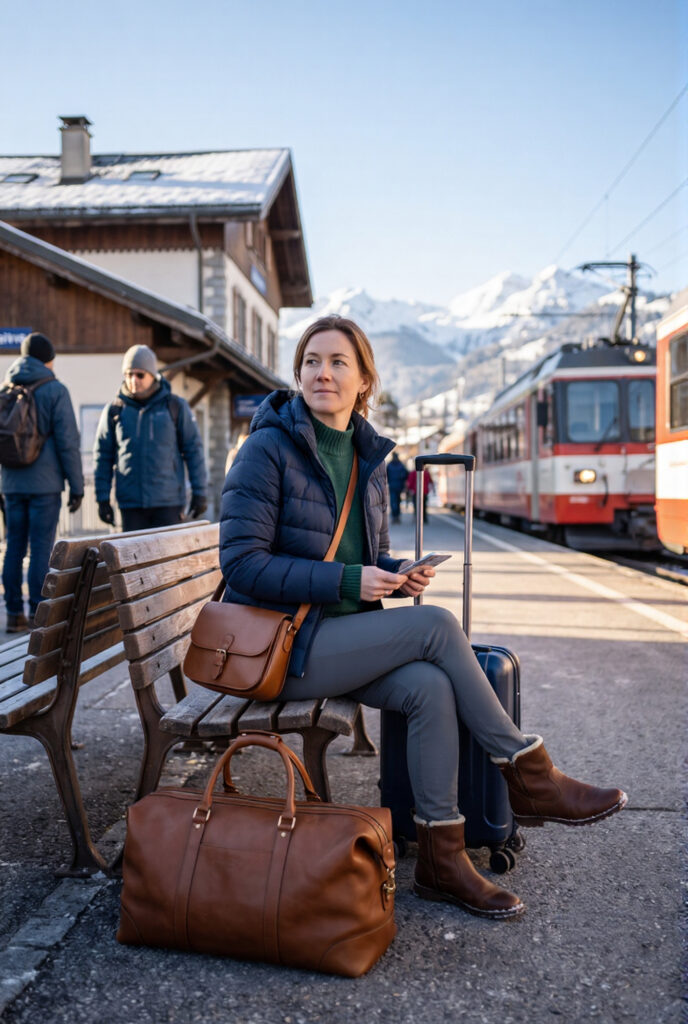
Six pieces, one après-ski wardrobe. Everything worn off the slopes in Chamonix and Megève. 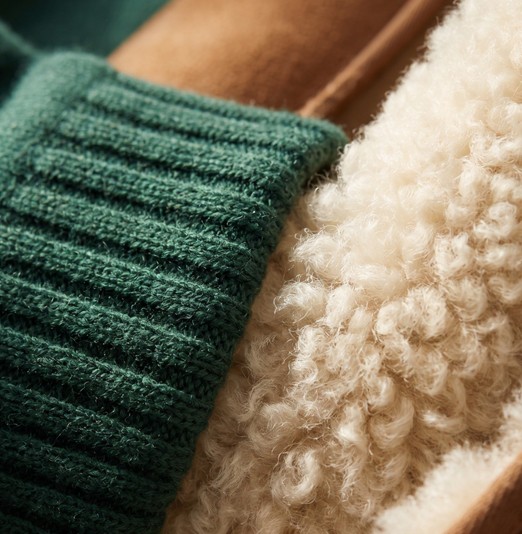
Cashmere against shearling. The texture that makes the après-ski hour work. 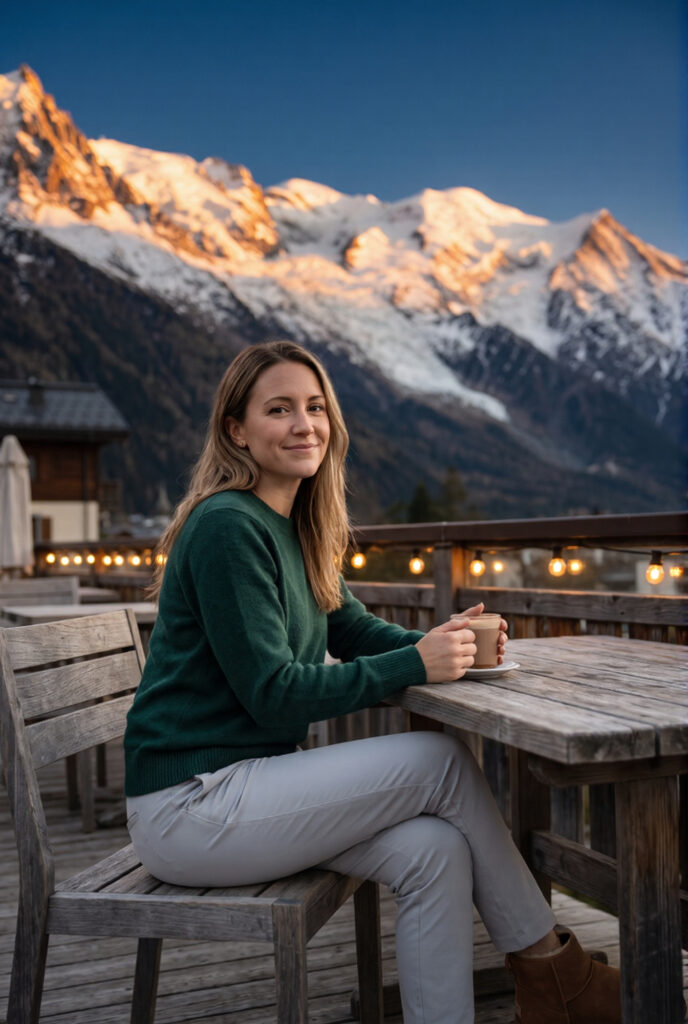
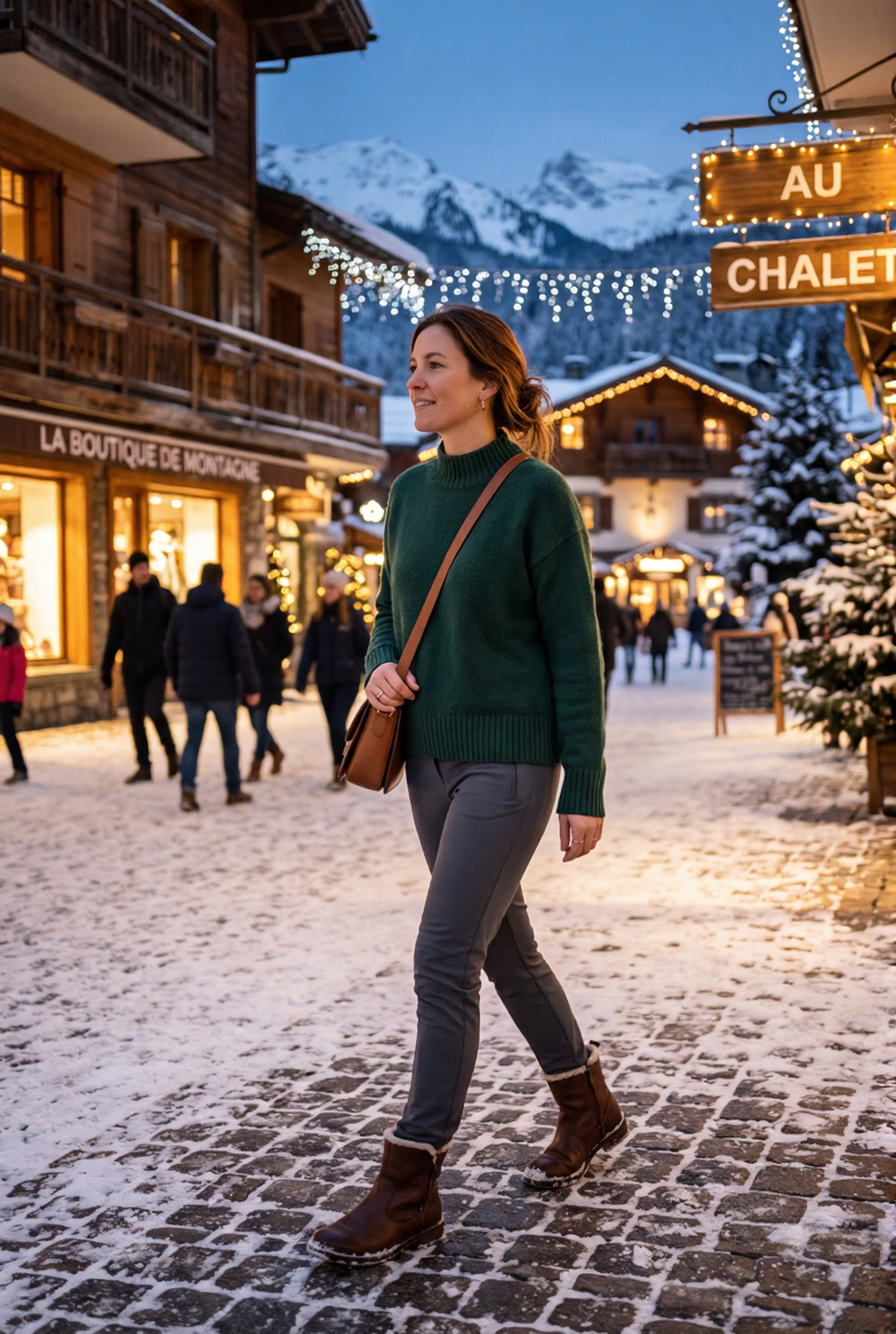
Chamonix at the end of the day. The knit and the boot, doing exactly what they were packed for.
The French Alps-Specific Pieces
The Waterproof Shell Jacket
The most important single piece in the French Alps capsule, summer or winter. A waterproof, windproof shell jacket with taped seams, a proper hood, and enough length to cover the hips. In summer this jacket goes over every hiking outfit when the weather changes, which it will. In winter it goes over the ski suit on the mountain and over the après-ski outfit in the evening if the temperature requires it. Buy the best version within your budget. This jacket is worn every day in the Alps and the quality shows in conditions.
The Merino Mid-Layer
A merino wool crewneck or zip-neck in alpine navy, glacier grey, or pine green. This is the layer between the base and the shell that provides the most warmth for the least weight and bulk. A 200-weight merino mid-layer in the Alps is warmer than a thick cotton sweater and a fraction of the packed size. It regulates temperature on the trail when the exertion generates heat, warms quickly when you stop, and looks good enough for a resort terrace or a village restaurant in the evening.
The Merino Base Layer
A long-sleeve merino base layer top in glacier white or alpine navy, and merino base layer leggings or tights. Worn under the technical trouser and the mid-layer on cold hiking days. Worn under the ski suit on the mountain in winter. Worn under the evening outfit when the resort town is cold at night. The merino base layer is the piece that touches skin and it does the most regulatory work: wicking, insulating, and keeping the layers above it dry. A 150-weight merino is the right choice for three-season use.
The Technical Trouser
A slim technical trouser in glacier grey with stretch fabric, articulated knees, and reinforced seat and knee panels. This trouser goes from a summer hiking trail to a cable car to the resort town without changing. It is not a hiking trouser that looks technical on the trail and wrong in a restaurant; it is a trouser that looks clean and intentional in both contexts. Several brands make this trouser in a slim enough cut that it passes for a smart casual trouser in a Chamonix restaurant.
The Après-Ski Boot
A shearling-lined or insulated leather boot in cognac or tan, flat or with a very low heel, that handles packed snow, icy pavement, and the terrace of a Megève hotel with equal confidence. This is the evening boot of the French Alps capsule and the piece that defines the resort mode of the wardrobe. In summer it doubles as the village walking boot for Annecy and the stone-paved streets of Chamonix town. Buy a version with a proper rubber sole that grips ice.
The Cashmere or Heavyweight Merino Knit
A chunky knit or a heavyweight merino sweater in alpine navy, pine green, or glacier grey for the resort evenings. The après-ski aesthetic in Chamonix and Megève runs on this piece: a substantial knit worn over a base layer, tucked into the technical trouser, with the après-ski boot below. It covers the gap between the mountain gear and formal evening wear and does it in a way that reads as intentional in the specific register of the French Alps resort town.
The Cultural Register of the French Alps
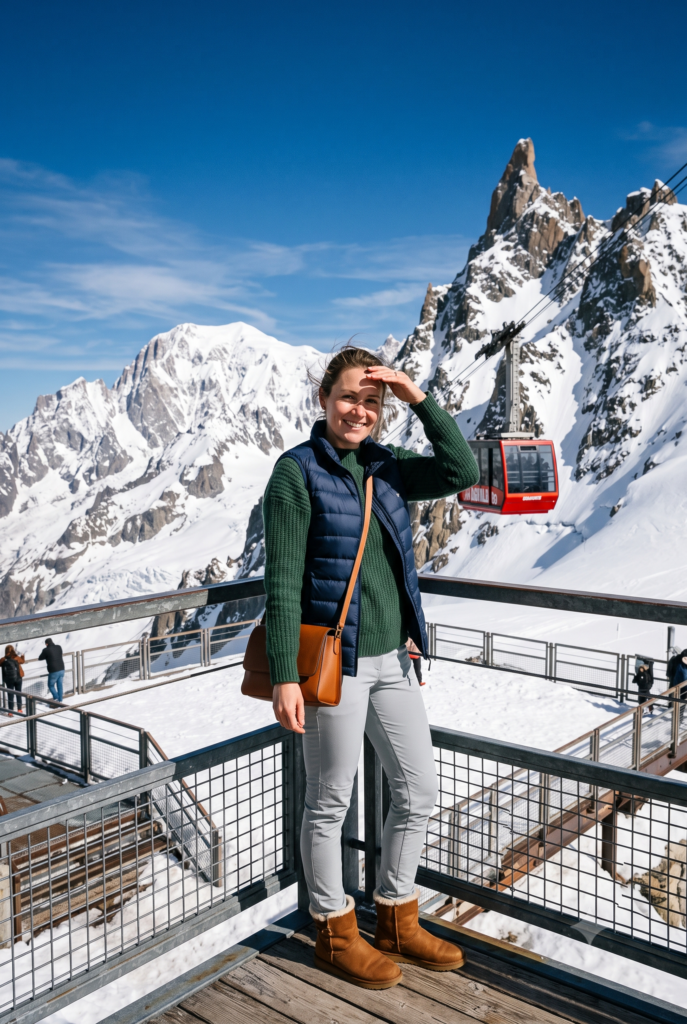
The French Alps resort towns, particularly Megève and Courchevel, have an après-ski dress culture that is more formal than anywhere else on the mountain. The end of the ski day is marked by a visible change of outfit: the ski suit and the helmet come off, the après-ski boots go on, and the standard in the resort bars and restaurants shifts to something considerably more considered than what was worn on the slopes.
Chamonix is more casual than Megève. The town is more working-class in origin, more mixed in its clientele, and the après-ski standard is relaxed compared to the high-end resorts. A clean knit, good trousers, and the right boot is enough for any restaurant in Chamonix. In Megève, the same outfit passes in most places but the restaurants at the higher end of the price range will expect something closer to smart casual.
On the mountain itself in summer, the dress code is purely functional. Nobody on the trail above the Mer de Glace is watching whether the technical trouser is the right cut. The standard is gear that works and looks as though it has been worn before. Brand-new kit in pristine condition that has never seen a mountain reads as uncertain to the regular hikers on the trail.
Annecy in summer has a relaxed lakeside elegance. The old town by the lake is full of tourists and the dress code is relaxed: linen, light cotton, sandals for the cobblestones: linen, light cotton, sandals that can handle cobblestones. The capsule covers this mode with the linen shirt and the flat shoe from the summer section.
The Fabrics for This Region
Merino wool is the primary fabric of the French Alps capsule and the one that works hardest in this environment. It regulates temperature across the range from a hot summer trail to a cold après-ski terrace, resists odour through multiple days of wear, dries quickly, and packs small. A merino base layer, a merino mid-layer, and a merino evening knit cover three different functions from a total weight that is less than a single cotton sweater.
Technical fabrics, specifically the stretch nylon-spandex blends used in technical trousers and the Gore-Tex or similar membranes used in waterproof shells, are the other essential fabric category. These are the places where synthetic fibres earn their place over natural fibres: no natural fabric provides the waterproofing and windproofing of a technical shell, and no natural fabric provides the stretch and abrasion resistance of a technical trouser at the same packed weight.
Cashmere in the evening knit is a luxury addition rather than a necessity, but the French Alps resort towns are the context in which cashmere makes the most sense in the capsule. The weight-to-warmth ratio is good, the packed size is acceptable, and the quality reads correctly in Megève and Chamonix in a way that a synthetic fleece does not for the evening.
Down or synthetic insulation in a gilet or a lightweight puffer provides the mid-layer option for the coldest days without the weight of a full insulated jacket. A packable down gilet adds considerable warmth when worn under the shell and packs into its own pocket.
The One Piece You’ll Wish You’d Brought
A packable down gilet in navy or grey. The layering system for the French Alps, base plus mid-layer plus shell, covers most conditions in summer and three-season hiking. But the coldest summer days above 3,000 metres, and the après-ski terrace in winter when the sun drops behind the ridge at four in the afternoon, call for an extra layer of insulation that the merino mid-layer alone does not deliver. A down gilet weighs almost nothing, packs into its own pocket, adds to the body core without restricting arm movement, and covers the gap between comfortable and cold in every alpine context.
The One Piece You Won’t Need
A full down puffer jacket packed as the primary insulation layer. Most visitors to the French Alps in summer overpack insulation, adding a heavy puffer or a down jacket that duplicates what the shell jacket plus merino mid-layer already covers. The layering system handles the cold better than a single heavy jacket and is more adaptable to the temperature swings of an alpine day. A full down jacket belongs in the kit for a winter ski trip where the resort temperature drops below minus ten regularly. For summer hiking and three-season visits, the packable gilet does the job in a tenth of the packed volume.
Your French Alps Capsule: The 12 Pieces
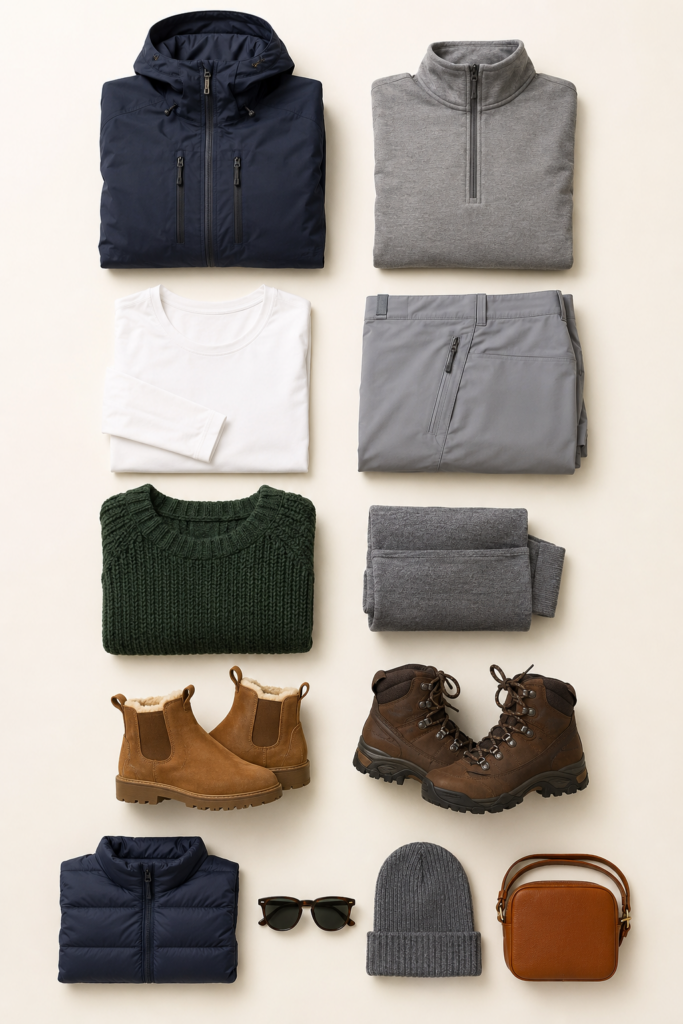
Shop the French Alps capsule. Every piece is linked below.
- Waterproof shell jacket with taped seams and hood, in navy or glacier grey —> 33,000ft Store Women’s Softshell Jacket
- Merino mid-layer zip-neck or crewneck, 200-weight, in alpine navy or pine green —> Arach&Cloz Women’s Wool Crew Neck Casual Sweaters
- Long-sleeve merino base layer top, 150-weight, in glacier white or navy —> ANRABESS Womens Long Sleeve Thermal Tops
- Merino base layer leggings or tights, 150-weight —> Merino Wool Base Layer Women Pants
- Slim technical trouser in glacier grey with stretch fabric —> baleaf Womens Travel Pants Lightweight Stretch with Zipper Pockets
- Heavyweight cashmere or chunky merino knit in pine green or alpine navy —> State Cashmere Women’s Essential Crewneck Sweater 100% Pure Cashmere
- Cognac shearling-lined or insulated leather ankle boot, rubber sole —> Project Cloud 100% Genuine Leather Women’s Ankle Boots
- Trail hiking boot in dark brown or charcoal, waterproof, lug sole —> CC-Los Women’s Lightweight Waterproof Hiking Shoes for Walking
- Packable down gilet in navy or glacier grey —> Obosoyo Women’s Ultra Light Long Down Vest
- Polarised alpine sunglasses with UV400 lenses, wrap or semi-wrap frame —> Nitrogen Polarized Wrap Around Sunglasses
- Merino wool hat in glacier grey or alpine navy —> Wmcaps Winter Beanie for Women
- Structured leather crossbody bag in cognac or dark tan —> Small Crossbody Bags for Women
Planning Your Full France Trip?
This guide covers the specific demands of the French Alps: the altitude layering system, the après-ski register of Chamonix and Megève, and the summer hiking wardrobe for the Mont Blanc trails. For the broader wardrobe picture across all six French regions, visit the France Packing Guide: What to Pack for Every Region. If your trip continues north to the boulevards of Paris, the wine villages of Alsace, the châteaux of the Loire Valley, the lavender fields of Provence, or the coast of the French Riviera, each has its own capsule guide. For destination planning, the Complete Guide to France covers every region in full.
Frequently Asked Questions
Pack real ski-weather gear: thermal base layers, an insulated waterproof coat, waterproof snow boots, gloves, and a warm hat. Resort towns sit below freezing for much of the season, and wind chill on the mountain adds to the cold beyond the base temperature.
Summer needs layers even in warm weather; valley towns can hit 25°C while higher elevations stay cool. Pack a moisture-wicking base layer, a light fleece, and a packable rain shell for hiking, plus sturdy hiking boots with ankle support for trail terrain.
Smart-casual with warmth in mind: a chunky knit sweater, comfortable boots, and a stylish but insulated jacket work well. Resort towns lean cozy-elegant rather than formal, so prioritize warmth without sacrificing polish for evening dinners and bars.
Yes, if your trip includes any trail time. Waterproof hiking boots with ankle support handle the Alps’ rocky, uneven terrain far better than sneakers. For town days in resort villages, a second comfortable walking shoe covers cobblestones and casual sightseeing.
Plan for four functional layers regardless of season: a breathable base, a mid-layer for warmth, a weatherproof outer shell, and one insulated piece for evenings or higher elevations. You’ll mix and match these daily rather than wearing all four at once.