
*This post may contain affiliate links for which I earn commissions.*
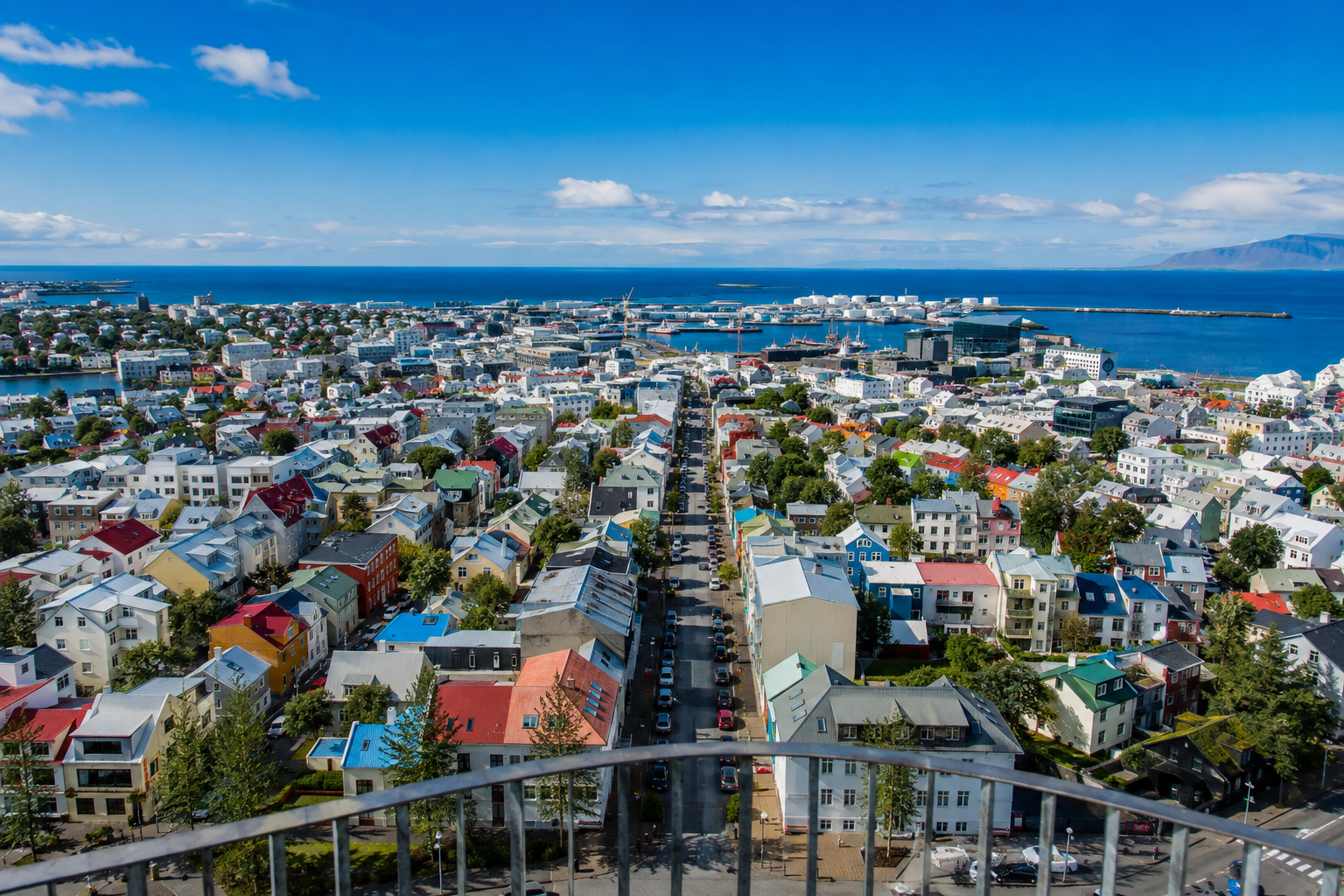
Reykjavík sits low against the edge of a fjord, rooftops in white and rust red climbing toward a single concrete spire. It is the world’s northernmost capital, and it feels the part: small enough to cross on foot in an afternoon, cold enough that you’ll be glad for wool by evening, bright enough in June that the sun barely leaves the sky. Most Iceland itineraries treat Reykjavík as a layover between the airport and the Ring Road. Give it two full days instead. The city holds its own against the South Coast, and it sets up everything that comes after it.
Getting Around Reykjavík: You Don’t Need a Car
Every other stop in this Iceland guide assumes a rental car. Reykjavík doesn’t. The church, the harbor, the concert hall, and most restaurants sit inside a fifteen-minute walk of each other, and the city bus, Strætó, covers the rest, including Perlan and the whisky distillery just outside town. Save the rental car for the day you leave the city. Inside it, walk.
Hallgrímskirkja
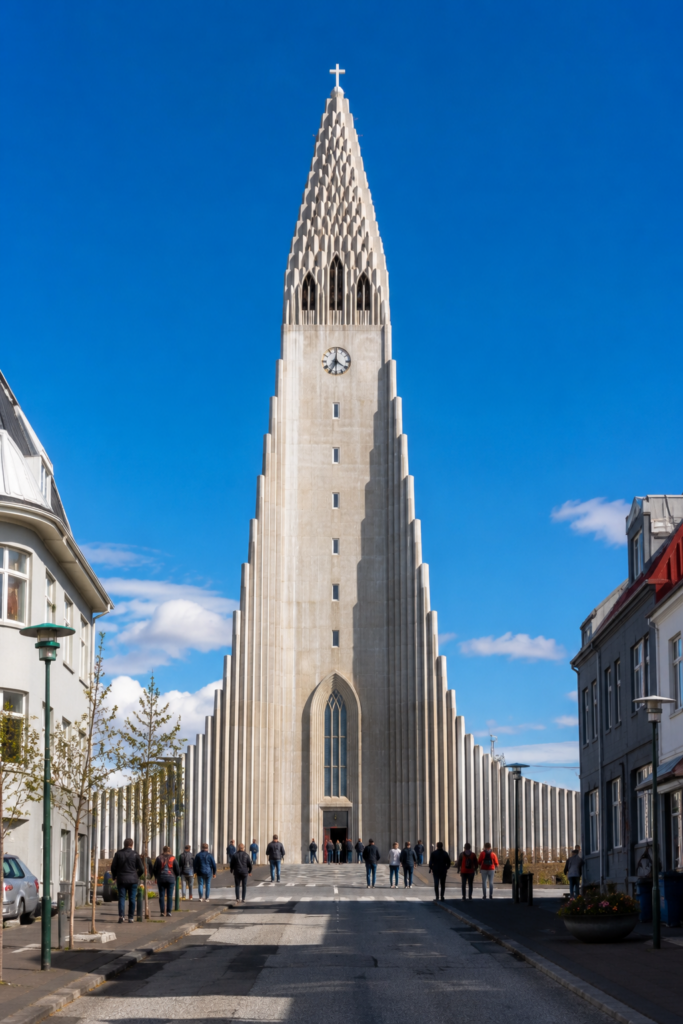
The church anchors the skyline from almost anywhere downtown. Its concrete facade, ribbed like basalt columns cooling into rock, took over forty years to finish; construction ran from 1945 to 1986, and architect Guðjón Samúelsson died before he saw it completed. At 74.5 meters, it’s the tallest building in central Reykjavík and the largest church in Iceland.
Entry to the church is free. The tower isn’t: a lift takes you up for around 1,400 to 1,500 ISK per adult, with a short flight of stairs to the open-air deck at the top. From there you get the whole city laid out in primary colors, the harbor, Mount Esja across the bay, and on a clear day the sea stretching west toward Greenland.
Hours shift with the season, longer in summer, shorter from September through April, so confirm current times on Visit Reykjavík’s official site before you go.
The Sun Voyager
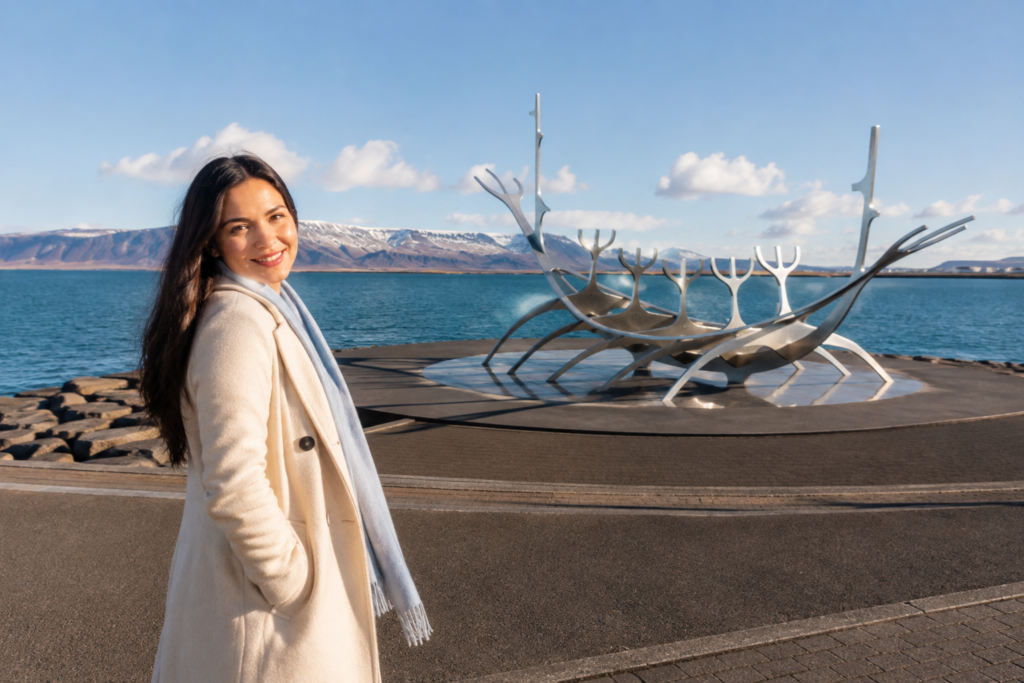
A ten-minute walk from the church along the waterfront path, a steel skeleton of a ship faces out to sea. Sculptor Jón Gunnar Árnason built it for the city’s 200th anniversary in 1990 and called it a dreamboat, not a Viking ship, though nearly everyone mistakes it for one at first glance. It’s meant as an ode to the sun: hope, and the promise of undiscovered land.
The sculpture is free, unfenced, and open around the clock. Come at golden hour if you can. In summer the midnight sun turns the steel pink and gold well past midnight; in winter, this stretch of open waterfront is one of the better spots downtown to watch for the northern lights.
Harpa Concert Hall
Harpa sits a short walk east of the Sun Voyager, a glass-and-steel building that catches the light differently every time you look at it. The dichroic glass panels, designed by Ólafur Eliasson and inspired by Iceland’s basalt coastline, throw blue, red, and violet reflections outward even as they let daylight pour in. You don’t need a ticket to a show to walk through the lobby and up the staircases; the building is worth the detour on its own, especially at dusk when the panels light up from inside.
The Old Harbour: Whales and Seafood
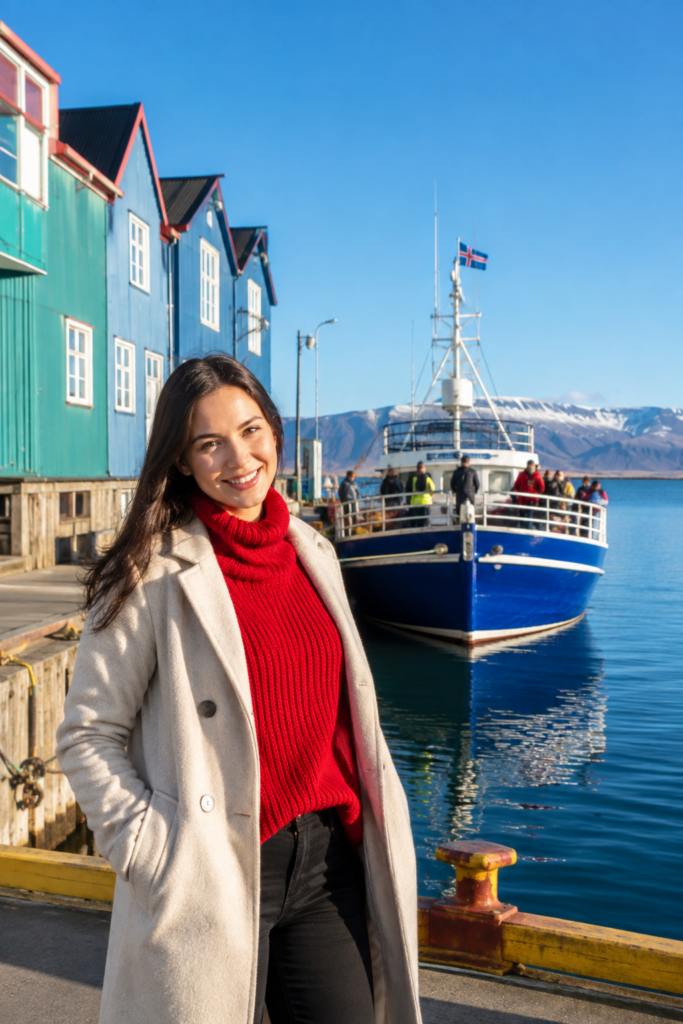
Reykjavík’s Old Harbour is the departure point for the city’s whale watching boats, and it’s worth building a half day around. Tours run two and a half to three and a half hours out into Faxaflói Bay, where minke and humpback whales feed close to shore alongside dolphins and harbor porpoises; orcas turn up occasionally in winter. Boats hand out warm overalls before you board, and most operators offer a free second trip if you don’t spot anything, though sightings are common between May and September. Book ahead, especially in peak summer.
Back on land, the harbor is where you eat. Small seafood counters and sit-down restaurants cluster along the pier, plates of langoustine and the catch of the day pulled straight off boats a few hundred meters away.
Grandi: Whales of Iceland and FlyOver Iceland
West of the Old Harbour, the Grandi district holds two attractions worth pairing on a gray-weather afternoon. Whales of Iceland is an indoor exhibition of 23 life-size whale models, including a 25-meter blue whale suspended overhead in a darkened hall built to feel like the seabed. It’s a useful primer before or after the real thing out on the water, and it’s fully weatherproof.
A few minutes’ walk away, FlyOver Iceland straps you into a chairlift-style seat in front of a curved screen and flies you over landscapes most visitors will never reach on the ground: glaciers, waterfalls, volcanic fissures. The full experience, preshow included, runs about 35 minutes, with the ride itself just under nine. It’s a good rainy-day stand-in for the parts of Iceland that are hard to reach without days you don’t have.
Perlan
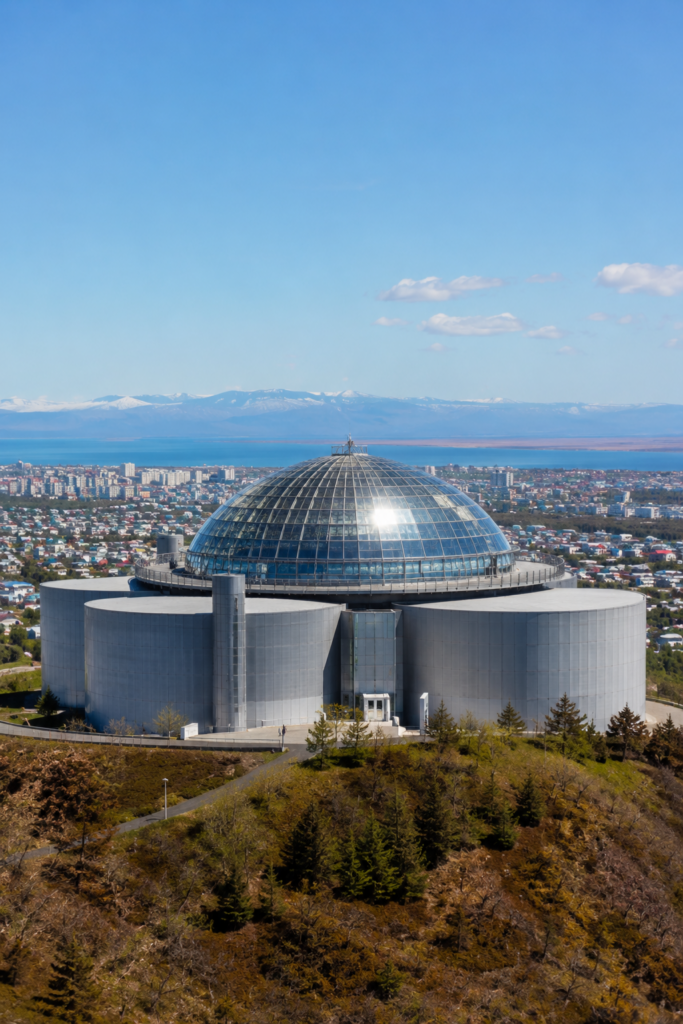
Perlan sits on Öskjuhlíð hill on the edge of the city, a glass dome built over old hot water storage tanks. Inside, an interactive exhibit walks you through Iceland’s geology, and a 100-meter indoor ice cave, the first of its kind, lets you feel a glacier’s cold without the three-hour drive most real ice caves require. There’s a planetarium show built around the northern lights, and a 360-degree observation deck at the top that rivals Hallgrímskirkja’s view without the elevator ticket line. It’s an easy stop to combine with a bad-weather day, and it works for families in a way most of the rest of this list doesn’t.
Flóki Whisky Distillery at Eimverk

Just outside city limits in Garðabær, a ten to fifteen minute taxi from downtown, Eimverk Distillery makes Flóki, Iceland’s first and only whisky, from barley grown entirely on Icelandic soil. The distillery also produces Vor, a pot-distilled gin, and Víti, a traditional brennivín made from native herbs. Tours run a little over an hour and end with a tasting of all three. Appointment only, so book before you land rather than trying to walk in.
When to Go
Two full days is enough to cover the city center on foot, with a third if you’re adding the whale watching tour or the distillery. Reykjavík works as a bookend on either side of a Ring Road trip, or as a standalone weekend if the rest of Iceland isn’t on this visit’s itinerary. Whichever way you build it, pack for four seasons in one day. The weather here changes faster than the bus schedule.
Reykjavík works on its own, or as the calm bookend to a longer trip around the country. For where the rest of the island fits, the Golden Circle, the South Coast, Snæfellsnes, start with our Complete Guide to Iceland, and before you pack, check the Iceland Packing List for what actually earns a spot in your suitcase for a country that can throw sun, rain, and wind at you before lunch.