
*This post may contain affiliate links for which I earn commissions.*
Iceland does not work like the rest of Europe. There is one road that circles the whole country, one city that holds most of the population, and a landscape that is still, in places, being made. You do not city-hop here. You drive a loop, or you base yourself in Reykjavík and take day trips out, and either way the weather changes the plan more than you expect it to. This guide covers how the country breaks down by region, how to get around, and the handful of things that are specific to Iceland and do not come up anywhere else in Europe: geothermal etiquette, glacier safety, and a sky that does very different things depending on the season you land in.
Overview: What Iceland Actually Is
Iceland has a population smaller than a mid-sized American city, spread across an island the size of Kentucky. More than half of that population lives in and around Reykjavík. Everywhere else is small towns, farms, and long stretches of nothing but lava field, glacier, and coastline. The Ring Road, Route 1, connects almost all of it in a single loop of roughly 1,300 kilometres.
This changes how you plan. You are not choosing between cities the way you would in Italy or France. You are choosing how much of the loop you want to drive, how far off it you want to detour, and how much time you want to spend in the capital before you leave it behind. A week gets you Reykjavík, the Golden Circle, and the South Coast. Two weeks gets you the full Ring Road. Either version works. The mistake is trying to do the full loop in a week and spending most of it in the car.
How to Get Around
A rental car is the honest answer for most of this guide. Iceland’s bus network exists but runs infrequently outside summer, and the sights that make the country worth visiting, waterfalls, black sand beaches, glacier lagoons, sit between towns rather than inside them. If your trip is Reykjavík only, you do not need a car. The moment you add the Golden Circle or the South Coast, you do.
Book a car with all-wheel drive if you are travelling between October and April. Summer rentals can get away with a standard compact on the Ring Road’s paved sections. F-roads, the mountain tracks into the interior highlands, require a proper 4×4 and are closed outside summer entirely. Check road conditions daily at road.is before you set out. Conditions here change faster than the forecast does.
Domestic flights connect Reykjavík to Akureyri in the north and a handful of other towns, useful if you want to see the far side of the country without driving the whole loop.
Choose Your Region
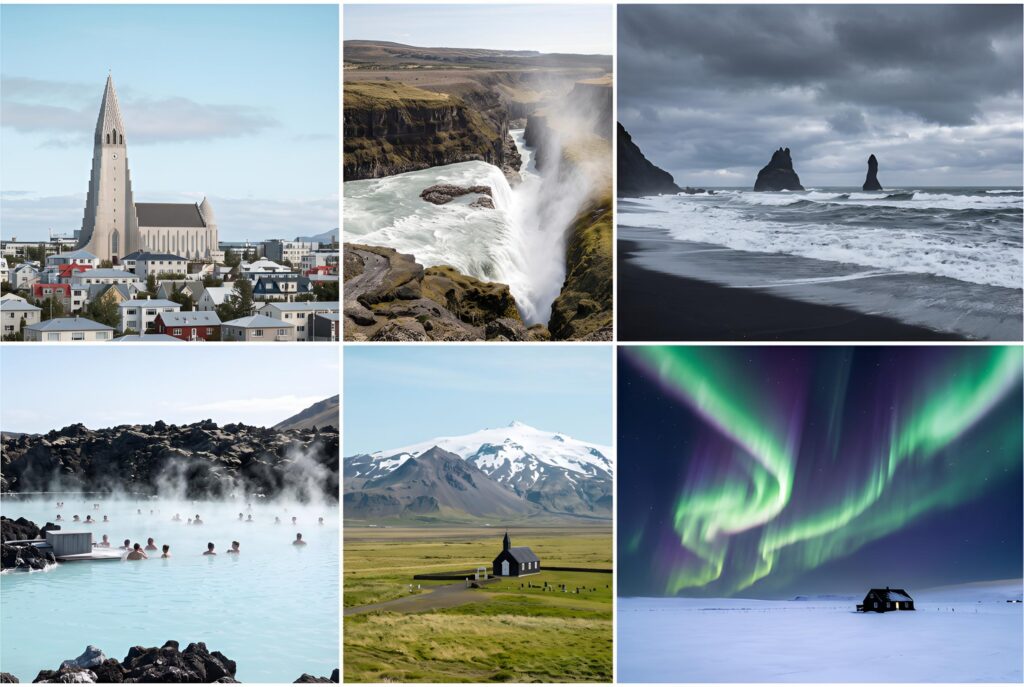
Iceland breaks into a small number of regions that most visitors combine rather than choose between. Each one below will get its own dedicated guide. This is the summary version, useful for deciding where your trip actually goes.
Reykjavík
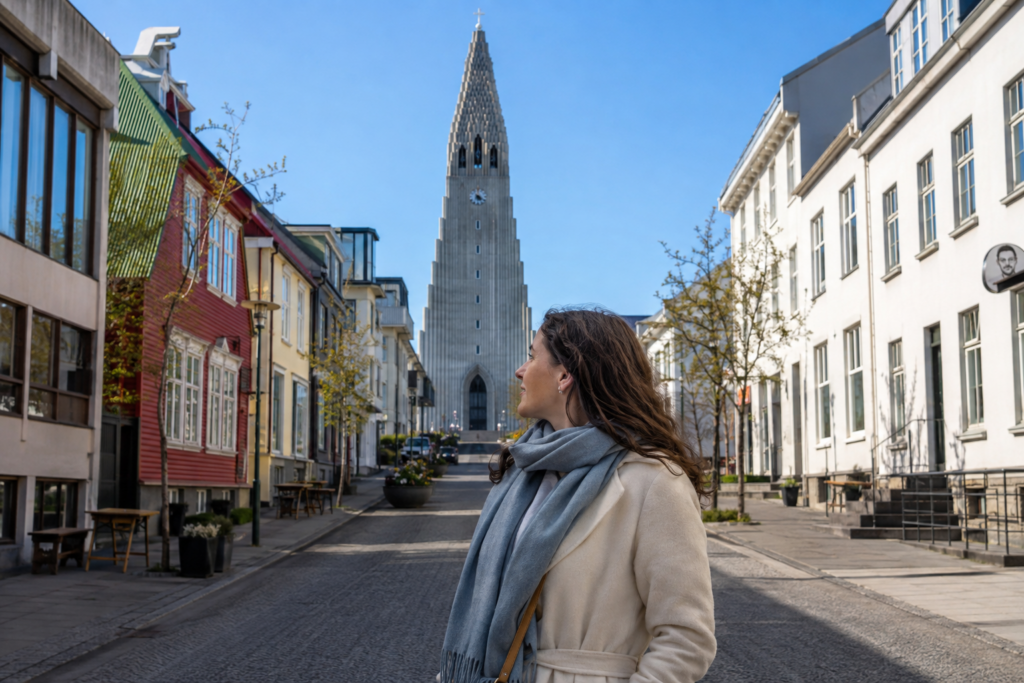
What it’s like: A small, walkable capital with a working harbour, a design and food scene that outperforms its size, and the Hallgrímskirkja church tower visible from most of the old town.
Key sights: Hallgrímskirkja, the Sun Voyager sculpture along the waterfront, the Harpa concert hall, the Old Harbour for whale watching and seafood.
Also worth a stop: Perlan, a glass-domed museum and viewpoint built over the city’s hot water tanks; a simulated flight over Iceland’s landscapes at FlyOver Iceland down at the harbour; a guided tasting at Eimverk Distillery in nearby Garðabær, home of Flóki, Iceland’s first whisky.
Distinct because: It is the only real city in the country and the only place where you do not need a car. Everything else on this list is a drive away.
Golden Circle
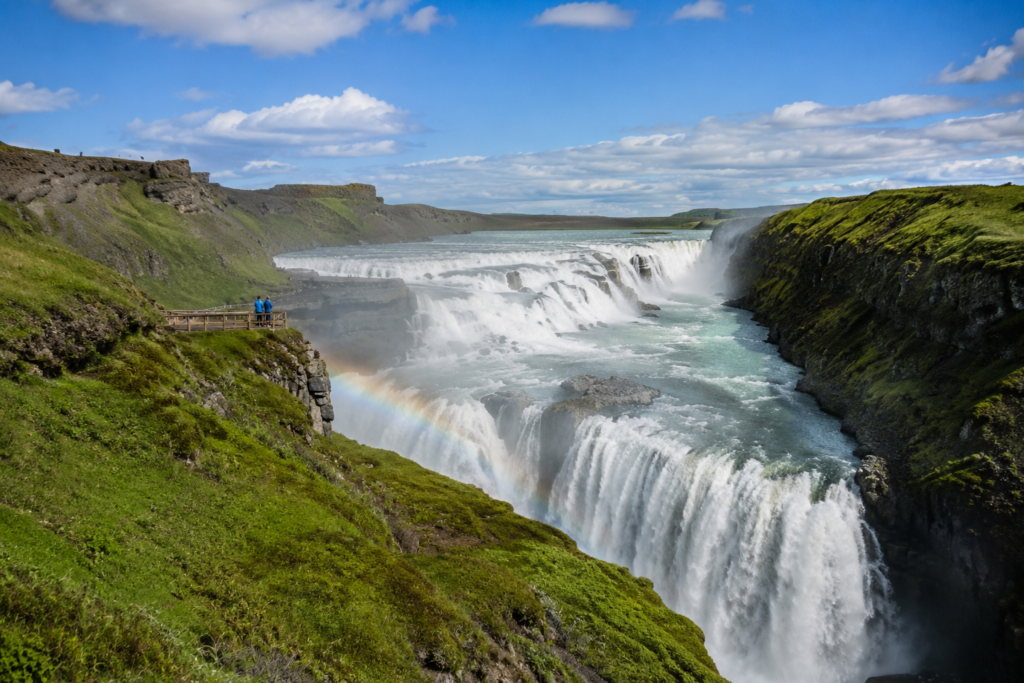
What it’s like: The most-visited day loop in Iceland, and busy for a reason. Three major stops in one manageable drive from Reykjavík.
Key sights: Þingvellir National Park, where the North American and Eurasian tectonic plates pull apart in front of you; the Geysir geothermal field, where Strokkur erupts every few minutes; Gullfoss waterfall, a two-tiered drop into a canyon.
Also worth a stop: Kerið, a red volcanic crater with a still blue-green lake inside it; Brúarfoss, a smaller, brilliant blue waterfall a short detour off the main loop and worth it if you have an extra hour.
Distinct because: It is doable in a single day without an overnight stay, which makes it the default first trip out of the capital for almost everyone.
South Coast
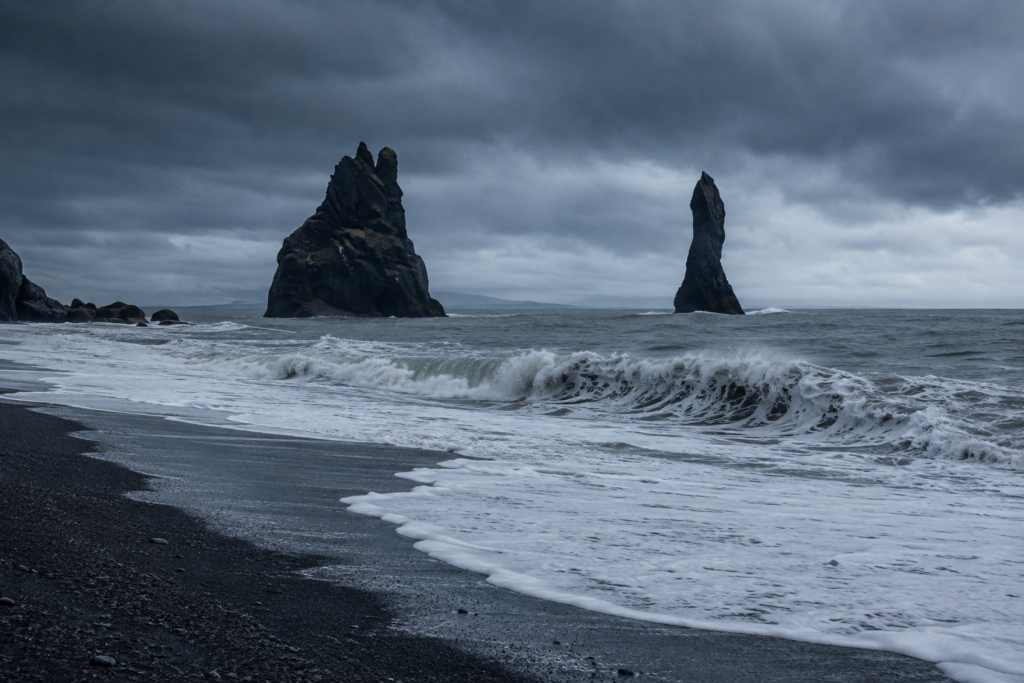
What it’s like: A drive along the base of the island’s glaciers, past waterfalls you can walk behind and black sand beaches with sea stacks rising out of the surf.
Key sights: Seljalandsfoss and Skógafoss waterfalls, the black sand beach at Reynisfjara, the Jökulsárlón glacier lagoon where icebergs drift out to sea.
Also worth a stop: Fjaðrárgljúfur, a deep, winding canyon with viewpoints along its rim; the Reynisdrangar sea stacks visible from Reynisfjara and the neighbouring Víkurfjara beach; Vatnajökull National Park around Skaftafell, where short trails lead out to glacier tongues and waterfalls like Hundafoss without a guide.
Distinct because: This is where the glaciers meet the coast, and where most first-time ice cave and glacier walk tours depart from.
Snæfellsnes Peninsula
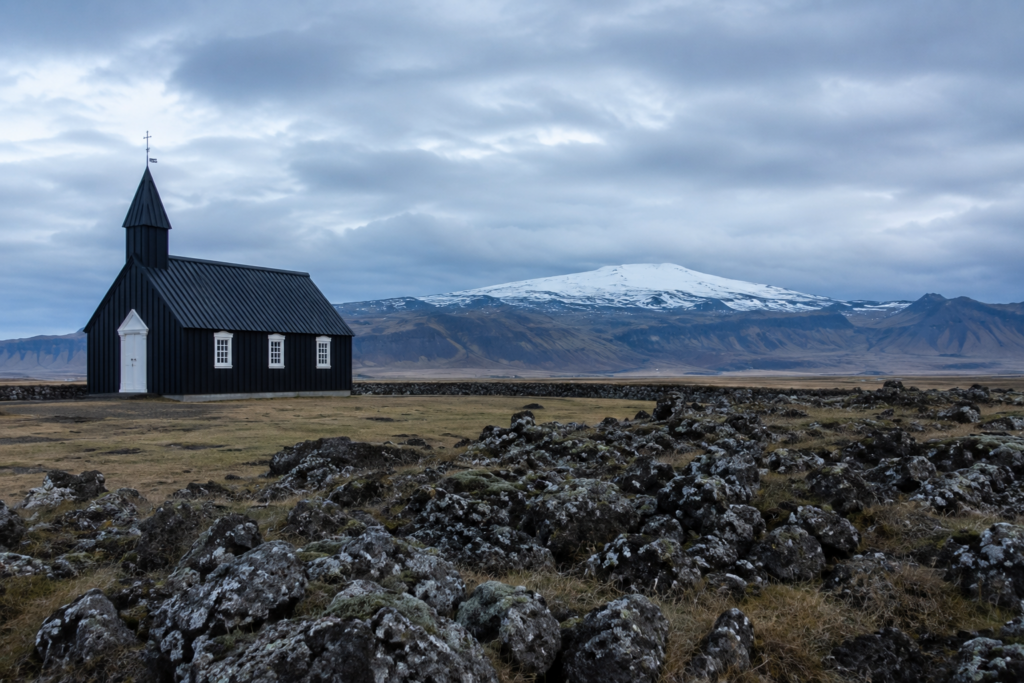
What it’s like: A smaller, quieter version of the whole country in one peninsula. Volcano, lava fields, fishing villages, and coastline, all inside a two-hour drive from Reykjavík.
Key sights: Snæfellsjökull glacier-topped volcano, the black church at Búðir, the town of Stykkishólmur.
Also worth a stop: Saxhóll Crater, a short climb up a set of stairs for a full view of the surrounding lava field; Rauðfeldsgjá, a narrow gorge you can walk into; Gatklettur, a natural rock arch on the water at Arnarstapi. On the way there from Reykjavík, Víðgelmir lava cave near Húsafell in West Iceland is worth building in as a detour.
Distinct because: It fits into a long day trip or overnight from the capital, which makes it the best option for travellers who cannot spare the days a full Ring Road loop needs.
Westfjords
The most remote and least visited region of Iceland, reached by long drives along fjord roads with almost no other traffic. A dedicated guide to the Westfjords is coming. For now, know that it belongs on a second trip or an extended one, not a first-time itinerary already covering the Golden Circle and South Coast.
Reykjanes Peninsula
The peninsula between Keflavík Airport and Reykjavík, and often the first and last landscape visitors see. Its main draw is Gunnuhver, a geothermal field with boardwalks over steaming mud pools and vents, easily worked into an arrival or departure day without adding a detour to the rest of the trip.
North Iceland and the Eastfjords
Two further regions worth a mention here, both better suited to a full Ring Road trip than a first-timer’s week. North Iceland centres on the Mývatn area: Skútustaðagígar’s pseudocraters and the steaming vents of Námafjall Hverir, plus Kolugljúfur, a waterfall canyon on the drive up from Reykjavík. East Iceland’s Eastfjords hold Stuðlagil, a turquoise river cutting through a wall of basalt columns, remote enough that most visitors only reach it on the full loop. Dedicated guides to both are planned once the Ring Road spoke posts are further along.
Geothermal Etiquette
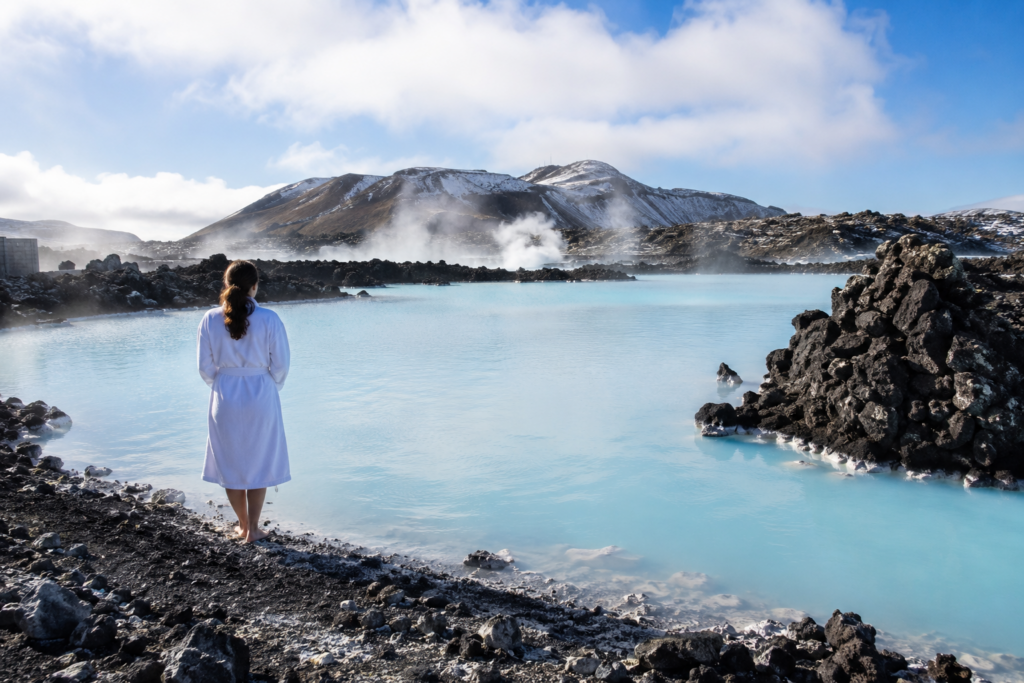
Iceland runs on geothermal water, and every pool, from the Blue Lagoon to the smallest municipal pool in a fishing town, operates under the same rule: shower naked before you get in. This is not a suggestion. Icelandic pools post diagrams at the shower entrance showing exactly which parts of the body need washing, and staff will send you back if you skip it. It comes from a practical place. Nobody adds chlorine to a pool this size, so the cleanliness of everyone in the water depends on everyone showering first.
Swimsuits stay on for the shower. Swim caps are not required outside a few lap-swimming pools. Bring your own towel or rent one, most pools charge a small fee either way. The Blue Lagoon, Sky Lagoon, and the smaller Secret Lagoon all follow this same rule, so the habit is worth learning before your first stop rather than your third.
The Ring Road
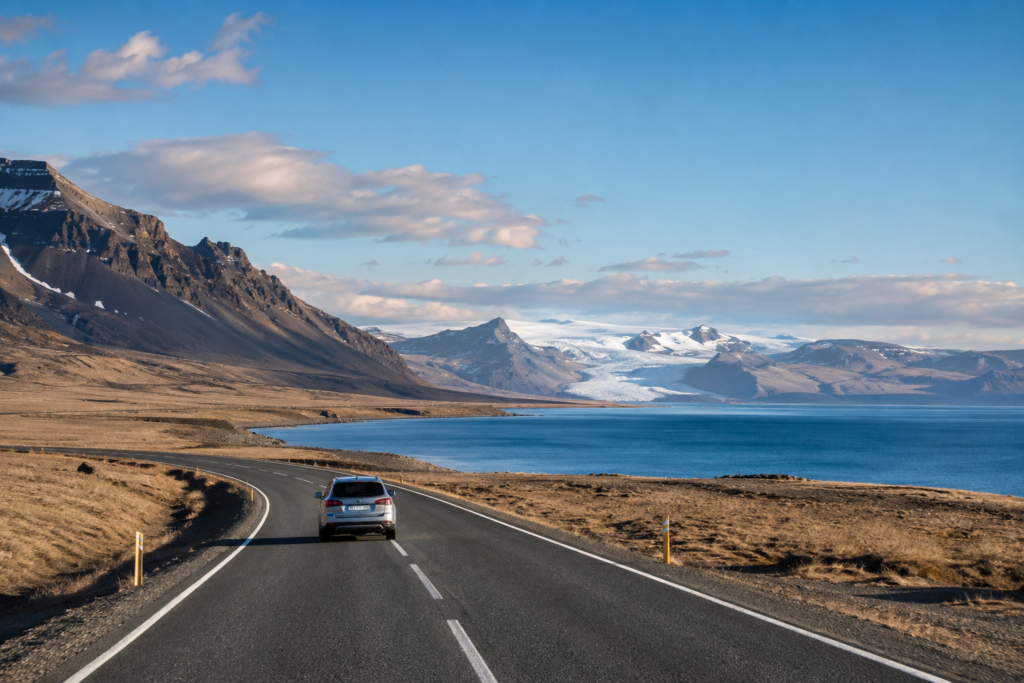
Route 1, the Ring Road, is the closest thing Iceland has to a single itinerary that covers the country. Driven start to finish, it takes a minimum of seven to ten days if you want time to stop rather than just pass through. Most people drive it counterclockwise, starting south along the coast toward the glacier lagoons, then up the east fjords, across the north near Akureyri, and back down through the west.
The road is fully paved for its entire length, which is not true of the detours off it. Petrol stations thin out considerably once you leave the south coast, so fill the tank whenever it drops below half in the east and north. Winter driving on the Ring Road is possible but demands respect: daylight runs to a few hours in December, ice forms without warning, and closures happen with little notice. Summer removes most of that risk and adds nearly 24 hours of daylight instead, which means you can start a hike at 9pm if the previous stop ran long.
Northern Lights and Midnight Sun
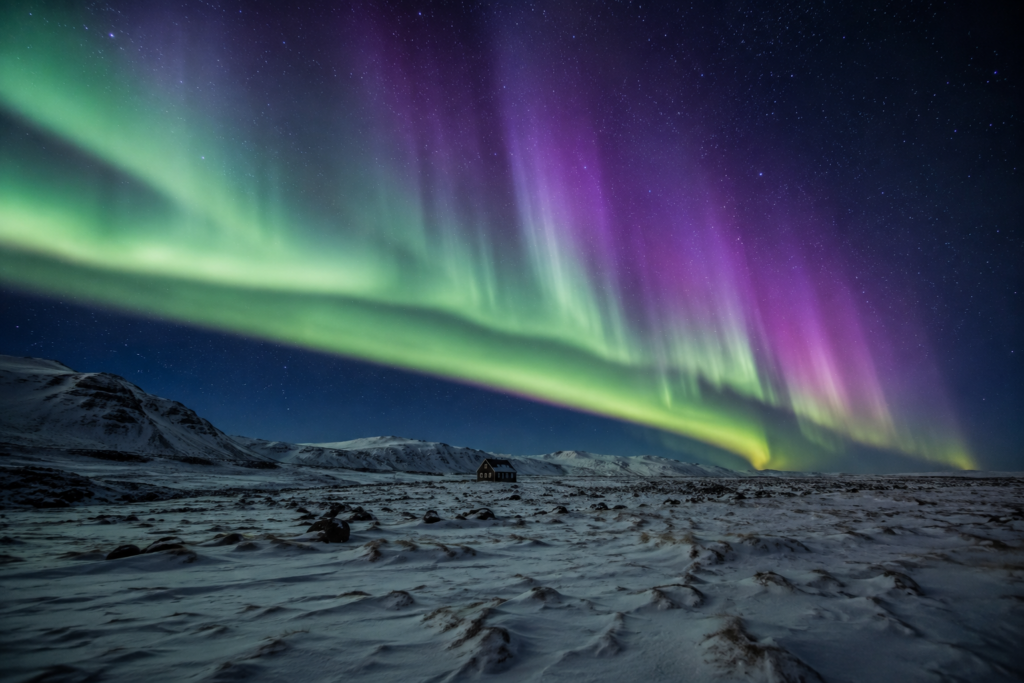
Iceland’s sky runs on two completely different seasons, and which one you land in changes what you pack and what you plan around.
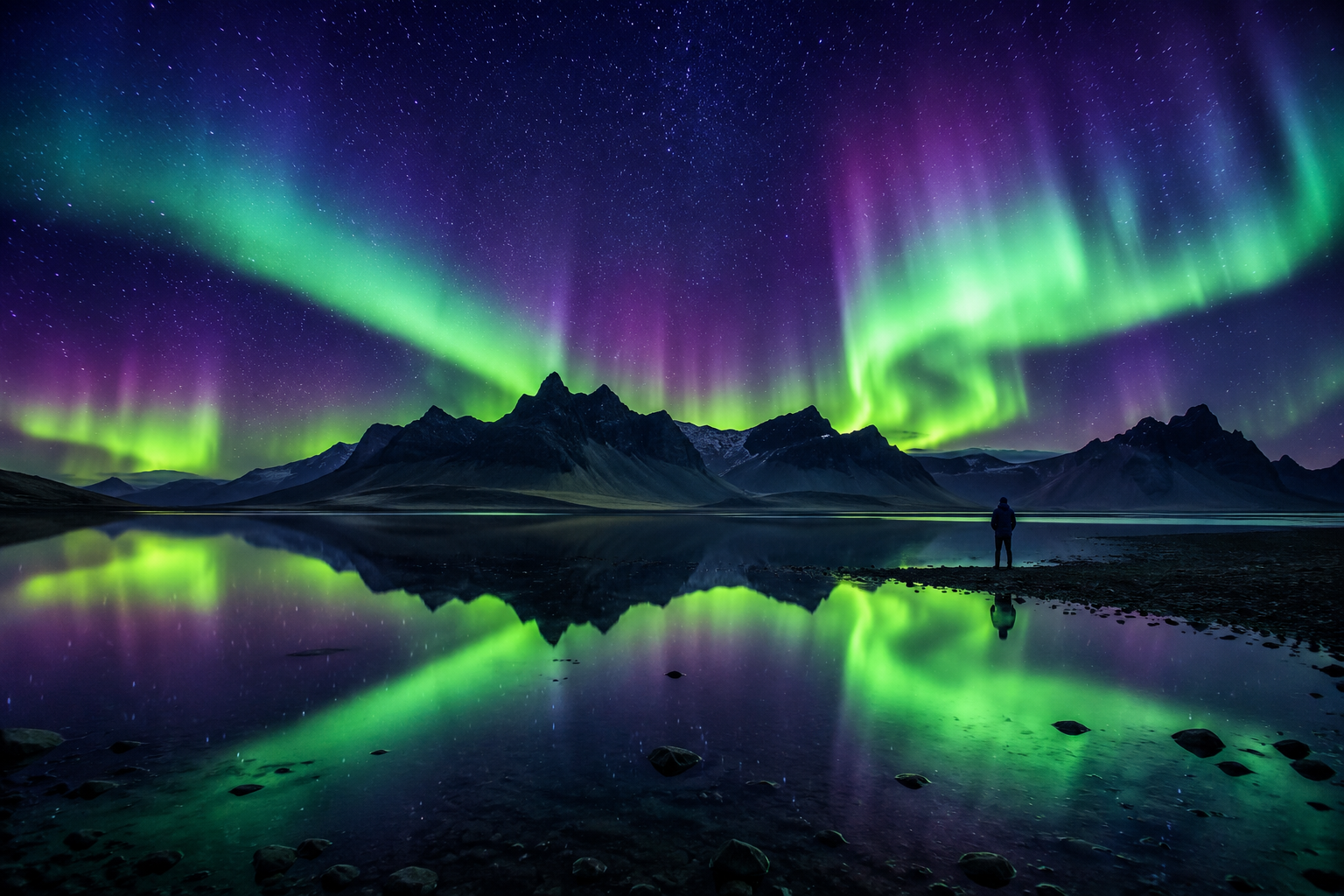
Aurora season runs from roughly September through March, when the nights are dark enough for the Northern Lights to show. You need clear skies and low light pollution more than you need a specific date, which is why South Coast farm stays and the Golden Circle’s rural stretches often out-perform Reykjavík for viewing, city light drowns out fainter displays. Aim for a trip of at least four or five nights if the aurora is the priority. Even in strong solar activity years, cloud cover can shut out a viewing for several nights in a row.
Summer flips the pattern entirely. From late May through July, the sun barely sets in the north, and Reykjavík gets close to 24 hours of usable daylight around the summer solstice. This is what makes late-night hikes and unhurried, no-rush South Coast road trips possible. Pack an eye mask if you are sensitive to light while sleeping, hotel blackout curtains vary.
One date is worth building a trip around specifically: on August 12, 2026, a total solar eclipse crosses western Iceland, tracking through the Westfjords, the Snæfellsnes Peninsula, Reykjavík, and the Reykjanes Peninsula. It is Iceland’s first total eclipse since 1954, and the next one is not due until 2196. Totality lasts just over a minute in Reykjavík and closer to two minutes in parts of the Westfjords and Snæfellsnes. If you are planning a trip around this date, book accommodation in the path of totality well ahead. This is a once-in-several-lifetimes event and the country expects the crowds to match.
Glacier and Ice Cave Safety
Glaciers and ice caves are two of the reasons people fly to Iceland, and both come with real risk that no other region in this cluster’s content asks you to think about. Crevasses on glacier surfaces are frequently hidden under a layer of snow, and ice caves can shift or partially collapse with temperature changes. Do not walk onto a glacier or into an ice cave without a certified local guide. This applies even to short, seemingly gentle glacier tongues near parking areas. Guided tours provide crampons, harnesses, and ice axes, and the guides read conditions daily before deciding whether a route is safe to run at all.
Ice caves are strictly a winter activity. Most operators only run cave tours from November through March, when the ice is cold and stable enough to enter. Summer ice caves are unstable and generally closed for exactly that reason. Book glacier and ice cave tours from established operators, and check safetravel.is before any independent outdoor activity in Iceland, run by the Icelandic Association for Search and Rescue, it lists real-time conditions and hazard warnings for the whole country.
Good to Know
- Tap water in Iceland is some of the cleanest in the world and safe everywhere. Skip the bottled water.
- Tipping is not expected. Restaurant prices already include service, and rounding up is a courtesy rather than an obligation.
- The Icelandic króna is the currency, but cards work almost everywhere, including small farm shops and public toilets. Carrying cash is rarely necessary.
- Fuel and restaurant prices run high by European standards. Budget accordingly, especially for a full Ring Road trip where fuel adds up over ten days.
- Wind, not cold, is the thing that catches visitors off guard. A dry, layered outfit at 5°C in a 60kph coastal wind feels colder than a still day well below freezing.
Best Time to Go
Summer (June to August) brings the longest days, the mildest weather, and the fullest access to F-roads and the highlands. It is also peak season for crowds and prices, and 2026 specifically brings the added pull of the August 12 eclipse.
Shoulder season (April to May, September) trims the crowds and the prices while keeping most roads open. September adds the start of aurora season on the clearer nights.
Winter (October to March) is the aurora window and the ice cave window at once, with the shortest days and the most demanding driving conditions. This is the season for travellers who want the Northern Lights specifically and are prepared to build in flexibility around weather delays.
Iceland at a Glance
| Region | Best For | Signature Sight | Drive Time from Reykjavík |
| Reykjavík | First and last stop, no car needed | Hallgrímskirkja | — |
| Golden Circle | A single full day out of the capital | Gullfoss waterfall | 1.5 hours |
| South Coast | Waterfalls, black sand, glacier lagoons | Jökulsárlón | 2.5 to 5 hours |
| Snæfellsnes | A quieter one- to two-day version of the whole country | Snæfellsjökull | 2 hours |
| Reykjanes Peninsula | An arrival or departure day, no detour needed | Gunnuhver hot springs | 30 to 45 min |
| Westfjords | Remote, uncrowded, a second-trip region | Fjord-side drives | 5 to 6 hours |
| North Iceland | Full Ring Road trips, Mývatn geothermal area | Skútustaðagígar and Námafjall Hverir | 5 to 6 hours |
| Eastfjords | Full Ring Road trips, the remote east | Stuðlagil Canyon | 6.5 to 7 hours |
Iceland rewards a plan built around the loop, not the map. Decide how many days you have, then decide how far around the Ring Road that actually gets you. A week is the Golden Circle and the South Coast done properly. Two weeks is the full country.
Read Next
Dedicated guides to Reykjavík, the Golden Circle, and the South Coast are coming soon and will link here once live.
For everything you need beyond clothing on a trip like this, from adaptors to offline maps, the Europe Travel Essentials list covers the gear that works across every country in this guide.