
*This post may contain affiliate links for which I earn commissions.*
Milano Centrale is one of the great railway stations of Europe, all fascist marble and vaulted glass, and the moment you step out of it onto the Piazza Duca d’Aosta you understand immediately that this city is not going to be charming about it. The buildings are imposing. The traffic is serious. The people crossing in front of you in their wool coats and dark leather are moving with the particular purpose of a city that has somewhere to be. Rome asks you to wander. Milan asks you to keep up.
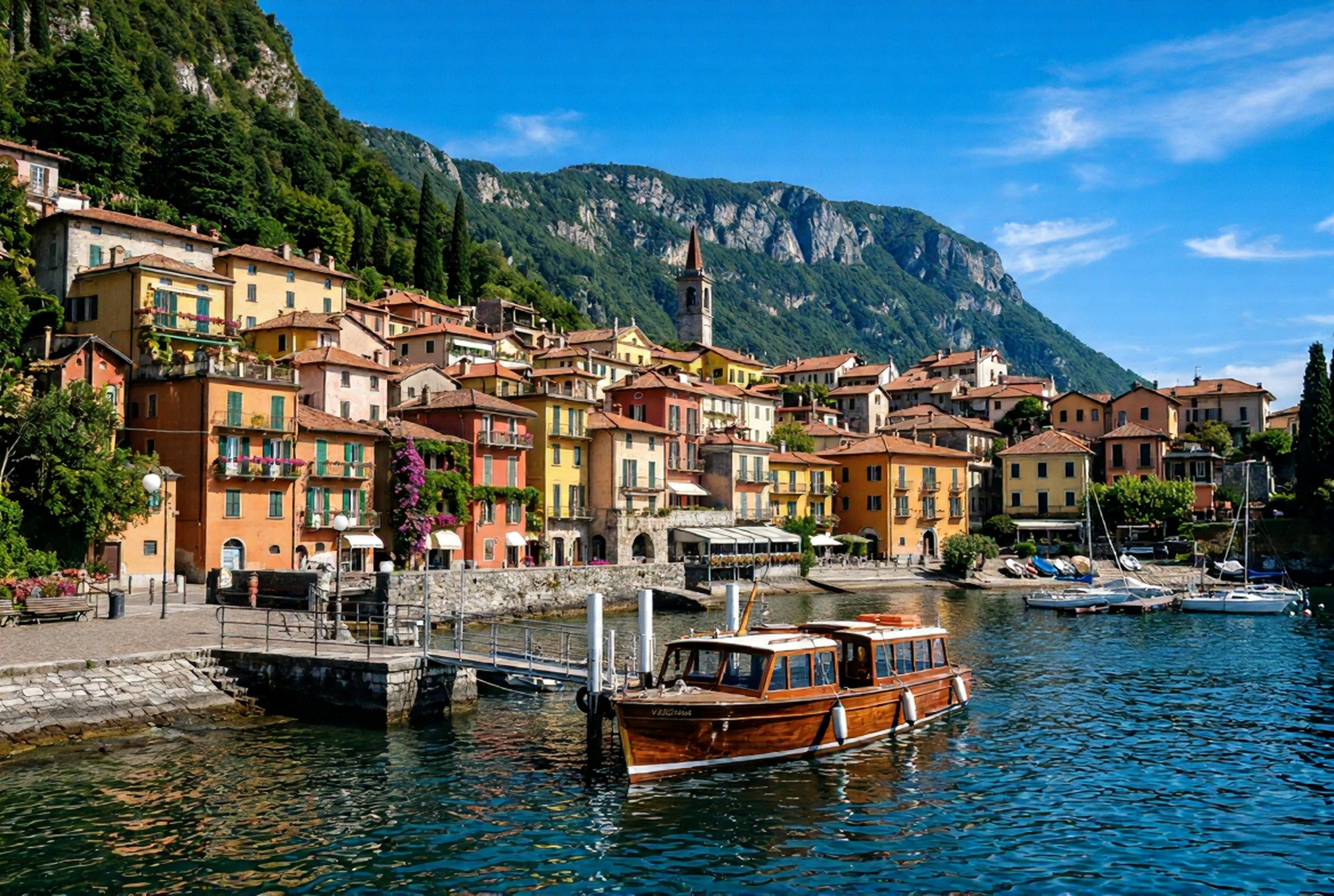
An hour north by train and the register shifts completely. The mountains appear and then the lakes, deep and cold and ringed by forested hills and the pale facades of lakeside villas. Lake Como feels like a different country from Milan, cooler in every sense: quieter, slower, the boat traffic measured and unhurried. Lombardy holds both of these worlds simultaneously and asks you to pack for them in a single bag.
What to See
The Duomo di Milano, from the roof
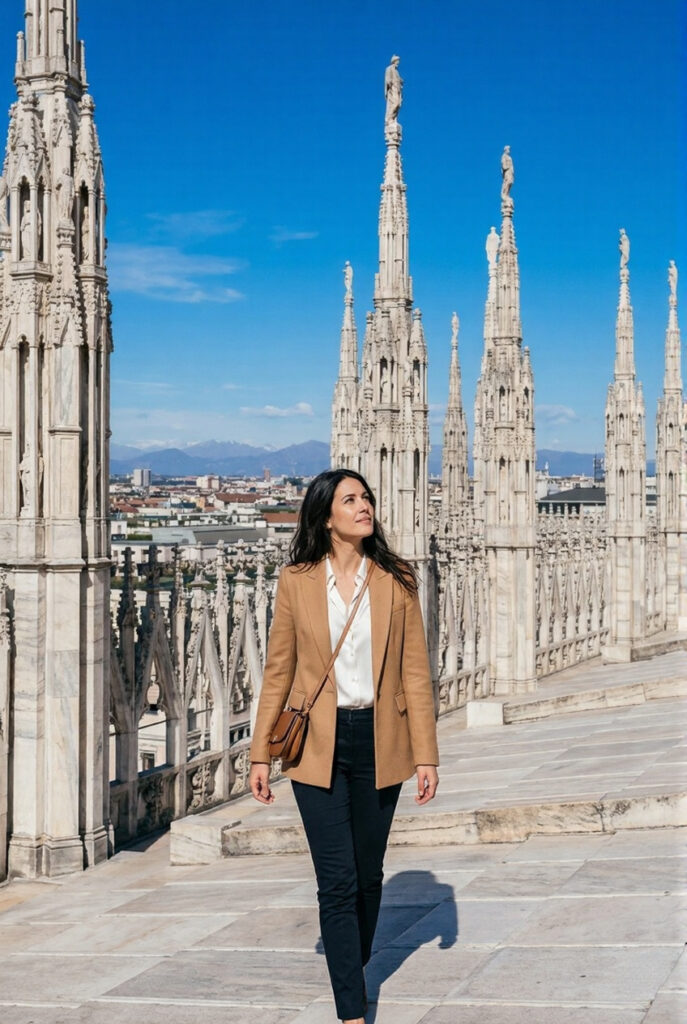
The Milan Duomo is the third largest cathedral in the world and one of the most elaborately decorated, nearly six hundred years of marble, spires, and statuary that the city was still adding to in the nineteenth century. The exterior repays close attention: every spire is topped with a different figure, the marble changes tone in different light, and the scale only becomes fully apparent when you are standing on the roof.
The rooftop terrace is the visit worth making. You walk between the spires at eye level, the city spreading flat to the horizon in every direction, the Alps visible on a clear day to the north. Timed-entry tickets for the rooftop are sold separately from the cathedral and go quickly. Book through the Duomo’s official website at least a day ahead. Early morning gives you the best light and the smallest crowds.
The Pinacoteca di Brera
The Brera gallery sits in the Brera neighbourhood, Milan’s most handsome quarter, on the first floor of a 17th-century palazzo above a botanical garden courtyard. The collection is not the largest in Italy but it is one of the best curated: Raphael’s Betrothal of the Virgin, Mantegna’s Dead Christ, Caravaggio’s Supper at Emmaus. Works you have seen reproduced so many times that seeing them in a room, at the right scale, in the right light, comes as a genuine surprise.
No booking required on most days. Entry is a few euros. The Brera neighbourhood around it is the right place to spend the afternoon: independent galleries, good coffee, streets that justify everything Milan claims about design.
The Last Supper, Santa Maria delle Grazie
Leonardo’s Last Supper is painted directly onto the refectory wall of a 15th-century convent and is not, technically speaking, a fresco. Leonardo used experimental paint on dry plaster rather than wet, which means it began deteriorating almost immediately and has been restored continuously for five hundred years. Knowing this before you see it changes what you are looking at. It is a painting in a constant state of being saved.
Entry is strictly timed: groups of thirty, fifteen minutes inside. Tickets sell out two to three months ahead in high season. Book through vivaticket.com the moment your travel dates are confirmed. If you arrive in Milan without a ticket, it is almost certainly gone. This is the one site in Lombardy where leaving booking to chance is genuinely costly.
Galleria Vittorio Emanuele II
The Galleria is technically a shopping arcade but describing it that way misses the point entirely. The iron and glass cruciform arcade built in 1877 is one of the finest public spaces in Italy: the mosaic floors, the painted vaulted ceilings, the central octagon with its glass dome. Prada and Louis Vuitton have shops here but the experience of walking through it is free and worth doing slowly, ideally in the early morning before the day-trippers arrive and the light is still soft through the glass above.
Find the bull mosaic on the floor of the central octagon and look for the worn patch. Tradition holds that spinning on your heel on the bull’s anatomy brings good luck. Every local knows which section of the floor to avoid.
What to Do
Take the boat across Lake Como
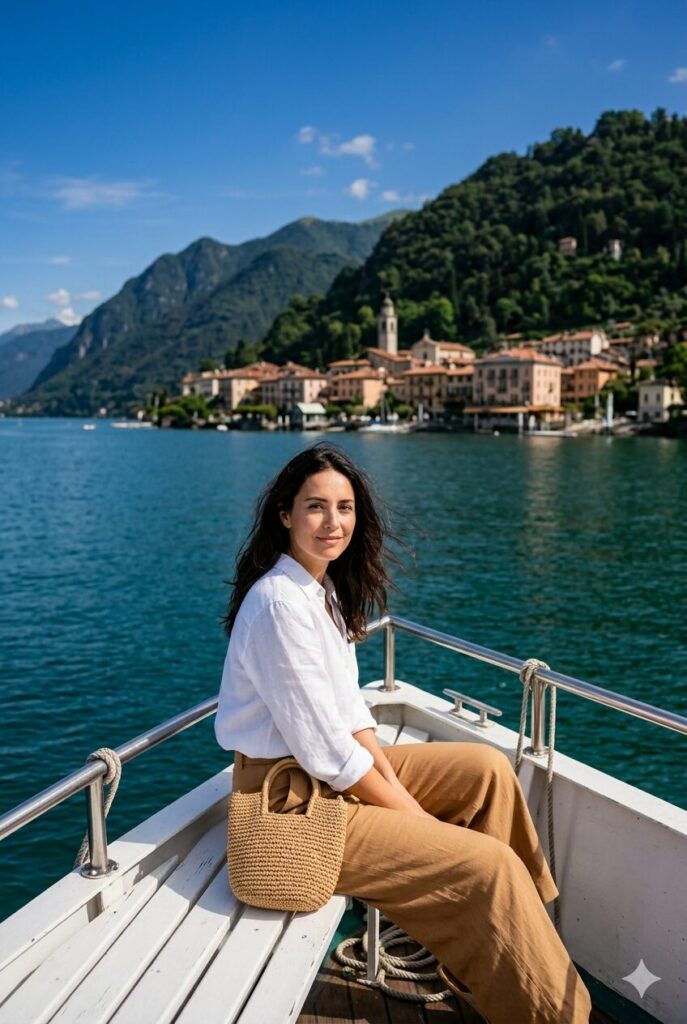
Lake Como is forty-five minutes from Milan by train to Varenna or Como, and the right way to see it is from the water. The public ferry service connects all the main towns on the lake and is cheap, regular, and the only sensible transport between villages on the steep western shore where roads are narrow and parking is essentially theoretical.
The slow ferry (not the fast hydrofoil) between Varenna and Bellagio takes about fifteen minutes across the widest part of the lake. Do that crossing at least once in each direction. Varenna is a better base than Bellagio: quieter, fewer tourists, the same view of the lake and the mountains, and the small beach below the town is one of the nicest spots on the water.
Spend an aperitivo hour in the Navigli
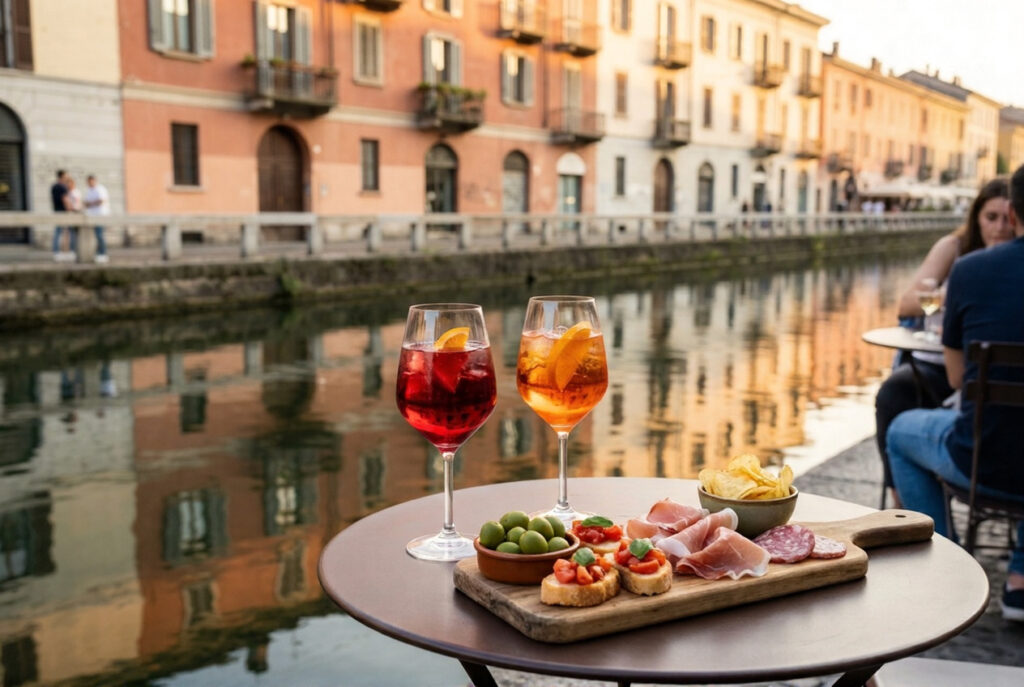
The Navigli are the old canal district in the southwest of Milan, what remains of a network of canals that Leonardo da Vinci helped engineer in the 15th century. Between six and nine in the evening, the bars along the Naviglio Grande serve aperitivo: a drink plus a spread of bar snacks that in some places constitutes a full meal. This is not a tourist ritual. It is how Milan eats before dinner, which in this city rarely starts before nine.
The best bars are not the ones directly on the water with the terrace tables and the menu in English. Walk one or two streets back, find the one that is full of people who live there, and order a Campari soda or a Franciacorta. Budget four to six euros for the drink. The food comes with it.
Walk the Brera district on a Saturday morning
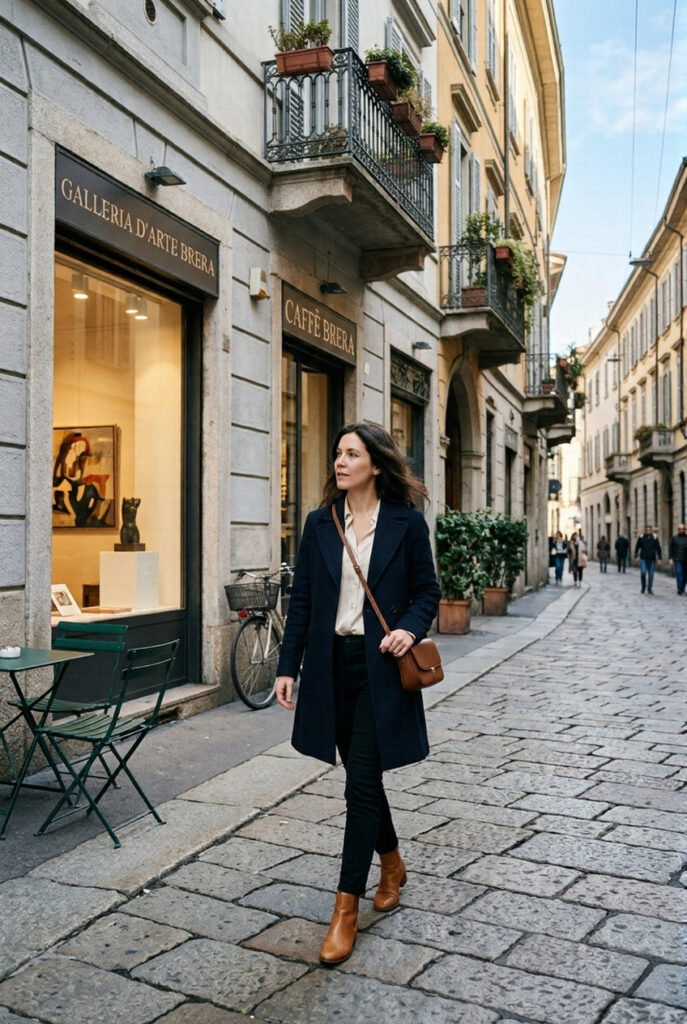
Saturday morning in Brera before midday is one of the better hours in Milan. The streets are quiet, the bars are doing a serious coffee trade, the independent shops are opening without rush. The Via Fiori Chiari has a small street market on Saturday mornings selling vintage clothing and antique objects. Walk from the Brera gallery south through the narrow streets to the Via dell’Orso and then to the Piazza del Carmine. The neighbourhood repays slow walking rather than purposeful navigation.
Day trip to Lake Garda
Lake Garda is the largest lake in Italy and a completely different character from Como. Where Como is narrow and dramatic, Garda is wide and southern-feeling, the landscape opening up on the southern shore into rolling hills and olive groves. Sirmione on the southern tip is the most visited spot and has a genuine medieval castle on a narrow peninsula worth the trip, though the town itself is extremely crowded in summer.
Gargnano on the western shore is the better destination for a quieter day: small, relatively untouched, Mussolini’s former residence visible on the lakefront, an excellent restaurant on the waterfront called La Tortuga. Trenitalia connects Milan to Desenzano del Garda on the southern shore in about an hour and a quarter. For the western villages you need a car or the limited local bus service.
Yes Milano, the city’s official tourism platform, has current exhibition and event listings.
Where to Stay
Milan and the lakes call for completely different bases, and commuting between them daily is tiring enough to make the choice matter.
Brera is the right neighbourhood for a first visit to Milan. It sits north of the Duomo, walkable to the gallery, the Galleria, Santa Maria delle Grazie, and the best aperitivo bars. The streets are handsome and the morning coffee culture is excellent. Not the cheapest area but considerably better value than the hotels immediately around the Duomo.
Porta Venezia and Isola are the two neighbourhoods that Milanese residents point to when asked where the city is actually interesting right now. Porta Venezia has the best independent restaurant scene in Milan. Isola, north of the central station, is smaller and more residential with a strong aperitivo culture and a good Saturday market. Both are well connected to the centre by metro.
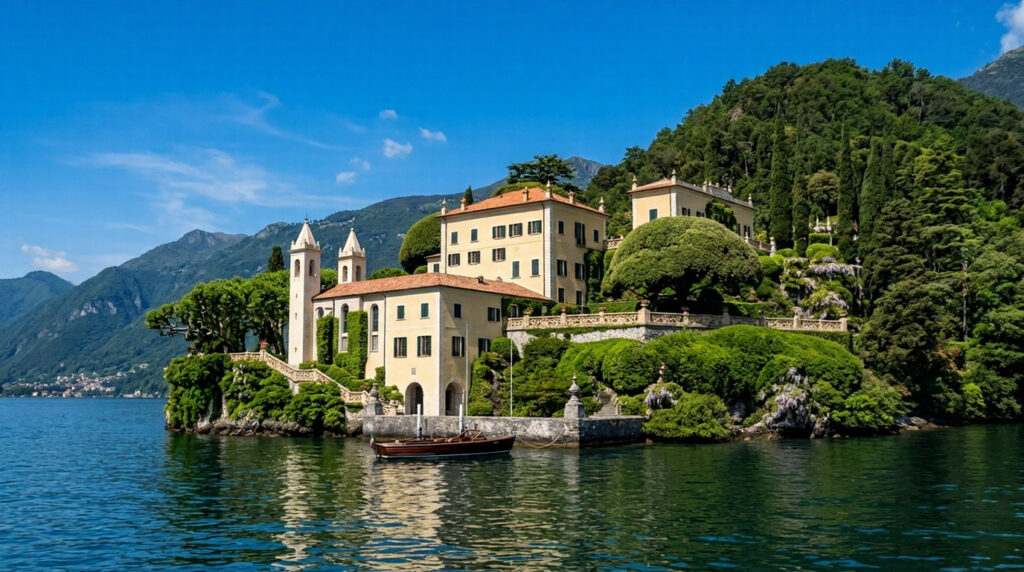
Varenna for the lakes. As noted above, Varenna on the eastern shore of Lake Como is a more considered base than Bellagio. It is accessible direct from Milan’s Centrale station in about an hour, it is quieter, and the ferry connections to the rest of the lake are good. For Lake Garda, Gargnano on the western shore requires a car but the western shore is quieter and far less gridlocked than the south.
Where to Eat
Luini, Via Santa Radegonda
Luini is a panzerotti shop a short walk from the Galleria that has been frying the same thing since 1949. A panzerotto is a small, deep-fried folded pastry filled with tomato and mozzarella, eaten standing on the pavement outside. The queue runs around the corner at lunchtime but moves fast. Two euros, consumed in three bites, one of the best street food experiences in northern Italy. Arrive before noon or expect to wait.
Pasticceria Marchesi
Marchesi has been in the Brera neighbourhood since 1824 and has a second location inside the Galleria. The pastry counter in the morning is the reason to visit: the marron glacés in autumn, the panettone in December, the cornetti and the bresaola pastries year round. Order a coffee at the counter in the original Via Santa Maria alla Porta location, which retains the green and gold interior it has had for two centuries. The Galleria branch is also Prada-owned and beautiful but considerably busier.
Ristorante Berton, Porta Nuova
For a single serious dinner in Milan, Berton in the Porta Nuova district is the reservation to make. One Michelin star, Andrea Berton’s cooking is precise and deeply rooted in northern Italian ingredients without being nostalgic about it. The tasting menu runs to seven or eight courses. The wine list focuses on northern Italian and French producers. Book several weeks ahead and go with the full menu rather than à la carte.
La Tortuga, Gargnano, Lake Garda
If the Lake Garda day trip is on the itinerary, La Tortuga on the Gargnano waterfront is worth planning the day around. Small, family-run, the menu built around the lake and the surrounding territory: freshwater fish, local olive oil, the simple pasta that northern Lombard cooking does better than anywhere. Book ahead, order whatever is freshest, and take a table on the terrace if the weather holds.
Good to Know
Milan dresses seriously. This is not a warning about dress codes at specific sites, it is an observation about the general register of the city. Shorts and sportswear are conspicuous in the Brera and the Duomo area in a way they are not in Rome or the Amalfi Coast. Milanese dress with structural polish and a quiet precision that has nothing to do with expense and everything to do with intention. Tailored trousers, a good shoe, a coat that fits properly: this is all it takes to move through the city without feeling conspicuously foreign.
Last Supper tickets: book immediately. Not eventually. Not when you confirm your hotel. The moment you know your Milan dates, go to vivaticket.com and book. Two to three months ahead is normal for high season. This is the one non-negotiable advance booking in Lombardy.
Getting around Milan. The metro is excellent, covering four lines across the city efficiently and cheaply. The ATM day pass is good value if you are making more than three journeys. For the Navigli and Porta Venezia, trams are the local preference and run frequently. Taxis are available at official ranks or via the itTaxi app. The centre is very walkable once you are in Brera or the historic district.
Lake Como transport. The train from Milano Centrale to Varenna-Esino takes about an hour and runs regularly throughout the day. From the station a short footpath leads down to the ferry dock. The public ferry network connects all the main towns. For the smaller western shore villages a car is necessary. Driving on the lake roads is scenic and extremely slow. If you are in a hurry, take the ferry.
On tipping. Not obligatory in Italy. Rounding up or leaving a euro or two after coffee and casual meals is appreciated. Five to ten percent at a sit-down dinner is generous. Check the bill for a coperto or service charge, which is standard in Milan, before adding more.
Weather and layering. Milan in autumn and winter is genuinely cold. The Alpine winds come off the mountains and the city’s wide avenues channel them efficiently. Spring is mild and the best season for the lakes, when the gardens of the villas are at their best. Summer is humid and hot in the city; the lakes are cooler and the ferry terraces are the most pleasant places to be. Pack a proper layer regardless of the month.
Best Time to Go
May is the finest month for the lakes. The villa gardens are fully open, the rhododendrons on the hillsides above Como are flowering, the ferry terraces are warm enough to sit on without a coat. The tourist season is building but has not yet reached its summer density.
Milan works well in any season but is best in September and October, when the fashion weeks bring energy to the city, the light is clear and golden, and the temperature is cool enough to wear the kind of clothing Milan rewards. The furniture and design fairs in April make that month lively and interesting if those are your interests, though accommodation books up far in advance.
July and August in Milan are hot, humid, and relatively empty of locals, many of whom leave the city entirely. The lakes in July and August are crowded and expensive, the ferry queues long, the lakeside roads gridlocked. If summer is your only option, book accommodation well ahead, use the early morning hours for everything, and plan to be on the water rather than in the towns by midday.
Read Next
Milan is the sharpest sartorial test in Italy. The espresso brown trench coat, the slate grey tropical wool trouser, the suede driving moccasin for the ferry dock: the Lombardy Capsule Wardrobe Guide builds the 12 pieces that move between the city and the lakes without a single compromise.
For the full wardrobe logic across every Italian region, the Complete Guide to Italy is the starting point.
If Venice is next on the itinerary, the Venice and Veneto Travel Guide covers the lagoon, the bacari, and the Prosecco Hills beyond.
Not sure what to pack for Milan? The Lombardy Capsule Wardrobe Guide covers the tailoring the city demands, the lake leisure pieces, and exactly what to wear to the Last Supper.