
*This post may contain affiliate links for which I earn commissions.*
Quick Summary
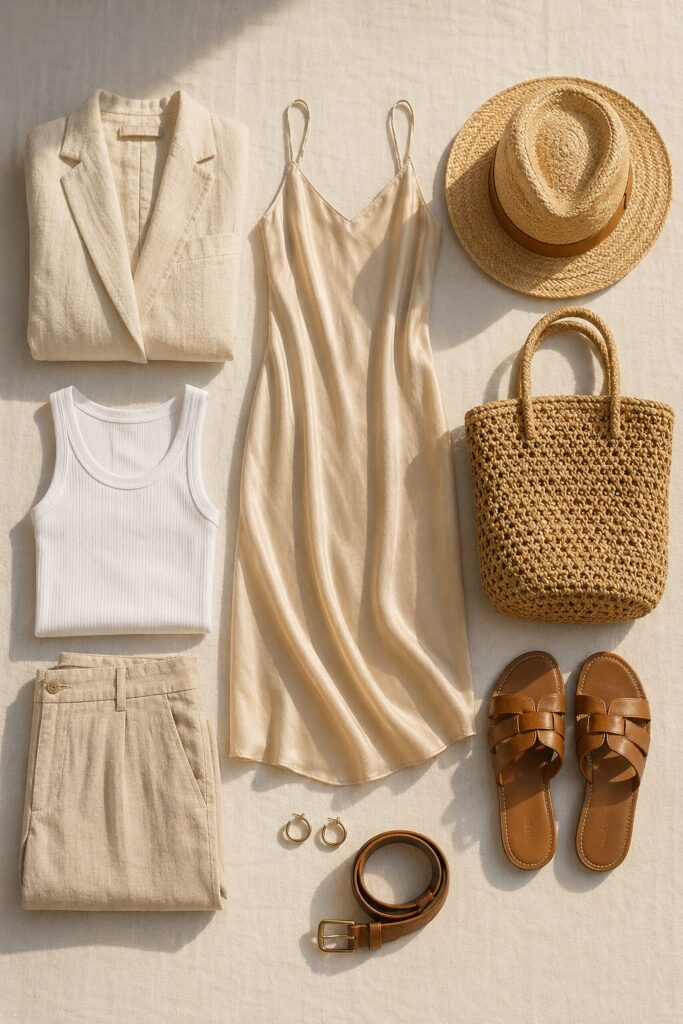
Pack a 12-piece Tuscany capsule anchored by an unstructured linen blazer, a bias-cut silk slip dress in Sangiovese garnet, and robust leather walking sandals with arch support for Siena’s brick inclines and the Val d’Orcia dust. A long-sleeved linen shirt and a raffia tote handle the vineyard sun. Skip heavy blue denim. It’s too hot and too stiff for the region’s fluid, agrarian pace.
The Regional Portrait
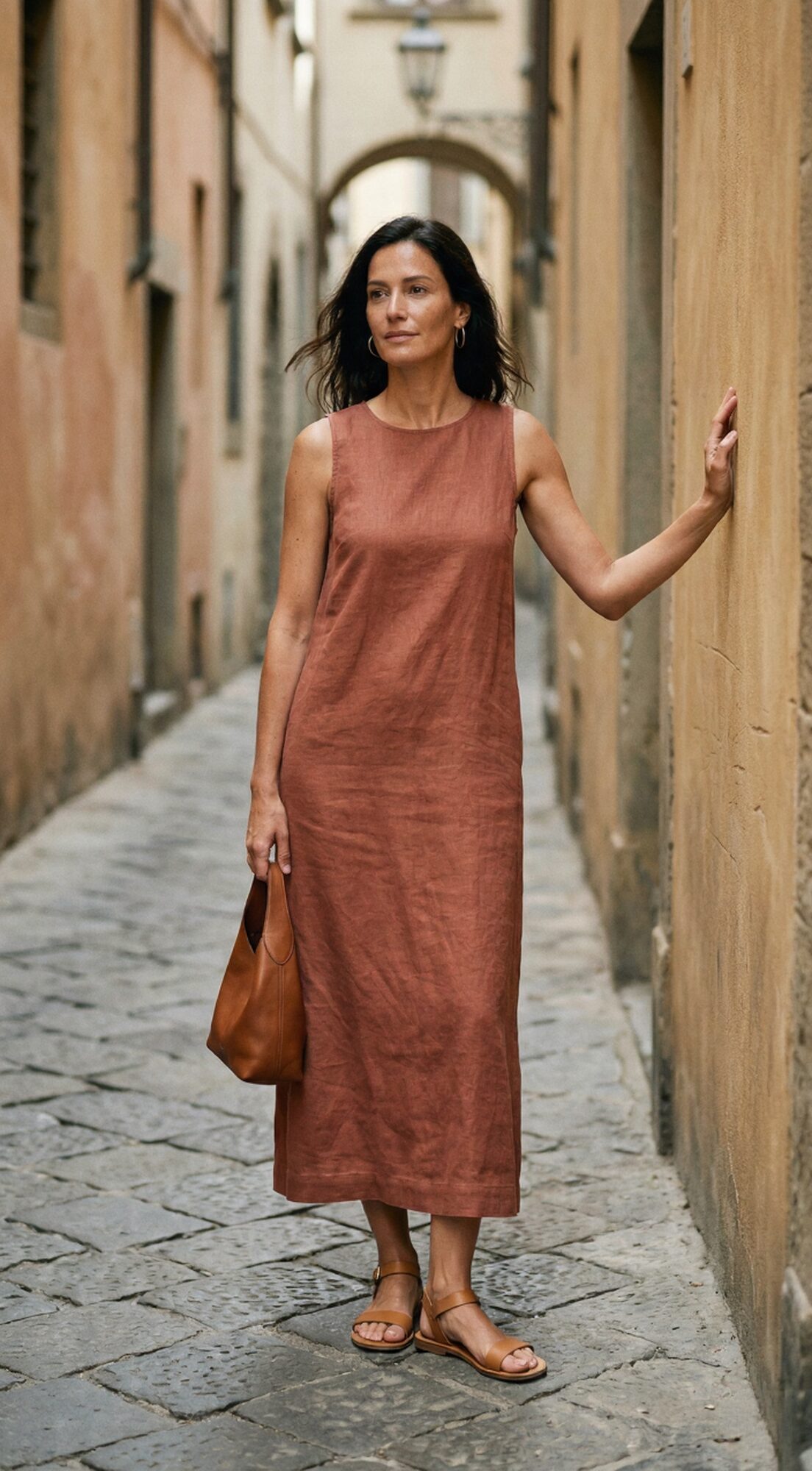
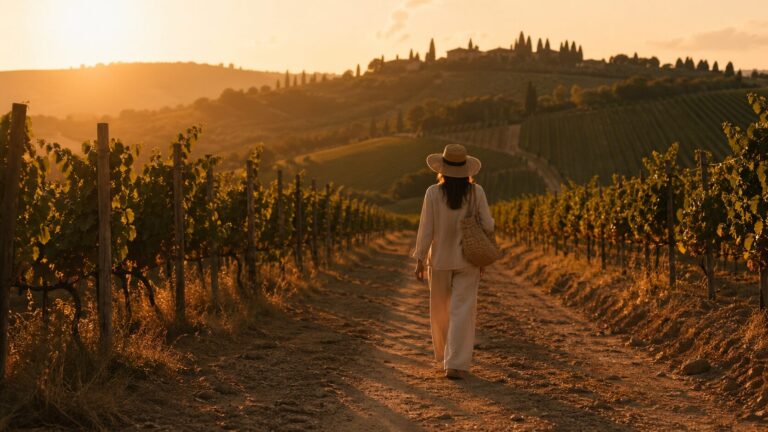
Late afternoon sun hitting the brickwork of Siena creates a light so thick it feels almost tactile. Dust kicks up from the white gravel roads of the Val d’Orcia, settling quietly on the hems of linen trousers. Tuscany asks something entirely different of the traveller than the paved austerity of Rome or the boardroom severity of Milan. The register here is a refined agrarian polish.
You are dressing for a landscape that is both a working agricultural hub and the birthplace of the Renaissance. The capital demands structure, but the countryside demands yield. We pack for long lunches under olive trees that bleed into evening walks through medieval hill towns. A stark, metropolitan wardrobe looks deeply out of place here.
Packing for Tuscany is like curating a small, considered gallery exhibit. Every piece must hold its own weight and serve a distinct purpose. The clothing must negotiate the sharp corners of Florentine palazzos and the sloping vineyards of Montalcino with equal grace. We prioritise fabrics that move with the wind and shoes built for an unforgiving earth.
The Regional Colour Departure
A dark, monochromatic wardrobe looks jarring against the rolling hills of the Chianti region. The regional palette is drawn directly from the earth. Sienese Ochre serves as your grounding neutral. This warm, baked clay tone mimics the rooftops of Florence and feels instantly native to the environment. It acts as a visual anchor that pairs beautifully with lighter fabrics.
Cypress Shadow provides your dark contrast. It’s a deep, blackened green inspired by the slender trees lining country estates, offering a softer alternative to true black. Black absorbs the relentless heat, whereas this dark green reflects the agricultural heritage of the region. It looks exceptionally sophisticated on a linen trouser.
Sangiovese Garnet introduces necessary depth. Bringing this translucent, bruised red into your silk blouses reflects the wine poured at every local table. It serves as a beautiful accent colour for evening dinners.
Rely on Raw Linen Flax for your lightest tones. Pure optic white glares harshly under the intense rural sun. An unbleached, natural flax tone absorbs the light beautifully and forgives the inevitable dust from a vineyard walk. It grounds your outfits in the agricultural reality of the region.
The Terrain Reality Check
Moving through this region physically punishes delicate clothing. Florence is paved in pietra serena sandstone slabs that are wide but unforgiving on the arches of your feet. The stones radiate heat upward during the summer months. The hill towns like Montepulciano require you to climb incredibly steep, uneven brick inclines.
Vineyard tours involve walking on packed dirt and loose white gravel. Sienese dust has a way of permanently clinging to suede, a fact many learn only after ruining their favourite shoes on the first day. This environment destroys thin soles. You need robust leather walking sandals with significant arch support or a tightly constructed leather loafer.
The rural areas present a different set of physical demands. Walking through a vineyard in Chianti involves stepping over ruts baked hard by the sun. The soil is deeply pigmented and will stain light-coloured canvas shoes immediately. Your footwear must be impenetrable and easy to wipe clean.
The terrain heavily dictates your hem lengths. A sweeping maxi dress acts as a broom for the Val d’Orcia dust. Cropped trousers and midi skirts ending safely above the ankle are mandatory. They allow clear movement up ancient staircases and keep your fabrics pristine.
The Region-Specific Pieces
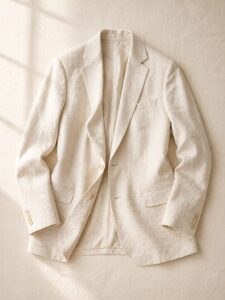
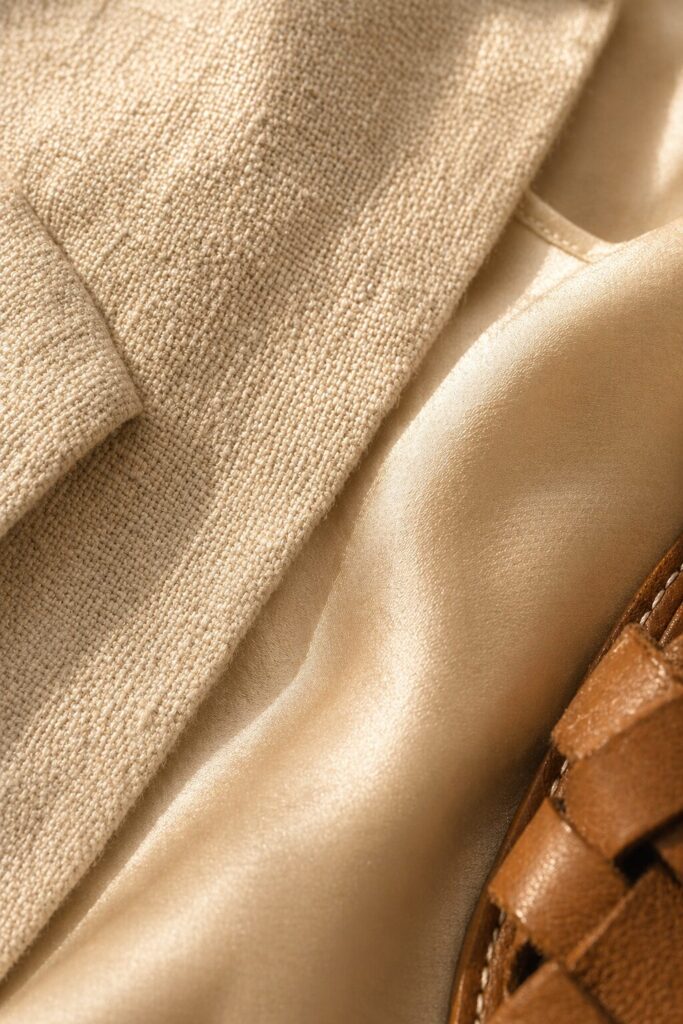
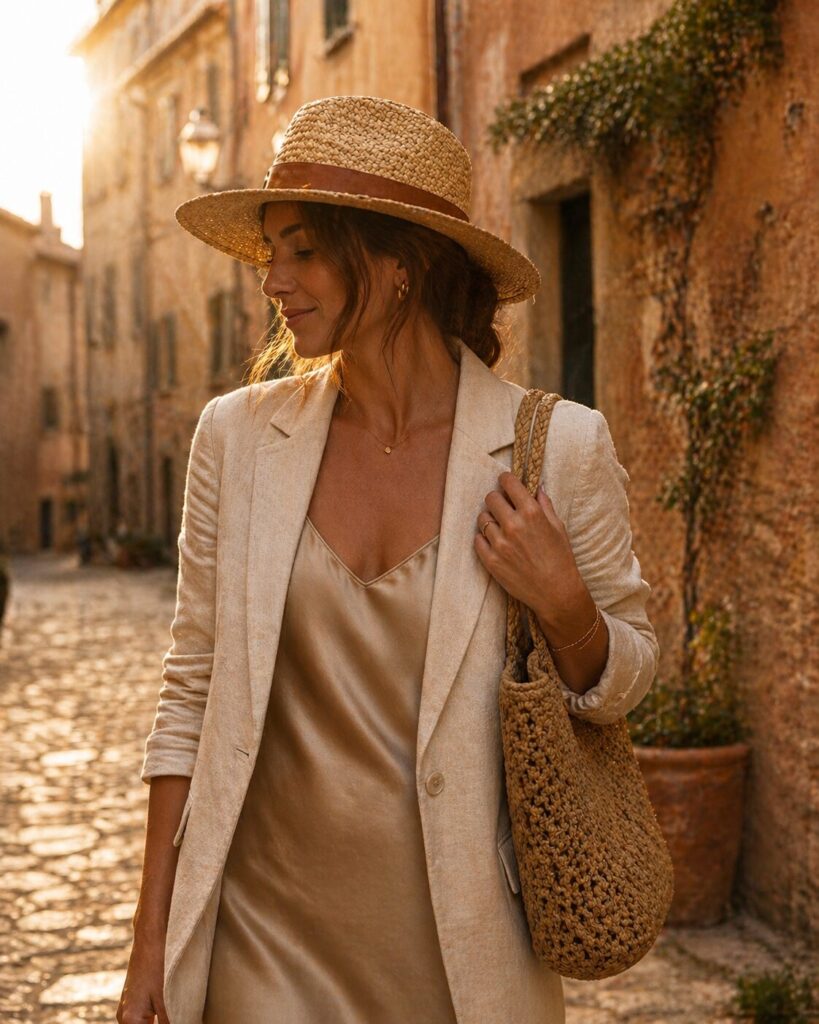
Your outerwear needs a profound shift. A sharply structured wool jacket feels suffocating in Florence. We suggest an unstructured, unlined linen blazer in a muted earth tone. It provides the exact degree of architectural polish required to view the Uffizi Gallery without causing you to overheat. It entirely replaces the heavy denim jacket.
You’ll want a voluminous A-line midi skirt cut from heavy cotton poplin. This allows cooling air to circulate around your legs during stagnant July afternoons in San Gimignano. It replaces restrictive tailored shorts, pairing perfectly with a ribbed silk tank. The movement of the skirt mirrors the relaxed pace of the region.
The environment calls for a woven raffia or straw tote bag. The wide streets of Florence and the open country estates feel safe enough for an open-top basket. It holds a bottle of water and a sun hat, replacing the utilitarian nylon crossbody you might carry in a denser city. It brings a textural, rustic element to your polished pieces.
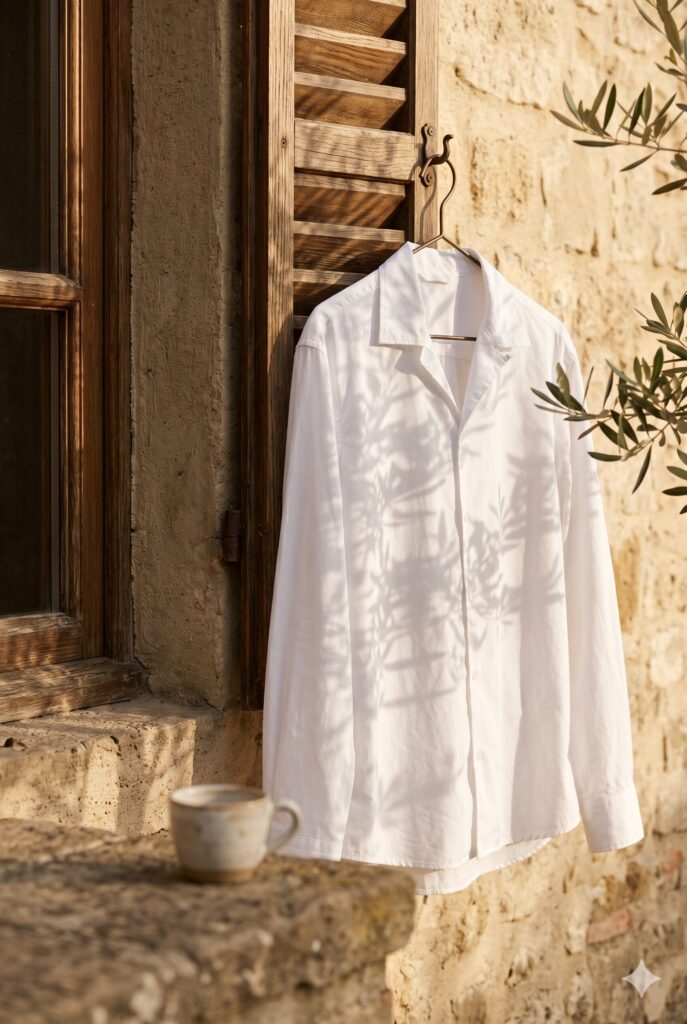
Bring a long-sleeved linen button-down shirt. Worn open over a silk camisole, it acts as a highly effective shield against the midday UV rays. Buttoned up and tucked into trousers, it meets the standard for a smart dinner reservation. It acts as the anchor of your daytime outfits.
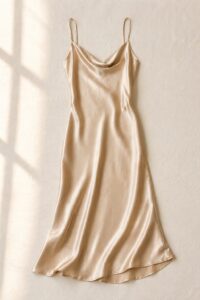
Pack a bias-cut silk slip dress in Sangiovese Garnet. This garment takes up the space of a folded handkerchief in your luggage but delivers immense visual impact. Worn with flat leather sandals during a scorching afternoon, it feels cooler than bare skin. Layered under your unstructured linen blazer, it immediately meets the dress code for a Michelin-starred restaurant in Florence.
The Cultural Register of This Region
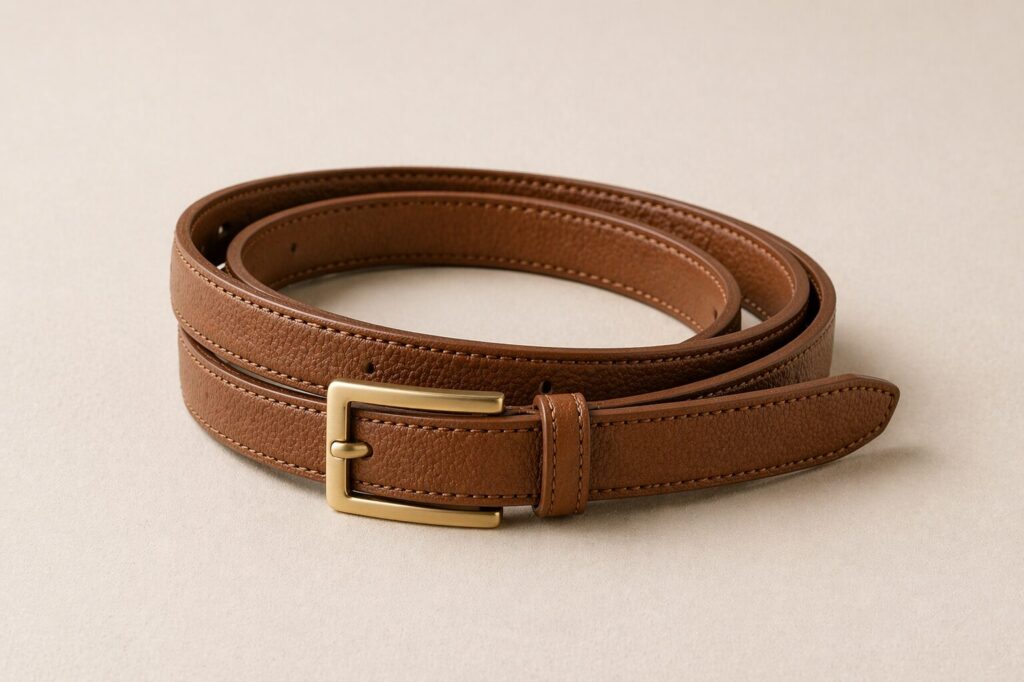
The locals approach dressing with a considered, leisurely pride. You won’t see athletic wear outside of a gym. The default aesthetic is relaxed but intentionally composed. Florence maintains a deep respect for artisanal craftsmanship. Wearing poorly constructed clothing stands out sharply against a culture that has produced the world’s finest leather goods for centuries.
The concept of la bella figura, the beautiful figure, extends well beyond the city limits. In Tuscany, looking good is considered a form of good manners. Showing up to a tasting room looking dishevelled suggests a lack of respect for the winemaker’s craft. The effort you put into your appearance is noticed and appreciated by the locals.
The countryside is more forgiving but still expects a collar or a well-cut dress for dinner. Religious sites remain strict. The Duomo in Florence and the cathedral in Siena will turn you away if your shoulders or knees are bare. Keeping a large cotton scarf in your tote solves this instantly.
Evening events at rural agriturismos call for a subtle shift in texture. Changing out of your dusty daytime trousers into a fresh silk dress signals a respect for the evening meal. The ritual of the passeggiata, the evening stroll, requires you to look presentable as you walk through the town square.
The Fabrics for This Microclimate
The heat in central Italy is a dry, baking force. The sun beats down directly, turning stone piazzas into ovens by early afternoon. Heavy synthetics trap sweat against the skin and prevent evaporation. Linen is the absolute requirement for surviving a Tuscan July. A pure linen shirt always wrinkles within ten minutes of wear, which is actually a relief since it gives you permission to stop worrying about looking perfectly pressed.
Cotton poplin serves as your secondary fabric. It offers a crisper silhouette than linen while maintaining vital breathability. Poplin dresses hold their shape beautifully during long car rides through the countryside. They refuse to cling to the body, offering a structured barrier against the afternoon heat.
Silk serves as your evening problem solver. It regulates body temperature exceptionally well, keeping you cool when the restaurant patio is still radiating the day’s heat. Silk also sheds the lingering dust of the countryside far better than velvet or heavy cotton.
The temperature drops noticeably once the sun disappears behind the hills. A lightweight cashmere or silk-blend knit proves highly useful for evening wine tastings. It blocks the sudden chill without adding bulk to your suitcase. Relying entirely on natural fibres is the only way to manage the temperature swings.
The One Piece You’ll Wish You’d Brought
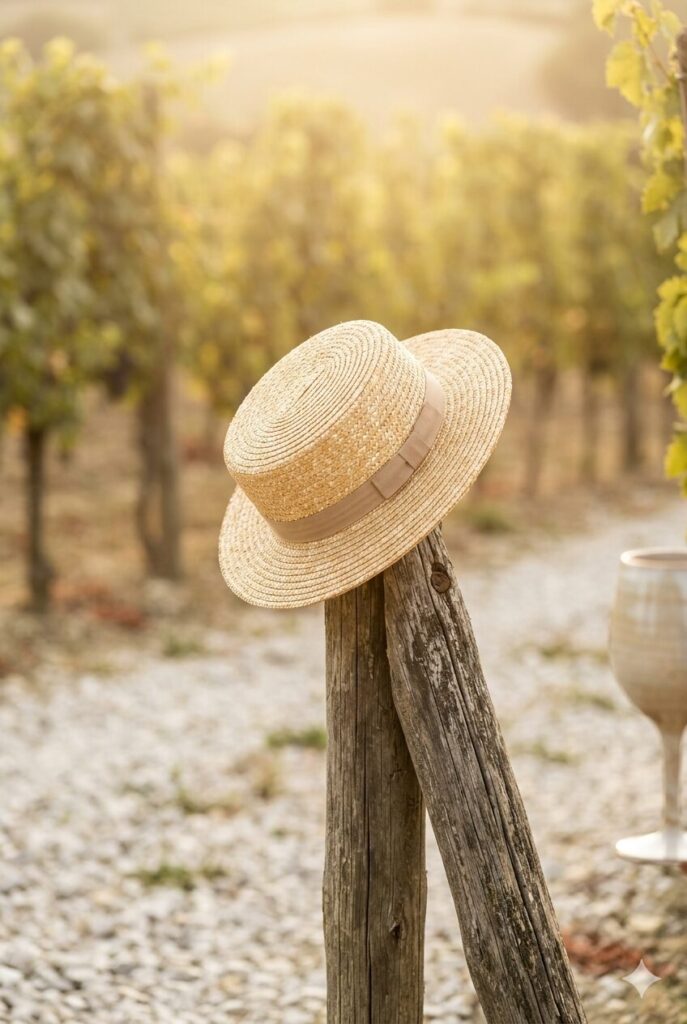
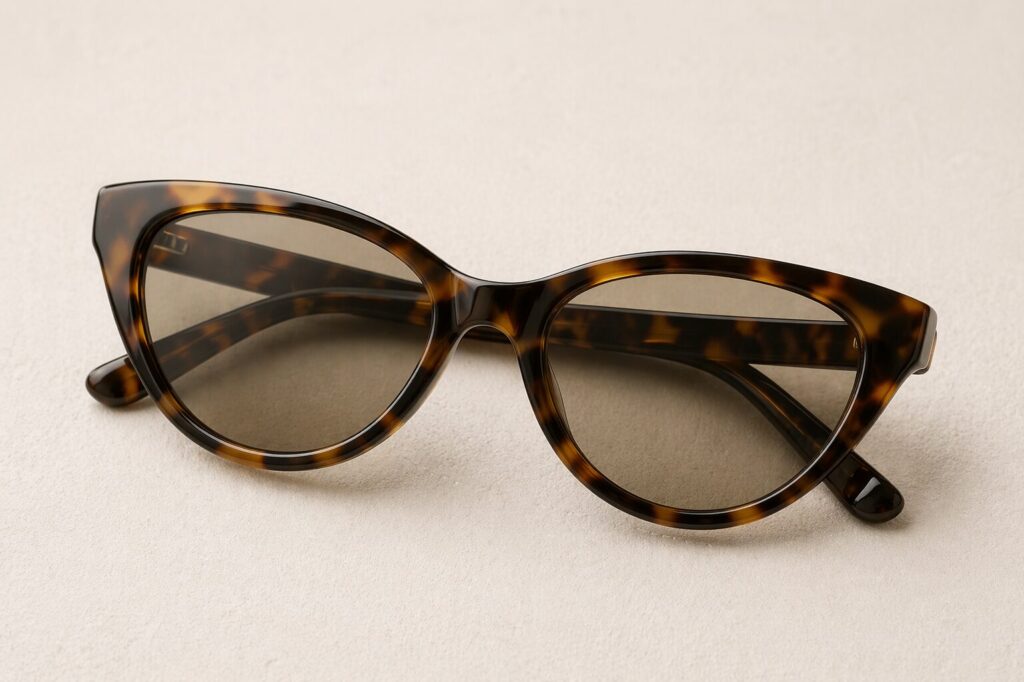
A packable, wide-brimmed straw hat proves its worth on the first day. Tourists often assume designer sunglasses provide enough protection. Standing in an unshaded, hour-long line for the Accademia Gallery teaches a harsh lesson. A proper hat creates a personal canopy. It prevents heat exhaustion and looks significantly more appropriate in a vineyard than a canvas baseball cap.
The One Piece You Won’t Need
Heavy, rigid blue denim is a liability in this climate. Thick jeans are punishingly hot during the day. They lack the breathability required for walking miles across sun-drenched hill towns. They also lack the fluid drape suited for the region’s evening aesthetic. Leave them behind in favour of lightweight trousers or fluid skirts.
Planning Your Full Italy Trip?
This guide covers the specific demands of Tuscany — the agrarian elegance of the Val d’Orcia, the Renaissance grandeur of Florence, and the unforgiving brick inclines of the hill towns. For the foundational wardrobe pieces that work across every region of the country, visit our Complete Guide to Italy. Whether your itinerary continues north to the lagoons of Veneto or the boardrooms of Lombardy, or south to Rome & Lazio, you will find targeted packing guides for each region there.
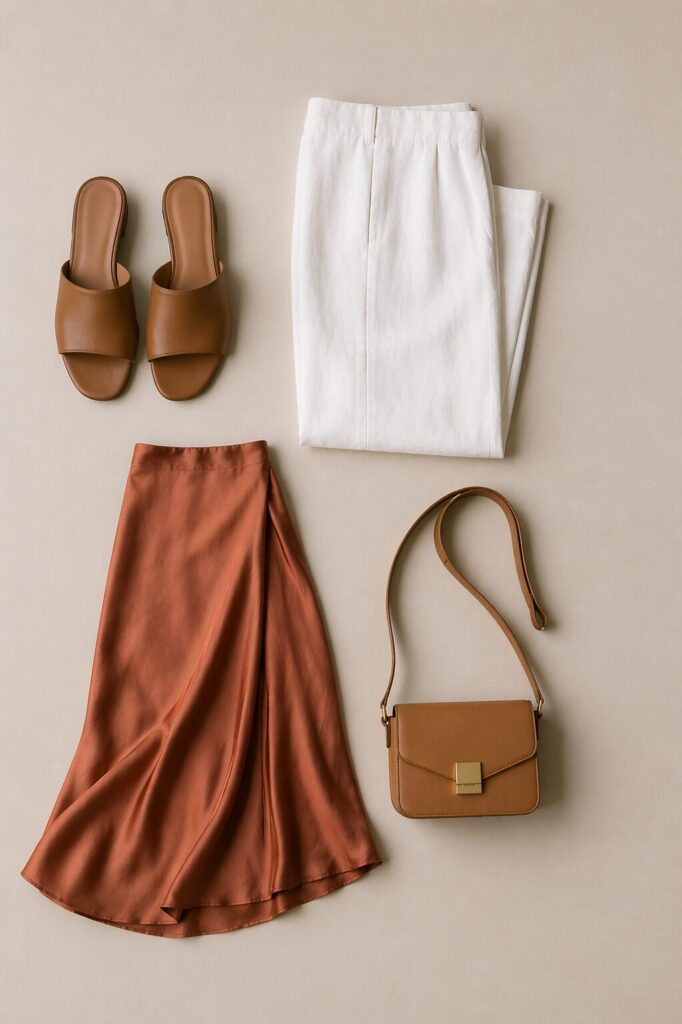
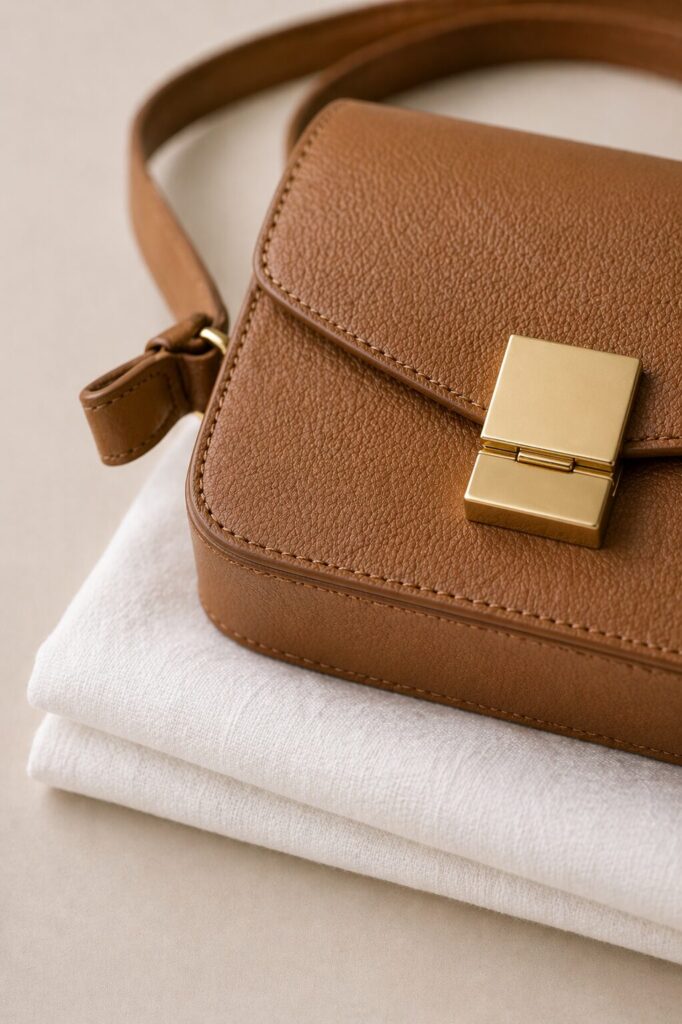
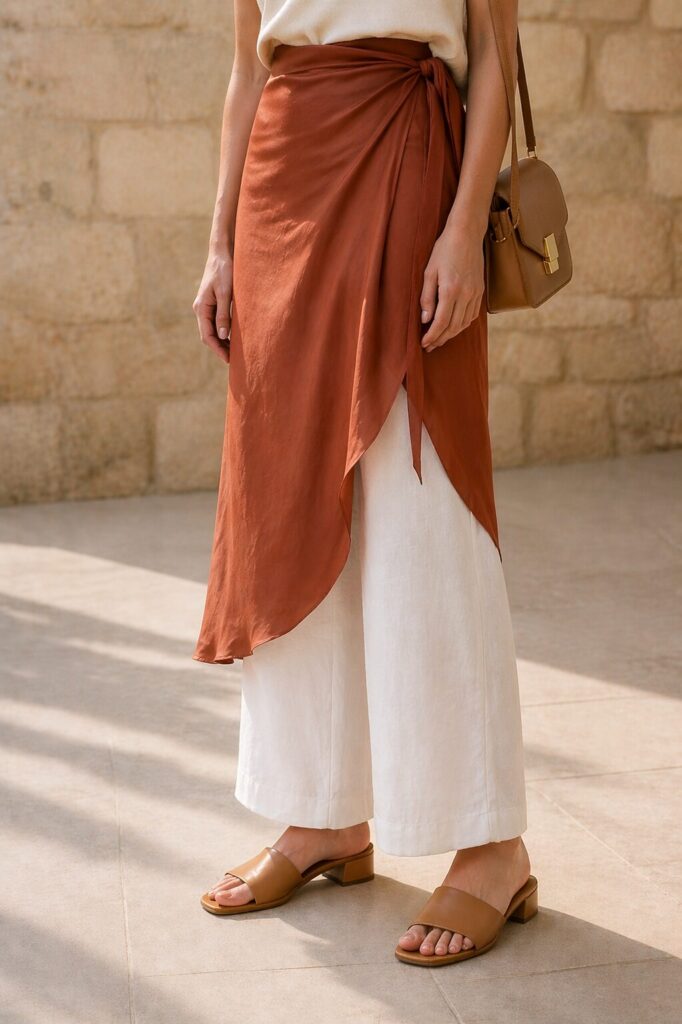
Why this works: every piece here negotiates two entirely different registers, the pietra serena stones of a Florentine morning and the candlelit table of an agriturismo dinner, without asking you to pack twice.
Your Tuscany Capsule: The 12 Pieces
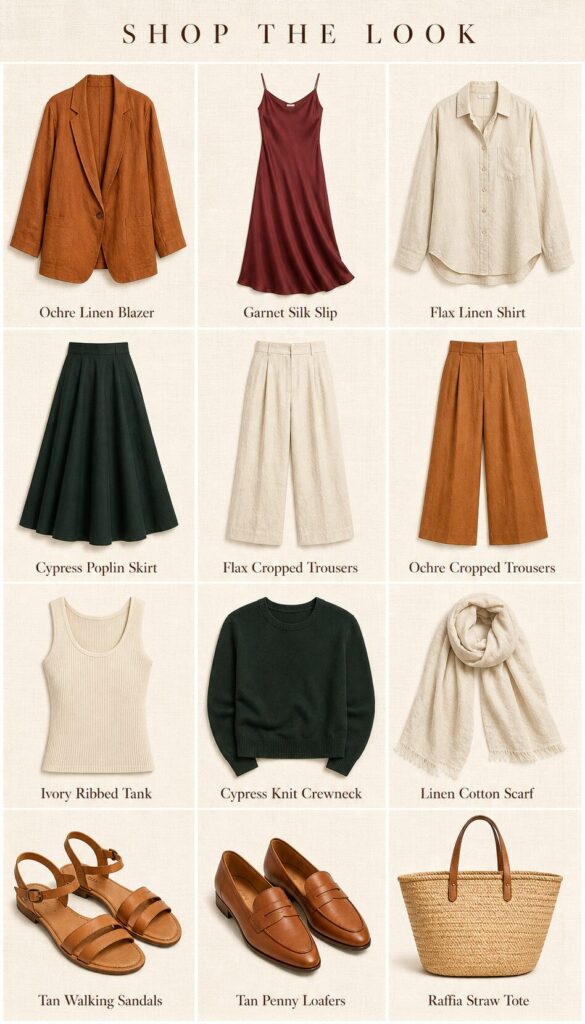
- 1 Lightweight cashmere or silk-blend knit sweater | Shop this item → ANRABESS Lightweight Sweaters for Women
- 1 Unstructured linen blazer in an earthy tone | Shop this item → IDEALSANXUN Linen Blazer for Women
- 1 Bias-cut silk slip dress in Sangiovese Garnet | Shop this item → Zylioo Women’s Mulberry Silk Slip Dress
- 1 A-line heavy cotton poplin midi skirt | Shop this item → Belle Poque Women’s High Waist Pleated Midi A-Line Skirt
- 1 Long-sleeved linen button-down shirt | Shop this item → ZAAYO Women’s Linen Button Down Shirt Long Sleeve
- 2 Pairs of cropped linen or light cotton trousers | Shop this item → ECUPPER Womens Linen Cropped Pants Loose Casual
- 3 Lightweight, breathable tops (silk or ribbed cotton) | Shop this item → Zeagoo Women Silk Satin Tops
- 1 Large cotton scarf for church visits | Shop this item → FURTALK Pashmina Shawl Wraps for Women
- 1 Woven raffia or straw open-top tote bag | Shop this item → YXILEE Handmade Straw Tote Bag
- 1 Pair of robust leather walking sandals with arch support | Shop this item → UBFEN Womens Walking Sandals With Arch Support
- 1 Pair of leather loafers or closed-toe walking shoes | Shop this item → Lightweight Penny Loafers | Slip On
- 1 Packable wide-brimmed straw hat | Shop this item → FURTALK Womens Sun Straw Hat UV UPF 80+
Tuscany is just one chapter of Italy’s extraordinary wardrobe story. Whether your itinerary takes you north to the lagoons of Veneto, further north to the boardrooms and lakes of Lombardy, south to the cobblestones of Rome & Lazio, or further south to the dramatic cliffs of Campania & The Amalfi Coast, you will find targeted packing guides for each region there. For the complete cross-regional packing strategy, visit our Complete Guide to Italy. If you’re covering multiple regions, Italy in One Bag covers the cross-regional packing strategy.
Frequently Asked Questions
Build a 10-12 piece capsule around linen and cotton in warm neutrals. Tuscany’s hill towns mean cobblestones and slopes, so prioritize comfortable walking shoes over heels. Add one elevated piece for a wine dinner or agriturismo evening, since those often run slightly dressier than city casual.
A cushioned, closed-toe walking shoe with grip handles Tuscany’s steep, uneven streets far better than sandals. Towns like Siena and San Gimignano involve real inclines. Bring a second, slightly nicer pair only if your itinerary includes a formal dinner or wine tasting.
Tuscany runs hot and dry from June through August, often reaching 32-35°C with little humidity relief inland. Pack breathable natural fibers, a wide-brim hat, and sun protection. Evenings cool noticeably in the countryside, so one light layer earns its space for dinner outdoors.
Smart-casual works well: a linen dress or tailored trousers with a nice top. Agriturismo settings lean relaxed but polished, not formal. Skip anything overly structured; the setting is rustic-elegant, and comfortable, breathable fabric suits both the meal and the countryside walk to reach it.
Spring (April-May) runs cooler and wetter, so add a light knit and a packable rain layer to the same base capsule. Summer needs less layering but more sun protection. The core pieces carry across both seasons; only the outer layer and accessories change.