
*This post may contain affiliate links for which I earn commissions.*
The Complete Insider’s Guide to the City of Light
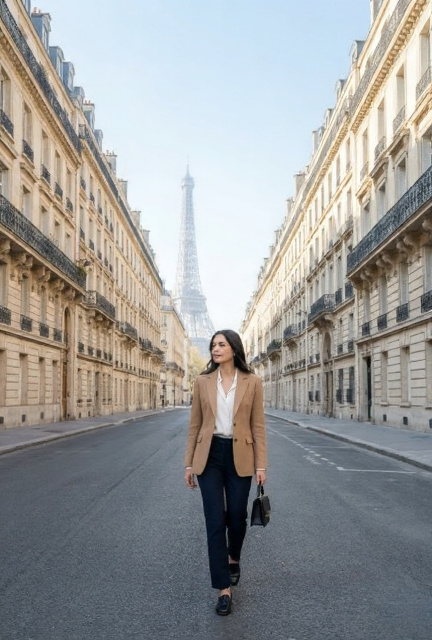
Paris arrives before you are ready for it. The taxi from Gare du Nord turns onto a wide boulevard and suddenly the Haussmann buildings are on both sides, six storeys of pale stone and wrought-iron balconies and those particular zinc rooftops, and you realise the city looks exactly like every photograph you have ever seen of it and somehow nothing like them at all.
The afternoon light here does something to the stone facades that no photograph captures properly. Low and golden, it comes in at an angle that makes the buildings glow from within. Standing in it for the first time, on a street corner in the 6th or looking west along the Seine from the Pont des Arts, you start to understand why people have been painting this city for two hundred years and have not run out of things to paint.
The major sites are real and worth your time. But Paris gives you its best hours in between them. A café table at ten in the morning. A market on Saturday. A boulangerie queue at seven. The Seine at eight in the evening. The city is better when you stop trying to manage it.
What to See
The Musée d’Orsay, not the Louvre first
Everyone goes to the Louvre. It is enormous, overwhelming, and best on a second visit when you know which rooms you want. On a first trip, go to the Orsay instead.
It is housed in a converted 1900 railway station on the Left Bank, and the building does half the work before you reach a single painting: the great arched glass roof over the central nave, the old station clocks still at each end. The collection runs from 1848 to 1914 and holds the world’s best Impressionist paintings. Van Gogh’s self-portraits. Monet’s series paintings. Degas’s dancers. Renoir, Pissarro, Cézanne. All in rooms that are human in scale, at a pace where you can actually look.
Book timed-entry tickets online in advance. The door queue moves slowly. Thursday and Friday evenings the museum stays open until 9:45pm and is far quieter than during the day.
Sainte-Chapelle
Most visitors spend their entire Île de la Cité visit at Notre-Dame and walk straight past this. The upper chapel is a cage of 13th-century stained glass, fifteen enormous windows running floor to ceiling, the walls almost entirely dissolved into colour and light. On a sunny morning it stops you cold.
It sits inside the Palais de Justice and you go through a security check to get in. Book ahead. Arrive as close to opening as possible before the groups arrive. Forty-five minutes is enough.
The Palais Royal gardens
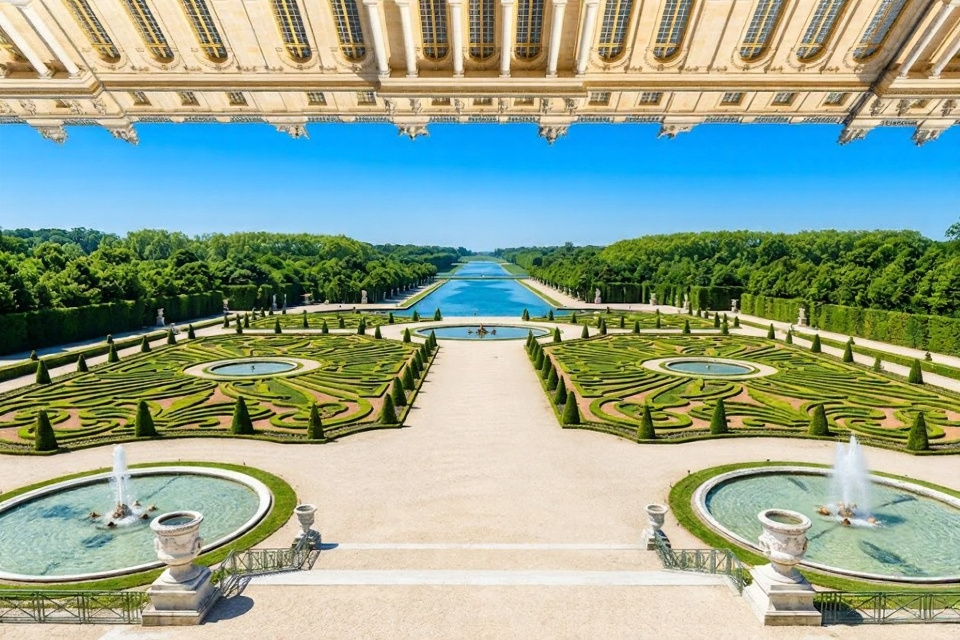
The Palais Royal is a 17th-century royal palace now housing government ministries and a handful of shops, and it wraps around a long formal garden that most people walk past without going in. The garden is one of the quietest spots in central Paris: gravel paths, double rows of lime trees, a long reflecting pool, arcaded galleries on all four sides. Daniel Buren’s striped columns in the courtyard give you a landmark.
Come in the morning or late afternoon. Get a coffee from the Rue de Rivoli, sit on one of the green metal chairs by the pool. Free, central, and nobody seems to know it is there.
Montmartre before ten
Montmartre is famous for Sacré-Coeur and for crowds. Both are accurate. What most people miss is that the streets below the basilica and to its west, around the Place du Tertre and the Rue Lepic, are worth seeing when they are quiet, which means before ten in the morning.
Walk up the Rue Lepic from the Abbesses metro. The market stalls are setting up. The Café des Deux Moulins on the corner is already serving. The streets are steep and the view from the steps of Sacré-Coeur at that hour, the city spread out below in the early light, is the one worth coming for. By eleven it is a different place.
What to Do
Walk the Canal Saint-Martin
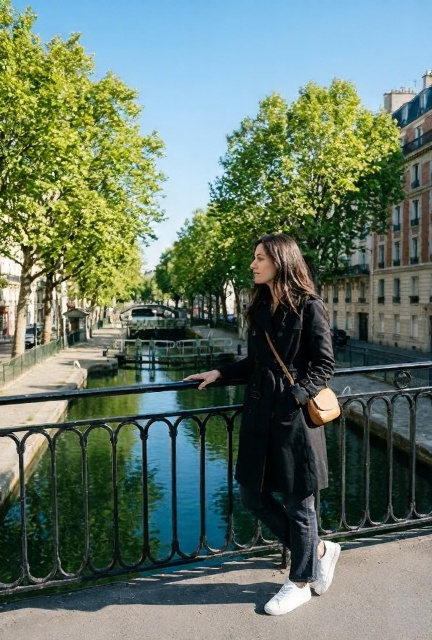
The Canal Saint-Martin cuts through the 10th arrondissement from République north toward La Villette. Iron footbridges over the water, plane trees along the towpaths, a run of small locks, café terraces on the Quai de Valmy. This is where younger Parisians spend Sunday mornings when the weather is right.
On Sundays the quays are closed to traffic. Walk north from République when everything is still opening up. The canal is quiet, the boulangeries are running, and the stretch takes about forty-five minutes without rushing. Stop at Ten Belles on the Quai de Valmy for a coffee.
Spend a morning at the Marché d’Aligre
The best working market in Paris, in the 12th. It runs every morning except Monday in the Place d’Aligre and the covered Beauvau hall beside it. The outdoor stalls sell produce at prices that make sense because locals actually shop here. The covered hall has cheese, charcuterie, wine, olives.
Get there between eight and ten on a Saturday or Sunday. The covered hall fills up by eleven. Buy some cheese, bread from the bakery on the corner, something from the charcuterie, and eat in the square outside. Costs almost nothing. One of the better mornings Paris offers.
Take a boat along the Seine at dusk
Most visitors dismiss the Seine boat trips as tourist traps. They are missing it. At dusk, when the Eiffel Tower lights come on and the monuments along both banks are lit, the city from the water is something else entirely. You also get a sense of Paris’s geography from the river that no amount of walking gives you.
Book the evening departure in advance. Sit on the upper deck, bring a layer, and stay for the full hour. Ignore the headphone commentary.
Père Lachaise on a weekday afternoon
The largest cemetery in Paris and one of the more beautiful places in the city. The 19th-century funerary monuments, the overgrown sections where the older graves are being slowly taken back by ivy, the quiet that settles around three in the afternoon. Oscar Wilde’s tomb, Jim Morrison’s, Chopin’s, Edith Piaf’s, Proust’s.
Pick up a map at the entrance. Two hours is the right amount of time. Go on a weekday. On a grey afternoon there is nowhere better.
Where to Stay
The arrondissements in Paris are genuinely different from each other, and where you sleep changes the trip.
Saint-Germain-des-Prés and the 6th is the Left Bank classic. Literary, expensive, full of good café terraces, walking distance from the Orsay and the Luxembourg Gardens. Brasserie Lipp, Café de Flore, Les Deux Magots are all here. The neighbourhood charges for what it is and delivers it.
The Marais (3rd and 4th) works best for a first visit. Central, walkable to most of the major sites, the best independent shopping in the city, the Place des Vosges, a strong restaurant scene. The streets around the Rue de Bretagne and the Rue de Turenne alone are worth a morning.
The 9th and 10th make sense for longer stays or tighter budgets. The 9th has the Opéra and the covered passages. The 10th has the Canal Saint-Martin. Both are well-connected and much cheaper than the 6th or the Marais.
Montmartre (18th) if the atmosphere matters more than the convenience. Steep streets, village character, the best views in Paris. Further from everything than the map suggests and the hill is steep. For a night or two it is worth it.
Where to Eat
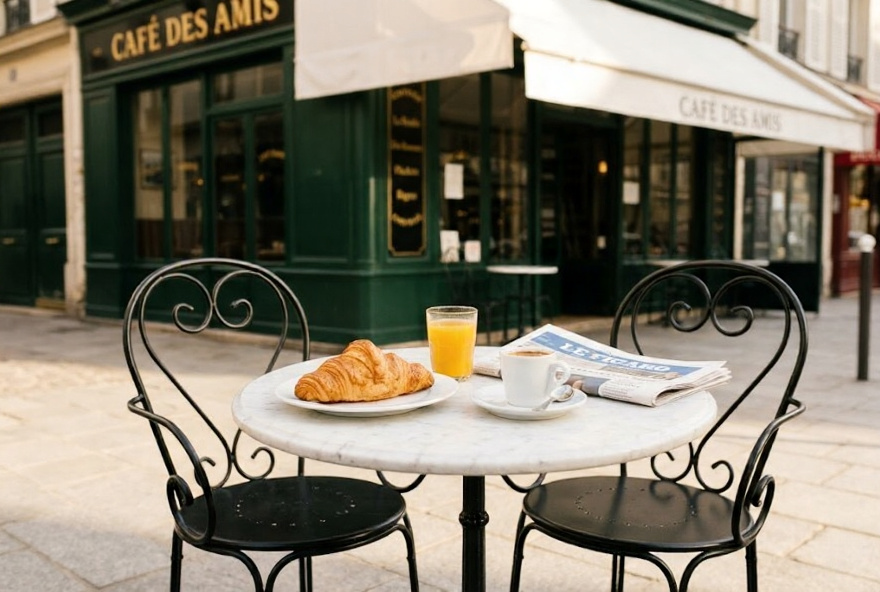
Du Pain et des Idées, 10th arrondissement
The most talked-about boulangerie in Paris and it earns it. The croissants are the benchmark: deeply laminated, properly buttered, caramelised underneath. The escargot pastries with pistachios and chocolate are better still. Open weekdays from 7am, closed weekends. Queue outside. The bread is very good but the pastries are the reason people come back.
Marché des Enfants Rouges, 3rd arrondissement
The oldest covered market in Paris, from 1615, in the Marais on the Rue de Bretagne. A dozen food stalls selling Moroccan tagines, Japanese bento, Lebanese mezze, French daily specials. Get there at noon when everything is fresh. Find a stool at one of the communal tables and order whatever is directly in front of you. Under fifteen euros. No better lunch in the Marais.
Septime, 11th arrondissement
The hardest reservation in Paris to get and worth the effort. Bertrand Grébaut’s place on the Rue de Charonne: short seasonal menu, natural wine, service that is warm rather than stiff, a room that feels comfortable rather than performative. Book two months ahead when reservations open online. If Septime is full, Septime La Cave around the corner takes walk-ins.
Bouillon Pigalle, 18th arrondissement
A Bouillon is a large, fast, affordable French dining room and Pigalle on the Boulevard de Clichy is the best of them. Three hundred seats, classic French dishes, prices that have stayed low on purpose. Steak frites, œufs mayonnaise, profiteroles, a carafe of house red. Under twenty euros. No reservation needed at the bar. The evening queue moves fast.
Good to Know
The metro covers everything. Fast, frequent, cheap, reliable. A Navigo day pass or a carnet of ten tickets is the right approach. The RER B gets you from Charles de Gaulle to central Paris in around forty minutes. For taxis, use official ranks or the G7 app. Uber works fully in Paris and is often cheaper for airport runs.
Free museum Sundays. The Louvre, Orsay, Pompidou, Rodin and others are free on the first Sunday of each month. Very busy. Worth knowing if the budget is tight, worth avoiding if crowds bother you.
Book ahead for the big sites. The Louvre, Orsay, Sainte-Chapelle, and the Eiffel Tower summit all sell timed tickets that go weeks ahead in high season. Ten minutes of booking online saves hours at the door.
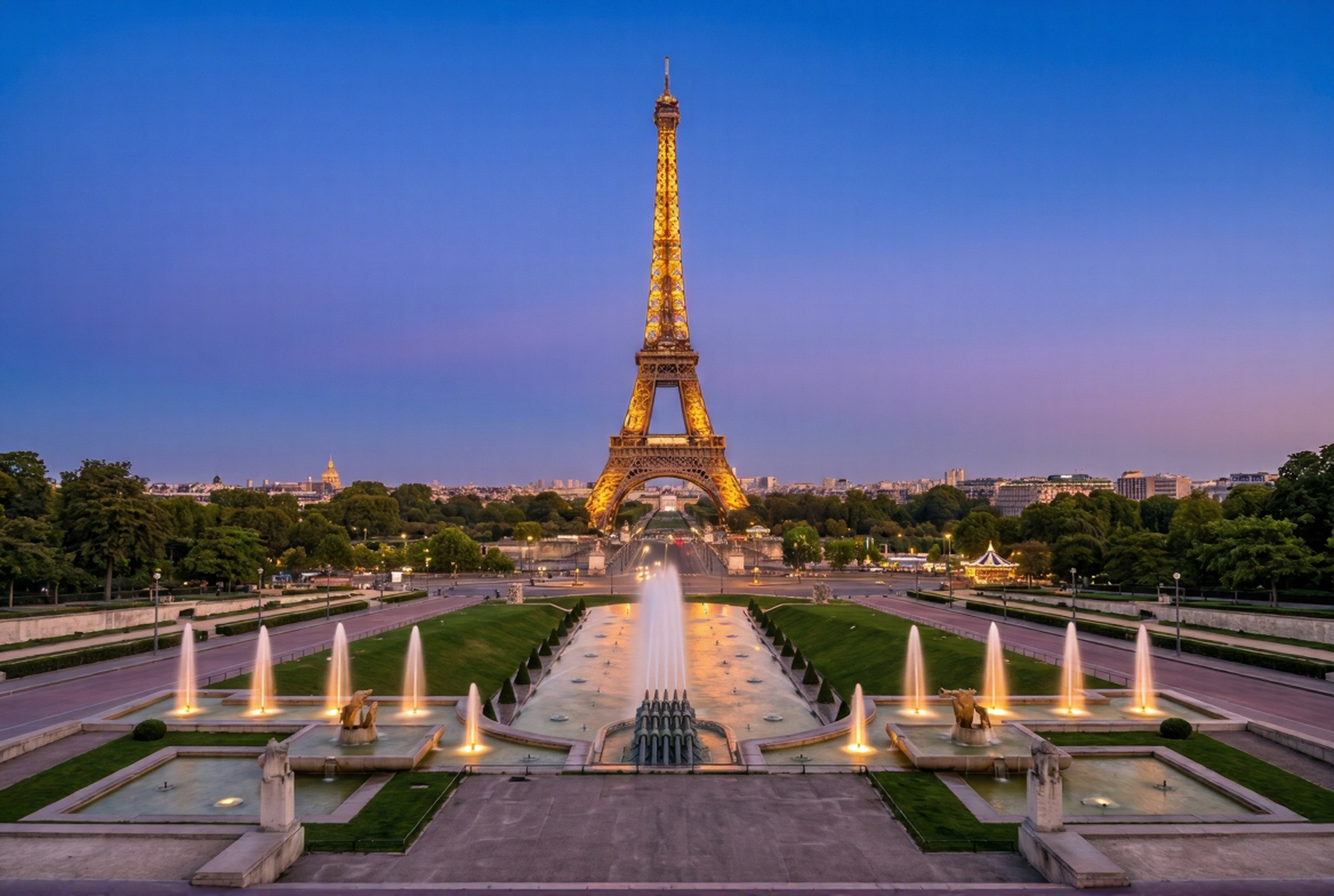
The Eiffel Tower question. The view from the summit in daylight is good. The tower seen from the Trocadéro or the Champ de Mars at dusk when the lights come on is better. Work out which one you are actually after before you book anything.
Tipping. Not expected. Rounding up or leaving a euro or two after coffee or a simple meal is fine. Five to ten percent at dinner is generous. Check the bill for a service charge first.
Pharmacies. There are more of them in Paris than you would believe, all marked with a green cross. The pharmacists handle minor medical issues, skincare questions, and things that would need a doctor elsewhere. Genuinely useful on a longer trip.
The Paris Convention and Visitors Bureau has neighbourhood guides and current museum booking details.
Best Time to Go
April and May. The chestnut trees on the boulevards are flowering, the light is at its best, and the city is busy but not yet overwhelmed. The Luxembourg Gardens and the Tuileries are worth an hour each at this time of year.
September and October are close behind. Paris empties in August when most locals leave, then comes back to life in September with a different energy: school starting, the city returning to itself. October light here is something to plan around.
July and August are hot and the major sites are packed. The residential neighbourhoods are quieter, a lot of shops and restaurants close for the month. Not impossible, just not the best version of the city.
January through March: cold, sometimes wet, almost no queues. The museums are easy to get into, the restaurant reservations come up. Paris in winter has a quality of its own that is harder to sell but worth experiencing.
Read Next
Paris takes its dressing seriously and the Paris Capsule Wardrobe covers the ten pieces that get it right: the blazer, the straight-leg trouser, the shoes that work on cobblestones and in a good restaurant on the same day.
For how the wardrobe shifts across every French region, the Complete Guide to Packing for France covers it all.
Heading to the coast after Paris? The French Riviera Capsule Wardrobe is already live.
Sorting out what to wear in Paris? The Paris Capsule Wardrobe has the ten pieces that get the city right.