
*This post may contain affiliate links for which I earn commissions.*
Quick Summary
Pack an Iceland capsule built on three layers: a merino base, a fleece mid-layer, and a waterproof windproof shell, since the weather swings by season and hour rather than by region. Add a light rain shell and brimmed hat for summer, a heavier fleece and second shell for shoulder season, and an insulated parka with thermal leggings for winter. Skip cotton base layers, umbrellas, and open sandals in every season.
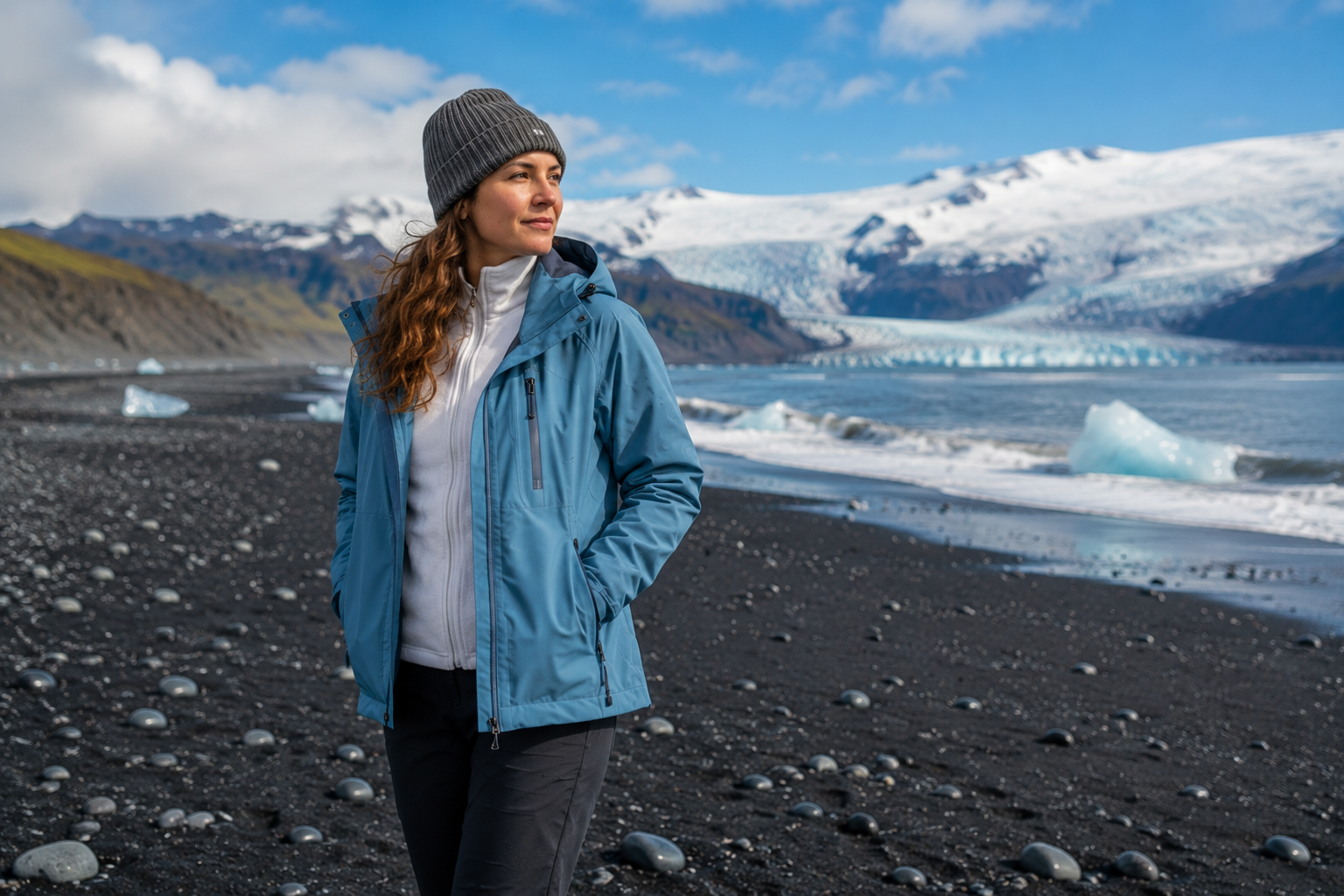
Your Iceland packing list has one job: solve wind and wet, not cold. That is the whole country in a sentence. Reykjavík in July and a glacier walk in February sit closer in temperature than you would think, because Iceland’s weather does not swing by region the way Italy’s or Spain’s does. It swings by season, by hour, and by whether you are standing in the open or tucked behind a building. Build one capsule wardrobe that layers correctly and you can wear it in June or January, in the city or on the Ring Road, without buying a second suitcase of gear.
This guide gives you that capsule. One bag, three seasonal variations, and a short list of activity add-ons for the days that call for them.
The Iceland Layering System
Every piece in this capsule fits into a three-part system.
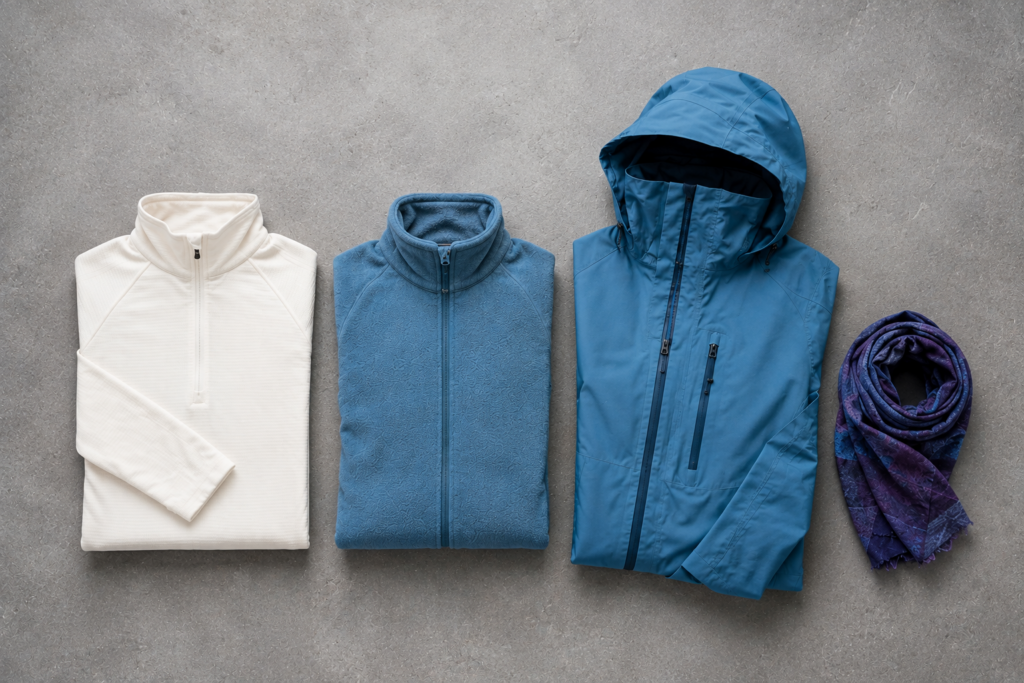
- Base layer: moisture-wicking merino wool or a synthetic technical fabric against your skin. Cotton stays wet once it’s wet, and wet fabric against your skin pulls heat out of your body far faster than dry fabric does. Leave cotton base layers at home in every season.
- Mid layer: fleece, wool, or a light down piece that traps warm air close to your body. This is the layer you add or shed as the day changes.
- Outer shell: a waterproof, windproof jacket. Not water-resistant, waterproof. Iceland’s wind regularly knocks 5 to 8°C off how a temperature actually feels, so a 12°C afternoon can feel closer to 5°C the moment you step off a sheltered street. The shell is not an optional extra, even on a day that looks mild from your hotel window.
Get this system right and the rest of the packing list is just filling in pieces around it.
Iceland’s forecast can shift within a few hours, especially outside Reykjavík. Check the Icelandic Met Office’s forecast each morning of your trip and pack your layers accordingly for the day ahead.
Universal Foundation Pieces (Pack These on Every Trip)
These items don’t change by season. They go in the bag whether you land in July or January.
- Waterproof, windproof shell jacket
- Waterproof boots, broken in before you travel
- Wool socks, at least three pairs
- A hat that covers your ears fully
- Gloves
- Sunglasses. Snow and glacier ice reflect UV light back at your eyes, so this belongs in your winter bag as much as your summer one
- A reusable water bottle. Iceland’s tap water is glacier-fed and safe to drink everywhere, so refill instead of buying bottled
- A swimsuit. Geothermal pools run year-round, and you’ll want one in every season, not just summer
Summer Capsule (June–August)
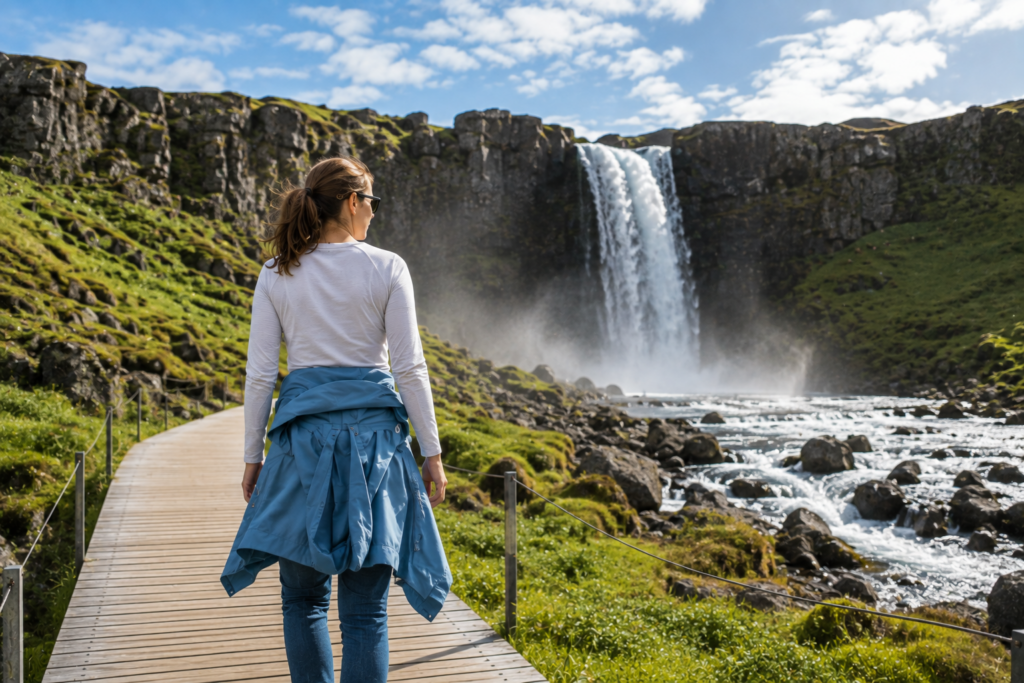
Summer in Iceland averages 8 to 15°C (46 to 59°F), which surprises first-time visitors expecting real warmth. It’s cool, it’s windy, and in the north, daylight stretches close to 24 hours. Add to your foundation pieces:
- Short-sleeve and long-sleeve tops for layering
- A light rain shell for sudden showers
- Extra sun protection: a brimmed hat, SPF, lip balm with SPF
- An eye mask, so the midnight sun doesn’t cut your sleep short
Shoulder Season Capsule (April–May, September–October)
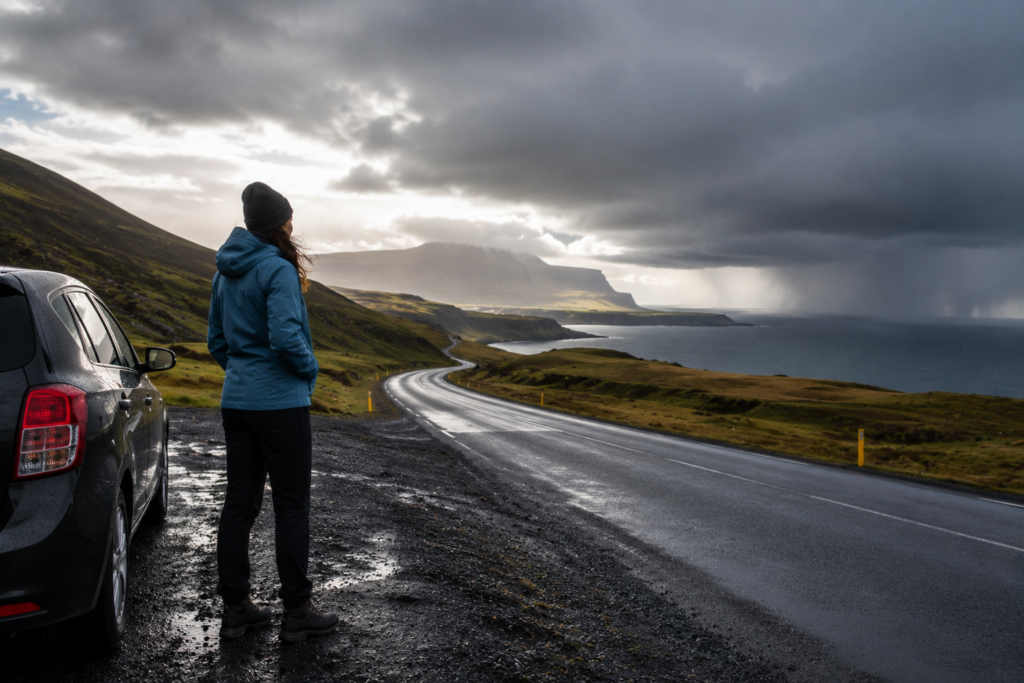
This is the hardest season to pack for. Weather swings widely from one day to the next, and October is the wettest month on the calendar. Build in more flexibility than summer and pack a heavier mid-layer:
- A heavier fleece or wool mid-layer than your summer one
- A second, sturdier waterproof shell
- A buff or lightweight scarf for wind protection around your neck
- One extra base layer, since layering up and down happens more often in this window
Winter Capsule (November–March)
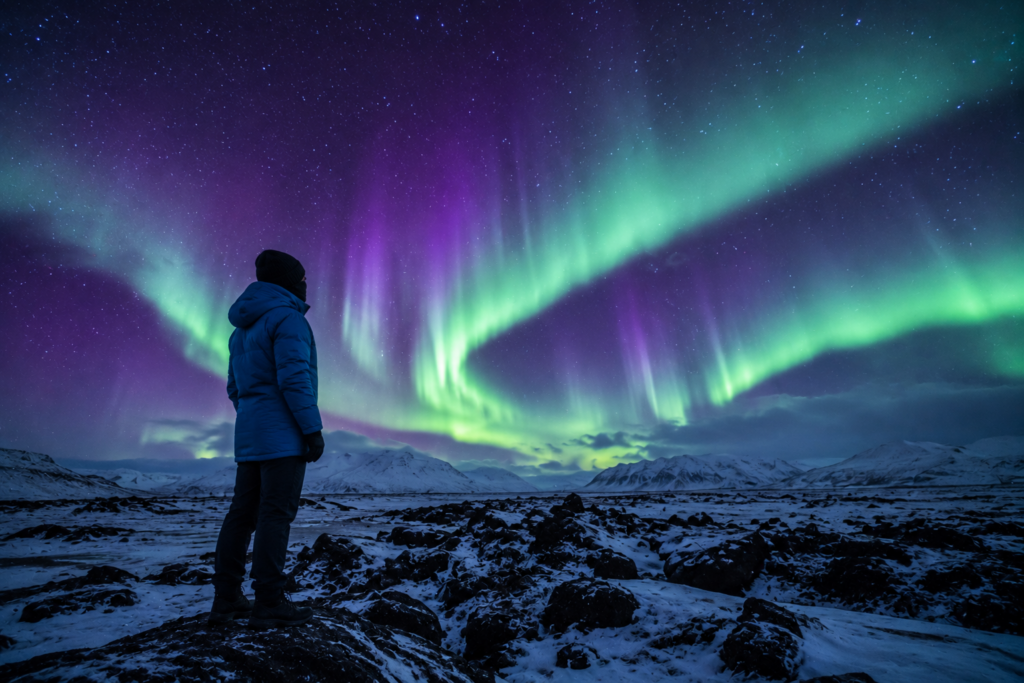
Winter averages -1 to 4°C (30 to 39°F) on the coast, colder inland, with December daylight down to 4 to 6 hours. Add:
- An insulated parka over your shell system
- Thermal leggings as a base layer under your pants
- Snow-ready waterproof boots with real tread
- A balaclava or a heavier neck layer for exposed windy stretches
Activity Add-Ons
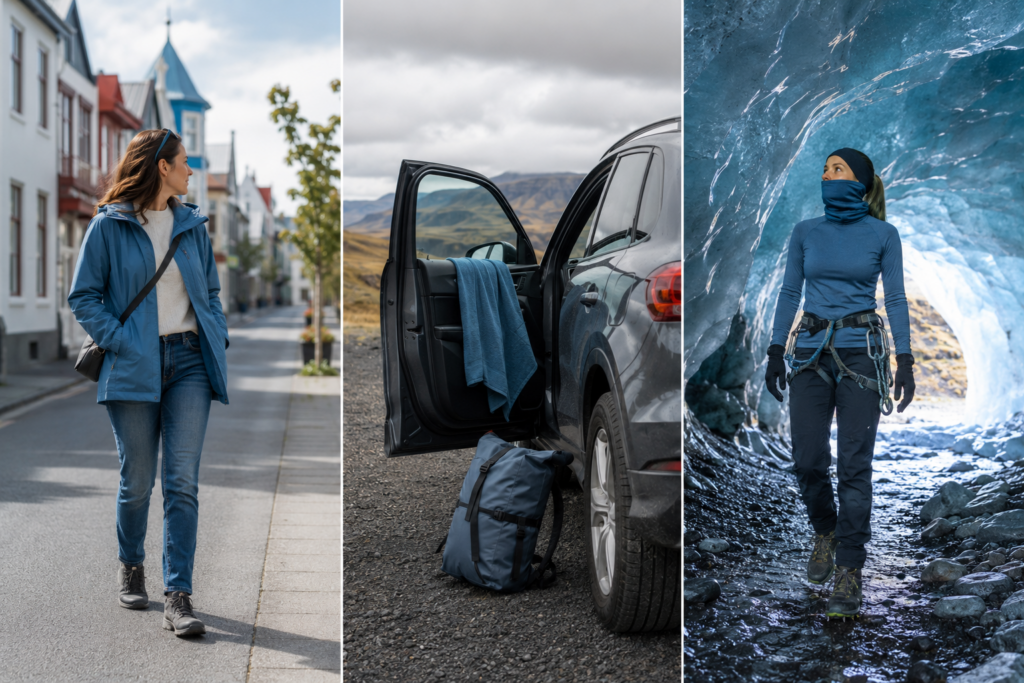
What you pack also depends on what you’re doing that day. Three scenarios cover most of an Iceland itinerary.
City Days (Reykjavík)
- Swap hiking boots for comfortable waterproof casual shoes
- Jeans work fine for city walking and restaurants
Ring Road / Road Trip Days
- Full layering system, every piece, every day
- Waterproof everything, including your bag if you can manage it
- A quick-dry towel for spontaneous stops at small-town geothermal pools
Glacier and Ice Cave Days
- Skip buying technical gear. Crampons and harnesses come from your guided tour operator
- Pack close-fitting layers that sit comfortably under a harness
- Waterproof gloves, since your hands will be on ice and rope
Geothermal Pool Packing Note
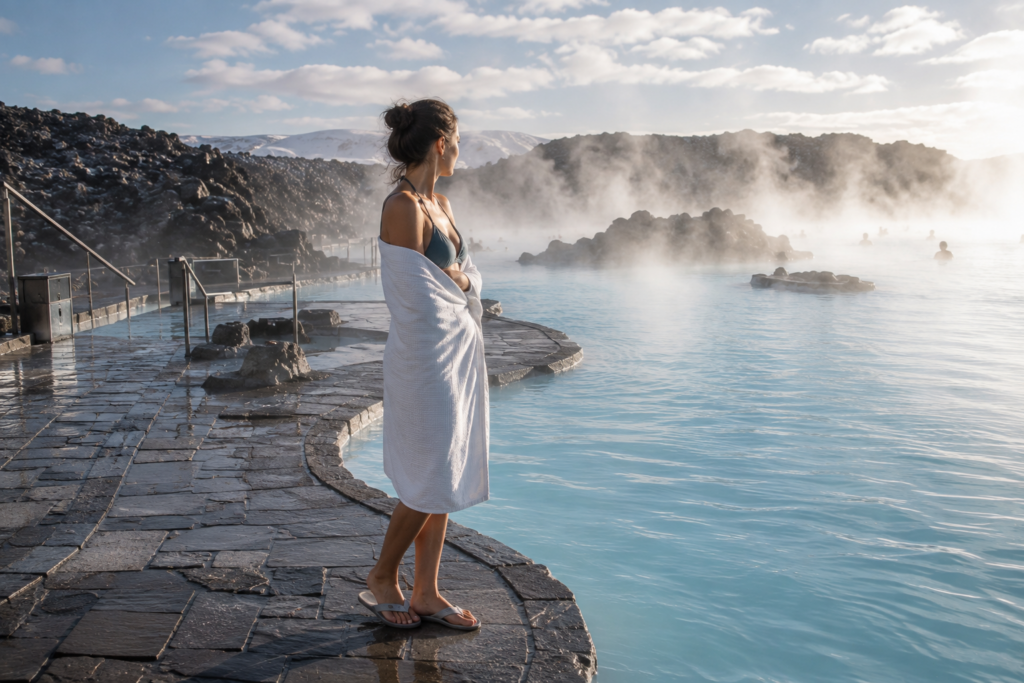
Swimsuit, a quick-dry towel, and flip-flops or pool sandals for the deck. You’ll want this exact kit whether you’re at the Blue Lagoon, the Sky Lagoon, or a small local pool in a fishing town. For the shower rules before you get in the water, see the Geothermal Etiquette section of our Complete Guide to Iceland; in short, you shower naked first, no exceptions.
What Not to Pack
- Cotton base layers of any kind
- An umbrella. Iceland’s wind turns them inside out within minutes, so they’re dead weight in your bag
- Open sandals as a primary shoe
- Any jacket that isn’t waterproof as your only outer layer
Capsule Piece Count: Iceland Packing List by Season
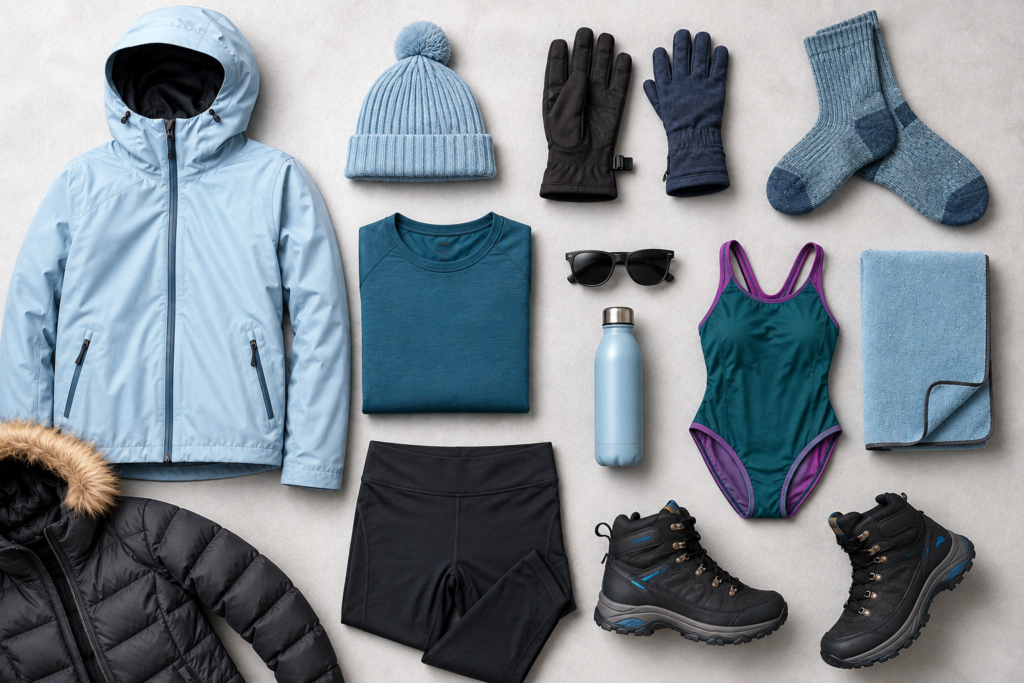
Here’s the full breakdown, season by season, sized to fit in one bag.
| Category | Summer (Jun–Aug) | Shoulder (Apr–May, Sep–Oct) | Winter (Nov–Mar) |
| Base layer tops | 2 | 3 | 3 (thermal) |
| Base layer bottoms | 1 | 2 | 2 (thermal leggings) |
| Mid layer (fleece / wool) | 1 | 2 | 2, one heavier |
| Outerwear | 1 light rain shell | 1 heavier waterproof shell | 1 insulated parka + 1 shell |
| Bottoms (pants/jeans) | 2 | 2 | 2, one water-resistant |
| Footwear | 1 waterproof boot, 1 casual | 1 waterproof boot, 1 casual | 1 insulated waterproof boot, 1 casual |
| Accessories | Hat, gloves, sunglasses | Hat, gloves, sunglasses, buff | Hat, gloves, sunglasses, balaclava or heavy neck layer |
| Swimwear | 1 swimsuit, 1 quick-dry towel | 1 swimsuit, 1 quick-dry towel | 1 swimsuit, 1 quick-dry towel |
Shop This Capsule
Here’s every piece from the list above, linked to a specific pick, so you’re not left guessing which waterproof shell or which merino base layer actually holds up in Iceland.
- Waterproof, windproof shell jacket: Patagonia Torrentshell 3L [Amazon affiliate link placeholder]
- Waterproof boots: Merrell Moab 3 Mid GTX (Waterproof) [Amazon affiliate link placeholder]
- Wool socks: Darn Tough Hiker Micro Crew Cushion [Amazon affiliate link placeholder]
- Merino base layer: Smartwool Classic Thermal Merino Base Layer [Amazon affiliate link placeholder]
- Merino base layer, women’s alt: Icebreaker Merino 200 Oasis Crew [Amazon affiliate link placeholder]
- Fleece mid layer: Patagonia Better Sweater Fleece [Amazon affiliate link placeholder]
- Insulated winter parka: The North Face ThermoBall Eco Parka [Amazon affiliate link placeholder]
- Thermal leggings: 32 Degrees Heat Thermal Leggings [Amazon affiliate link placeholder]
- Balaclava / heavy neck layer: Buff ThermoNet Balaclava [Amazon affiliate link placeholder]
- Waterproof gloves: Outdoor Research Adrenaline Gloves [Amazon affiliate link placeholder]
- Ear-covering hat: Carhartt Acrylic Watch Hat [Amazon affiliate link placeholder]
- Sunglasses: Ray-Ban Wayfarer Polarized [Amazon affiliate link placeholder]
- Reusable water bottle: Hydro Flask 24 oz Wide Mouth [Amazon affiliate link placeholder]
- Quick-dry towel: Rainleaf Microfiber Travel Towel [Amazon affiliate link placeholder]
- Buff / neck gaiter (shoulder season): Buff Original Multifunctional Headwear [Amazon affiliate link placeholder]
Good to Know Before You Pack
- Carry some ISK cash. Iceland is highly card-friendly, but rural stops and paid public bathrooms sometimes ask for cash only
- Laundry access is common on longer trips. Pack fewer, better pieces and plan to rewash rather than overpacking for two weeks
Build this capsule once and it works for a July trip or a January one, in Reykjavík or on the Ring Road. Get the layers right and stay dry, and the weather stops being something you have to manage.
Planning the rest of the trip? Start with The Complete Guide to Iceland for the full overview, then dig into our destination guides for Reykjavík [link — coming soon], the Golden Circle [link — coming soon], and the South Coast [link — coming soon] as they go live. For everything you’ll want in your bag beyond clothing, see our Europe Travel Essentials guide [link placeholder].
Frequently Asked Questions
Pack layers even in June through August. Daytime temperatures sit around 10-15°C, but wind off the coast makes it feel colder. Bring a moisture-wicking base layer, a light fleece, and a waterproof windbreaker. Skip shorts and sandals; Iceland’s summer doesn’t run warm by most standards.
Winter needs a real insulated coat, thermal base layers, waterproof snow boots, and wool socks. Temperatures hover near freezing but wind chill makes it feel far colder, especially near waterfalls or the coast. Pack for wet and windy over simply cold.
Yes. Shoulder season (April-May, September-October) sits between summer and winter extremes but swings unpredictably day to day. Build around the same layering system as summer, then add one heavier mid-layer and waterproof gloves for the colder stretches this season brings.
Guided glacier walks require waterproof, insulated hiking boots with ankle support, thermal base layers, and a windproof outer shell. Most tour operators provide crampons and ice axes, but your clothing layers are your responsibility. Cotton has no place here; it stays wet once damp.
Pack a swimsuit, a quick-dry towel, and sandals for walking between the changing area and the water. Bring a robe or cover-up for the walk back to your locker afterward. Your hair will smell of sulfur; a leave-in conditioner helps if that bothers you.
The core capsule stays the same, but a Ring Road trip needs more durable, weather-ready pieces since you’ll be outdoors at remote stops with no quick access to shelter. A Reykjavík-only trip can lean slightly more toward café and restaurant-appropriate layers.
One pair of waterproof hiking boots covers most of Iceland’s terrain, from black sand beaches to uneven lava fields. Add a second, lighter shoe only for city days in Reykjavík. Skip fashion sneakers or anything without real tread; wet rock and gravel demand grip.
Yes, if you build it in layers rather than fixed outfits. A base layer, a mid layer, and a weatherproof shell adapt to a wide temperature range by adding or removing pieces. This layering approach matters more in Iceland than the specific season you’re traveling in.